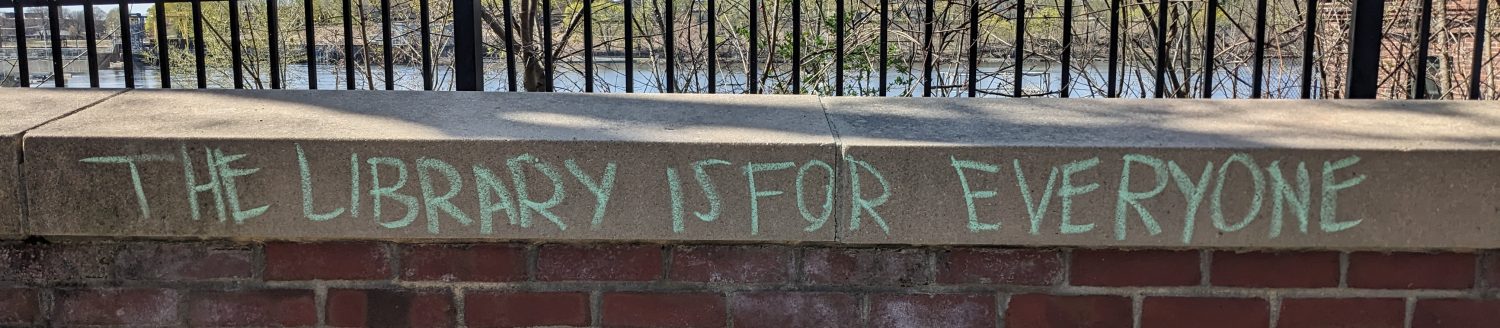
NELA 2018: The Library Is Your Space

The New England Library Association (NELA) annual conference was in Warwick, Rhode Island this year, and it was a fantastic conference; all of the sessions I attended were worthwhile, and I saw lots of activity on Twitter (#NELA2018) to indicate that many other sessions were generating a lot of excitement as well. To top it off, the food was good, and the room temperature resembled neither saunas nor igloos. Well done, Rhode Island! Now, on to the sessions:

Monday, 9am: Finding Appeal Factors: Or What I’ve Learned from Being Twitter’s Resident Reader’s Advisory Specialist by Margaret Willison (@MrsFridayNext)

Willison had spoken the evening before about debunking the myth that “smart people like smart things and dumb people like dumb things.” Her presentation Monday morning was two-pronged: (1) how to learn to like what you don’t like (e.g. how to recommend horror if you don’t read/watch horror), and (2) cross-format recommendations (e.g. “I just watched ___, what should I read next?”). She talked about the need to step outside your natural tastes and build enthusiasm/information for other things; a great way to do this is to ask an articulate friend, and have them explain why they like what they like (not why you should like what they like). By discovering the appeal factors, you can build a common ground and work back. After all, “Just because something isn’t your cup of tea doesn’t mean you can’t understand why someone else likes it.”

Willison did a live example with an audience member who reads the Jack Reacher books by Lee Child, finding out the appeal factors, making a “wrong” recommendation (a series of books that matched in character and content, but differed in tone). This can be done for music and movies as well as for books, and that’s where cross-format recommendations come in. See, for example, NPR’s Read, Watch, Binge series (and while you’re at it, check out their incredible Book Concierge tool, which they make annually; here’s 2017). Other resources are Goodreads, Smart Bitches, Trashy Books and The Ripped Bodice (for romance), The Criminal Element and Stop, You’re Killing Me! (for mysteries and thrillers), and the publisher TOR (for sci-fi and fantasy).
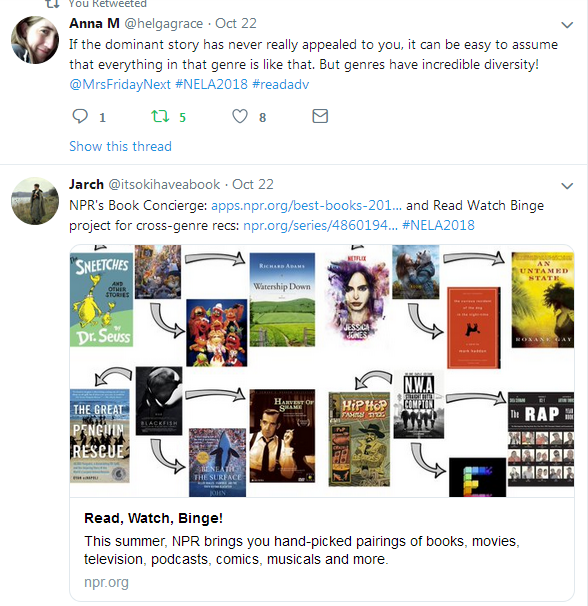
Screenshot of @itsokihaveabook and @helgagrace on Twitter

Monday, 11:30am: Sensory Storytime at the Public Library by Babs Wells, Maria Cotto

Shifting gears from adult readers’ advisory to children’s services, I attended two librarians’ joint presentation about sensory storytimes they offer at their libraries. Sensory storytime is geared for kids on the autism spectrum or with other developmental issues, though neurotypical children are welcome. Wells and Cotto strongly encouraged anyone thinking of offering a sensory storytime to use the book Programming for Children and Teens with Autism Spectrum Disorder by Barbara Klipper, and also pointed to an ALSC blog post that serves as a brief how-to guide. It’s important to be aware of community resources as well, to partner with and to spread the word. (If you’re in Rhode Island, Massachusetts, or nearby, check out The Autism Project.)

Wells and Cotto described their usual sensory storytime, starting with registration: not required, but helpful, especially if it gives the librarian a chance to talk with the parent/caregiver beforehand about any special needs their child might have. They might also want a “social story,” a one-page handout that can help prepare the child for a new environment or event; it can be read like a picture book. Once the storytime has begun, it’s helpful to have visuals for everything, to ease transitions from one activity to another (books, bubbles, songs, activities, etc.). Starting with a hello song is a good idea; the librarian learns everyone’s names (parents too!) and can roll a ball to each kid and have them roll it back. Cotto said she always has a felt board or a puppet, and stools or mats for kids to sit on, and things for them to hold in their hands and fidget with. “These kids need something that will capture their attention, they need something in their hands, they like to participate.” She only reads one book, something like Dog’s Colorful Day by Emma Dodd or The Deep Blue Sea by Audrey Wood. “Go with the flow,” she advised – much like toddler storytime. After the organized part of sensory storytime, it’s playtime: they bring out more activities – popsicle sticks with velcro on the ends so kids can make different shapes, sensory sand, water marbles (but not together!), dried beans with little treasures kids can find and scoop into a cup. This can be a time for parents and caregivers to socialize (they shouldn’t be socializing or on phones during storytime; they should be involved. “I get in everyone’s faces!” Cotto said). Be sure to give plenty of warning when the program is wrapping up: five minutes, three, one, goodbye!

Lastly, remember: “When you meet one child with autism, you meet one child with autism.”

sensorystorytime1sensorystorytime2

Monday, 12:45pm: NERTCL Lunch with author Tracey Baptiste

The New England Roundtable of Teen and Children’s Librarians (NERTCL) had their annual business meeting over lunch and then invited author Tracey Baptiste (The Jumbies, Rise of the Jumbies) to speak. She tried out a new talk on us, “Creativity Under Pressure.” Here are my tweets from the session, which was probably less polished than one she’d given many times, but definitely interesting (and mark your calendars for the third Jumbies book next year!).

Twitter screenshotstracey2

Monday, 2:15pm: Fake News or Real News? Helping Our Patrons Tell Fact from Fake, by Victoria Palmatier and Lisa Lipshires, Springfield City Library

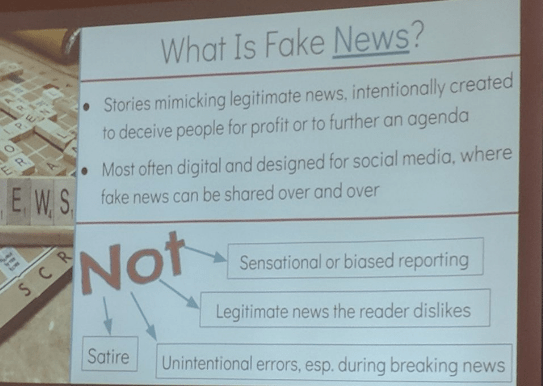
This is a topic I follow closely (See: Fake News a.k.a. Information Disorder reading list | “What is fake news?” informational handout (Creative Commons licensed) | Libraries in a Post-Truth World | Libraries in a Post-Truth World: The Conversation Continues), and the Springfield librarians’ presentation was very good, from their handout (a double-sided folded brochure called “Fake News? Real News? How to Tell Fact From Fake”) to their explanation of how they designed their workshop and what they’d do differently next time. They consulted two librarians and a journalism professor from UMass-Amherst as well as a local journalist, collected lots of resources for checking facts and photos (one I hadn’t heard of before was mediabiasfactcheck.com), suggested browser plug-ins (AdBlockPlus and Privacy Badger), and explained that in addition to checking a source’s bias, it’s necessary to check your own, especially if you’re having a strong emotional reaction to a headline.

Palmatier and Lipshires’ initial workshop was a lecture format followed by discussion, and they said that next time, they would offer a more hands-on approach in their computer lab. Another great idea they had was to have a copy of the day’s local paper for each workshop attendee, and then look at the local news online as well. They said that an in-person workshop makes the library and librarians seem approachable and legitimate, and as resources that can provide human connection in a meaningful way and make the world less confusing. (We all know we’re not going to change anyone’s mind on Facebook…)
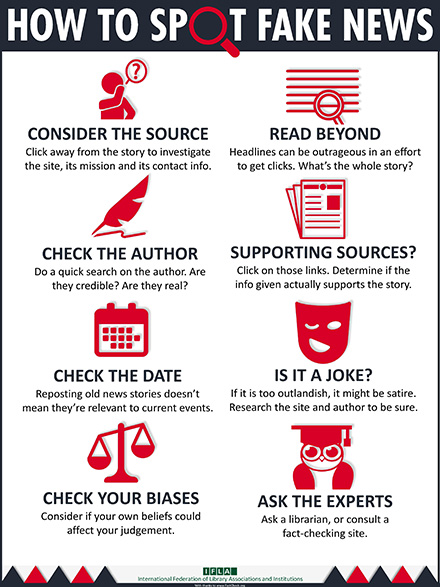
IFLA infographic: How to Spot Fake News

Photo of "What is fake news?" slide
Presenters’ slide: What is Fake News?

Monday, 4:30pm (slightly delayed due to fire alarm): Great Expectations: Leaping from High School to College, by Sarah Hunicke (Portsmouth High School), Mary C. MacDonald (University of Rhode Island), and Marianne Mirando (Westerly High School)

There is a gap between what college and university professors expect in terms of research skills and information literacy and the students’ abilities in these areas. Because this year’s high school senior is next year’s college freshman, these three presenters worked together to examine what high school librarians (and high school teachers) can do to bridge the gap. College faculty expect students to be able to: 1. determine information needed to answer questions, 2. recognize information bias, 2. distinguish scholarly vs. popular, 3. understand the publishing cycle.

“Where do our students struggle?” Practice, Process, Assessment. “Where do our instructors struggle?” Assignment design (format vs content), Process (time commitment), Additional burden (grading). The two high school librarians who were presenting wanted to help teachers integrate information literacy into their students’ assignments without greatly increasing their grading burden. They each brought an example assignment from their schools, and we split into groups to come up with ways to do just that. In one case, it was as simple as adding a section on research quality to the grading rubric, and having the students hand in an annotated bibliography early in the process. Of course, librarians can also model searching library databases and online, showing students how to broaden or narrow searches as needed, and how to use keywords instead of natural language; if students see librarians working through problems (like getting no results, or too many results), they feel more confident to work through the same problems themselves.

Some teachers may not seek librarians’ help or even accept it when it is offered; however, the idea of “coaching” is big in K-12 education right now, so one approach librarians can take is to ask teachers, “If you’re not happy with your students’ sources/bibliographies, what can we do about that?” and work together.

For more on this topic: Project Information Literacy | Stanford study, “Evaluating Information: The Cornerstone of Civic Online Reasoning”

And that was Monday! Stay tuned for Tuesday’s sessions: the ALA President’s “Big Ideas” speech, the First Amendment in libraries, Gregory Maguire, and the Ignite sessions (quick, 5-minute presentations on different topics).
Step Into Storytime, October 15

Last week the library was closed for Columbus Day/Indigenous Peoples’ Day, so there was no storytime, but this week we were back in action! We started with seven kids, mostly on the younger side of our range, but as usual, more trickled in throughout and we probably had more than 10 altogether.

IMG_20181015_094459
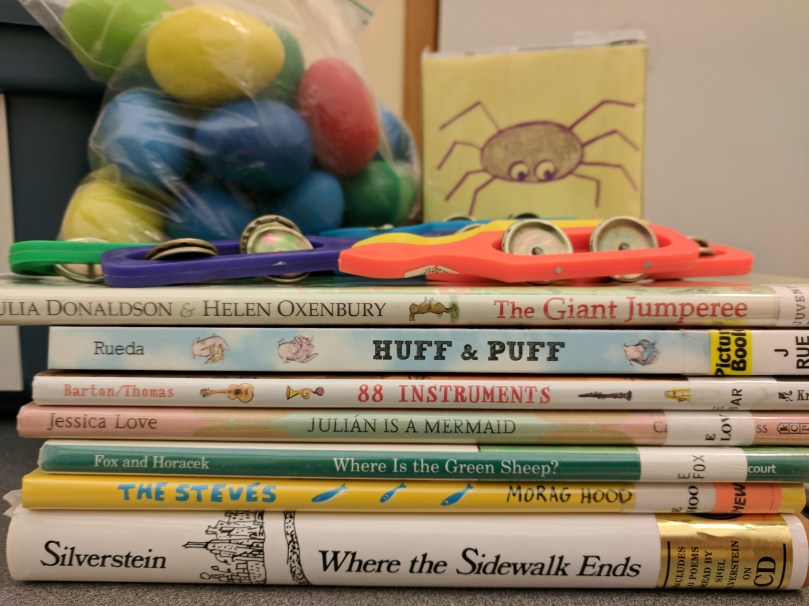
The Giant Jumperee, Huff & Puff, 88 Instruments, Julian is a Mermaid, Where is the Green Sheep?, The Steves, Where the Sidewalk Ends
  • Hello song with ASL from Jbrary
  • Name song (“____ is here today, let’s all clap our hands, ___ is here today”)
  • The Giant Jumperee by Julia Donaldson, illustrated by Helen Oxenbury: this one went over pretty well! It’s fun to read, and it’s a little long for some of the younger ones but it’s got a pattern they can follow.
  • Song cube: “I’m A Little Teapot”
  • Handed out scarves for Huff & Puff by Claudia Rueda. Blow on the scarves (or just wave them) when the wolf huffs and puffs! Collected scarves.
  • Song cube: “ABCs”
  • Let children come up and select shaker egg or bells for 88 Instruments by Chris Barton, illustrated by Louis Thomas. Practiced shaking and making noise, then being quiet with hands (and instruments) in laps. Collected instruments after the book (and one last good shake).
  • Song cube: “Zoom Zoom Zoom, We’re Going to the Moon”
  • Julian Is A Mermaid by Jessica Love. Explained that “abuela” means “grandmother” and “vamanos” means “let’s go,” otherwise let the pictures and text speak for themselves. This is the first time I’ve read this book in storytime and people seemed to really love the pictures.
  • Song cube: “The Itsy Bitsy Spider”
  • The Steves by Morag Hood. Such a funny book, adults and kids both responded well to the humor. Nice bright pictures work well for storytime also. Could do a tie-in craft with puffin coloring sheets or gluing pieces together. Or color puffins and then glue them onto one big sheet to make a puffin colony!
  • Song cube: “If You’re Happy and You Know It” (I usually end with “if you’re sleepy and you know it, give a yawn,” and stretch and sit back down; this is a good quieting technique)
  • Where the Sidewalk Ends by Shel Silverstein: “Hug-O-War,” “Early Bird,” and “Pancake?”
  • Goodbye song with ASL from Jbrary
  • Clean up colored sitting mats, put on music (“Shake Your Sillies Out,” “Wheels on the Bus,” “Skip to my Lou”), blow bubbles, dance!
IMG_20181015_094532
Backup selection: Bear Says Thanks, We Don’t Eat Our Classmates, Hello Hello, Monkey and Me, The Very Hungry Caterpillar, Wow! Said the Owl, One Little Blueberry
IMG_20181015_102814
The final lineup

Step Into Storytime, October 1

Today’s storytime was a big success! The weather (gray and threatening rain) helped bring people in, and Lots of Dots with a tie-in craft – gluing colored paper dots to a huge piece of butcher paper with glue sticks – was a huge hit. Hello Hello was a great book to start with, too – I forgot how many excellent opportunities it affords for interaction (“Hello Tongue, Ears, Hands, and Nose”), and it has a built-in quiet pause (“Hello Quiet”). For “Hello Bend” I demonstrated how to wiggle like an octopus, and at “Hello Neighbor” I asked the kids to turn and say hello to a neighbor.

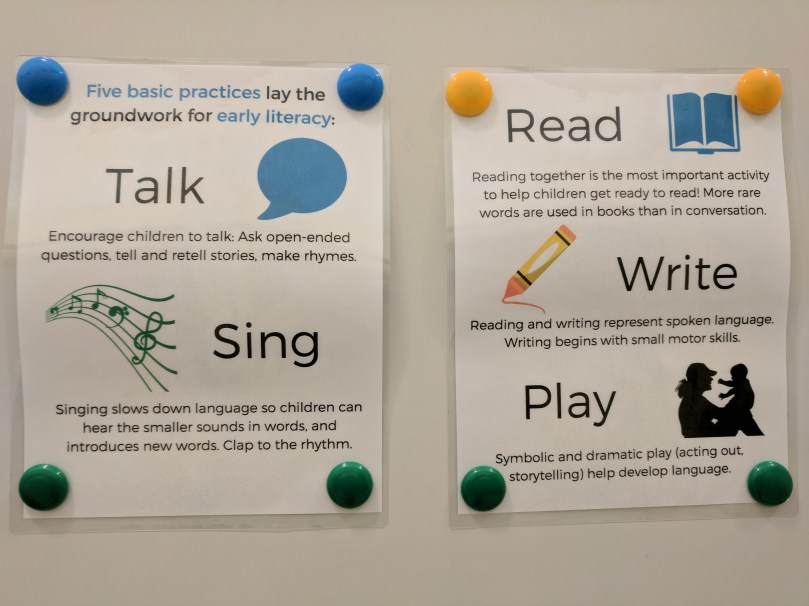
Last week I made some early literacy signs to hang up along with a Step Into Storytime sign; I laminated them so they’ll be reusable. (I made them in Canva; if you’d like copies, I’m happy to share the PDF.) During “Itsy-Bitsy Spider” I mentioned that fingerplay helps develop fine motor skills.

IMG_20181001_095146

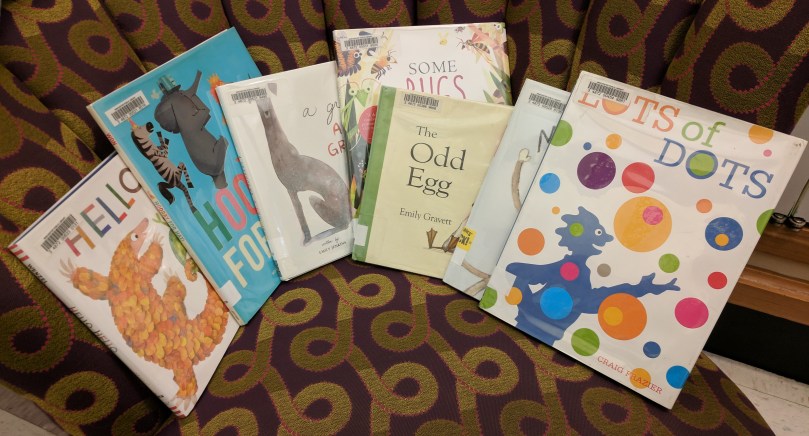
Book covers
Hello Hello, Hooray for Hat, A Greyhound A Groundhog, Some Bugs, The Odd Egg, Monkey and Me, Lots of Dots
  • Welcome and announcements
  • Hello song with ASL
  • Name song (there were about 10-11 kids to start, some more trickled in later)
  • Passed out scarves right away for Hello Hello by Brendan Wenzel – wave the scarves hello! Keep them for the song cube.
  • Song cube: “ABCs”
  • Hooray for Hat by Brian Won (lots of kids caught on to the pattern of the story and said “Hooray!” at the appropriate times)
  • Song cube: “Zoom Zoom Zoom, We’re Going to the Moon”
  • A Greyhound, A Groundhog by Emily Gravett and Chris Appelhans (I brought a little stuffed greyhound from home and let the kids come pet it after the story)
  • Some Bugs by Angela DiTerlizzi and Brendan Wenzel (I pointed out that it says “words by” and “bugs by,” which I love. “Author” and “illustrator” aren’t as meaningful for little kids; “wrote the words” and “drew the pictures” are easier to understand)
  • Song cube: “Itsy-Bitsy Spider” and “I’m A Little Teapot” (it landed against my chair, so both sides were showing)
  • The Odd Egg by Emily Gravett (with a big alligator SNAP! with two arms at the end)
  • Monkey and Me by Emily Gravett (this is sing-song-y enough that I did it with all of us standing up and doing the animal imitations – waddling penguins, elephant trunks, etc.)
  • Song cube: “I’m A Little Teapot” again
  • Lots of Dots by Craig Frazier (some kids found “dots” – buttons – on their clothes when I asked, and one found “dots” in the flower print on her leggings)
  • Goodbye song with ASL
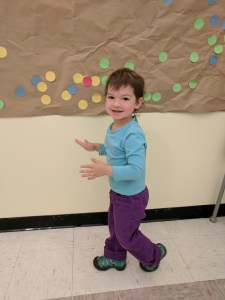
  • Craft: I taped a long piece of butcher paper to the floor and scattered colored construction paper dots on it for kids to glue with glue sticks. They LOVED it. Definitely something to do again in a couple weeks. When everyone was done I taped the paper up on the wall.
IMG_20181001_105617
This is my kid. No photo release form required.

Step Into Storytime, September 24

Today we had a big crowd at storytime! It was a gray fall day, so maybe the weather urged people inside, or perhaps they’re just getting back into the rhythm of the season (storytimes are a little more sporadic in the summer because of all the other programs we do). There were at least 15 kids in the 2-3 age range, plus assorted siblings and several late arrivals. In the beginning, we had more than ten but I did the name song anyway – it’s a great way to learn names and start building individual connections.

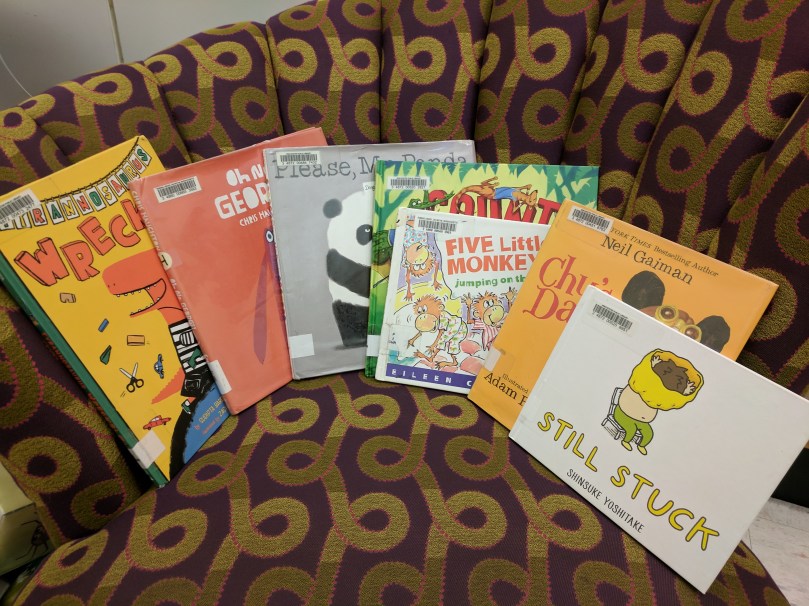
Books face out on storytime chair
Tyrannosaurus Wrecks!, Oh No George!, Please Mr. Panda, Count the Monkeys, Five Little Monkeys, Chu’s Day, Still Stuck
  • “Hello Friends” song with ASL
  • Name song (“Hello ____, hello ___, hello ____, we’re glad you came today”)
  • Handed out shaker eggs for Tyrannosaurus Wrecks! by Sudipta Bardhan-Quallen, illustrated by Zachariah Ohora
  • Kept the shaker eggs for Oh No, George! by Chris Haughton. Collected shaker eggs after.
  • Song cube: ABC song
  • Please, Mr. Panda by Steve Antony
  • Song cube: “If You’re Happy and You Know It”
  • Five Little Monkeys Jumping On the Bed by Eileen Christelow (jumping encouraged!)
  • Count the Monkeys by Mac Barnett, illustrated by Kevin Cornell
  • Song cube: “I Had A Little Turtle”
  • Scarves (by audience request) for Still Stuck by Shinsuke Yoshitake. Collected scarves.
  • Goodbye song with ASL. Put away colored mats. Dance party with bubbles! (We have an old ipod loaded up with Raffi and Disney versions of classic kid music. And I brought my own bubbles from home because I am devoted to Pustefix bubbles.)

I skipped the flannel board and craft this week, but for next week I am thinking of a craft with paper dots and glue to go with Lots of Dots, and maybe The Very Hungry Caterpillar flannel board again…if I can make a butterfly before next Monday!

Step Into Storytime, September 17

There was a smaller group at storytime today, but that allowed me to do the name song (“____ is here today, ____ is here today, let’s all clap our hands, ____ is here today”) after our usual “Hello friends” song. If the group is bigger than ten or so, I don’t do it, but because we only had seven or eight today, we did. I think it’s a good way to start because all the kids feel included, and it helps me learn the names, so I can address kids by name throughout the storytime.

When we use the song cube, or sing a new song, I make sure we do it twice, because young brains are hungry for patterns and repetition.

IMG_20180917_102852
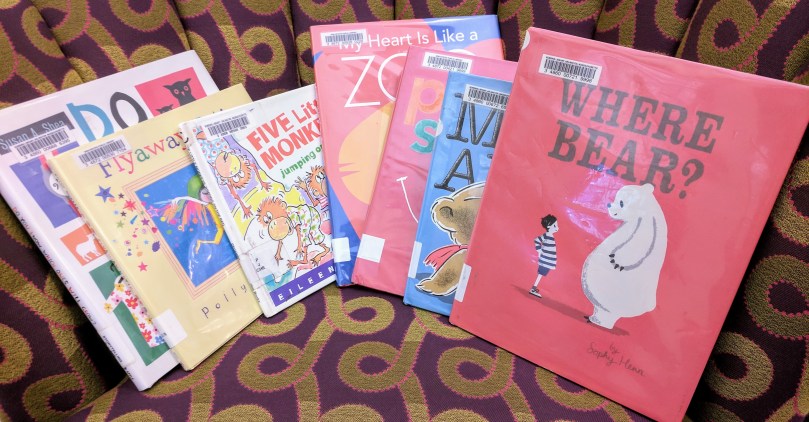
Do You Know Which Ones Will Grow?, Flyaway Katie, Five Little Monkeys, My Heart Is Like A Zoo, Perfect Square, Make A Wish Bear, Where Bear?
  • Welcome: Glad you’re here, please keep the doors clear, take snacks outside, feel free to come and go as needed.
  • “Hello Friends” song with ASL
  • Name song
  • Book: Do You Know Which Ones Will Grow? by Susan Shea
  • Song cube: “I Had A Little Turtle”
  • Hand out scarves
  • Book: Flyaway Katie by Polly Dunbar
  • Book: Five Little Monkeys by Eileen Christelow
  • Collect scarves
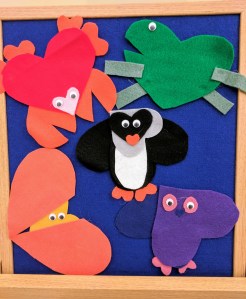
  • Book: My Heart Is Like A Zoo by Michael Hall (with flannel, but not interactive)IMG_20180917_094132
  • Song and activity: “Shake Your Sillies Out” with shaker eggs
  • Song cube: “I’m A Little Teapot”
  • Book: Perfect Square by Michael Hall
  • Song cube: “Itsy-Bitsy Spider”
  • Book: Make A Wish Bear by Greg Foley
  • Song: “Twinkle Twinkle Little Star”
  • Book: Where, Bear? by Sophy Henn
  • Goodbye song with ASL
  • Activity: coloring with crayons on a big piece of butcher paper (one bowl of crayons at each corner of the paper)

See last week’s Step Into Storytime here.

Step Into Storytime, September 10

Today kicks off our fall series of storytime programs, and mine is “Step Into Storytime” for two- and three-year olds (though siblings are allowed to join, and we’re pretty lenient about ages; the come-and-go-as-necessary philosophy enables kids and their grown-ups to leave if they’re having a tough time and come back in when they’re ready, or next time).

We started off, as usual, with an introduction and a few guidelines (keep doors clear, take snacks outside), then our welcome song: “Hello friends” with sign language. I sang it through once with the motions, then showed each sign (should have done that first!), then we sang it through again, and lots of the kids and adults participated. Next:

  • Song cube: “Zoom zoom zoom, we’re going to the moon” (standing, twice)
  • Book: Fall Is Not Easy by Marty Kelley
  • Activity: Adding leaves to the tree on the flannel board. I think every kid participated and we had 16 leaves!
  • Song cube: “I had a little turtle”
  • Book: Hooray for Hat by Brian Won (“Show me your grumpy faces!”)
  • Song cube: “ABCs”
  • Book: The Very Hungry Caterpillar by Eric CarleIMG_20180910_095130
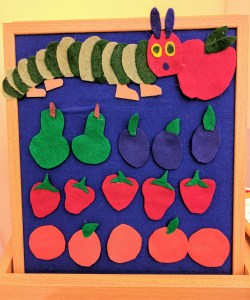
  • Activity: Very Hungry Caterpillar flannel board. At the appropriate point in the story, a kid would come up and remove the fruit the caterpillar ate that day (apple, pears, plums, strawberries, oranges). One kid who wanted to participate didn’t get a chance to take fruit off the board so I let her take the caterpillar off. And note to self: I need to make a butterfly!
  • Song cube: “The Itsy-Bitsy Spider” (standing, twice)
  • Book: Chu’s Day by Neil Gaiman and Adam Rex (kids loved the big sneeze!)
  • Song/activity: I passed out shaker eggs and we stood to sing “Shake Your Sillies Out.” Kids brought the eggs back to the front and put them in the bag at the end of the song.
  • Book: The Duckling Gets A Cookie by Mo Willems (I put my flannel Pigeon and Duckling up on the flannel board but we didn’t do anything with them)
  • Song: “Twinkle Twinkle Little Star” to calm a slightly squirrelly crowd. I meant to do the “Goodbye Friends” song with ASL like usual but I forgot!
  • Activity: Coloring with crayons. I traced one of the pages from Blue Chameleon and made copies for kids to color however they liked. We have a giant bin of crayons and they color right on the floor – next time I would scoop a few smaller bowls of crayons and spread them out around the room. People were great about putting the crayons back when they were finished!

Overall, this was a great storytime. Hooray for Hat seemed to be a favorite, several kids recognized The Very Hungry Caterpillar, and I think the Mo Willems book might have been more successful earlier in the lineup.

We have a whiteboard along one wall, and after “Welcome to Step Into Storytime!” I had written the five activities that support early learning: Talk, Sing, Read, Write, Play. Next time I want to incorporate more early literacy information into the storytime for caregivers, explaining in a sentence here and there why I’m doing what I’m doing (why sing songs twice, for example, and why do fingerplay or sign language) to support that early learning.


Summer Storytime II

My second all-ages summer storytime was this morning, and it was a full house! I didn’t get an exact headcount because people came and went, but the room was full, and I think I put out at least 30 mats, and all were in use. Like last time, I started with a welcome and a reminder to keep doorways clear so people could come and go. I also explained I would be placing the books I read during storytime to the side of my chair and anyone was welcome to check them out afterward.

  • Song: “Hello” song with American Sign Language (ASL) from Jbrary. Demonstrated the signs first and invited everyone to do the signs and/or sing along; sang it twice.
  • Book: There Might Be Lobsters by Carolyn Crimi, illustrated by Laurel Molk. This is one of my absolute favorites, and I brought along a stuffed lobster to show every time the line “…there might be lobsters” came up in the story. Some kids began shouting along, which was just what I’d hoped.
  • Song cube: I made a song cube with pictures on each of the six sides that correspond to a simple song; the first one was “If you’re happy and you know it, clap your hands.” I tried to get a different song to come up each time…sometimes a little manipulation was required.
  • Book: Oh No, George! by Chris Haughton. Some of the older kids had good guesses about what George would do.
  • Song cube: “I Had A Little Turtle”
  • Prop/toy: Hand out colored scarves (the Golden Rule of Storytime: you get what you get and you don’t get upset!). I enlisted three of the older kids to help pass out scarves, which we keep stored in empty tissue boxes.
  • Song: “Shake Your Sillies Out” waving scarves around
  • Book: Huff & Puff by Claudia Rueda. We “huffed and puffed” or waved the scarves at the appropriate times during the story. All of the kids were super into it! Collected the scarves afterward, with helpers.
  • Book: Bark, George by Jules Feiffer – another book about a dog named George!
  • Song cube: “Itsy Bitsy Spider” (twice)
  • Book: They All Saw A Cat by Brendan Wenzel (only fair to read a cat book after two dog books)
  • Song cube: “I’m A Little Teapot” (twice)
  • Book: Still Stuck by Shinsuke Yoshitake. Most kids can relate to this one, and the grownups appreciated the humor too – I heard a few chuckles.
  • Song cube: “Zoom Zoom Zoom, We’re Going to the Moon”
  • Book: One Little Blueberry by Tammy Salzano, illustrated by Kat Whelan
  • Book: There’s A Bear on My Chair by Ross Collins
  • Song: “Goodbye” song with ASL from Jbrary. Same tune as the “Hello” song, taught the signs first, repeated it twice.
  • Thanks for coming, time to put mats away so we can…
  • Dance to music (“Banana Bread” by Caspar Babypants) and bubbles! Bubbles are always a hit.

Summer Storytime


Today was my very first official library storytime! It was an “all ages” summer storytime, so I brought more books than I was planning to read, so that I could be flexible depending on who showed up. There was a good mix, from infants to about four years old. I didn’t get an exact headcount, but I think there were at least 15-20 kids, with several trailing in throughout the storytime (it’s supposed to be a 45-minute program, though we ended about ten minutes early).

Here’s what we did, with a huge hat tip to my fellow (and far more experienced) children’s librarians, Lauren and Ms. B:

  • Welcome, thanks for coming, introduced self, mentioned a few ground rules (leave the doorways clear, take snacks outside)
  • Song: “Hello” song with American Sign Language (ASL) from Jbrary. Demonstrated the signs first and invited everyone to do the signs and/or sing along; sang it twice.
  • Book: Hello Hello by Brendan Wenzel
  • Song cube: I made a song cube with pictures on each of the six sides that correspond to a simple song; the first one was “If you’re happy and you know it, clap your hands”
  • Book: Roller Coaster by Marla Frazee (I like to rotate the book 360 on the “it goes all the way around” page)
  • Song cube: “I Had A Little Turtle”
  • Prop/toy: Hand out colored scarves (the Golden Rule of Storytime: you get what you get and you don’t get upset!). I enlisted two of the older kids to help pass out scarves, which we keep stored in empty tissue boxes.
  • Book: Huff & Puff by Claudia Rueda. We “huffed and puffed” or waved the scarves at the appropriate times during the story. All of the kids were super into it! Collected the scarves afterward.
  • Book: Tickle Monster by Edouard Manceau
  • Activity: My husband made flannel pieces for our own Tickle Monster; I set them up before storytime, and as I read each page and a piece of Tickle Monster disappeared, I took off the corresponding pieces. With a group of all older kids I would have let them come up and take the pieces off, but because we had a lot of littles and this was my first time, I did it myself.
  • Song cube: “I’m A Little Teapot”
  • Prop/toy: Hand out shaker eggs. Shake shake shake…stop!
  • Book: Tyrannosaurus Wrecks by Sudipta Bardhan-Quallen. Kids shook their eggs every time Tyrannosaurus “WRECKS!” (And sometimes in between.)
  • Song: “Shake your sillies out” (with the eggs). Collected eggs.
  • Book: Please Mr. Panda by Steve Antony
  • Okay, we have time for one more song cube and one more book…
  • Song cube: “Zoom Zoom Zoom, We’re Going to the Moon”
  • Book: Some Bugs by Angela DiTerlizzi
  • Song: “Goodbye” song with ASL from Jbrary. Same tune as the “Hello” song, taught the signs first, repeated it twice.
  • Music and dance and bubbles! “You’re Welcome” from Moana, bubbles. The kids were pretty into it, especially the bubbles. Some trickled out right away, others stayed longer. I had put out all of the books I read during storytime and invited people to check them out – several were taken!
  • Another thank you for coming, and a reminder to check the schedule for our other summer programs.

I’m already looking forward to my next summer storytime in August! What are your favorite read-aloud books? Favorite tie-in activities to do with scarves, shaker eggs, puppets, etc.?


2018 Mid-Year Reading Wrap-Up

It’s almost time for the mid-year wrap-up of books I’ve read and liked best so far this year. There’s still plenty of June left, but I’m preparing for a book talk later this month, so it seemed like a good time to go over the past five months of reading in my LibraryThing catalog. This isn’t BuzzFeed so I won’t be doing a “Top [odd number] Books You MUST Read RIGHT THIS SECOND” style of list, but I have separated them by category. As always, these are books I’ve read in this time frame; some are recently published, but others are older.
There are a lot of picture books, because we read a lot of picture books (and, at about 32 pages each, you can read many more of those – even with repetition – in the same amount of time it takes to read an adult book). So we’ll start there, and if you have no interest in picture books, then skip ahead!

Cover image of A Different PondPicture Books
Jabari Jumps by Gaia Cornwall
There Might Be Lobsters by Carolyn Crimi (illus. Laurel Molk)
The Way I Feel by Janan Cain
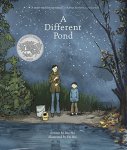
A Different Pond by Bao Phi (illus. Thi Bui)
Toys Meet Snow by Emily Jenkins (illus. Paul O. Zelinsky)
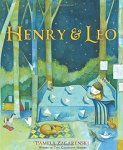
Henry & Leo by Pamela Zagarenski
Sleep Like A Tiger by Mary Logue (illus. Pamela Zagarenski)
Flyaway Katie by Polly Dunbar
Cover image of Henry & LeoThe Little Red Hen and the Passover Matzah by Leslie Kimmelman
88 Instruments by Chris Barton
More More More Said the Baby by Vera B. Williams
Perfect Square by Michael Hall
Miss Brooks Loves Books (And I Don’t) by Barbara Bottner
Flora and the Flamingo by Molly Idle

Fiction
Interestingly, all of these fall under the umbrella of “speculative fiction.”
Stories of Your Life and Others by Ted Chiang
Cover of StarlingsAn Unkindness of Ghosts by Rivers Solomon
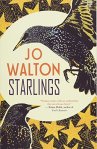
Starlings by Jo Walton
Dreadful Young Ladies and Other Stories by Kelly Barnhill (esp. the novella “The Unlicensed Magician”).

Nonfiction
Daemon Voices: Essays on Storytelling by Philip Pullman
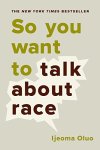
So You Want to Talk About Race by Ijeoma Oluo
Cover of So You Want to Talk About RaceWhen They Call You A Terrorist by Patrisse Khan-Cullors and asha bandele
Cookbooks
Dinner by Melissa Clark: lots of good ideas to follow or riff on, all based on the idea of a single dish being a whole meal (though that single dish usually has many components)

Middle Grade & Young Adult
Stella by Starlight and Out of My Mind by Sharon Draper
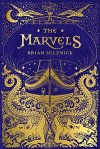
The Marvels by Brian Selznick
Cover image of The MarvelsThe Boy From Tomorrow by Camille P. DeAngelis

Eliza and Her Monsters by Francesca Zappia
Speak by Laurie Halse Anderson & Emily Carroll (graphic novel)
The Hazel Wood by Melissa Albert
And this batch of novels, each of which is satisfying if you’re looking for contemporary realistic fiction with some romance and diversity: I Have Lost My Way by Gayle Forman; The Earth, My Butt, and Other Big Round Things by Carolyn Mackler; When Dimple Met Rishi by Sandhya Menon; Puddin‘ by Julie Murphy; You Bring the Distant Near by Mitali Perkins

Looking ahead to the second half of the year, I’m excited to read new novels by Kate Atkinson (Transcription), Rebecca Makkai (The Great Believers), Angie Thomas (On the Come Up), Hank Green (An Absolutely Remarkable Thing), and Therese Anne Fowler (A Well-Behaved Woman). Looking back at a to-read list from November 2017, there are still a few titles there I haven’t gotten to, and more coming out all the time….What books are you looking forward to reading?

PLA, day one: You are only one energy stream

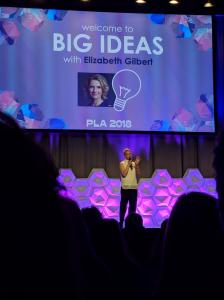
BigIdeasGilbert
Elizabeth Gilbert, photo credit Twitter user @brendageeker

The first event of the day on Thursday was the “Big Ideas” talk with author Elizabeth Gilbert. Gilbert is a polished speaker, and an inspiring one. Her theme for this talk was about focus. She told the audience about an encounter with a woman she admired when she was in her mid-20s; the woman, an artist, asked her, “What are you willing to give up to have the life you keep pretending you want?” Gilbert learned she needed to say no to things, even things she wanted to do, in order to shine “the spotlight of her attention” on what was most important.

“You are only one energy stream – what are you going to use it for? …The question is one of priorities – knowing what matters to you, and what does not matter to you.” Sometimes it takes a crisis: “A crisis forces a reckoning about who you are and what you care about.” You have to determine your priorities; set boundaries; and the third thing, Gilbert said, is mysticism – the idea that “there’s something going on her beyond what we can see…beyond the rational, empirical, logical.” At this stage in her life, Gilbert said, she is in search of teachers who are relaxed. Everyone is stressed, worried, anxious, so when she meets someone who is relaxed, she wonders how they got to be so at ease, and what she can learn from them. “You cannot be relaxed if you don’t know what matters to you.” Gilbert closed with words familiar to readers of Eat, Pray, Love: “Everything’s gonna be all right.”

Screen Shot 2018-03-27 at 8.11.18 PM

ECRR-logo-4CAfter Gilbert’s talk, it was into the exhibit hall to hear a quick presentation on Every Child Ready to Read: Play in the Library” from librarians from the Carroll County Public Library system in Maryland. Every Child Ready to Read consists of five simple practices that parents, caregivers, and educators can do with young children to increase early literacy skills: talking, singing, reading, writing, and playing. Skills developed in play include language, creativity, problem-solving, and social skills. The CCPL librarians described an interaction with two young children, a librarian, and a pop-up toy that illustrated all of these: the librarian helped the children take turns and introduced new vocabulary, while the children figured out how to make the animals pop up and go back down. Storytimes offer an opportunity for structured play as well, like using dry paintbrushes along with I Ain’t Gonna Paint No More, or scarves to blow in the wind with Mouse’s First Spring.

CCPL offers a 12-hour training course for educators on using play across the seven content areas of the curriculum; storytimes, playgroups, and “baby Rembrandt”; puppet theaters and Play and Learn centers in each of their libraries; and Make & Learn programming kits for use in the library and with library partners (e.g. daycares, preschools). Play and Learn centers can be set up in any space relatively inexpensively; remember to reserve one drawer for “Sanitize me!” (items that have gone into kids’ mouths). A final tip from CCPL: When you have the opportunity to renovate or redesign your space, go timeless: avoid typefaces, and try to bring the outside in (trees, trains, etc.).

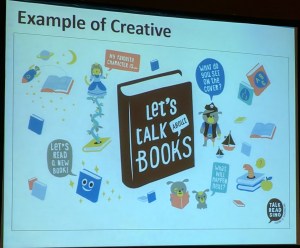
Slide: Example of Creative
A slide from Too Small to Fail’s presentation: “Let’s Talk Books”

The morning session I chose also had to do with childhood development and early literacy efforts: Jane Park Woo of Too Small to Fail and Maricela Leon Barrera of the San Francisco Public Library presented “Talking is Teaching: Opportunities for Increasing Early Brain and Language Development.” Too Small To Fail’s goal is to “make small moments big,” and “to promote the importance of early brain and language development and to empower parents with tools to talk, read, and sing with their young children from birth” – work that librarians (“trusted messengers”) are already doing, making the library a perfect partner.

The SFPL already offers storytimes, Play to Learn areas at all locations, ECRR workshops, “Big SF Playdates,” an “Early Literacy Buffet” (for educators), and community partnerships. Their message to parents and caregivers is “Talk to/with your kids! Sing with them! If you’re doing that, you’re on the right track, they’re learning.” This message is generally well received.

IMG_20180322_145041
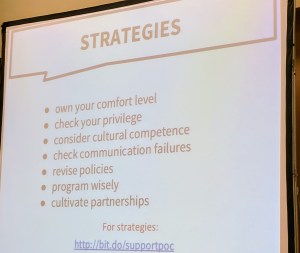
A slide from “Push Comes to Shove”

After lunch with some other folks from Massachusetts, I went to my first afternoon program, “Push Comes to Shove: Supporting Patrons of Color in Your Institution,” presented by Kristyn Caragher and Tracy Drake of the Chicago Public Library and Aisha Conner-Gaten of Loyola Marymount University.

“You have a lot of power and privilege as an information worker today,” said Conner-Gaten. Ask yourself, “How do I leverage my power to help this person?” Racism lurks in libraries: in policies, one-on-one interactions, and in programming.

  • White activists: Listen to understand, not respond. Make mistakes, be uncomfortable, apologize, educate yourself.
  • Ask: Are your policies a barrier? When were they written, why were they implemented, how often are they revisited? When you have to say no, does it make sense? Particular policies to revisit are those around sleeping, food and drink, and identification needed to get a library card.
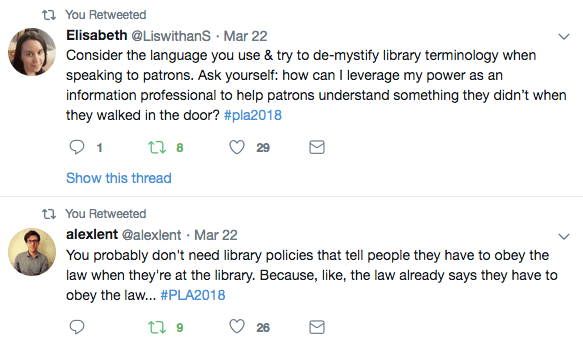
  • Librarians are fond of jargon, but many of our abbreviations (e.g. ILL) aren’t necessarily familiar to patrons. “De-mystify and de-class the library” by reducing your use of library jargon, or making sure you explain yourself in interactions where a patron seems confused.
  • If security or police officers work in your library building, they should be familiar with (and follow!) the library’s policies. Often it is better if a librarian handles the face-to-face interactions with patrons (but leave it to security if the patron is violent). Small changes make a big impact.
  • Harness community-driven energy and effort, especially with youth. Develop engaging collaborations with students. When looking for partners, check to see if they are coming from within the community or outside it.
  • For those in a position to hire, hire more diverse staff. Give serious consideration to out-of-state candidates, and advertise in other places than library job boards (like indeed.com) if the position doesn’t require an MLS.

The presenters supplied a handout with framework terminology (oppression, anti-racism, collective liberation, and social justice) and questions for reflection (Who are you? Who is your community? Who do you serve? Who is doing good work right now at your institution? In your community? What are you doing? What are you going to do? Who are your allies/partners? What resources do you need?).

Screen Shot 2018-03-27 at 8.11.52 PM

IMG_20180322_154946
Nametags as icebreakers

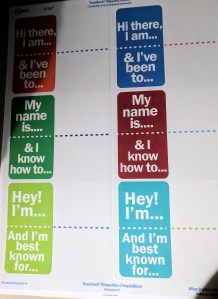
For the final program of the day, I chose to go to “Lost in the Library? Never Again with User-Centered Design,” presented by Bridget Quinn-Carey of Hartford Public Library, Margaret Sullivan of Margaret Sullivan Studio, and Maxine Bleiweis of Maxine Bleiweis and Associates, LLC. The audience was encouraged to use a nametag (see photo at right), though it wasn’t an interactive session.

Quinn-Carey started by defining “design thinking.” Design thinking is: service design, human-centered design, user-centered design, user experience. (See also: http://designthinkingforlibraries.com/.) She talked about eliminating barriers to use, like offering online payment for fines (or getting rid of fines!), having an open holds shelf, eliminating computer sign-ups. Consider physical barriers, service barriers, and language barriers too. Focus on customer-centered services, library trends, community values and needs; foster and cultivate staff and public engagement. Think about your space in a new way: “The library is a place for…” “The children’s room is a place for…”

Screen Shot 2018-03-27 at 8.11.06 PM

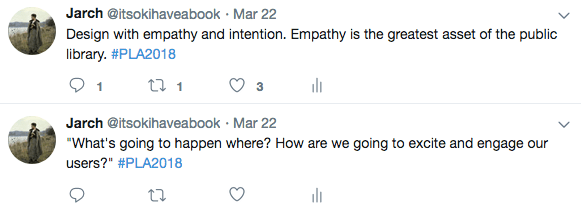
Sullivan asked, “What kind of community do you want to create? What kind of library do you want to create?” She said to foster learning outcomes, design with empathy and intention: “Empathy is the greatest asset of the public library.” Ask, “Who are we designing this for and why? How will the space support the activities and programs to foster the feelings and outcomes that we want for our community of users?” She advised going on “service safaris” to your favorite “third places” to examine how they achieve the effects you may want to reproduce in the library. Also, ask your patrons what they love about the library already!

For her part, Bleweis talked about the importance of staff buy-in. With current staff, identify the leaders and watch for opportunities. When hiring new staff, restructure the interview process to make it experiential: have them interact with patrons, have them show you or teach you something. Throughout the library, identify the “points of confusion” and put help there. Instead of documenting questions, document interactions. At programs, overstaff them if you can (ha!) and give people roles; talk to early arrivals and follow up if necessary. (It’s much easier to initiate conversations before a program if you aren’t worrying about if the presenter will show up, if the AV will work, the temperature in the room, etc.).

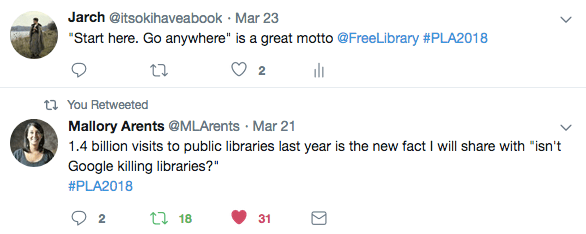
I wasn’t on Twitter as much as I usually am during conferences, and there wasn’t a huge Twitter presence (unless people were using a different hashtag?) but I sent out a few quotes from the sessions I attended, and enjoyed others’ quotes and comments from other sessions, so I’ve included some of those here.

Screen Shot 2018-03-27 at 8.12.21 PM

And that was my first full day of PLA! Stay tuned for more.