SCBWI Winter Conference follow-up

Because I am not in possession of a Time Turner like Hermione, I couldn’t attend all of the sessions of SCBWI during the weekend, but fortunately – yet another silver lining of virtual conferences! – the recordings of all of the sessions are available to attendees for the next month. Here are my notes on the three keynotes and panels that I didn’t cover last weekend (and here are my notes on the sessions I attended last weekend).

Genre Breakout Sessions: Two Editors Discuss What’s Hot, What’s Not, What They’re Acquiring and the Rules of the Road . Picture Books: Elizabeth (Liz) Bicknell (editorial director at Candlewick), Joanna Cárdenas (senior editor at Kokila, imprint of Penguin Young Readers) and Andrea Welch (executive editor at Beach Lane Books, S&S)

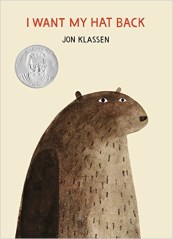
I Want My Hat Back

  • Liz Bicknell is drawn to stories about (in)justice, nature, and stories that show human foibles in a humorous way. “In all of these subject areas, I hope that the storytelling and the art will be compelling and arresting so that the underlying messages will be absorbed…I hope that readers will grow up to love the world and to embrace all those who inhabit it.”
    • Fun fact: Liz said that she was the only editor who didn’t want to change the ending of Jon Klassen’s I Want My Hat Back, which she acquired for Candlewick. Can you imagine it with a different ending?! And that is why you need the right editor for the right book.
  • Joanna Cárdenas said that Kokila’s mission is “centering stories from the margins” to “more accurately reflect the world that we live in and we add depth to the way that readers see the world and their place in it.” They publish “Books that make an impact…Books for children and teens across genres and formats… [Books that] entertain and inspire. [Books that] push against harmful, entrenched narratives.”
  • Andrea Welch is looking for books that “help children of all backgrounds see the world in new and exciting ways.” She said, “When I’m reading new projects, I always pay attention to my gut reaction primarily.” She asks, Am I intrigued by a story or a concept or a topic? Does the manuscript feel different or unusual in some way? Does the writing/voice capture me? Do I find myself wanting to read the story aloud? Do I feel excited to sit down and share the work with a child? Are artist/illustration possibilities popping into my head? Then, does market/audience exist for this book? Can I get the rest of my team excited about it?
  • Andrea said that in her role as an editor, “Those conversations [with author/illustrators] move a project forward. I have a vision for each book, but ultimately my job as an editor is to help author/illustrator tell the story they set out to tell in the most impactful way.”
  • Joanna said, “Great picture books are entire worlds captured in 32 or 40 pages…really good picture books help a young reader orient themselves in space…and in time.”
  • Joanna also said that rather than try to identify or follow trends (it takes so long to make a picture book that trends aren’t as much of a thing in that format), “What is helpful is for creators to read current picture books. Read every year things that are coming out… Be aware of what’s coming out, who are your contemporaries… Understand how your work might fit somewhere in there. Read, read, read, read, read.”
  • For illustrators, Joanna is looking for someone who can tell a whole story in one picture. “Something that makes me ask questions not because I’m confused but because I’m intrigued.”
  • For authors, Andrea is looking for that feeling of “the author has taken my hand and led me into the story, the story is executed in such a way that I’m on board and in from the beginning.” It can be a strong voice, an unusual topic – that feeling of being swept up by a manuscript. What doesn’t work is “when I feel like I’m just dropped into action right away,” there’s dialogue between characters I don’t know yet. “I like to be led and not just thrown in.”
  • Joanna’s advice: “Creating stories for young readers is a huge responsibility. Picture books are an introduction to the world, to interpersonal relationships, and how things work.”
  • Liz’s advice for writers: “Take some picture books that you really admire and reverse-engineer them – type up the text of that picture book.” You’ll get a sense of length, pacing, page turns, and what illustration brings to the story that isn’t in the text.

Keynote Address: Looking Back to Move Forward, Tami Charles

  • “Life is like an arrow: sometimes you get pulled back only to get launched into something beautiful.” (Quote unattributed)Tami Charles author photo
  • Growing up, “I never really saw myself, my friends, or my community” reflected in literature. Now, we have Jacqueline Woodson, Carole Boston Weatherford, Meg Medina, and many more – “I would have loved to have had their books as a child….REPRESENTATION IS EVERYTHING….I wanted to add my voice.”
  • Over the years, “My writing grew stronger, and my rejections grew nicer.”
  • “The word ‘no’ has empowered me, broken me, and put me back together again. The word ‘no’ holds power, but on the flip side, the word ‘yes’ holds beauty. And somewhere in the middle of that, there exists hope. And it’s that hope that keeps us going…”
  • “Collectively, this work that we do is bigger than us.”
  • “Celebrate the yeses, learn from the nos. Allow them both to launch you…”
  • Re: writer’s block after rejection: “There’s a beauty in pausing. If you’re not writing, there’s a reason for that. And the reason is probably that you need to be reading, you need to be studying.” Especially read the genre that you want to write in. “I write as widely as I read. And I read a lot.”
  • “Don’t give up on the stories that you shelve.” May be wrong format or wrong time.
  • “In this journey…success is going to look different….Your path is your own. Don’t look at what someone else is doing to compare how you’re doing in your own journey.”

Mock Acquisition Meeting: Wendy Loggia and Delacorte Publishing Team

Delacorte is an imprint of Random House Children’s, with a focus on MG and YA fiction (“where commercial + literary intersect”). There are nine members on the Delacorte editorial team; four of them, including Wendy Loggia, were on the panel (Hannah Hill, associate editor; Ali Romig, editorial assistant; and Lydia Gregovic, editorial assistant), along with Kelly McGauleyfrom marketing, Adrienne Weintraub from school and library marketing, Jillian Vandall from publicity, and Kim Wrubel from subsidiary (sub) rights. Delacorte is invested in their authors in the long term; “we’re acquiring authors, not books.” Looking for books that reflect our (editors’) personal taste and that have hungry readers in the marketplace. Wendy said, “Every acquisition is unique” – editors discuss, and loop in other departments as necessary. In this mock meeting, they discussed five titles, and revealed whether they acquired them or not, and why. It was a fascinating fly-on-the-wall experience, hearing about appeal factors and other considerations, like summer reading, audiobook rights, school library and classroom potential, and the Scholastic book fair.

  • Reasons to say YES to a manuscript: authentic emotions, relatable, discussion-worthy themes, strong commercial voice, good hook(s), fresh, emotionally resonant, standout quality/breakout potential.
  • Reasons to say YES to an author: positive, clear communicator, engaged in their community, familiar with genre tropes, flexible and open to change, social media presence.
  • Reasons to say NO to an author/manuscript: not strong or unique enough, a glut of that type of book in the marketplace, point of sale (POS) numbers on previous similar titles not encouraging; if the author had an opportunity to revise and the revision isn’t as strong as the editors had hoped. (It’s hard to break someone out if they’re writing the same kind of book for a different publisher; “Maybe consider writing something completely different and give yourself a fresh start.”) If an editor decides not to make an offer, in most cases, “We give feedback to the agent/author, information about what worked for us and what didn’t.”

Did you attend SCBWI Winter Conference? What were your most important takeaways?

SCBWI Winter Conference

The Society of Children’s Book Writers and Illustrators (SCBWI) is usually held in New York, but this year, of course, it’s virtual. Ordinarily, there are about 1,000 attendees, but the online format hosted 4,000 attendees – many of whom were illustrators who contributed to the Virtual Portfolio Showcase, which is full of incredible art! (Not sure how long that link will be live.)

This is my first time attending (#SCBWIBIRD, per Jolie Stekly) and in many ways it’s similar to the many library conferences I’ve attended (except: there were ASL interpreters and closed captioning in every session!). The Golden Kite awards were Friday night, and the weekend was packed with sessions from 11:30am through the evening (EST). In a few time slots there were multiple choices for sessions, but all of them were recorded and will be available to conference attendees through March; I plan to catch up on those I missed over the next week, but in the meantime, here are some quotes and takeaways. (Note: I use quotation marks when I’m pretty certain I’ve got the exact quote. If there are no quotation marks, it’s close to the actual words used, but not exact.)

#NY21SCBWI badgeFriday, February 19

Orientation for first-time conference attendees: Jolie Stekly

  • “This is an industry full of turtles.” Slow & steady.
  • “If you’re able to be yourself, you have no competition. All you have to do is get closer and closer to the essence.” (Quote unattributed)

Golden Kite Awards Presentation & Gala

Saturday, February 20

Keynote Conversation: Matt de la Peña and Christian Robinson, The Picture Book as a Perfect Marriage Between Author and Illustrator

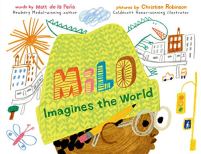
  • Matt read their new picture book, Milo Imagines the World. “Maybe you can’t really know anyone just by looking at their face.”MiloImaginesTheWorld
  • “I try to enter every picture book through [children’s] point of view…. What is it like if you don’t have all the information and the only thing you can really read is the adults?” (Matt)
  • “I don’t think good writers go into a story with a message…but I do think good writers go into a story with a point of view.” (Matt)
  • “I’m curious, how many wizards do you have at your school?”(Matt, pushing white teachers/librarians to make sure all book collections are diverse)
  • “Drawing and making pictures was my way of making space for myself.” (Christian)
  • “Talent can get you a job but character can help you keep it.” (Christian)
  • “Play well with others…. You have to make compromises and you have to trust that everyone has the same goal in mind – to make the best book possible and get it to the most readers possible.” (Christian)
  • “Authors of picture books have two jobs: you have to get the story right and you have to get the music right.” (Matt)
  • “A true collaboration is putting your collaborator in the best position to succeed.” (Matt)

State of the Industry Keynote: The Hard Questions and the Truthful Answers: Jean Feiwel with Lin Oliver

  • Jean Feiwel on adapting to the culture of each company she worked for: What do they want from me, and what can I accomplish for them?
  • On combining fiction and science in the Magic School Bus series: My answer to people who say “you can’t do that” is “of course it wasn’t the way it was done, but I did it anyway.”
  • Children are humans with information needs. “Rather than keep content away from kids, I think it’s important to expose them to many different types of books.” Adults should be “not gatekeepers, but ambassadors.”
  • “The market is crying out for diversity and expansion… The real growth and opportunity is in doing NOT what you did last year…but to change the landscape.” If publishers have a limited perspective, they’ll have a limited list.
  • Children today don’t have the prejudice against pictures anymore. Artists are incredibly varied and sophisticated. Illustrations add to the story. “Those boundaries don’t truly exist.”
  • Creators (authors, illustrators) should “be in the world,” be on social media, be well-read.

Behind the Scenes at a New York Publishing House: An Insider’s Tour of Simon & Schuster Books for Young Readers with Laurent Linn, Katrina Groover, Chava Wolin, and Paula Wiseman

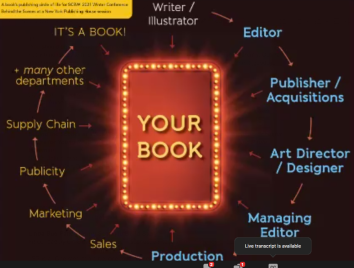
Diagram of a book's circle of life

  • Art Director Laurent Linn’s “circle of life of a book” graphic (right)
  • Publisher and Editor Paula Wiseman offered an analogy: “the editors are the beads and the publisher is the chain”
  • “Backlist is frontlist to those who haven’t read it.” Paula Wiseman pointed out that children’s literature gains new readers every few years.
  • Laurent Linn described Katrina Groover, Managing Editorial Director, as both an air traffic controller and orchestra conductor. In her words: “What I am responsible for is meeting deadlines.”

Genre Breakout Sessions: Two Editors Discuss What’s Hot, What’s Not, What They’re Acquiring and the Rules of the Road 

  • I watched the middle grade session with Tricia Lin (Random House) and Krista Vitola (S&S), but plan to watch the picture book session with Elizabeth Bicknell, Joanna Cardenas, and Andrea Welch ASAP!
  • “Editorial opinions vary. If we don’t fall in love with a voice, it doesn’t mean another editor won’t fall in love with that voice.” (Krista)
  • You’re always going to write more than what ends up in the finished publication. “You still [need] to write those pages, because they’re gonna help you later in the story.” (Krista)
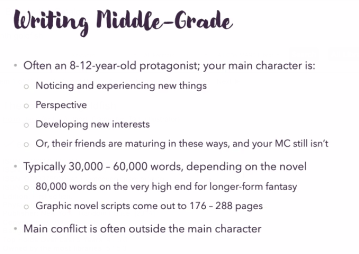
  • Series is the bread-and-butter of middle grade. Character driven, concept driven. (Krista)Screen shot of Writing Middle Grade slide
  • “A second pair of eyes is always super important. Someone not as close to your project as you are can really bring fresh eyes, things you would never be able to catch on your own. We get second readers all the time on our end…. Open yourself up to that feedback. Receive it with an open mind.” (Tricia)
  • There’s this idea of success in publishing…it’s important to keep in mind is that everything is subjective – what you choose to write, what I choose to acquire, what the customer is going to buy…every step of the way, it’s so subjective. You’re here, and you’re writing. With every idea you brainstorm and every word you write. … We’re trying to reach people, we’re trying to do good. (Tricia)

Keynote Address: Looking Back to Move Forward, Tami Charles (I was zoomed out and needed a break, I will watch this one ASAP as well. The tweets from her talk were ecstatic!)

Zoom Peer Critique: Picture Book: Despite a few technical difficulties – handled with grace and perseverance by April Powers and Julian Petri – a huge number of us eventually got into breakout groups for a useful critique, employing the “sandwich style” (praise, constructive criticism, praise).

Sunday, February 21

Keynote Conversation: Jerry Craft and Victoria Jamieson, moderated by April Powers

  • “All children need to see all children in their books.” (April)
  • “It’s hard to know which feedback to take and which feedback not to take.” (Victoria)
  • “If I don’t have to put words in a panel, I don’t.” (Jerry)
  • I like to have the pictures say one thing and the words say another…. That’s one of the beauties of graphic novels…that makes it a really sophisticated art form. Kids have to read something visually and in words and put them together. (Victoria)
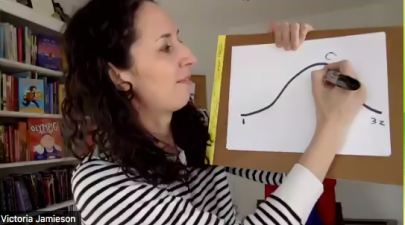
  • Story arc for picture books: introduce character quickly, then they start having problems; a little denouement at the end.
  • Timeline for making a graphic novel? (1) brainstorming/developing, (2) sketches/writing, (3) final art (Victoria)
  • Every author/illustrator collaborator is different. At one point Victoria wished aloud to “phone a friend” (Shannon Hale and LeUyen Pham), so I found a couple of interviews with them: School Library Journal and Publishers WeeklyScreenshot of story arc

Mock Acquisition Meeting with Wendy Loggia and Delacorte Publishing Team (planning to watch recording)

Mock Book Cover/Book Design Production Meeting with Yaffa Jaskoll and Scholastic Publishing Team (Stephanie Yang, Baily Crawford, Maeve Norton)

  • “There are a lot of opinions to consider and it takes time to make everyone happy.” (Yaffa)
  • On designing a series (e.g. Baby Sitters Club): Each book has to look individual and also look like part of the series (Yaffa)
  • Key takeaways (for illustrators): Keep your social media updated. Reply to email quickly (within 24 hours). Do your research, stay current, keep your work fresh. The conceptual solution is as important as execution; try a few different designs. Find where your style fits naturally and build on that. Be flexible: it can take a bunch of tries to get the art just right. Show variety in your artwork. “You never know what we’re going to gravitate to.”

Real Talk with Four Agents: A Deep Dive Into the Children’s Publishing Business: Kirby Kim (Janklow & Nesbit), Kevin Lewis (EMLA), Erica Rand Silverman (Stimola), Saba Sulaiman (Talcott Notch)

  • “I’ve always felt like I could be a good advocate for others.” (Kirby)
  • “It’s never too early to get engaged in the industry…. You don’t have to wait to have a book published.” (Erica)
  • “Children are really, really receptive to difference… Characters who don’t look like them, think like them. They embrace silliness, absurdity, the unexpected.” (Saba)
  • “You should be encouraged if you’re unpublished, that’s not a bad thing.” (Erica)
    • Or “pre-published,” per Lin Oliver.
  • “You have to care about something, and you have to engage in that thing you care about…. Find that thing that you can do, and do it!” (Kevin)
  • “Go by your compass, not your clock.” (Kirby, quoting Alvina Ling)

Keynote Address: Becky Albertalli and Adam Silvera: Writing for the Contemporary YA Audience, introduced/moderated by Kim Turrisi

  • Something that surprised me as an author…You end up hearing from readers all around the world and you find out that there are people who have something in common with you that you thought you were totally alone in feeling. It’s the most bizarre, surreal, and wonderful experience to have. (Becky)
  • “It’s really hard to keep in mind that our specific experiences can be night and day from other people… There are a lot of people who need a lot of different kinds of stories.” (Becky)
  • To some people it might feel like only marginalized stories are getting attention right now, and it’s like no, we’re gathering steam for sure, but there’s still so much catching up to do…. Not reading widely is doing a disservice to your worldview and your reading experience. (Adam)Screen Shot 2021-02-21 at 5.19.49 PM
  • Writing tips from Adam: I create a list of 10 random things/details about a character to get to know them. Helps get closer to the heart of the character. “All these choices lead to that authenticity.” There’s world-building in a contemporary space as much as there is in a fantasy space.
  • How to create high stakes if the main character is not facing a huge, life-changing problem? “The stakes are how badly your characters want the outcome that they want.” (Becky)
  • Re: social media: Authenticity is so important to me but also really scary…Privacy gets really complicated. It’s part of the job to figure out those boundaries. (Becky)
  • I was not prepared. I wasn’t prepared for being talked about in a public way. There’s a big difference between being a writer and being an author. (Adam)

My Life in Children’s Books: A Rare Appearance by the Legendary Patricia MacLachlan, in Conversation with Lin Oliver

  • “I like books that allow me to enter them, and if there are too many words, I don’t know where I’m going.”
  • A book should speak to all readers: “Something for the adult to hold, and something for the child to grab onto.”
  • Landscape: “It matters where a book takes place, and what’s going on and where it is.” Recognize your landscape: where did you come from, where have you been, where are you going, what is your great sadness and great joy?
  • Children know everything. They’re also very direct. “They believe everything and they want to know everything.”
  • Quoting her father: “The title taps you on the shoulder and the first line takes you by the hand.”
  • “Children matter.” They see everything, they know everything, they don’t always understand it. It’s nice to be able to reach out and touch them, even if it’s to ask them a question, or show them someone else going through what they’re going through. We owe them…quality of attention.

And that’s a wrap! It was a great first SCBWI conference experience, even if it wasn’t in person. (On the plus side: I didn’t have to travel; I got to do yoga stretches, hang out with my kid, and eat snacks between sessions; and I could be in sweatpants the whole time. On the minus side, I actually like meeting people in person.) Overall: pandemic sucks, technology is a good workaround – and made the conference more accessible – children’s books are here to stay, everyone involved in the creation of children’s books is pretty cool.

2021 ALA Youth Media Awards

The ALA Youth Media Awards were announced this morning. Last year, I was doing storytime for 2- and 3-year-olds at my library during the announcement and caught up right after; today (like many others), I watched in my pajamas with my five-year-old next to me or in my lap, waiting impatiently through the YALSA awards for the ones she really cared about…the Pura Belpré and the Caldecott! (When We Are Water Protectors was finally announced as the winner, she said, “That’s the one I would have picked, too.”)

“We stand
With our songs
And our drums.
We are still here.”
-We Are Water Protectors

“A cure is not about what we want. It’s about what we need. The same is true for stories.” – When You Trap A Tiger

“When you believe, that is you being brave. Sometime, believing is the bravest thing of all.” – When You Trap A Tiger

I was excited about the books (and authors and illustrators) in every award category, starting with the Asian/Pacific American Awards: I loved Danbi Leads the School Parade (picture book honor) and Prairie Lotus (children’s literature honor), and When You Trap A Tiger (children’s lit winner – and Newbery winner!).

School Library Journal has already published an article and a complete list of the honor and award books, so, like last year, I’ll continue with the books I’ve already read in each category. I’ve already requested several of the ones that I missed (including three of the Caldecott honor books, I am embarrassed!) from the library.

  • Danbi Leads the School Parade by Anna Kim (Asian/Pacific American picture book honor)
  • Prairie Lotus by Linda Sue Park (Asian/Pacific American children’s literature honor)
  • When You Trap A Tiger by Tae Keller (Asian/Pacific American children’s literature winner)
  • Welcoming Elijah by Lesléa Newman, illustrated by Susan Gal (Sydney Taylor picture book winner)
  • I Talk Like A River by Jordan Scott, illustrated by Sydney Smith (Schneider Family Book Award winner for young children)
  • When Stars Are Scattered by Victoria Jamieson and Omar Mohamed (Schneider Family Book Award honor for middle grade)
  • Show Me A Sign by Ann Clare LeZott (Schneider Family Book Award winner for middle grade)
  • You Should See Me in a Crown by Leah Johnson (Stonewall honor)
  • King and the Dragonflies by Kacen Callender (Coretta Scott King author honor, Stonewall award)
  • Before the Ever After by Jacqueline Woodson (Coretta Scott King author winner)
  • Solutions and Other Problems by Allie Brosh (Alex Award)
  • Clap When You Land by Elizabeth Acevedo (Odyssey honor)
  • Sharuko by Monica Brown, illustrated by Elisa Chavarri (Pura Belpré illustrator honor)
  • ¡Vamos! Let’s Go Eat by Raúl Gonzalez (Pura Belpré illustrator winner)
  • Honeybee by Candace Fleming, illustrated by Eric Rohmann (Sibert award winner)
  • Ty’s Travels: Zip, Zoom! by Kelly Starling Lyons (Theodor Seuss Geisel honor)
  • What About Worms!? by Ryan T. Higgins (Theodor Seuss Geisel honor)
  • Outside In by Deborah Underwood, illustrated by Cindy Derby (Caldecott honor)
  • We Are Water Protectors by Carole Lindstrom, illustrated by Michaela Goade (Caldecott winner)
  • Fighting Words by Kimberly Brubaker Bradley (Newbery honor)
  • We Dream of Space by Erin Entrada Kelly (Newbery honor)
  • When You Trap A Tiger by Tae Keller (Newbery winner)

Travis Jonker over at SLJ invites readers to fill out a 2021 “Caldecott Comment Card.” Since I only read two(!) out of the five Caldecott honor/award books this year, I can’t say how the handful of titles I was hoping for compare, but I was sad not to see Minh Lê and Dan Santat’s Lift on the list at all (I think Sophie Blackall’s If You Come to Earth was tremendous also, but she’s already won twice). As a wise librarian friend said this morning, “I don’t envy the committees. Such hard decisions.”

So, thank you to everyone who served on any committee; thank you to all of the authors and illustrators who created books last year, and their publishers; and thanks to the booksellers and other librarians who are going to get these (and many other) books into the hands of readers, one way or the other (hurray for contactless pickup!).

2020 Reading Wrap-Up

Well, 2020 was a year. (As Sloane Crosley wrote in The Clasp, Was there a worse compliment than the one with no adjective?”) At many times during the year, the only good news was news from the publishing world: wonderful new books from debut authors and illustrators, and eagerly- (impatiently-) awaited new books from established authors and illustrators.

As always, I read many new books this year, as well as many new-to-me books published in previous years. In this post, I’m going to highlight only my favorites published in 2020, because this was a tough year for authors and illustrators and I want to cheerlead their books as best I can. Betsy Bird at SLJ is doing a superb and even more detailed/themed job of this over on her blog; see “31 Days, 31 Lists.”

Here’s my 2019 reading wrap-up. And now, on to 2020’s reading:

Total number of books read: 619. Fewer than last year! But we did a lot of re-reading.

Partially read/started-didn’t-finish: 12. Some cookbooks, some poetry, some children’s books that were over the head of the kiddo so we only read sections, or I skimmed.

Picture books: 324. There were so many outstanding picture books published this year. We also re-read many of the picture books we discovered last year and the year before, but I’m focusing on 2020 titles especially:

  • My Best Friend by Julie Fogliano, illustrated by Jillian Tamaki
  • One Little Bag: An Amazing Journey by Henry Cole
  • Evelyn Del Rey Is Moving Away by Meg Medina, illustrated by Sonia Sánchez
  • Maud and Grand-Maud by Sara O’Leary, illustrated by Kenard Pak
  • If You Come to Earth by Sophie Blackall
  • On Account of the Gum by Adam Rex
  • Sugar in Milk by Thrity Umrigar, illustrated by Khoa Le
  • Don’t Worry, Little Crab by Chris Haughton
  • Lift by Minh Lê, illustrated by Dan Santat

Early readers: 31. I still love Laurel Snyder’s Charlie & Mouse with my whole heart. We also discovered Saadia Faruqi’s fabulous Meet Yasmin this year. (If you are in charge of a school library or children’s section of a public library and don’t have Yasmin – get them!!) Mo Willems’ perpetually popular Elephant & Piggie books are even more fun now that the kiddo reads, so we each choose a part (I’m usually Gerald) and read aloud together.

Chapter books: 21. Abby Hanlon’s Dory Fantasmagory was a huge hit with everyone in our family this year, in audio and print. We also read Betsy-Tacy by Maud Hart Lovelace, more Ivy & Bean by Annie Barrows (with illustrations by Sophie Blackall), and the Questioneers series by Andrea Beaty.

Middle grade (some overlap with YA): 88. A few standouts published in 2020:

  • The Thief Knot (A Greenglass House Story) by Kate Milford
  • Show Me A Sign by Ann Clare LeZotte
  • Prairie Lotus by Linda Sue Park
  • The List of Things That Will Not Change by Rebecca Stead
  • Wink by Rob Harrell
  • We Dream of Space by Erin Entrada Kelly
  • When You Trap a Tiger by Tae Keller
  • Before the Ever After by Jacqueline Woodson (novel in verse)
  • Sal & Gabi Fix the Universe by Carlos Hernandez
  • A Place at the Table and A Thousand Questions by Saadia Faruqi (of Yasmin fame)
  • The Silver Arrow by Lev Grossman
  • Fighting Words by Kimberly Brubaker Bradley
  • American as Paneer Pie by Supriya Kelkar
  • Three Keys by Kelly Yang (sequel to Front Desk)
  • Of Salt and Shore by Annet Schaap
  • King and the Dragonflies by Kacen Callender (National Book Award)

YA/teen (some overlap with MG): 41.

  • Not So Pure and Simple by Lamar Giles
  • Almost American Girl by Robin Ha (graphic novel memoir)
  • Clap When You Land by Elizabeth Acevedo (The Poet X, With the Fire on High)
  • Parachutes by Kelly Yang
  • Again, Again by E. Lockhart
  • Dress Coded by Carrie Firestone

Adult fiction: 51 (including about 16 romance novels, because if there was ever a year where a HEA was required, it was this one).

  • The Pull of the Stars by Emma Donoghue
  • Hamnet by Maggie O’Farrell
  • Utopia Avenue by David Mitchell
  • The Book of V by Anna Solomon
  • A Good Neighborhood by Therese Anne Fowler
  • Rodham by Curtis Sittenfeld
  • The Searcher by Tana French
  • The Once and Future Witches by Alix E. Harrow
  • The Midnight Library by Matt Haig
  • The Invisible Life of Addie LaRue by V.E. Schwab
  • The Illness Lesson by Clare Beams
  • Oona Out of Order by Margarita Montimore
  • Red, White, and Royal Blue by Casey McQuiston (2019)

Nonfiction: 35ish (some overlap with other categories; not including 9 how-to books; 87 total nonfiction books, including books written for children). A few standout 2020 titles in this category:

  • Having and Being Had by Eula Biss
  • How You Say It by Katherine D. Kinzler
  • You’re Not Listening by Kate Murphy
  • The Genius of Women by Janice Kaplan
  • The Line Becomes A River by Francisco Cantú
  • The Black Friend by Joseph Frederick
  • The Story of More by Hope Jahren
  • How to Be A Conscious Eater by Sophie Egan
  • It’s Not About the Burqa, edited by Mariam Khan (2019)
  • Stamped by Jason Reynolds and Ibram X. Kendi
  • History Smashers: The Mayflower by Kate Messner (middle grade)

Graphic novels: 17. I heard New Kid author Jerry Craft speak (virtually, of course) and he mentioned that there are several storylines that are only depicted in the illustrations of his books, not in the text at all; careful readers (or re-readers) will pick up on those. Visual literacy is literacy! A few more 2020 titles to mention:

  • Stepping Stones (Peapod Farm) by Lucy Knisley (middle grade)
  • Snapdragon by Kat Leyh (middle grade)
  • Twins by Varian Johnson (middle grade)
  • When Stars Are Scattered by Victoria Jamieson (MG/YA)
  • Go With the Flow by Karen Schneemann and Lily Williams (MG/YA)
  • Class Act by Jerry Craft (MG/YA)
  • Flamer by Mike Curato (YA)

Short stories/essay collections: 14. I have a whole separate post about this coming up, but to highlight just a few more 2020 titles:

  • Disability Visibility, edited by Alice Wong
  • A Map is Only One Story, edited by Nicole Chung and Mensah Demary
  • A Mind Spread Out on the Ground by Alicia Elliott
  • Why Did I Get a B? and Other Mysteries We’re Discussing in the Faculty Lounge by Shannon Reed
  • Come On In, edited by Adi Alsaid
  • Once Upon an Eid, edited by S.K. Ali and Aisha Saeed

Audiobooks: 15. We also do a lot of re-reading on audio – for example, the Clementine series by Sara Pennypacker, narrated by Jessica Almasy; the Ramona series by Beverly Cleary, narrated by Stockard Channing; the Dory Fantasmagory series by Abby Hanlon, narrated by Suzy Jackson; the Princess in Black series by Shannon and Dean Hale, narrated by Julia Whelan.

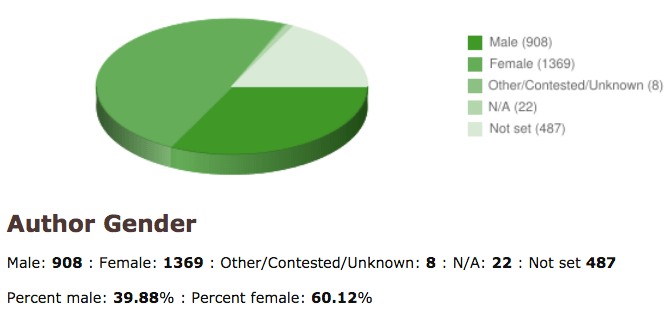
Screenshot of LibraryThing Author Gender pie chart

#WeNeedDiverseBooks: 132. And our reading life – and life-life – is so much deeper and richer for having these mirrors, windows, and sliding glass doors. More faces, more stories, more variety.

Five-star ratings: 17. (There are an awful lot of 4.5 and 4-star ratings as well.) Several of these were picture books, but there’s also a cookbook (Pastry Love by Joanne Chang, which I happened to have checked out from the library when everything shut down in March and kept – and baked from – for months) and Alix E. Harrow’s smashing new novel, The Once and Future Witches.

Re-reads: 8 according to LibraryThing, but I don’t have an accurate way of tracking this, other than to note “re-read” in my review. It was definitely more than eight, but they were mostly picture books, early readers, or chapter books. I did read Seanan McGuire’s In An Absent Dream twice this year – it’s my favorite of her Wayward Children series. And I’ll likely re-read Kate Milford’s Greenglass House or one of its companions between now and New Year’s, as is my December tradition – I just bought a copy of Bluecrowne.

None of us can be sure what 2021 holds, but I feel reasonably certain that whatever else, there will be books. Thank you to everyone involved in that process: the authors, illustrators, agents, editors, publicists, publishers, booksellers, librarians, teachers.

Thanksgiving, Gratitude, and Native #OwnVoices

A version of this piece will be posted to the Winchester Public Library website later this month.

Thanksgiving and Gratitude, Past and Present

On Thanksgiving Day, the myth goes, we remember the “first Thanksgiving,” where Pilgrims and Native Americans celebrated a good harvest and shared a meal. But that story is often told in an inaccurate or outright harmful way, and the history that followed is obscured, such that many families now choose to focus on the “giving thanks” aspect of the holiday rather than the historical one. 

As educator Debbie Reese (Nambé Pueblo) writes, “Here’s the thing. I want teachers, parents, and librarians to consider that a lot of American Indians don’t necessarily ‘celebrate’ Thanksgiving as it is celebrated in the mainstream American holiday scheme….Native peoples and our cultures were attacked. But we persevered, and many of us have a different view of this holiday….I want you to see me and Pueblo people (in my case) as a people that existed and exists on its own merits – not as minor characters, or colorful ones, in the story that America tells about America.” 

So below is a list of books about giving thanks and being grateful, books about cooking and sharing meals together, and books by Native American authors, centering Native kids, both historically and in the present. For more #OwnVoices books, check out the American Indian Youth Literature Award.

Additional Resources:

Books for Littles: Decolonizing Thanksgiving is an Oxymoron

Center for Racial Justice in Education: A Racial Justice Guide to Thanksgiving

Association for Library Service to Children (ALSC) “Talking with Young Children about Race” 

Nashville Public Library “Tackling Racism in Children’s Classics: The Thanksgiving Story”

Teacher and Librarian Resources for Native American Children’s and Young Adult Books, Cynthia Leitich Smith

Books (alphabetical by author’s last name)

Thanksgiving and Native History

  • Bruchac, Squanto’s Journey: The Story of the First Thanksgiving
  • Messner, The Mayflower (History Smashers)
  • O’Neill & Bruchac, 1621: A New Look at Thanksgiving
  • Ortiz, The People Shall Continue
  • Waters, Tapenum’s Day 

Sharing Food & Gratitude

  • Cabrera, The Thank You Letter
  • Chen, Hot Pot Night!
  • Cooper, Pumpkin Soup 
  • De La Peña, Last Stop on Market Street
  • Falwell, Feast for Ten
  • Horowitz, The Ugly Pumpkin
  • Ledyard, Pie Is For Sharing
  • Maillard, Fry Bread: A Native American Family Story
  • Marchand, How Food Was Given: An Okanagan Legend
  • Mora, Thank You, Omu!
  • Mora, Gracias / Thanks
  • Muth, Stone Soup
  • Paul (editor), Thanku: Poems of Gratitude
  • Peters, Clambake: A Wampanoag Tradition
  • Ram, Thukpa for All
  • Regguinti, The Sacred Harvest: Ojibway Wild Rice Gathering
  • Saeed, Bilal Cooks Daal
  • Sorell, We Are Grateful: Otsaliheliga
  • Swamp, Giving Thanks: A Native American Good Morning Message
  • Tamaki, Our Little Kitchen
  • Walker, Four Seasons of Corn: A Winnebago Tradition
  • Wittstock, Ininatig’s Gift of Sugar: Traditional Native Sugarmaking

Native Voices

  • Akulukjuk, The Owl and the Lemming
  • Akulukjuk, Putuguq & Kublu and the Qalupalik! (graphic novel)
  • Campbell, A Day With Yayah
  • Child, Bowwow Powwow
  • Dupuis, I Am Not A Number
  • Erdrich, The Birchbark House
  • Flett, Birdsong
  • Flett, Wild Berries
  • Highway, Caribou Song
  • Jameson, Zoe and the Fawn
  • Jerry Cans, Mamaqtuq!
  • Lindstrom, We Are Water Protectors
  • Minnema, Johnny’s Pheasant
  • Peacock, The Forever Sky
  • Qitsualik-Tinsley, The Raven and the Loon
  • Robertson, The Water Walker
  • Robertson, When We Were Alone
  • Sammurtok, In My Anaana’s Amautik
  • Smith, Jingle Dancer
  • Smith, My Heart Fills With Happiness
  • Smith, When We Are Kind
  • Sorell, At the Mountain’s Base
  • Vandever, Fall in Line, Holden! 

Spooky Storytime

This morning I recorded a “spooky storytime” for my library to post to our website. We’re offering some live programs and some recorded ones, because as all caregivers (and program planners) have figured out by now, you can’t always get kids to show up at a certain time, even if it doesn’t involve leaving the house.

It wasn’t quite the real thing, but I pretended some of my usual “Step Into Storytime” kiddos were there and brought my best storytime energy.

  • Welcome to Spooky Storytime!
  • Here is my Pumpkin, Round and Fat” (to the tune of “I’m A Little Teapot”) from KCLS
  • Skulls! by Blair Thornburgh and Scott Campbell, published by Atheneum (Simon & Schuster)
  • Pumpkins on the Ground” (to the tune of “Twinkle Twinkle”) from KCLS
  • The Halloween Tree by Susan Montanari and Teresa Martinez, published by Sourcebooks
  • Goodbye friends, have a spooky day/evening!

And here are a few other “spooky” books (some mention Halloween, some don’t):

  • Creepy Carrots by Aaron Reynolds
  • I Love My Fangs by Kelly Leigh Miller
  • Monster Needs A Costume by Paul Czajak
  • Room on the Broom by Julia Donaldson
  • Stumpkin by Lucy Ruth Cummins
  • The Little Old Lady Who Was Not Afraid of Anything by Linda Williams
  • I Want to Be in a Scary Story by Sean Taylor

What are your favorite picture books to read this time of year?

Books I Wish I Could Read at Storytime

Back in March, I began checking out WAY more books than usual to prepare a stockpile for when the library closed – and I was glad I did. I was able to refresh my stash of library books once while the library was operating with very limited in-person staff, and since August I’ve been going to work in the building twice a week, so I have more or less regular access again.

But while I love reading books one-on-one with my kiddo, I miss doing storytimes for two- and three-year olds! And we’ve read some picture books that I can’t wait to read to a live audience of kids.

For laughs:

  • Little Penguin Gets the Hiccups by Tadgh Bentley (2015): And what’s the best cure for hiccups? A good scare! Maybe you can help… [Note: your fake hiccup game has to be on point.]
  • I Love My Fangs by Kelly Leigh Miller (2020): What happens when a little vampire gets a loose tooth?
  • I Can Be Anything by Shinsuke Yoshitake (2020): Fantastic if your audience has even the most basic grasp of charades.
  • Nothing Rhymes With Orange by Adam Rex (2017): Poor Orange feels left out of the rhyming fruit game, but when the others see they’ve hurt Orange’s feelings, they find a way to include them. Full of snarky commentary and even a Nietzsche reference.
  • Bo the Brave by Bethan Woolvin (2020): Turns classic fairy tale tropes on their heads in a most delightful way.
  • Unstoppable by Adam Rex (2020): Animals who envy/admire each others’ abilities (flying, swimming, etc.) team up, and then work together to save their habitat. Environmentalism and civics with a huge dose of humor.
  • Don’t Worry, Little Crab by Chris Haughton (2019): This instantly became one of my favorite summer books, along with Jabari Jumps and There Might Be Lobsters. Little Crab is excited about leaving their tidepool and going to the ocean, but once they see the ocean, they aren’t so sure….and then, once they’re there, they don’t want to leave!
  • This Is A Dog by Ross Collins (2019): My kiddo loves what she calls “cross-out books” – books where part of the title is crossed out and written in differently – and this scene-stealing dog was no exception. See also Z is for Moose.

Touching/thoughtful/interesting:

  • No Ordinary Jacket by Sue Ellen Pashley (2020): This definitely has echoes of Something From Nothing: a beloved jacket is passed down from elder sibling to younger.
  • Our Favorite Day of the Year by A.E. Ali (2020): At the beginning of the school year, a teacher asks each student in her class to share about their favorite day of the year, so everyone learns what is special to their classmates. A cut above regular show-and-tell, especially in the way that holidays are introduced and made familiar.
  • The House Full of Stuff by Emily Rand (2020): Beauty – and usefulness – is in the eye of the beholder.
  • Under the Lilacs by E.B. Goodale (2020): A little girl, failing to get attention from her mother and sister, runs away to the lilac in the yard and recreates her home there.
  • Trees Make Perfect Pets by Paul Czajak (2020): Her parents probably expected her to choose a cat or a dog, but Abigail defends her choice beautifully. An especially good choice for older preschoolers in springtime, around Earth Day.
  • Goodnight Veggies by Diana Murray (2020): Do you have an evening storytime at your library? This is a unique take on a bedtime book, set in a rooftop garden in Brooklyn.
  • Rita and Ralph’s Rotten Day by Carmen Agra Deedy (2020): Repetition is used to great effect in this story of how friends hurt each other, apologize, and forgive – but it’s an up-and-down journey.
  • Only A Tree Knows How to Be A Tree by Mary Murphy (2020): If you like to incorporate yoga into your storytimes, there are natural  opportunities here.
  • Play in the Wild: How Baby Animals Like to Have Fun by Lita Judge (2020): This is a nonfiction picture book with primary and secondary text, and great big illustrations of the baby animals at play. For a storytime with younger kids, I’d stick to the primary text and make it as interactive as possible, acting out the different animal behaviors.
  • Lifesize by Sophy Henn (2018): Henn shows animals (or parts of animals) life-size in this large trim book. Try on a toucan’s beak, compare your toes to an elephant’s, look through the eye of a giant squid!
  • Imogene’s Antlers by David Small (1988): OK, I’m late to the party on this one, but I saw that there’s a sequel coming out this year and I had to read the original…and it’s wonderful. Imogene’s mom has fainting fits, but Imogene cheerfully rolls with the sudden appearance of her antlers – and the twist at the end is priceless.

Books as gifts for the classroom

Many daycare, preschool, pre-K, and elementary school teachers have their own classroom libraries. They usually develop these libraries out of pocket, or through donations; adding a new book is a way to build that library and increase the number of books kids have ready access to.

Here are a number of relatively new books that would be great additions to classroom libraries – and the majority of the authors and illustrators are BIPOC. I’ve separated them into categories by age, but please don’t treat that as a hard-and-fast rule.

Ages 2+

Hello, Hello by Brendan Wenzel

Carrot & Pea by Morag Hood

Thank You, Omu! by Oge Mora

Dim Sum for Everyone by Grace Lin

A Parade of Elephants by Kevin Henkes

Rain! by Linda Ashman, illustrated by Christian Robinson

Grumpy Pants by Claire Messer

Ages 3+

Saturday by Oge Mora

Want to Play Trucks? by Ann Stott, illustrated by Bob Graham

Hank’s Big Day by Evan Kuhlman, illustrated by Chuck Groenink

Julian Is A Mermaid by Jessica Love

Ralph and Rita’s Rotten Day by Carmen Agra Deedy, illustrated by Pete Oswald

The Adventures of Beekle: the Unimaginary Friend by Dan Santat

Lift by Minh Le, illustrated by Dan Santat

Dreamers by Yuyi Morales

Don’t Touch My Hair! by Sharee Miller

Mae Among the Stars by Roda Ahmed, illustrated by Stasia Burrington

Ages 4+

Ada Twist, Scientist by Andrea Beaty, illustrated by David Roberts

Wemberly Worried by Kevin Henkes

Owen by Kevin Henkes

Jabari Jumps by Gaia Cornwall

My Best Friend by Julie Fogliano, illustrated by Jillian Tamaki

The Someone New by Jill Twiss, illustrated by EJ Keller

Bilal Cooks Daal by Aisha Saeed, illustrated by Anoosha Syed

Amy Wu and the Perfect Bao by Kat Zhang, illustrated by Charlene Chua

World Pizza by Cece Meng, illustrated by Ellen Shi

Unstoppable! by Adam Rex

Alma and How She Got Her Name by Juana Martinez-Neal

Fry Bread by Kevin Noble Maillard, illustrated by Juana Martinez-Neal

First Day of School

The Class by Boni Ashburn, illustrated by Kimberly Gee

All Are Welcome by Alexandra Penfold, illustrated by Suzanne Kaufman

School’s First Day of School by Adam Rex

Truman by Jean Reidy

The King of Kindergarten by Derrick Barnes, illustrated by Vanessa Brantley-Newton

We Don’t Eat Our Classmates by Ryan T. Higgins


As an additional resource, Tinkergarten pulled together a list of “24 Books with Black Protagonists by Black Authors.” Representation matters – all kids need to see themselves reflected in literature (positively!). And if your students are homogeneous, then diverse books can serve as “windows” to show them that the world is full of all kinds of people. (The “windows, mirrors, and sliding glass doors” analogy was coined by Rudine Sims Bishop; Debbie Reese, founder of American Indians in Children’s Literature, would add “curtains” as well, that certain stories may be kept within a culture.)

Teachers, please chime in on the topic of classroom libraries. Do you welcome donations? Do you keep a wish list? Do you (or your students) have favorite titles, either for read-alouds or reading alone? What else should parents/caregivers/guardians/volunteers know about classroom libraries?


Anti-racist book lists: a place to start

No one would argue that 2020 has been a pretty rough year so far. We’re facing the effects of climate change and the very real and immediate specter of worse to come; we’ve got a global pandemic; and here in the U.S., we have a president who refuses to lead a coherent, science-based, national response to either the COVID-19 pandemic or the epidemic of racism our country is also battling.

I’ve done a lot of reading about all of these things, but less writing about them. I compiled most of the anti-racism resources below in early June, but at the time, the internet was flooded with similar resources; did I need to create a selected bibliography of them? (I didn’t, really, but my instinct is always to take notes, document, and share, so if they are useful to you, fantastic.)

On June 15, the New England Library Association (NELA) published a statement that reads, in part, “Let us all stand together, build coalitions, and be each other’s accomplices in the struggle to end internal, interpersonal, and systematic forms of racism and all other forms of oppression….Racism, in all its forms, destroys our communities. We must all proactively work on eradicating racism anywhere and everywhere it exists” (emphasis added).

I have been thinking – as a white parent and librarian – about how to do that, and what advice I can share about how to be anti-racist and how to raise anti-racist kids. I’ve boiled it down to a few points, for now:

  1. White parents, caregivers, teachers, and librarians need to normalize talking about race. Though some of us were taught to be “colorblind” in the ’90s, what we really need to be is “color conscious.” If talking about race is taboo, that makes it seem uncomfortable, and shameful, and then we arrive at the point where even mentioning race is considered racist. But if we refuse to recognize the racism around us, and can’t talk about it, we can’t work to dismantle it. (Note that even the option to talk about race or not is part of white privilege.)
  2. Books provide an entry point to discuss many topics. If you’re involved in selecting books for kids (if you’re a parent, caregiver, teacher, librarian), make the effort to choose books that show all kinds of people. Don’t let white be the default. Don’t let animals be the default (as much as we may love hedgehogs and bears). Most of us live in communities that are effectively segregated; if kids don’t see diversity around them, at least they can see it in picture books.
  3. If you’re seeking books that show Black characters, make sure you are not just getting biographies of civil rights heroes or stories of enslavement. Select books that show Black joy as well. There is a wealth of contemporary Black stories – enough for every month of the year, not just Black History Month. Seek out and read #ownvoices books.
  4. Definitions are important. Racism is structural, historical, and present-tense. We live in a racist society; it’s “the water we swim in.” As the song from Avenue Q goes, “Everyone’s a little bit racist sometimes,” even if our intentions are good. But white intentions don’t matter as much as white actions. So…
  5. Listen. Speak with care. Have humility. We will make mistakes; don’t let fear of making mistakes keep us from doing the work. Apologize, repair, listen some more.

A selected bibliography of anti-racism resources, June 2020

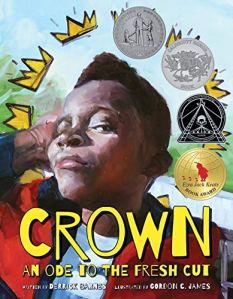
CrownOde

“Discussing Race with Young Kids,” Rachel G. Payne and Jessica Ralli, School Library Journal, September 24, 2018. https://www.slj.com/?detailStory=discussing-race-with-young-kids-first-steps

“What White Children Need to Know About Race,” National Association of Independent Schools (NAIS), https://www.nais.org/magazine/independent-school/summer-2014/what-white-children-need-to-know-about-race/

“Talking to Kids About Race,” Lindsey Krabbenhoft, Jbrary, July 21, 2016. https://jbrary.com/talking-to-kids-about-race/

“A Nonfiction Anti-Racist Reading List,” Publishers Weekly, June 3, 2020. https://www.publishersweekly.com/pw/by-topic/industry-news/tip-sheet/article/83485-an-anti-racist-reading-list.html

“Antiracist Books for Kids,” Kirkus https://www.kirkusreviews.com/book-lists/antiracist-books-kids/#a-good-kind-of-trouble

“10 Antiracist Books for Teens,” Kirkus https://www.kirkusreviews.com/book-lists/10-antiracist-books-young-adults/

“10 Books That Challenge Racism,” Kirkus https://www.kirkusreviews.com/book-lists/10-books-challenge-racism/

“Antiracist Resources and Reads: Lists for All Ages,” Elizabeth (Betsy) Bird, School Library Journal, June 2, 2020. http://blogs.slj.com/afuse8production/2020/06/02/antiracist-resources-and-reads-lists-for-all-ages/

“Because Black Lives Matter, A Collection of Antiracist Reading Lists,” Karen Jensen, School Library Journal, June 1, 2020. http://www.teenlibrariantoolbox.com/2020/06/because-black-lives-matter-a-collection-of-anti-racist-reading-lists/

“Our Modern Minstrelsy,” Kekla Magoon, The Horn Book, June 3, 2020 https://www.hbook.com/?detailStory=our-modern-minstrelsy

“Young Dreamers,” Christopher Myers, The Horn Book, August 6, 2013 https://www.hbook.com/?detailStory=young-dreamers

Reading While White http://readingwhilewhite.blogspot.com

We Are Kid Lit Collective https://wtpsite.wordpress.com

The Brown Bookshelf https://thebrownbookshelf.com

Professional Development during COVID-19 Closure

It’s now been nearly ten weeks since my library closed due to the spread of coronavirus, but people in both of my departments (children’s services and adult services) have been doing plenty of work from home. One early request from a department head was that we find one webinar of our choice each week to “attend” and share notes with the rest of the staff. Here are brief summaries and takeaways of some of the webinars and programs I’ve attended/watched over the past couple months – maybe they’ll be useful to you as well.

*

“READ WOKE: 5 Ways to Identify a #ReadWoke Book—and 3 #OwnVoices Authors to Diversify Your Collections,” Cicely Lewis, School Library Journal, October 23, 2019

Cicely Lewis, who started the #ReadWoke movement, introduced and moderated this panel of three authors: Kao Kalia Yang (A Map Into the World), Melanie Gilman (Stage Dreams), and NoNiequa Ramos (The Truth Is).

Read Woke books:

  • Seek to challenge the status quo 
  • Have a protagonist from an underrepresented or oppressed group
  • Challenge a social norm
  • Give voice to the voiceless 
  • Provide information about a group that has been disenfranchised

The #WeNeedDiverseBooks movement was cited, as well as #OwnVoices (“stories about diverse characters written by authors that are a part of that same diverse group”).

Author quotes:

  • Yang: “Want to write about things that matter. Write the kind of books that kids can grow up/old with. Books that make the world a more beautiful place.” 
  • Gilman: “It’s important for everyone to have access to their own history.” (Not the whitewashed version in textbooks)
  • Ramos: “Our whole society is built with white supremacy and systemic racism in place…homophobia….those things leak into everything.”
  • Gilman (re: school librarians worried about pushback): “Do you value the lives of the children who are going to be looking for books like this in your collection? Do you value the responsibility of libraries to have a book for everyone who walks through that door?”

Article: “‘Read Woke’ School Reading Challenge Makes an Impact,” Cicely Lewis, School Library Journal, March 29, 2018.

After this webinar, I developed a “Read Woke” middle grade book list for the library blog, and worked together with our teen librarian to put together a “Read Woke” book for teens as well.

*

Libraries and COVID-19: Providing Virtual Services, American Libraries Live, March 26, 2020, with Jason Griffey, Francisca Goldsmith, David Lee King, and Lindsey Gervais

I didn’t keep close track of who said what during this webinar, but here are the main takeaways:

  •  Don’t worry about fully replicating the experience of being in the library….any service you can provide is incredibly appreciated by the public…. Don’t try to be perfect…just meet your patrons where they are. Remember, we’ve been providing “virtual reference” by phone (and e-mail and chat) for ages!
  • Make use of existing resources. Where do you already have an online presence? What digital resources do you already offer that you can advertise heavily now (e.g. databases, Overdrive/Libby, hoopla, Ancestry, etc.)
  • Check other libraries’ websites to see what they are prioritizing and how they are communicating; consider having an FAQ on your landing page (e.g. “What do I do about overdue materials?”)
  • Best practices for managing staff collaboration when many are working remotely? “Reset expectations.”
  • Ask: What are your patrons’ needs? What is the easiest and simplest way to reach them?
  • What about patrons who don’t have access to computer/internet/phone? Leave library wifi on so people can use it from outside; lend out hotspots if you can; partner with local radio and TV stations.
  • How is virtual reference different from in-person reference? It’s harder to remember to be open-ended in our initial inquiries. (Figure out what they actually want to know, not what you first think they want to know.) There is less personal connection when you can’t rely on eye contact, body language, tone of voice. Be more tolerant. People might be more frustrated, having already done some online searching. Communicate when it may take you some time to answer a question. Use a variety of formats to reach your patrons.

*

SLJ Middle Grade Magic: A Virtual Event Dedicated to Middle Grade Literature, School Library Journal, April 8

Twitter: #middlegrademagic

Cover of Ways to Make Sunshine

1pm Lunch keynote: Renee Watson, Ways to Make Sunshine

Renee Watson is a captivating speaker who grew up in Northeast Portland (OR) and was a reader and writer from an early age. She said that “magical spaces that nurtured me” included the library, her neighborhood, and the theater, and said, “Miracle and magic come out of desolate places…it’s a realistic thing to dream big.” 

Watson said, “The work we are doing as librarians and writers and educators makes a difference, you don’t always know [the impact you’ll have],” mentioning the teacher who encouraged her to keep a journal in second grade, and the teacher who produced a play she wrote in eighth. 

I really enjoyed two of the author’s previous novels (Piecing Me Together and Some Places More Than Others) and am looking forward to this one, when I can get my hands on it.
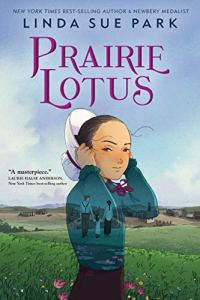
Cover of Prairie Lotus4pm Closing Keynote: Linda Sue Park, Prairie Lotus

In Prairie Lotus, Park wrote a book for herself as a young girl, reading the Little House on the Prairie books and wishing she could see herself in them. But she began her talk by showing illustrations of characters knitting in picture books: some were holding their knitting needles in a way that would have made it impossible to knit, while others were holding them correctly. Though it’s a small thing, “I still think it matters….because these pictures show, to me…that knitting isn’t important. It’s not important to get it right. And that feels disrespectful….They could have gotten it right (as Christian Robinson does) if if mattered to them.” And then she did a Brilliant Teacher Pivot and said, “This is just about knitting – but what if it’s about your culture? What if people don’t care enough to get it right with those kind of things?….Then you’re in the kind of territory where a book can actually harm a reader.” Though it’s not possible to get everything right, “We have a responsibility to try.”

(Let me just say, if I was a student, and a teacher started a class this way, I would be hooked. I would take every class they offered for the next four years.)

Park talked about “The danger of the single story,” the title of Chimamanda Ngozi Adichie’s TED Talk. She said, “The essence of Prairie Lotus for me is to try to dismantle the single story of that era of history.” In historical fiction, first question is, “Who else was there?” (Gilman also raised this point in the ReadWoke presentation.) The single story “is easier. It’s easier to tell that single story….The real story is more complex, more difficult, it takes more time. And it is worth every minute of that time.”

*

Libraries and COVID-19: Considering Copyright During a Crisis, American Libraries Live, April 3, with Lesley Ellen Harris, Jill Hurst-Wahl, and Kenneth D. Crews

I attended this webinar mainly because I was interested in what they’d have to say about public libraries offering virtual storytimes and read-alouds. They did discuss that – as well as getting students and teachers access to materials – but because of the nature of Fair Use, they didn’t offer hard-and-fast rules. Instead, they suggested (1) documenting all decisions you’ve made so far and that you make going forward; (2) applying Fair Use principles consistently; (3) being in touch with the library director and Board of Trustees; (4) using public domain, Creative Commons, and open access materials instead of copyrighted works whenever possible; and (5) keeping careful records – we will be looking back on this in the future.

  • “Now is a time to think about copyright but not obsess about copyright.”
  • “Make your decisions today with a view to how you’re going to reflect back on them.”

My take: Most publishers have relaxed their copyright restrictions temporarily, and have put forward specific ways their copyrighted materials can be used. (Here is the SLJ COVID-19 Publisher Information Directory.) Overall, they seem to prefer a closed platform (such as teachers may have in place with their students already), but realize that that may not be possible, so they generally allow posting to public platforms as well, if the material is taken down after a certain period of time, and if they’re notified by e-mail and/or tagged on social media.
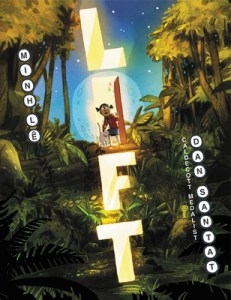
Cover of Lift

Authors want their books to be read and shared during this time, and publishers are highly unlikely to sue libraries for putting storytimes online while most of the country is under some version of a stay-at-home order. (Personally, I bought a copy of Minh Le and Dan Santat’s lovely picture book Lift from one of our local independent bookstores after my daughter and I watched Santat read it online the week before it came out. Book sales seem to be doing pretty well right now.)

*

Demo & Overview of Beanstack Mobile App and Web Service: “Make a Splash with Project Outcome: Measuring the Success of Summer Reading Programs,” April 13

This was a quick, thorough demo of how the Beanstack platform can be used for summer reading programs through the library. Different programs can be set up for children, teens, and adults; in keeping with library privacy values, minimal information (name and age) is required (the library can choose to add additional fields). Participants earn badges throughout the program, for books read and activities completed; the library can award prizes or have it just be for fun. Patrons can print their reading logs if they wish. There is also an “offline reader” mode.

Beanstack seems easy to use for both staff and patrons, and they claim to be “obsessed with [customer] support!” It can be used throughout the year for other challenges as well, such as 1000 Books Before Kindergarten or winter/spring vacation reading.

*

“Supporting Family Literacy While #SocialDistancing,” Mackin, April 30, with Jennifer Plucker, Deidra Purvis, and Greta Schetnan

The intended audience for this webinar was classroom teachers, but there were important takeaways for children’s librarians in public libraries as well. Classroom teachers have established relationships with students and parents, and a direct channel of communication (one hopes), but in terms of providing access to resources, public librarians can help prevent “summer slide” as well.

COVID-19 presents new challenges: increased time away from school and the “faucet” of resources; increased stress; the opportunity gap (some families have internet access and enough devices, others don’t); separation from support systems; and an exacerbation of existing inequality.

Just as classroom teachers and school librarians can, public librarians can provide access to “high-interest titles that serve as windows and mirrors,” and communicate with caregivers that they are their children’s first teachers. Literacy doesn’t come only from reading, but also from talking, singing, writing, and listening; many everyday activities (like cooking and baking) can build literacy skills.

Finally, though, “Time spent reading is the biggest predictor of reading achievement.” Ensuring access to high-interest books is paramount if we are to grow a generation of readers.

*

Form-Based Readers’ Advisory: When Your Readers (and Staff) Are At Home,” NoveList, April 29, with Angela Hursh (NoveList), Melissa Andrews (Boston Public Library), Monique Christian-Long (Dallas Public Library), and Kristy Lockhart (Weymouth Public Library)

Three public librarians spoke about the personalized, form-based readers’ advisory services their libraries offer. Each has a different brand (Shelf Service, #DPLWhatsNext, BookMatch) and a slightly different process, but all three use a LibraryAware template/newsletter to send results to people who use the service (LibraryAware and NoveList are both EBSCO products).

Form-based RA is a great service to offer while the physical library building is closed; patrons get a personal touch, which is extra appreciated in these times, and librarians can make sure that the titles they recommend are available as ebooks or digital audiobooks. Though it wasn’t mentioned, I believe that the Williamsburg (VA) Public Library reader preference form was the original model for these libraries’ forms. (It is long and thorough, and can only be used by library cardholders.)

One of the most important questions is the first one an in-person readers’ advisory interview is likely to lead off with: What are some books/authors you love (either recently, or all-time favorites)? When sending suggestions back, include an explanation for “why we thought you’d like this title” – make a connection with something they wrote on the form.

With or without LibraryAware, form-based RA is something most libraries can offer, tailoring the variables (see below) to suit their capabilities and patrons’ wants/needs. Consider:

  • The number and type of questions on the form
    • Which questions are required and which optional; is the form open to anyone, or only cardholders?
  • Turnaround time (how long between a patron submitting a form and receiving a response? One week is good)
  • How many titles are suggested (usually between 5-10)
  • How many library staff will answer the forms (is there a strict rotation, does it depend on current workload or RA strengths?)
  • How is the form built? How are the replies generated? LibraryAware is one option, but a Google form and e-mail work too
  • How will you advertise this service? How will you handle “surges”?

I loved answering these forms at my last library, and my current library is about to launch this service too.

*

“Trivia Pursued Remotely: Hosting Online Trivia Contests in a Time of Social Distancing,” Massachusetts Library System, May 12, presented by Mikaela “Miki” Wolfe of the Sharon (MA) Public Library

Ingredients for a successful trivia night: host, technology, content, audience.

Host: Miki was already hosting in-person trivia nights quarterly at the Sharon Public Library; now she is offering virtual trivia twice monthly, on Saturdays at 8pm, to give people a fun way to “hang out.”

Technology/gameplay: Miki said that the transition from in-person to online was fairly easy; they use the presenter view in Zoom to share slides with questions. The chat feature is used for questions and comments, NOT for answers; teams self-score(!) and a designated person from each team reports their score in the chat at the end of each round.

Content: There are three rounds, with 15 questions per round (one per slide), plus a picture round and some bonus content. Miki creates most of her questions from scratch (she generously shared years’ worth of questions), and while she recommended a few trivia sites to find questions, she warned against trusting what you find online – it’s always wise to cross-check. She also varies the difficulty of the questions.

Audience: Audience feedback is key to make sure the audience returns! (They had 50+ people at each virtual trivia event so far.) Each registered participant receives a survey, which can be shared with teammates.

*
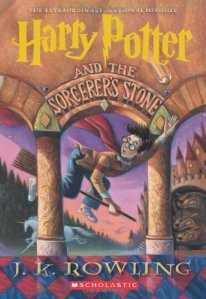
cover image of Harry Potter and the Sorcerer's StoneHarry Potter Trivia, Arlington (MA) libraries, May 13

Luckily, the day after Miki’s presentation, I got to attend a virtual trivia event through my town’s library – also using Zoom, also having participants self-score. It was low-key and fun, and with 10+ participants, there was room for casual chat (all related to Harry Potter). Fox Branch Manager Amanda Troha ran the event; she started by “sorting” participants into Houses by pulling slips of paper out of a hat – a great way to start while waiting for those who show up a few minutes late.

There were three questions per slide/round, and there were eight rounds, plus two picture rounds. Each slide of three questions was followed by an answer slide. The program lasted about an hour, and at the end, Amanda asked the participants (mostly kids/tweens) if they’d liked it, would they come again, were there other things they’d want trivia about? (Yes; yes; Star Wars, Disney, Marvel superheroes, Percy Jackson, Keeper of the Lost Cities, etc.)

After hearing about and experiencing virtual trivia with self-scoring, I am a convert! I’ve already started to work on shifting our planned Harry Potter trivia for late July from an in-person to an online event.

*

Are you a librarian working from home? Have you attended any webinars you’d recommend? Read any fantastic articles? Please share!