Amazon vs. Bricks-and-Mortar

It’s not even Amazon vs. the independent bookstores anymore; now it’s Amazon against any physical bricks-and-mortar bookstore that offers browsability, serendipity, and (hopefully) knowledgeable, informed, helpful staff who can make personalized suggestions tailored to your needs, likes, and dislikes.

Author Richard Russo wrote an op-ed in The New York Times on December 11 about Amazon’s competitive strategy of encouraging buyers to use its price check app in stores by offering credits to consumers, who then buy from Amazon instead of from stores. (It should be noted that while book prices can be checked with the app, they do not qualify for the promotion.)

Russo sent this news on to a number of other authors, including Scott Turow (president of the Authors Guild), Stephen King, and Ann Patchett. King called the strategy “invasive and unfair”; Turow suggested that it might not be “lawful” for Amazon to encourage consumers to go to a store solely to obtain pricing information without any intention of buying; and Patchett said, “I do think it’s worthwhile explaining to customers that the lowest price point does not always represent the best deal. If you like going to a bookstore then it’s up to you to support it. If you like seeing the people in your community employed, if you think your city needs a tax base, if you want to buy books from a person who reads, don’t use Amazon.”

Authors and bookstore owners and employees aren’t the only ones who object to Amazon’s price check promotion; Maine Senator Olympia Snowe said, “Amazon’s promotion – paying consumers to visit small businesses and leave empty-handed – is an attack on Main Street businesses that employ workers in our communities.”

Fortunately, it is not all bad news for bookstores. An “unusually vibrant selection” of books this season seems to have helped bookstore foot traffic and sales, which are up from this time last year. Former Borders customers are finding other bookstores, too. One bookstore owner in Seattle said, “What’s extraordinary about the books that are out there is that they’ve been so well written and such a pleasure to read. Maybe people have an appetite for nonfiction right now, just for some sort of grounding in reality.”

The book business is, as much as book lovers would like to deny it, a business, but Amazon’s price check app and promotion are “bare-knuckles” enough to leave a bad taste in one’s mouth. Before doing ordering all your holiday presents on Amazon, consider what you get for a few extra dollars at the bookstore: personal recommendations from people who read. Of course, the level of service stores offer varies, but if you’re in the Cambridge/Somerville area, I can recommend the excellent Porter Square Books in good faith.

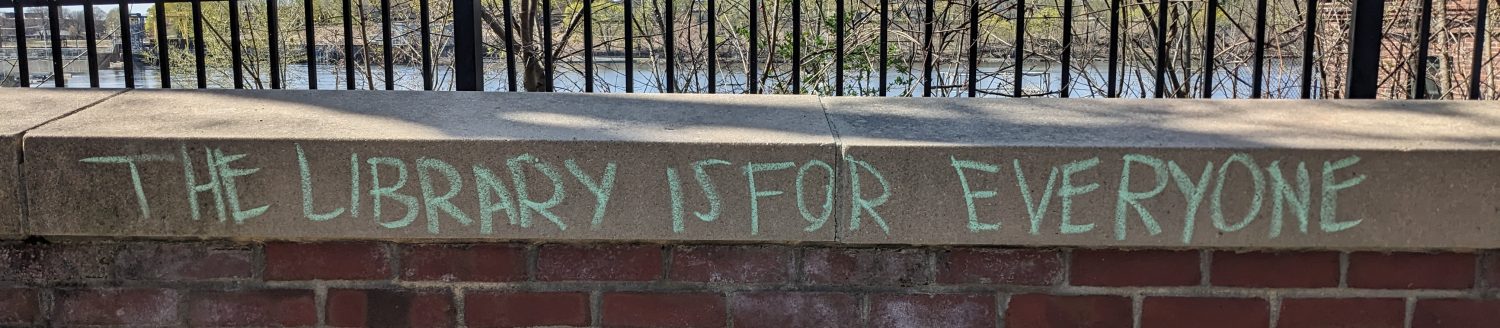
And if you aren’t looking to buy, just looking to read, another great place to get a recommendation is your local library. 🙂
Two Approaches

The Authors Guild has spoken out against Amazon’s Lending Library, arguing that Amazon’s contracts with publishers cover only the sale of books, not lending or giveaways. For additional background on this issue, here’s my November 3 post with several links. The Guild may have a point here, and urges its authors to contact their agents and publishers.

In the “good news” category, however, we have Ann Patchett’s new independent bookstore, Parnassus Books, opening soon in Nashville, TN. The most recent NYT article notes that small, independent bookstores compete “where Amazon cannot: by being small and sleek, with personal service, intimate author events and a carefully chosen rotation of books” (including e-books). Best of luck to Ann, her business partner Karen Hayes, and Parnassus Books!

A Balanced Information Diet

This evening I went to a screening of some TED talks at MIT, sponsored by the New England chapter of ASIS&T. We watched five TED talks, with a little bit of discussion between each one.

1. Raghava KK, “Shake up your story” – the artist/father talked about how looking at multiple perspectives could lead to the development of empathy and increase creativity.

2. Wael Ghonim, “Inside the Egyptian Revolution” – Ghonim described how the Internet allowed Egyptians to connect, to realize they were not alone and had shared dreams, to collaborate and speak out. He described how the “psychological barrier of fear” led to silence, but because of the Internet, “the fear is no longer fear, it’s strength. It’s power….The power of the people is much stronger than the people in power.” (After the talk, we discussed the flip side of technology: in the case of Egypt, technology allowed people to overcome their isolation, but what about when the government controls the technology?)

3. Eli Pariser, “Beware online filter bubbles” – This was the talk I found most interesting. Pariser, an online organizer and author, talked about the invisible shift in the flow of information online; search engines show us what they think we want – but what we want to see might not be what we need to see. Although the “personalization” due to algorithmic editing can sometimes be helpful, most people don’t realize that results are being filtered or tailored in this way – and we don’t decide what gets included or what gets left out.

Left to their own devices, people tend to read sources that re-confirm their existing points of view, and this was true long before the Internet (some people read the New York Times, some read the Wall Street Journal). Editors used to be our “human gatekeepers,” but now there are algorithmic gatekeepers, and they have no concept of journalistic integrity or ethics: they just want to show us what we want to see. Eventually, we may end up with a diet of “information dessert” and no “information vegetables. The information might be “relevant,” but we won’t be presented with information that is uncomfortable, challenging, important, or that presents other points of view – and we may become less and less aware that this information exists.

This addresses only a small piece of this issue, but check out the Google Transparency Report.

4. Sunni Brown, “Doodlers, Unite!” – According to Brown, doodling during a meeting isn’t a waste of time, and it doesn’t mean you aren’t paying attention – in fact, it may be helping you process information better. (After all, don’t many group brainstorming sessions end up using a whiteboard or pen and paper to sketch out ideas?)

5. Hans Rosling and the magic washing machine – This talk certainly had the best title, and was arguably the most entertaining. Swedish professor of global health Hans Rosling described the direct connection between the washing machine and reading: when his mother got a washing machine and no longer to do the washing by hand, she had time to take him to the library instead. “Thank you industrialization…that gave us time to read books!” The middle part of his talk concentrated on the developing world, climate change, and the use of resources (1/7 of the world population uses 1/2 of the resources – washing machines included).

One of the discussion questions (offered somewhat tongue-in-cheek, I believe) after this last talk was, “Do you think the invention of washing machines has increased library circulation?” In a roundabout way, it probably has: in the industrialized world, washing machines and other time-saving devices allow us to have more leisure time, which some of us do spend reading. 🙂

Many, many more TED talks are available “free to the world.” Explore, and enjoy!

Digital Public Library of America

For those interested in the Digital Public Library of America (DPLA) project, Simmons GSLIS will be streaming the plenary meeting, which is taking place this Friday, October 21, in Washington, D.C. Here’s the agenda: there are a number of amazing speakers, including David Ferriero (Archivist of the United States) and John Palfrey, chair of the DPLA steering committee and author of Born Digital. Maureen Sullivan (ALA President 2012-13) and Robert Darnton of Harvard University Libraries (and author of The Case for Books) will serve as moderators at different times of day. The Beta Sprint projects will be presented at 1:30pm.

This is a project I’m interested in and have been following for some time. I’m sorry I can’t be in D.C. on Friday, but looking forward to seeing what they have come up with. A “national digital library” is such a huge project, it’s hard to wrap your mind around – but if Europe can do it, maybe the U.S. can pull it off as well.

Wikipedia and Sue Gardner

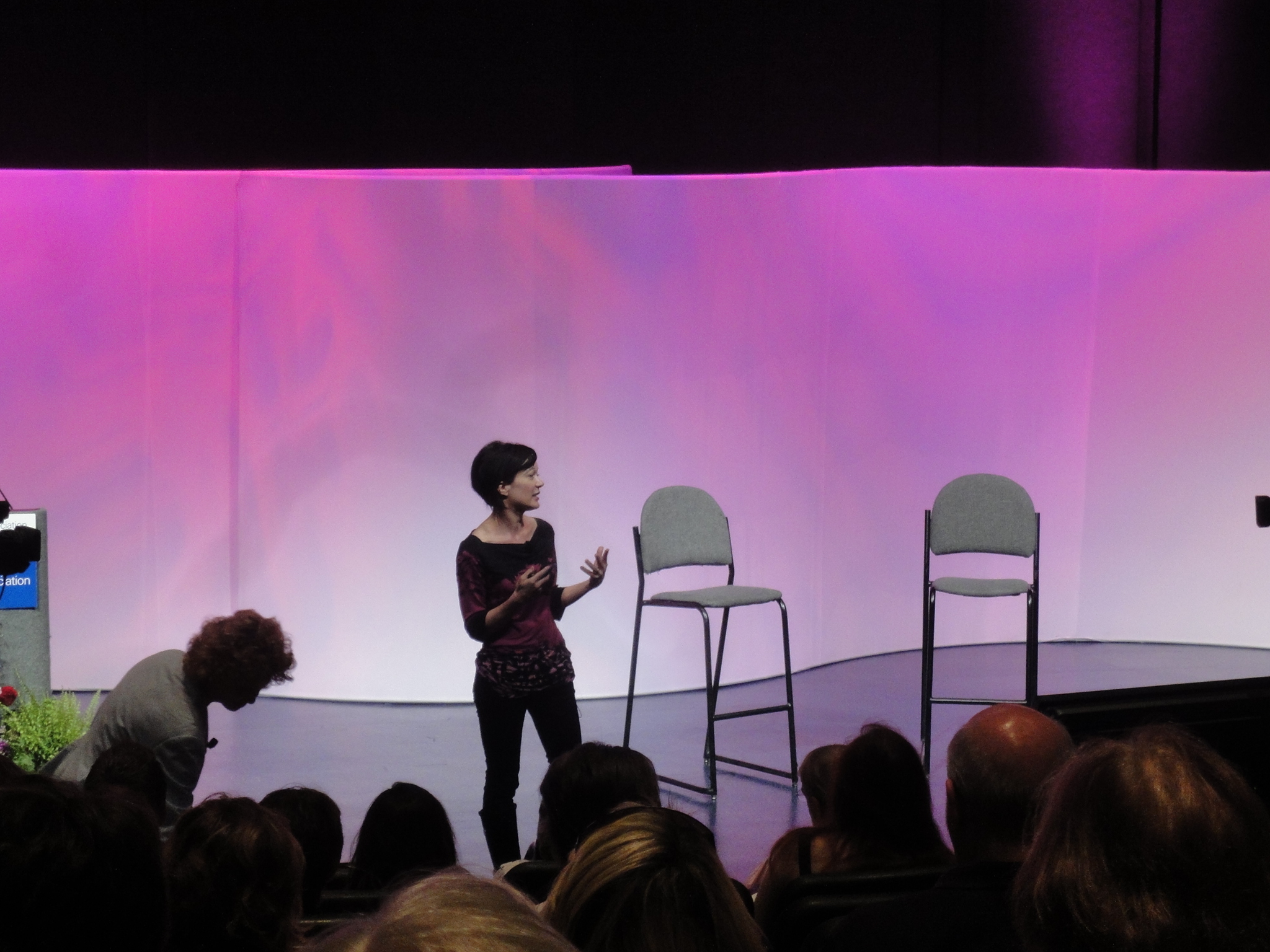
One of my favorite programs at ALA Annual was Sue Gardner‘s talk on Wikipedia. Gardner is the Executive Director of the Wikimedia Foundation, the nonprofit behind Wikipedia, and she is an incredible speaker: dynamic, enthusiastic, and prepared. She answered questions in a direct manner (and she’s quotable).

We are getting to the point in academia where Wikipedia is becoming accepted as a reliable reference tool. It is a great jumping-off point. You wouldn’t cite it in a paper – but then, you wouldn’t cite any other encyclopedia in a paper, either, after about third grade. Its value is in its currency, relevance, and most of all in its citations.

Gardner said that Wikipedia is an “inherently radical” nonprofit, supporting the idea that “people have a right to access to information.” She described the “virtuous circle, by which participation leads to quality, which leads to a broader reach, which leads to greater participation. There is “no such thing as perfect accuracy” – even recognized authoritative sources such as Britannica have errors, and those can’t be corrected as quickly as Wikipedia can, and they aren’t as widely or frequently monitored, either.

Wikipedia is a “credentials-neutral environment – some people need to be anonymous.” However, unlike communism, which looks good in theory but breaks down in practice, some problems for Wikipedia are theoretical rather than practical: “Wikipedians are fierce defenders of editorial integrity,” so while self-serving articles are a concern in theory, they are not so much of a problem in practice.

One of the main goals of Wikipedia, said Gardner during the Q&A, is “to get information to people so they can make informed decisions about their lives.” Gardner – former director of the Canadian Broadcasting Company’s website and online news – also encouraged questioning the nature of “authority” – “Is Fox News a ‘reliable source’?”

Journalism, Gardner said, “is not really a profession, it’s a job for curious people.” Also, it seems, a job for students and librarians: part of a recent public policy initiative encourages teachers and professors to assign students to write for Wikipedia. There are over 100,000 Wikipedia editors worldwide; these editors work for free, because they enjoy it and believe in it. The average Wikipedia contributor/editor is 25 years old, a STEM (Science/Technology/Engineering/Math) grad student – and male. Wikipedia contributors skew male; librarians skew female. Gardner’s message was clear: “We want you as Wikipedians.”

It was a galvanizing talk – read the American Libraries write-up here – and I’m excited to be attending the first Wikipedia in Higher Education Summit tomorrow.

Friends of the Library

Monday of this week was the annual meeting of the Friends of the Somerville Public Library. There was a guest speaker, Kenneth Gloss, the proprietor of the Brattle Book Shop in Boston. I have been there once – last summer a friend and I made a project of visiting all the used book shops we could find in Boston and Cambridge – and can vouch that it is an excellent place to poke around.

Gloss brought some “show and tell” objects: a 14th-century manuscript page (which has held up better than cheap novels printed much more recently); a cookbook from the 1790s that included a recipe for “how to cook eel, the common way”; and a facsimile of Poe’s Tamerlane. “Almost anything you can think of out there, people are interested,” he said.

For those who are interested in valuable/rare books, here are a few things to check for:

  • Is it a first edition?
  • Does it have an intact dust jacket (for hardcovers)?
  • Is it in good condition?
  • Is it signed by the author?
  • Is it an association copy? That is, has the author inscribed it to someone in particular?

And for those who are wondering about how to store old books properly, a good rule of thumb is “if you’re comfortable, the books are comfortable” – it shouldn’t be too hot or too cold, too dry or too humid. Keep the books out of direct sunlight, and don’t pack them too tightly on the shelf (or so loosely that they lean over).

For the book collectors out there, I also recommend Allison Hoover Bartlett’s excellent and enthralling The Man Who Loved Books Too Much: The True Story of a Thief, a Detective, and a World of Literary Obsession.

Promising Pals Breakfast

The Promising Pals end-of-year breakfast was on June 3. I didn’t realize what a huge program it was until I got there; every single student, 6th grade through 8th, has a Pal, and the program strongly emphasizes how important it is to come to the breakfast; students are disappointed if their Pals don’t show up.

There were several speakers (including Mayor Menino!) and performers, and all of us “adults” got to meet our student pals. It’s a pretty incredible program – still going strong after 25 years, and impressively well organized. I’m glad I got involved.

Speaking Volumes: Rare Books at the Isabella Stewart Gardner Museum

Earlier this week I went to an interesting talk at Simmons: Dr. Anne-Marie Eze, the Andrew W. Mellon Postdoctoral Curatorial Fellow at the Isabella Stewart Gardner Museum, spoke about Isabella Stewart Gardner as a rare book collector and about the upcoming exhibit “Illuminating the Serenissima: Books of the Republic of Venice” (May 3-June 19, 2011).

Though Isabella Stewart Gardner is most well known for collecting art, she began collecting books first; however, no one has looked at the rare book collection as a whole or considered Gardner as a collector/bibliophile till now. Dr. Eze is doing this, and cataloging the 5,000 books, which date from the 14th century through the 20th and include illuminated manuscripts, children’s books, incunabula, and inscribed “association” copies from authors with whom Gardner was friends – Henry James, for example.

In her talk, Eze noted – and seemed disappointed – that Gardner did not write in her books. Here seems to be the difference between a librarian/historian type and a rare book collector: the latter would want the book to be free of underlining and marginalia (unless it was the author’s or another famous person’s own notes, which could increase its value), but Eze would have been pleased to discover some, as a clue to Gardner’s life. I was reminded of a line of Rainer Maria Rilke’s from “Improvisations of the Caprisian Winter,” translated by Franz Wright:

So many things lie torn open
by rash hands that arrived too late,
in search of you: they wanted to know.

And sometimes in an old book
an incomprehensible passage is underlined.
You were there, once. What has become of you?

National Library Week

It is officially National Library Week! This year it’s April 10-16, so please find some way to support and/or advocate for your public library this week. I wrote to three government officials via the Massachusetts Library Association site, and have already received two replies: one a formality from one of the Governor’s aides, but another really nice e-mail (personal enough to tell my own letter had been read) from State Senator Patricia Jehlen, agreeing about the importance of libraries in our communities.

It’s easy to think of government as impersonal, removed, and impossibly bureaucratic (and, at present, rather gridlocked). That makes it all the more gratifying to be reminded that the government is made up of people, and those people are there for our benefit. So write to your legislators today, and remember to say thank you!

Promising Pals

I have a pen pal!

Last fall, I volunteered to be part of the Promising Pals program through the Scott/Ross Center for Community Service at Simmons. For months, I received bright yellow postcards indicating that the program was underway, that the students were very excited, that the first letter would be arriving soon, etc. The program was delayed a little because of all the snow days, but last week I finally received my first letter. My correspondent (pen pal!) is a sixth-grade student at the James P. Timilty School in Roxbury, and she has handwriting so exceedingly neat that it puts mine to shame.

I like writing (and receiving) letters – real, paper letters, not e-mail – but I underestimated how exciting this program would be. More precisely, I forgot how enthusiastic sixth-graders can be, and how that enthusiasm can be contagious. It’s not just letter-writing; it’s getting to know someone who would otherwise be a stranger, and getting to know that person through that antiquated medium of pen and paper (not the internet!). We’re different ages – different generations, eek! I actually wrote letters in grade school because e-mail didn’t yet exist on the scale it does now – we have different backgrounds and different interests, but we have been randomly connected. The main purpose of the program may be “to highlight literacy and mentoring,” but what a cool way to do that – by reading the same book and discussing it, in handwritten letters.