NELLS exercises and evaluations

Throughout the week at NELLS, we did a number of exercises and self-assessments. I have shared three of these below (PDF). They were all valuable exercises, in that they cause you to think deeply about your experiences, inclinations, and preferences; also, by examining how you work best, you can consider how others work best, how your styles might differ, and how to manage those differences to achieve a positive outcome.

Leadership self-assessment: This assessment tool helps identify areas of strength and areas for development*: the categories include communication, professional ethics, decision making, planning, solving problems, entrepreneurship, team building, coaching, leading change, motivation, empathy, social skills, self-awareness and regulation, and supervision. The questions, over four pages, are “I” statements, with a 1-5 scale from “seldom” to “frequently” for answers (e.g. “I explain ideas and concepts so all can understand”).

Conflict_management_style_assessment: This assessment tool consists of 20 questions with two possible answers each (choose a or b) over two pages, with scoring key on third page to determine your conflict management/negotiating style(s). Answer the questions before consulting the scoring key. Consider how you might work best with someone whose conflict management or negotiation style is different from yours.**

Risk-taking in organizations: This is less of an assessment exercise and more of an opportunity for reflection; it is two pages of open-ended questions.

*”Areas for development,” not “weaknesses.” The old familiar SWOT model of analysis (Strengths, Weaknesses, Opportunities, and Threats) can be replaced with SOAR: Strengths, Opportunities, Aspirations, Results. With this model, organizations can avoid getting bogged down in the negative and what has happened in the past by focusing on the positive (what is working) and on the future (what do we want it to look like, how do we want to function, what do we want to offer).

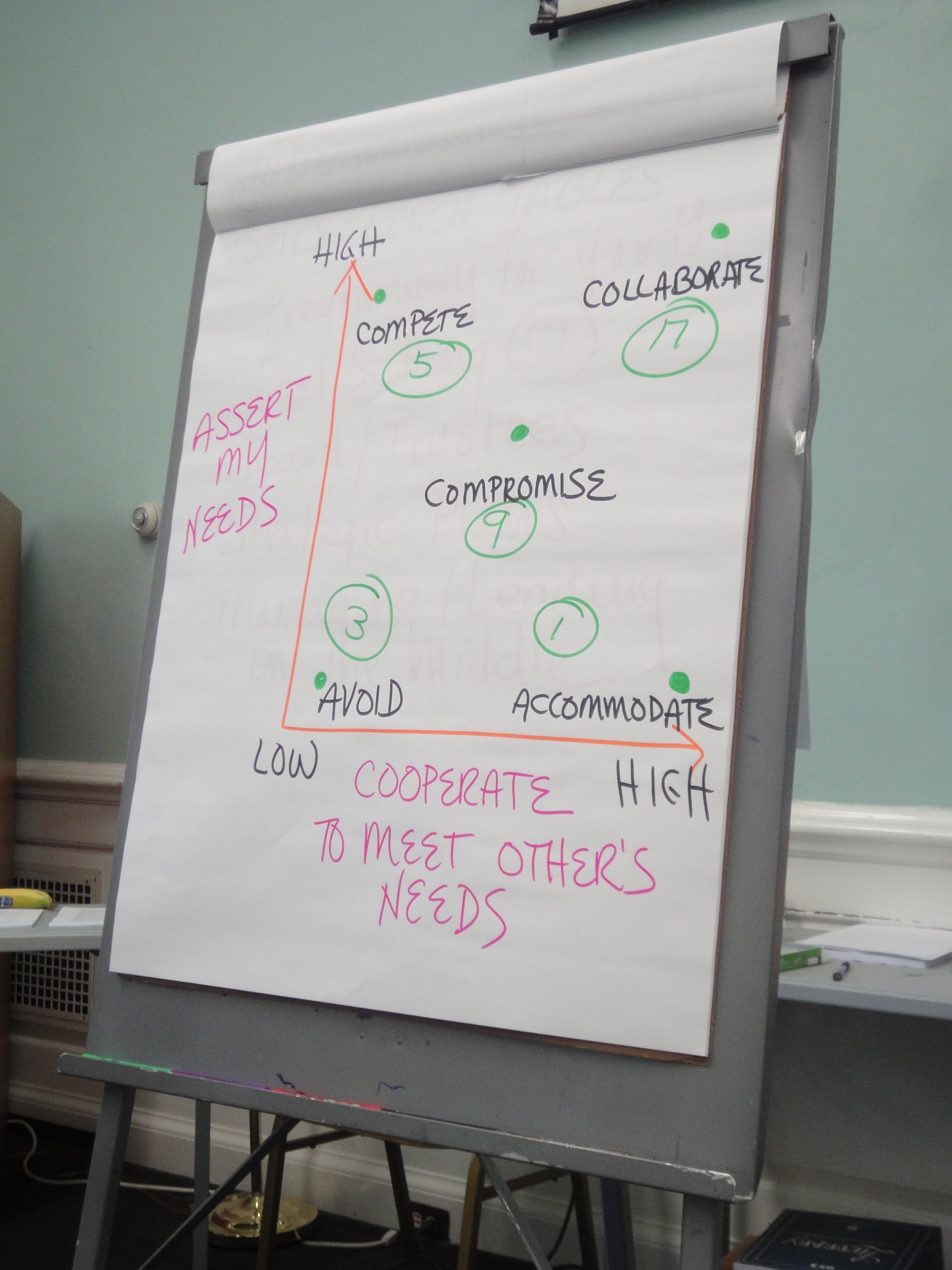
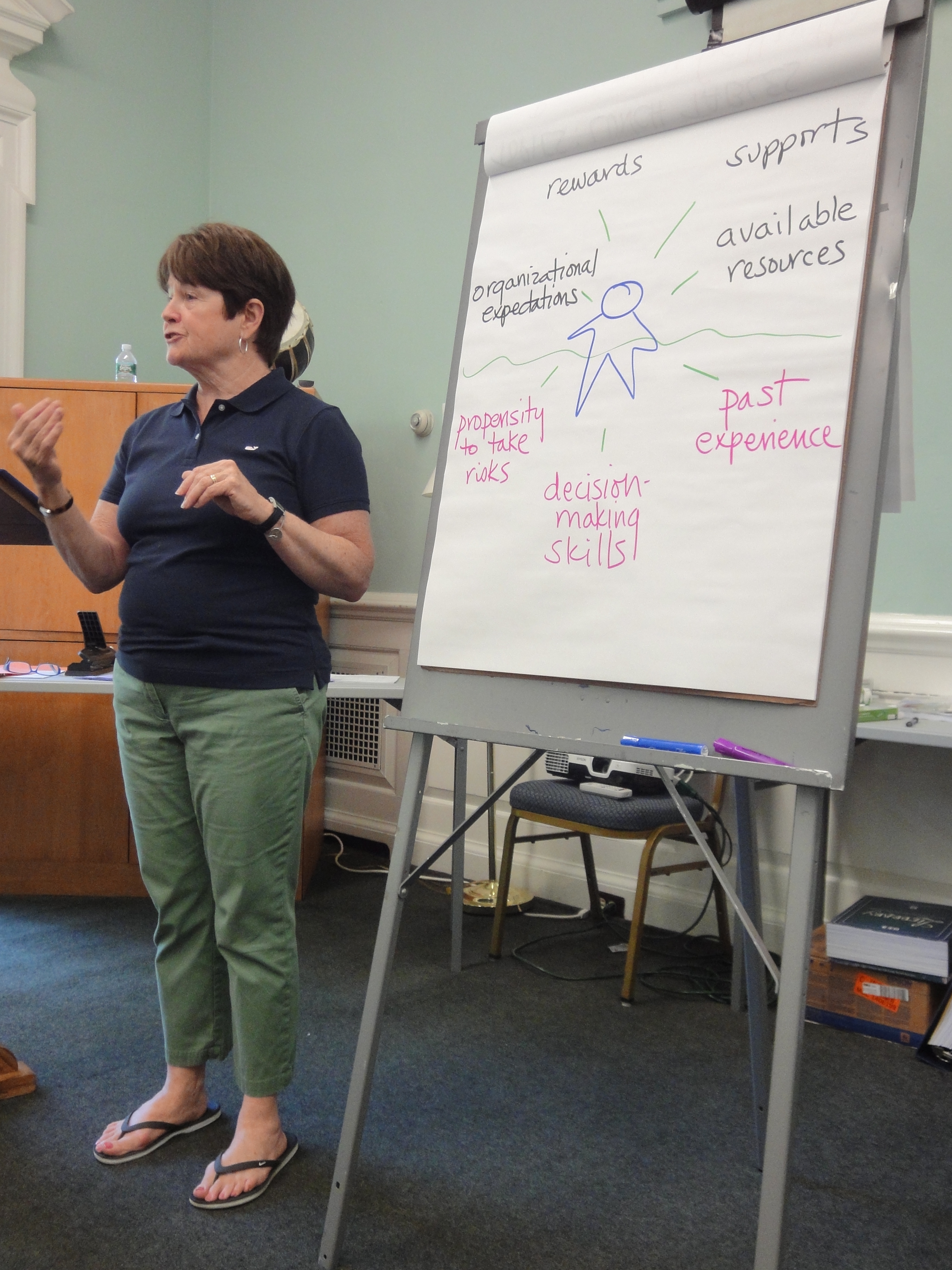
conflict_management_styles_graph**One of the best discussions of the week came out of this exercise, when we regrouped to discuss our results. Someone who had one conflict management style asked those with a different style how best to approach them to deal with conflict in a positive way. Recognizing that your co-workers – no matter where they are in the organizational hierarchy – may have a different style from yours brings a new level of awareness to the process of conflict management and negotiation.

In the photo at right, the circled numbers in green represent the results of the NELLS group. Though many of us scored high on two management styles (collaborating and compromising, for example), these numbers reflect only the highest scores. “Collaborating” was the most prevalent style, followed by compromising, competing, avoiding, and accommodating.

NELLS resources

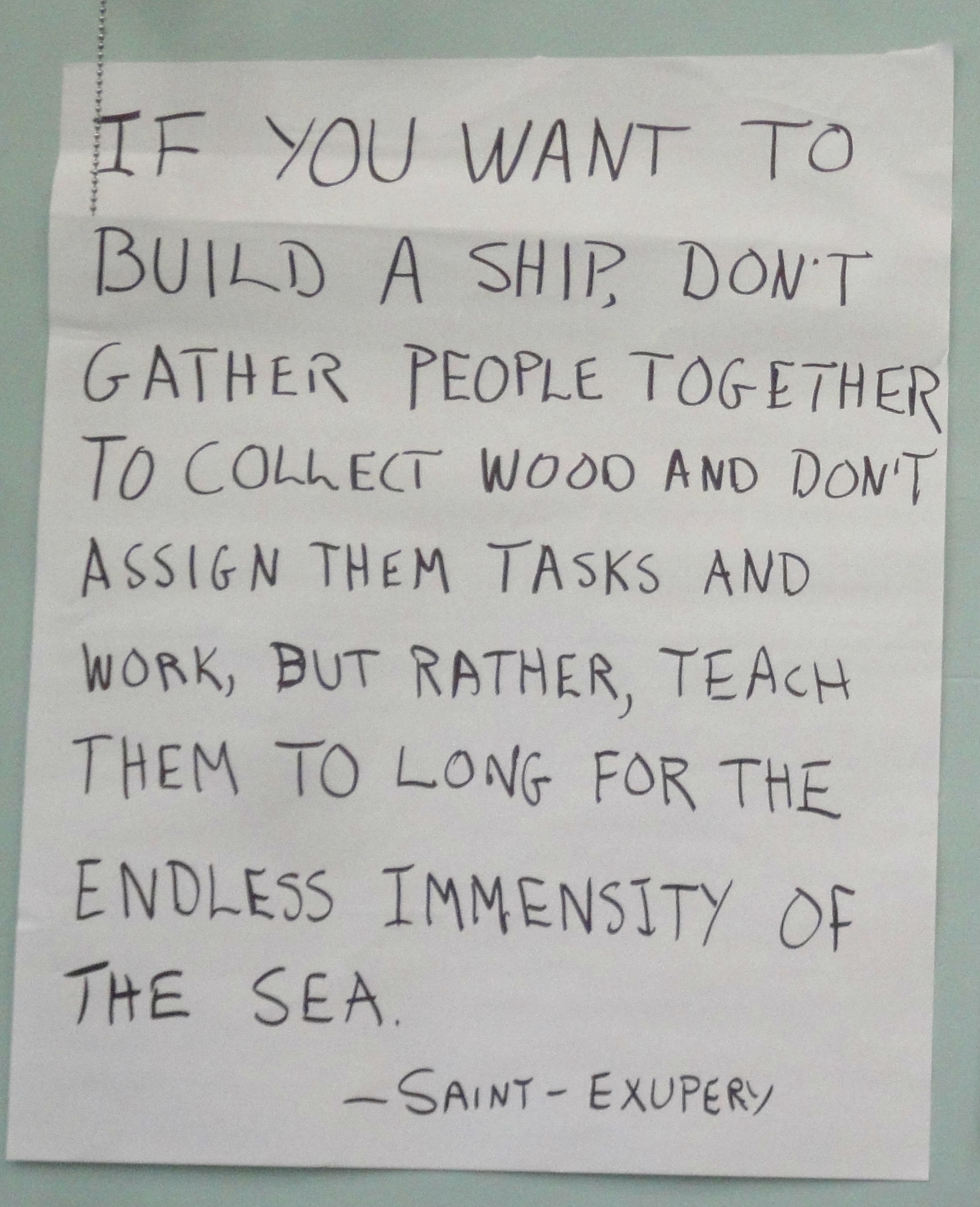
st-exuperyOn the first day of NELLS, each participant and mentor received a binder full of resources, including a “selected list of readings on leadership” compiled by Maureen Sullivan, which I have reproduced below (she said it was okay to share):

Bennis, Warren et al. Transparency: How Leaders Create a Culture of Candor

Bennis, Warren and Joan Goldsmith. Learning to Lead: A Workbook on Becoming a Leader

Berger, Jennifer Garvey. Changing on the Job: Developing Leaders for a Complex World

Bridges, William. Managing Transitions.

Cohen, Allan and David Bradford. Influence without Authority.

Farrell, Robert and Kenneth Schlesinger. Managing in the Middle (an ALA Guide for the Busy Librarian)

Fisher, Roger and Daniel Shapiro. Beyond Reason: Using Emotions as You Negotiate

Heifetz, Ronald et al., The Practice of Adaptive Leadership: Tools and Tactics for Changing Your Organization and the World

Kinlaw, Dennis. Coaching for Commitment. Jossey-Bass, 1999.

Kouzes, James M. and Barry Z. Posner. A Leader’s Legacy and The Truth About Leadership

McKee, Annie et al. Becoming a Resonant Leader

Patterson, Kerry et al. Crucial Conversations and Crucial Confrontations

Sinek, Simon. Start with Why: How Great Leaders Inspire Everyone to Take Action

Stueart, Robert D. and Maureen Sullivan. Developing Library Leaders.

rollingridge_mazeOf course, many other books and articles were mentioned by Maureen and others during the week. I have listed as many of those as I could find here, but if other NELLS folks want to add more in the comments, that would be great. Links for books go to the Minuteman or OCLC catalog, links for articles go to various websites.

Alexie, Sherman. “Superman and Me.” The Story and Its Writer: an Introduction to Short Fiction.

Amabile, Teresa. Growing Up Creative: Nurturing a Lifetime of Creativity

Boyatzis, Richard. The Competent Manager: a Model for Effective Performance

Brazelton, T. Berry. Touchpoints Birth to Three: Your Child’s Emotional and Behavioral Development  (mentioned in the context of managing emotions)

Conger, Jay. “The Necessary Art of Persuasion.” Harvard Business Review, May 1998. (Article preview is available, the rest of the article is behind the HBR paywall.)

Conner, Daryl. Managing at the Speed of Change: How Resilient Managers Succeed and Prosper Where Others Fail

De Rosa, Cathy, et al. From Awareness to Funding: A Study of Library Support in America. OCLC, 2008. (Web | PDF)

Drucker, Peter. “Managing Oneself.” Harvard Business Review, January 2005. (Article preview.)

Gabarro, John and Kotter, John. “Managing Your Boss.” Harvard Business Review, January 2005. (Article preview.)

Gladwell, Malcolm. Blink: the Power of Thinking Without Thinking

Goleman, Daniel. “Leadership That Gets Results.” Harvard Business Review, March 2000. (Article preview.)

Gross, Valerie. Transforming Our Image, Building Our Brand: the Education Advantage

Hallowell, Edward. CrazyBusy: Overstretched, Overbooked, and About to Snap: Strategies for Handling Your Fast-Paced Life and The Childhood Roots of Adult Happiness: Five Steps to Help Kids Create and Sustain Lifelong Joy and Connect

Harwood, Richard. The Work of Hope: How Individuals & Organizations Can Authentically Do Good (free ebook from link)

Heath, Chip. Switch: How to Change Things When Change is Hard.

Heifetz, Ronald et al. “Leadership in a (Permanent) Crisis.” Harvard Business Review, July 2009. (Article preview.)

Hesselbein, Frances, et al. The Organization of the Future

Kegan, Robert. The Evolving Self: Problem and Process in Human Development (he has written other books as well, including Change Leadership: a Practical Guide to Transforming Our Schools, but I think The Evolving Self was the one Maureen mentioned)

Kotter, John. “Accelerate!” Harvard Business Review, November 2012. (Article preview.)

Kretzmann, Jody and Rans, Susan. The Engaged Library: Chicago Stories of Community Building. Urban Libraries Council, December 2005. (PDF)

Lankes, R. David. Expect More: Demanding Better Libraries for Today’s Complex World

MacKinnon, Rebecca. Consent of the Networked: the World-Wide Struggle for Internet Freedom

Margolis, Michael. Believe Me. GetStoried.com

Maurer, Rick. Beyond the Wall of Resistance: Unconventional Strategies that Build Support for Change

Moore, Mary. The Successful Library Trustee Handbook. ALA, 2005.

Neiburger, Eli. Libraries Are Screwed. September 2010. (YouTube video, approx. 20 min. altogether, part 1 | part 2)

Nelson, Sandra. The New Planning For Results: a streamlined approachALA, 2001.

O’Toole, James, and Bennis, Warren. “A Culture of Candor.” Harvard Business Review, June 2009. (Article preview.)

Updated to add: Perlinska, Agnieska and Chapados, Chip. The Conversation: Simple Truths to Make Life Work

Sandberg, Sheryl. Lean In: Women, Work, and the Will to Lead

Scholtes, Peter. The Leader’s Handbook: Making Things Happen, Getting Things Done

Shewhart, Walter A. “Plan Do Check Act (PDCA).” (Wikipedia article)

Quinn, Robert. Deep Change: Discovering the Leader Within

Underhill, Paco. Why We Buy: the Science of Shopping

Von Oech, Roger. A Whack on the Side of the Head: How You Can Be More Creative

Neil Gaiman: Myth, Magic, and Making Stuff Up

neil-gaimanThanks to Twitter (see, it IS good for something!), I found tickets to the sold-out Neil Gaiman talk at the Boston Museum of Fine Arts on Saturday, “Myth, Magic, and Making Stuff Up.” Gaiman is not only an excellent writer – of fiction for adults, teens, and children, of graphic novels, of nonfiction, of short stories – he is a great advocate for libraries, so I was doubly excited to see him speak.

His first words to the audience were, “Hello. So, the plan. And I have one.” He then said hello to those watching/listening from the overflow room, and consoled them, “You wouldn’t believe what it smells like in here.” For the rest of the hour, he gave a prepared talk, then read us a draft of a new story(!), then answered questions from the audience.

Gaiman likened myths to compost – an analogy he has used elsewhere – old, essential stories broken down into their rich, earthy components, ready and waiting for writers to plant their own seeds and harvest their own new plants from the old material. Myths evolve to suit – and help explain – a particular time and place. In one version, Sleeping Beauty might sleep for a hundred years, and in another version she might sleep for just a day; in many versions she is the protagonist, but in another it’s the queen who is the hero. “Too often myths are unexamined,” Gaiman said. “It is the function of imaginative literature to show is the world we know but from a different direction.”

After his prepared talk, Gaiman read us a story called “Freyja’s Unusual Wedding,” a retelling of an old Norse myth featuring Freyja, Thor, Loki, and the giant Thrym. I’m unfamiliar with the original, but in this version, Thrym steals Thor’s hammer, Mjolnir, and demands Freyja’s hand in marriage in exchange for its return. Freyja, naturally, declines to be married off to the giant, and Thor and Loki must come up with an alternative plan. “Freyja’s Unusual Wedding” is to be part of a collection of retellings of myths that Gaiman plans to spend 2014 working on (among other things, I’m sure), and the audience reaction was strongly positive.

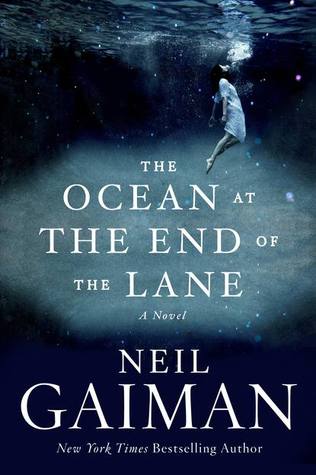
oceanattheendofthelaneThe question and answer session was relatively brief. One person asked about the role of rules in myths, citing examples from Gaiman’s newest adult novel, The Ocean at the End of the Lane. Gaiman responded that myths once had a useful function as a teaching tool in society, but noted, “I have always been very fond of not telling what the rules are.” He pointed out that whenever he has met with people in Hollywood meetings about his projects, someone has inevitably said, “I don’t really understand what the rules are,” to which he replied, “No one understands what the rules are.” That’s what makes life – and stories – interesting (or scary).

Another person asked, “Do you ever create something that becomes part of your belief system?” Yes, Gaiman said; writing can be a way of learning what you believe, and at least, “I believe what I’m writing while I’m writing it.” But, he added, “It’s weirder for me when other people believe it.” (“I have a very weird kind of head.”)

The last question was from a teacher, who mentioned the recent change in the core curriculum, a shift toward more nonfiction. He asked if Gaiman could recommend some nonfiction he liked. Gaiman said that he hadn’t really started reading nonfiction until he started writing fiction and realized “It all had to come from somewhere.” He recommended two of his favorite nonfiction books: Extraordinary Popular Delusions and the Madness of Crowds by Charles MacKay (1841), London Labour and the London Poor by Henry Mayhew (1967).

A few additional quotes from the first part of the event:

On turning into a werewolf: “I dreamed I did once, so I know what it’s like.”

On writing: “We [authors] cannibalize ourselves.”

On stories: “Without our stories we are incomplete.”

On fairy tales: “Fairy tales are not true, they’re more than true.”

On the imagination: “It’s a strange place, the imagination…a dangerous place…you can always use a guide.”

For those who missed this event and are interested in what Gaiman has to say, I recommend his recent commencement speech (video). For those who are interested in reading some of his work, check out A Calendar of Tales for free – twelve short stories, one for each month of the year, inspired by prompts on Twitter.

Note: The above photo of Neil Gaiman is from the Boston MFA website. Photography during the event was “strictly prohibited.”

New England Library Leadership Symposium (NELLS) 2013

I returned home from NELLS just a couple hours ago. We were all instructed to “take time for yourself” and stay away from our notes for a few days, so this will just be a brief post before I revisit all of the excellent materials from the past week.

MaureenOn Monday, 28 participants, six mentors, and two co-chairs from Maine, Massachusetts, Connecticut, New Hampshire, and Vermont met at Rolling Ridge in North Andover, MA to spend a week learning about leadership in libraries.

ALA President (2012-2013) Maureen Sullivan joined us for the week to teach the symposium, and we had visitors throughout the week as well, including former Director of the Massachusetts Board of Library Commissioners, Rob Maier, New England Library Association (NELA) President Deborah Kelsey, Maine Library Association (MLA) President Nissa Flanagan, Connecticut Library Association (CLA) Past President Carl DeMillia, New Hampshire Library Association (NHLA) President Diane Lynch, and Vermont Library Association (VLA) President Amber Billey (via a Google Hangout).

Photos from the week – of the grounds, of our brainstorming and discussion session results, and our social activities – are available on Flickr.

It was an incredible experience, and I’m grateful to have had the opportunity to learn so much from Maureen, as well as the mentors and all of the other participants. More on NELLS to come soon.

ALA Chicago

I didn’t get to attend ALA’s Annual Conference in Chicago this year, but I followed along virtually on Twitter (#ala2013) and through others’ blog posts and articles.

alaRT

On June 27, Maureen Sullivan announced the launch of the “Authors for Library eBooks” initiative. A District Dispatch blog post, “Bestselling authors call for library ebook lending,” quotes Jodi Picoult: “Whether it’s a digital file or a paper copy, I want readers to find my books—and all books—in their libraries!” (As readers of this blog know, not all publishers make all their ebooks available for libraries to purchase.)

My friend Brita, who attended the conference through the Student-to-Staff program (the same way I did in 2011), wrote this great piece on Ann Patchett’s PLA President’s Program: “Ann Patchett, Readers’ Advisor Extraordinaire.” She also created a Bibliocommons list of Patchett’s top ten recommendations.

ALAbibliocommons

YA Authors Decode Dystopia“: I would have loved to have been in the audience for this author panel on dystopian fiction, featuring Lois Lowry, Cory Doctorow, Veronica Roth, and Patrick Ness. The authors identified “an important component of dystopian fiction that makes it so appealing: the ability to place oneself intimately in the action. The ‘what if’ factor draws readers into dystopian fiction, making them imagine how they would react if faced with calamity.”

I would have loved to sit in on PLA’s “Long e-Overdue” panel as well, which featured Jamie LaRue of the Douglas Country (CO) Libraries, Mary Minow of Library Law, and Michael Porter of Library Renewal. The idea of “library-managed e-content platforms”  as an alternative to middleman-style vendors such as OverDrive and 3M is a great goal to aim for.

I also followed along with the “New Adult: What Is It & Is It Really Happening?” panel on July 1 via Twitter (#ala13na). The panelists provided a huge list of “new adult” resources, including articles, blog posts, and booklists. Depending on who you listen to, “new adult” is either a “hot new category” in publishing, or a useless and annoying marketing ploy; it’s either fiction that features main characters in the 18-25 (ish) age range, bridging the gap between YA and adult, or it’s typical YA but with sex scenes. It’s definitely an emerging niche, though, and there’s lots to discuss.

Finally, from American Libraries Magazine, there’s a list of “10 Steps to a Better Library Interior.” The first step (“fresh perspective”) even includes one of my favorite cleaning/de-cluttering tips, which is to take everything out, then only put back the things you really want to keep. (Or at least imagine you’re doing so: obviously it’s impractical to move computers, furniture, and tens of thousands of books out of the library and into the parking lot.)

Conferences are both exhausting (travel, long days, rushing from one room to another, meeting lots of new people) and energizing (meeting new people, encountering new ideas, thinking about how you can bring those ideas back to your own library or workplace). I’m glad I was able to follow along virtually this year, thanks to those who wrote, tweeted, and linked.

Edited to add: My friend and fellow Student-to-Staffer (2011) wrote a great recap of all the programs, panels, and roundtables she attended at ALA 2013, including sessions on young adult literature, graphic novels, ARCs, and the New Adult panel. It’s worth a read, especially if you’re a YA librarian and/or a school librarian.

Roundup: Reading and writing elsewhere

I haven’t posted here in a little while, but I have managed to write a few posts elsewhere. On the Robbins Library blog, I wrote about four WWII books that I’ve read recently: The Guernsey Literary and Potato Peel Pie Society by Annie Barrows and Mary Ann Shaffer, Life After Life by Kate Atkinson (which I wrote about here previously), All the Light There Was by Nancy Kricorian (who is coming to the Robbins Library this fall!), and Rose Under Fire by Elizabeth Wein, author of the fantastic Code Name Verity.

Over on my personal blog (mostly recipes and dog photos), I wrote about which thirteen (13) books I brought with me on a recent one (1) week vacation, and then which of those I actually read. Also, if you’re interested in seeing what The Casual Vacancy or Mockingjay look like in Icelandic, or what The Fault in Our Stars looks like in French, I took photos of those book covers in the Reykjavik City Library and a bookstore in the 11th arrondissement of Paris, respectively.

In other news, I found out I’ve been accepted to the New England Library Leadership Symposium (NELLS), along with my friend Anna, an awesome young adult librarian (read her blog! Unlike me, she actually sticks to a schedule). We’ll be there, along with 26 other participants, for a week later this summer, and I’m pretty excited to meet other librarians from around New England, exchange ideas, learn a lot…and maybe go canoeing.

We built this together

“We need editors, and we need publishers, and we need booksellers….We built this together, and we’re going to keep building it together.” -John Green at the American Booksellers Association Annual Awards (he gives librarians a shout-out too)

The book business may be changing, but that doesn’t mean that many “traditional” elements aren’t crucial (see “In defense of editors,” October 2011). Books may have only one author, but many hands and minds go into their production, let alone their success.

Library Learning Goes Online

I wrote recently about MOOCs and online learning, so naturally I was interested in the new AL Live webcast, Library Learning Goes Online, and it did not disappoint. The moderator was Sarah Steiner, the Social Work and Virtual Services Librarian at Georgia State University Library, and the speakers were John Shank, Instructional Design Librarian and Associate Director of the Center for Learning and Teaching at Penn State University, and Lauren Pressley, Director for Learning & Outreach at Virginia Tech University Libraries.

Similarities and differences between online and face-to-face (F2F) teaching and learning

Online and F2F are “more similar than different,” said Pressley. In both cases, instructors must establish learning objectives and identify learning outcomes. There are more variables online than F2F, and more design options; Shank warned of “options overload,” noting that this may be more of a challenge for public libraries because they tend to have fewer resources and less expertise in this area. Pressley said that the “intentional stance” required for instructional design of online courses “bleeds over into F2F,” and Shank agreed that “technology starts a discussion.”

Costs and benefits of teaching and learning online

“Communication is on a different scale,” said Shank, meaning the instructor has more  reach, but can lose the intimacy from the F2F environment, as well as other forms of interaction, such as nonverbal communication. Pressley agreed, “Whatever you gain from the online environment, you lose something else.” Being online can provide a sense of isolation or connection; more people may be connected, but the connection is shallower.

Shank also noted that the time investment necessary in order to get deep meaningful engagement is a challenge. Pressley reminded instructors and students alike that “it is a real class! Block out time to do work, interactions, and planning.” She also added another benefit of online learning, which is that it can be a great option for distance learning, and for solving space issues (not enough classrooms, or not enough space in classrooms).

Mere convenience aside, there are real advantages to online learning. Shank observed that the online environment can draw out people who wouldn’t speak up in class, and it serves different styles of learners, especially those who prefer to have time to reflect before responding.

Time investment

Inarguably, there is an additional time investment required for teaching an online class: Pressley listed content creation, upfront prep time, and consideration of instructional design principles. Content can be reused in future classes, but communication is time intensive. Shank noted that transparency increases because students can tell exactly how responsive the instructor is. Likewise, depending on the tools being used, the instructor can see the exact degree of each student’s participation.

Student engagement with the material

Here too, there are similarities between online and F2F instruction. Pressley advised, “Present content in an interesting and useful way; let students interact with you and each other; tie the material to real-world need.” Shank added, “Increase conversations and dialogues” with tools such as chat, realtime polls, and built-in activities. Steiner added that students can be engaged with each other as well as the instructor.

Assessment and active learning

Pressley identified three categories of assessment: course evaluation, ongoing, qualitative assessment during the learning process (formative), and learning outcomes (summative). In her classes, she gets feedback “on the fly” using Google surveys or SurveyMonkey, scavenger hunts, and other methods; strategies will be different depending on whether the course is credit-based or a “one shot” class or workshop.

Shank suggested building feedback into any activity, online or F2F. He also does a learning analysis, examining how much students access course content and how that relates to performance. If students are disengaged and not doing well, he shows them a graph of time spent on class work vs. grade in course (“There is always a statistically significant correlation”).  He strips personal data out, of course, but the exercise also has the effect of showing students that instructors can track their engagement and performance.

MOOCs (Massive Open Online Courses)

Shank identified the “big three” MOOC providers at the moment: Coursera, Udacity, and edX. MOOCs, he said, are “not new technology, but the timing wasn’t right till now.” Given the limited access to and high cost of higher education, MOOCs seem like a perfect solution in terms of the access and cost. Shank predicts, “[MOOCs] are going to evolve, not go away,” and that the interactivity element of them may increase.

Pressley took a MOOC herself, and said that she interacted with the content and her classmates, but not professor. “It’s a pretty good deal, for free,” she said, but asked, “When you pay for higher ed, what are you paying for?” Pressley said that there are things that instructors in higher ed can learn from the MOOC model, but that MOOCs would not replace higher ed institutions entirely; their impact on higher ed is “not the end of days.”

Shank agreed that MOOCs are “part of the landscape.” Technology, he said, has had its impact on other industries such as music and finance; now it is having an impact on education. He asked, “How can we use this platform to show people what we do as librarians?” Parents and incoming students are a prime audience for academic librarians. Shank stated, “Librarians are more important than ever because we live in the information age.” He also mentioned that public libraries could serve as meetup points for students taking MOOCs, so that they can meet in person as well as online, creating a hybrid/blended learning experience.

Troubleshooting new technology

Shank said, “Test it before you do it! Be prepared.” Pressley advised, “Get there early – give yourself a cushion.” When you have a large audience, she said, “Choose less experimental technology,” go for something more simple and reliable,  and have a backup way of communicating the information. Experiment with newer, more complex, or less reliable technology in small groups. Steiner suggested having a backup person available, as well as backup technology, as least while setting up.

Best practices for teaching online

Shank reminded instructors that “learners have little experience, it’s new technology.” There is a learning curve, and patience is required on both sides. Assessment is also crucial; Pressley said, “Ask strategy questions, not skill questions: ‘What was your approach to finding…’ [rather than] ‘What did you use?'” Technology, Shank said, “Gives us more ways to assess, understand, and communicate.” Analytics about students’ work habits and behavior can be useful to instructors.

Changes in the near future

“Consumers are becoming producers,” said Shank, giving the example of citizen journalists. Open educational resources are also growing, as is content curation. Pressley mentioned the competency-based educational movement, as well as personal learning networks, rich informal learning spaces, and MOOCs. Shank spoke about learner analytics, “bits and bytes instead of people with souls.”

Overall, this was an excellent presentation and I’m glad I watched it. Some of the material was familiar from the User Instruction class I took in grad school, and from my own experiences with online learning in that class and others; some of the content was familiar from reading recent articles on the topics of MOOCs and higher education. However, this presentation provides the unique perspective of librarians positioned within higher ed, which makes it especially worthwhile. Click to watch (opens in a new window):
ALLive


Making the library a little more Awesome

As soon as I read about the Awesome Box at the Somerville Public Library, I thought it was a fantastic idea and I wanted to bring it to Arlington as well. The Awesome Box, dreamed up by the capable inventors at the Harvard Library Innovation Lab, allows library users to “cast a physical vote for an item they found amazing or useful” by returning it to the “Awesome Box” instead of the regular Returns bin. Library staff then scans the “awesome” items, and they appear on the library’s web page.
arlingtonawesomebox

Awesome at the Somerville Public Library

Awesome at the Harvard Library

Awesome at the Robbins and Fox Libraries (We just launched this week so there aren’t very many items yet, but keep checking!)

We’ve also devoted one of our four Staff Picks display shelves at Robbins to items that have been “awesomed” – so it has, in effect, become a Patron Picks shelf. It will be interesting to see what turns up there, and I hope it will be a conversation starter for library users and staff alike.

Talking about books (a.k.a. readers’ advisory) is one of my favorite parts of librarianship, which is why I pushed so insistently to bring Awesome Box to our library. Fortunately, there was a lot of in-house enthusiasm in all departments, and the folks at the Harvard Library Innovation Lab have been absolutely great to work with. SPL librarians also responded helpfully when I asked them about their experiences with implementation, and based on their answers I was able to make up a simple FAQ for our staff here in Arlington.

I’m looking forward to seeing what people think is awesome. I expect to see a lot of popular, high-profile books, movies, and TV shows, but I think it will also be a great way to discover some more obscure items as well.

Because my reading list isn’t already long enough.

MLA Conference, Day Two (Thursday), Part Three

On Thursday afternoon, I attended the session “Analyze Your Collection.”

weedingtweet1

“Collection analysis” in this case seemed to be a polite synonym for weeding (withdrawing books from the library collection). Two representatives from the Thomas Crane Public Library in Quincy, MA, Claudia Shutter and William Adamczyk (now of the Milton Public Library), spoke about their experience using the tool/service CollectionHQ. They described CollectionHQ as a “weeding/collection development tool” that “optimizes performance of materials”; CollectionHQ “talks” to the ILS monthly via FTP, so the library regularly sees new data.

Adamczyk spoke about the practical and ideal reasons for weeding. Practical reasons have to do with space, aesthetics, and cleanliness; “ideal” reasons have to do with updating the collection, keeping accurate statistics, and improving catalog searches. To get started, he said, (1) have a plan and goals and commit to it/them, and (2) form a team, then discuss, prioritize, and standardize.

weedingtweet2

Systematically weeding the library collection is “a great inventory project.” The hands-on aspect plus the CollectionHQ tool helped the Thomas Crane staff identify “dead items,” grubby items, and areas that were over- or under-stocked by comparing the items in the collection to the demand for those items. CollectionHQ also helped them maintain an accurate inventory and clean up their database. (Throughout the project, they used special red book trucks for weeding, so those carts wouldn’t be confused with regular circulation carts.)

Thomas Crane reported that their results after weeding and using CollectionHQ were “better circulation and better turnover, better aesthetics, better browsing, more space on the shelves…a better understanding of over/under-stocked areas.”

Next, we heard from Rick Lugg from Sustainable Collection Services. SCS “offers deselection decision-support tools to academic libraries.” Academic library stacks, Lugg said, are often “full of books but empty of users.” As he pointed out, it’s not free to keep a book on the shelf (see “On the Cost of Keeping a Book” by Paul Courant and Matthew Nielsen, p. 81-105, PDF), and so weeding – or “deselection” is necessary in academic libraries too. Lugg acknowledged that public librarians are “way out in front” of their academic counterparts in terms of weeding, but that academic libraries have a different mission than public libraries, and that mission includes preservation.

weedingtweet3

Lugg defined three categories of material: archive copies, service copies, and surplus copies. He spoke about redundancy, in terms of keeping a book on the shelf when it could be easily accessed elsewhere, either online (via HathiTrust or Google Books) or from another library. With “independent action in a collective context…safety is built into the system.” With SCS, libraries have the ability to “combine elements in a way that makes sense locally” and use the “rules-based interactive system” to make “data-driven decisions.” For example, a librarian could create a deselection list of withdrawal candidates that were published before 1990, have never circulated, and that are owned by at least 100 other libraries; these lists can be iterative, as weeding is “an ongoing process” rather than “one massive project.”

weedingtweet4

weedingtweet5

Overall, this was an okay session; though it was neat to see some of the CollectionHQ and SCS output, the session felt a bit like an advertisement, and I’m already very much on the weeding bandwagon for both “practical” and “ideal” reasons here at the public library. It was interesting to consider the additional parameters that academic librarians have to consider when weeding, though.

The final panel I attended at MLA on Thursday was “Print and Digital Publishing: How are Publishers, Editors, and Authors Adapting,” moderated by Skip Dye of Random House, with Liz Bicknell of Candlewick Press, M.T. Anderson (author of Feed and many other young adult novels), Amy Caldwell of Beacon Press, and Chris Stedman (author of Fathiest).

Skip Dye began by asking the question, “Adapting?” and answering it, “Are we?” The basic cycle of the publishing industry hasn’t changed: authors find agents, agents pitch the book to editors at publishing houses, publishers acquire the book and distribute it to the market. Within that cycle, however, there’s a lot of room for difference. Some editors still prefer to mark up a physical manuscript with pen or pencil (“I think with a pencil in my hand,” said Bicknell), while others will make corrections and suggestions on an electronic copy of the manuscript and e-mail it back to the author. Some editors – at Scholastic, for example – work entirely over e-mail, Anderson said, but that changes the revision process, not the writing process. At Candlewick, Bicknell said, books are still “conceived as print books,” then made “e.” Caldwell said she preferred to edit shorter pieces electronically, but still preferred to read long books on paper, for the better sense of cohesion and pacing.

The two really disruptive elements to the publishing industry at this moment are e-books and self-publishing, and those topics made up most of the panel’s discussion in this session. The editors and authors on the panel made many salient points about how e-books affect publishing in ways large and small. Caldwell pointed out that “it does take work to make a book into an e-book”; Bicknell explained that permissions were tied to the number of copies published, so even though e-book sales are not connected to physical quantity, they can be limited by permissions. “Trade publishing is a small profit margin business,” she said. Anderson, too, expressed concern about that margin. If advances continue to shrink, authors may no longer be able to afford to write research-intensive, sophisticated books – “Then what?”

Skip Dye raised a seemingly small but non-trivial point: permissions are necessary not just for other authors’ or artists’ work, but for fonts as well. Different e-readers and tablets display different fonts, and often offer only a limited choice. Bicknell added, “Fonts send subliminal messages…[they] create mood.” (Surely some readers of this blog are familiar with the documentary Helvetica? And we all have our favorite fonts…I am fairly certain I could identify a single line from an Ann Patchett novel based solely on the font.) Dye mentioned that different devices also display different levels of color saturation, which has an effect on illustrated books, especially children’s books.

printdigpubtweet1

The discussion then turned to self-publishing. Chris Stedman is a 26-year-old active blogger, a digital native who writes and edits on the computer, and reads and writes on paper – yet he still chose to write a book and work with a traditional publisher instead of self-publishing. He said that the value of a traditional publisher lies in the “third-party perspective,” an editor’s experienced eye instead of a friend or family member’s opinion. Caldwell spoke about the author-publisher match, describing publishers as “curators in certain areas.” (Beacon Press, for example, is “an independent publisher of serious fiction and nonfiction.”)

On the topic of self-publishing, Caldwell said, “Publishers can be wrong, and not want to take risks. But, editors see lots of manuscripts and know how hard it is to write a good book. There’s so much stuff, finding something you want to spend time with is hard….Publishers make it easier for readers to find something worthwhile.” Anderson too chimed in, agreeing that self-publishing allows for “democratization” but asking, “How do you end up with the grassroots but not the dirt?” Whereupon publishers were compared to the “special environment” of hydroponics.

printdigpubtweet2During the Q&A, Stedman stated, “The way in which we consume media is changing dramatically.” Writers are trying different formats (might we see a resurgence of the long-form essay, or the novella?). Caldwell mentioned the attention span issue; with the proliferation of information (and entertainment), shorter formats like “singles” or long articles might do well.

printdigpubtweet3

This final panel might have been trying to cover too much ground in its allotted time, but the panelists certainly touched on a number of interesting topics. As a former assistant at a literary agency, I can attest that about 99.98% of manuscripts submitted were nowhere near the quality of a published book, and even with help from an agent and an editor, most of them never would be. (Which is not to say that awful books don’t get published – they do – or that worthwhile manuscripts don’t get rejected – they do.) Whatever else changes, editing is a crucial part of the writing and publishing process.

masslibtweet