From Jane Eyre to Gemma Hardy

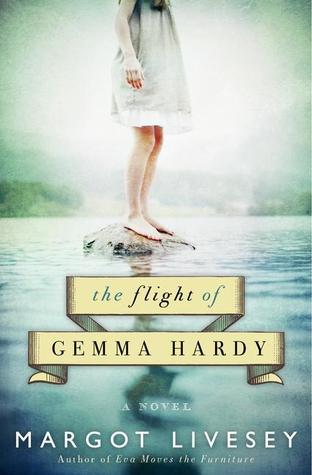
Last night, I had the pleasure of hosting Margot Livesey at the library for a reading and booktalk. You know that Sourcebooks T-shirt, Authors Are My Rockstars? That pretty much sums it up for me, but I think I managed to be somewhat graceful and well-spoken (keeping the “likes” and “ums” to a minimum). Margot herself was just lovely (you can listen to an interview with her on the Leonard Lopate Show if you missed last night’s event), and I was so excited to do this program with her.

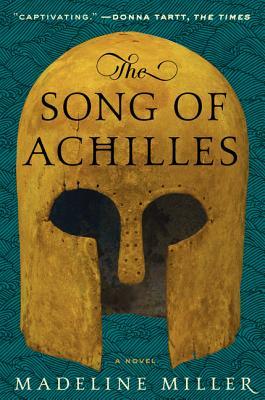
Check out the library blog post to read more about the books we discussed and recommended: The Song of Achilles by Madeline Miller, Billy Lynn’s Long Halftime Walk by Ben Fountain, Bring Up the Bodies by Hilary Mantel, Rules of Civility by Amor Towles, and Gold by Chris Cleave.

After reading from The Flight of Gemma Hardy and recommending some other books, Livesey answered questions from the audience. One person asked how autobiographical the novel was; Livesey said, “Like Charlotte Bronte, I stole from my own life…I borrowed recklessly and exaggerated wildly.”

Livesey also discussed why she chose to “re-imagine a novel” that was published in 1847 and hasn’t been out of print since (165 years)? “It’s preposterous,” she allowed, but the story clearly has “enduring appeal,” the nature of which has to do with the combination of two old and powerful narratives: that of the orphan and that of the pilgrim/traveler on a journey. Jane Eyre – and Gemma Hardy – combine these two into one.

Also, by setting the story in the 1950s-1960s, Livesey was able to “write back” to Bronte, showing how far women have come (though, as she noted last night and in the interview linked to above, the “swinging ’60s” didn’t reach parts of Scotland until the 1970s). As a reader, it was deeply satisfying to see Gemma standing up for herself in ways that Jane couldn’t.

So, if you haven’t already read it, do add The Flight of Gemma Hardy (and also perhaps my other favorite Livesey novel, Eva Moves the Furniture) to your to-read list.

The Growing Pains of E-Books

Like many librarians in public libraries, I spend a fair amount of time explaining how various e-readers work, how the digital media catalog (separate from the regular library catalog) works, and how to accomplish the many steps required to download an e-book from the library collection.

I know that we live in a time of unprecedented and rapid technological growth and change, and that what we are going through now is just growing pains. The book industry, like other media industries (music, film), is trying to figure out how to deal with this change.

But it’s not happening fast enough, or thoughtfully enough. The prevalent model right now is one book, one reader: libraries buy (or, more often, license) one digital copy of a book, and one library user can borrow it at a time. With vendors and digital rights management (DRM), publishers are attempting to make the digital world obey the same rules as the print world, but this is artificial and must give way to a better model.

Even with the current model, most major publishers are not participating; they refuse to sell or license e-books to libraries. This comes as a surprise to many library users, which means librarians must do a better job of raising public awareness, notes San Rafael Public Library Director Sarah Houghton (a.k.a. the Librarian in Black).

There are other models out there: Brian Herzog (a.k.a. the Swiss Army Librarian) explains a newer platform called Freading, a token-based system that eliminates waiting lists. The main catch is that Freading’s 15,000+ books don’t include any from the “Big Six” publishers (HarperCollins, Random House, Penguin, Macmillan, Hachette, Simon & Schuster), and therefore many popular titles.

Eventually – sooner rather than later, one hopes – the major publishers will see that their fears are unfounded, and that selling or licensing e-books to libraries will not gut their sales. (After all, selling print books to libraries didn’t kill the book industry.) In an article that reported research findings showing “a symbiotic relationship between library patronage and consumer book purchasing,” School Library Journal editor-in-chief Rebecca Miller said, “It’s exciting to have data to back the sense that library use is also an economic engine for the book industry. Publishers now have proof of how libraries support their business models.”

For years, articles asking “Are libraries obsolete?” and wondering, “Will [fill in the blank] be the death of libraries?” have abounded. Libraries are still here, though, and most want to remain relevant; we want to continue offering “the highest level of service to all library users through appropriate and usefully organized resources” (ALA Code of Ethics). In many cases, libraries offer not just access to resources but also a community center, a place for people to meet, learn, work, and create. Now, with the rise of self-publishing, the question has become: Are publishers relevant? Are publishers obsolete?

Not quite yet. The mainstream publishing industry still has value. Its editors and publicists have decades of experience in identifying great work, improving it and polishing it through the editorial process, spreading the word about it through publicity and advertising, and printing and distributing it.

But the Big Six aren’t the only game in town. While they drag their feet, libraries would do well to consider other sources of e-content. As Jamie LaRue points out in his recent Library Journal piece, “All Hat, No Cattle: A call for libraries to transform before it’s too late,” independent publishers have shown themselves to be much more open to working with libraries than mainstream publishers have been. Additionally, digitization projects throughout the country have made more content available online; and of course there is self-published material.

So, publishers: what’s stopping you from reaching more readers by selling e-books to the “staggeringly effective marketing machine” (LaRue) that is the library? And librarians: it’s time for us to work together to explore other options instead of letting the Big Six call the shots. As LaRue points out, “If we pay public dollars for content, then we must be able to take possession of the copies. Anything else is sheer vendor lock-in and shirks our obligation to preserve the public record.”

Libraries and librarians are waiting, impatiently but often too quietly, for publishers to work with us on this. It has the potential to be a situation where everyone wins: publishers profit, authors reach a wider audience, libraries provide excellent service, readers have access to a wide variety of resources.
 

Reviewers and Readers: what do we want?

I read a lot of books (understatement of my life), and a lot of book reviews (especially since it’s now part of my job), but until recently I did not know about Bookmarks Magazine. They have their own reviews, but they also provide links to reviews elsewhere. Two of the most useful features on the site are “see all of this week’s reviews” and “see most-reviewed books (last 8 weeks).”

For collection development purposes (i.e. buying books for the library), I’ve been relying on traditional sources, like Publishers Weekly, Booklist, Kirkus Reviews, and Library Journal. These are all great resources, but I also really appreciate being able to go to Bookmarks to read several reviews of a book at once.

Recently, having just read Gold by Chris Cleave (and having attended a reading at the Brookline Booksmith), I was curious as to how it was being reviewed in the mainstream press. Thanks to NetGalley, I had the opportunity to read Gold before its official publication date, knowing little about it except the basic premise, and form my own opinion (in a word: lovefest) before I read the opinions of others. Reading some of the reviews Bookmarks linked to, I found that others’ opinions were decidedly mixed, with at least one reviewer (LA Times) complaining of “a feeling of being manipulated.”

Now, book reviewing is a subjective thing, but this seemed to be an odd complaint. No one really likes the word “manipulate,” but isn’t that what all writers, fiction and nonfiction, aspire to do? Nonfiction authors nearly always have an agenda; they are trying to convince you to see things a certain way. (Granted, while plenty of nonfiction has an obvious bias, other nonfiction aspires to be bias-free. It’s basically impossible, but points for effort.)

Fiction, on the other hand…fiction is made up. Invented. Imaginary. Necessitates, frequently, a “willing suspension of disbelief.” We read fiction because we are hungry for stories, and because even though characters and places might be made-up, they are also often deeply true. The authors who can manipulate us best are the ones we love most.


Book it to the library

I just wrote a long-ish post on “the value of your library,” most of which applies whether you’re an Arlington, MA resident/library user or not. The main point of the post is that public libraries, even if you only visit yours two or three times a year, are a pretty amazing deal. Arlington, for example, spends $44.57 per capita on its public library.

If you live in Massachusetts and are interested in the per capita spending for your local library, check out this report (PDF) from the Massachusetts Board of Library Commissioners (MBLC), which has that data for every one of Massachusetts’ 350 towns. Average per capita spending is $37.15 (or 1.30% of the municipal budget); the medians are slightly lower.

Can you think of a better deal for forty bucks? I can’t. Check out ilovelibraries.org’s Library Value Calculator to see what the library is worth to you.

Library Q&A

Stack Exchange, “a network of free, community-driven Q&A sites,” now has a Library and Information Science site in beta. Most of the library Q&A I have seen has been through LinkedIn groups’ discussions (mostly ALA), so this seems like a great forum for detailed, professional questions.

Because librarians are all about sharing knowledge, I’m optimistic that this site will be successful if enough library professionals know about it. So, librarian-friends, check it out! Read the FAQ before jumping in and asking/answering.

Massachusetts Library Association Conference

I was lucky to be able to attend MLA today. I heard some great speakers and panels and met some inspiring (and friendly!) people. “The Future of Libraries: The Next Generation,” featuring six panelists who have only been librarians for five years, was excellent, and skillfully moderated by Maureen Sullivan. One of my favorite audience questions to this panel was “What is your hope for your profession that will keep you in it?”

The next panel, “The Future of Library Leadership,” featured participants in the 2011 New England Library Leadership Symposium (NELLS). All had insightful things to say and great examples of their leadership skills in action; all demonstrated the value of close relationships with professional peers. Though many NELLS participants were in management positions, some were not, proving that leadership is not just for managers.

I’ll go into both these panels in more depth in future posts; I’ll also touch on the “Reading Women” talk, Random House Book Buzz, and the closing keynote (Maureen Sullivan, Keith Fiels, and Molly Raphael). More to come!

“I can’t imagine not wanting to learn.”
-Jeremy Shaw-Munderback, “Next Generation” panelist

Real Good for Free

I’ve read a lot of articles and blog posts over the past few years about e-readers, e-books, and the resulting tension between publishers and libraries. In the “Sparring Over E-Books” section of her article “Changing Policies on Digital Books Wreak Havoc on Libraries,” Jenny Shank repeats the publishers’ argument about “friction.” Essentially, publishers are fine with libraries lending books to patrons for free, as long as it is slightly more difficult for people to use the library than to buy books in a store or online. However, if it’s just as easy to borrow a book from the library as it is to buy it, then (the argument goes), sales will plummet.

Let’s backtrack to the days before online ordering, when buying a book meant going to a bookstore, and borrowing one meant going to the library. If you got a book from the library, you had to return it, meaning you had to make one extra trip; if you bought the book, you didn’t have to go back to the bookstore until you wanted to. An extra trip is a little extra friction, a little added inconvenience (assuming you aren’t the kind of person who goes to the library every week whether your books are due or not).

With online sales of both e-books and print books, it became much easier to buy books and have them shipped to you; frictionless, one might say (except for the friction of the money leaving your account). Now that libraries are also offering e-books – or at least trying to – some publishers are objecting that there ought to be some inconvenience introduced to the process, that it should be harder to borrow an e-book than to buy one. To these publishers I say: have you ever tried to borrow an e-book from a library? For most systems, “one-click” doesn’t enter into it.

But for argument’s sake, let’s pretend borrowing an e-book from a library is as easy as buying and downloading one from Amazon or Barnes & Noble (or one of the independent bookstores that offers e-books). People have been able to get books from the library for free for years. And has that caused the collapse of the publishing industry? No, it has not. (Remember: libraries buy their books from publishers! Libraries are customers, too. And libraries buy a lot of books.)

One book borrowed does not equal one lost sale. In fact, people who borrow are also people who buy; this is true of music as well as books, as Christopher Harris points out in American Libraries (“Giving Away Music Increases Sales…Just Like For Books”).

The title of this post comes from a Joni Mitchell song. “Real Good for Free” is on the album Miles of Aisles.

Treasure Hunt

Professor Greg Downey at the University of Wisconsin-Madison created an amazing assignment for his digital native students: find information that’s not online. And where did most of them turn for help? Libraries!

In the User Instruction course I took last fall, we spent a lot of time discussing “one-shot” instruction: those 45-minute or hour-long sessions an instruction librarian might get with a freshman class to teach them everything they need to know about the library (hint: impossible. Remember, some people get Master’s degrees for this). Usually, librarians concentrate on the online catalog and one or two major databases, and that’s all they have time for.

Downey, however, clearly recognizes the importance of research, online and off, as well as all that libraries have to offer, in terms of physical materials as well as online databases and additional software and technology. This assignment reflects that recognition and respect for libraries and research; it’s also a great reminder that not everything is available on the Internet.

I’ve heard that “librarians like to seek; everyone else likes to find.” Finding is certainly satisfying, but it seems like Downey’s students got into the seeking aspect as well, and that’s what good research is about. Great assignment!

Happy National Library Week!

April 8-14 is National Library Week! Show your support for your library by visiting in person, commenting on or “liking” your library’s social media pages (Facebook, Twitter, etc.) if it has them, participating in Library Snapshot Day on Thursday, volunteering, writing to your library director, or calling or writing to your local government representatives to let them know what libraries mean to you.

One of my favorite library statistics is that on average, a person will pay about $40 per year in taxes to support the library. That is less than the cost of two hardcover books – and libraries aren’t just for books (though they do usually have plenty of hardcovers, paperbacks, ebooks, and audiobooks). They also offer DVDs, public internet access, and programs – from storytime and crafts for kids, to movie screenings, to computer and technology workshops, and much more. What do you love about libraries? Leave a comment!

Let Us Now Praise Libraries, Librarians

An article in the Boston Sunday Globe caught my eye this morning, with the headline “Let Us Now Praise Libraries, Librarians.” (A true librarian would have titled it “Let Us Now Praise Librar*”; hats off to you if you get the joke.) The article’s author, Anthony Doerr, writes about his childhood reading, “Here’s what I think about now: No one ever told me no. Not Mom, not the prim librarians stamping return dates onto slip after slip. No one ever said: This book is outside your age range; this book is too complicated.”

I had a similar childhood experience, reading far ahead of my “age appropriate reading level” and not coming to any harm. I’ve thought about this topic before (see the last three paragraphs of the post “Whose Common Sense?“), and I’m glad to see a similar attitude in print. Doerr writes, “…I worry that we are presenting reading to our kids as a labor to suffer through for which a reward can be earned at the end….The message to young people is obvious: Books are good for you. What’s missing, however, is the idea that sustained reading is magic, a kind of magic that can be wildly addictive, even dangerous.”

He then goes on to create a fantastic analogy, based on the fact that when the brain is stimulated (“when a person is thinking imaginatively and creatively”), it produces endorphins: “Great books are like drugs, readers [are] like junkies, and, yes, to stretch the analogy into absurdity, good librarians [are] like drug dealers.” He finishes, “So, to all you beautiful librarians out there, with National Library Week in the offing….Keep on putting books in the hands of readers, because as every good dealer knows, all it takes is one fix and your patrons are hooked.”

One of the most magical, engaging, imaginative, creative books I can think of is Nick Bantock’s Griffin & Sabine, which is the first of six books (all equally magical) detailing the correspondence between Griffin and Sabine. It’s not your typical epistolary novel (see The Guernsey Literary and Potato Peel Pie Society, also an excellent book), because each postcard and letter Griffin and Sabine exchange is rendered with “their” artwork and handwriting; the reader pulls actual letters out of actual envelopes. (For this reason, my first encounter with the books was in Special Collections at the Mount Holyoke College library.) If you can find these, I highly recommend them; you will find yourself immersed and filled with wonder. “Sustained reading is magic,” indeed.