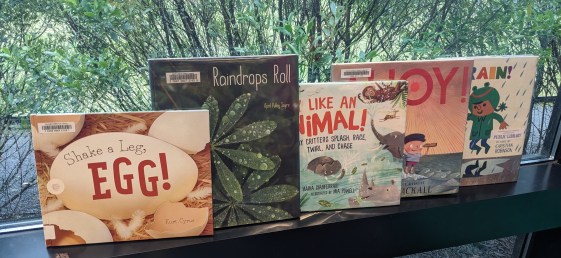
There was an unusually small group at storytime this week, all regulars, so it was actually nice and cozy. As usual, we started with our “Hello, Friends” song with sign language, and it’s so cool to see the toddlers signing along. We read four books this week, with song cube songs and the Little Mouse flannel board activity in between:
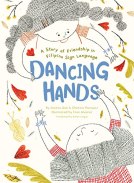
Dancing Hands: a story of friendship in Filipino sign language, by Joanna Que and Charina Marquez, illustrated by Fran Alvarez, translated by Karen Llagas (a Schneider Family Honor Book)
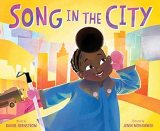
Song in the City by Daniel Bernstrom, illustrated by Jenin Mohammed
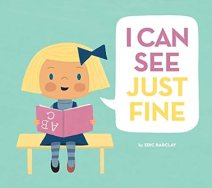
I Can See Just Fine by Eric Barclay
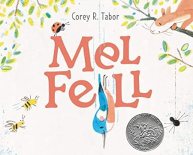
Mel Fell by Corey R. Tabor
All of these books, in their own way, are about ability. Perception and communication also emerge as themes.
Dancing Hands worked well because it has minimal text, but shows readers how to make the signs the girls in the story are making (signs are also illustrated on the endpapers!). Dancing Hands feels a lot like My Best Friend by Julie Fogliano, illustrated by Jillian Tamaki, another favorite storytime book.
Song in the City is a little bit longer, but the illustrations are super bright – featuring that warm yellow from the cover – the text rhymes, and there are a lot of sound effects. This was definitely the book that the adults in the room loved best. We all paused in the middle to close or cover our eyes, as Emmalene helps Grandma Jean do in the book, to focus on what we could hear.
I would love I Can See Just Fine based on its title alone, but the execution is just perfect. A little girl named Paige has trouble seeing the board at school, reading her sheet music, and even identifying animals (she picks up a skunk and calls it a kitty). She is not excited to go to the eye doctor, or when they tell her she needs glasses, but when she stands in front of the huge array of frames to choose from on the wall, you can just feel her wonder and awe. She tries on lots of frames and chooses the right ones for her. I showed the group my own glasses, identifying the different parts (frames and lenses). I also shared with the group that the eye doctor is my favorite one to go to – they never give shots!
We wrapped up with Mel Fell, which is about confidence and ability in a different way: a baby kingfisher’s first flight/dive. The orientation of this book is unique (in the photo above, the spine is actually on top), and there’s a fun rotation required part of the way through the story. We see community members – other residents of Mel’s tree – attempt to help, but ultimately, Mel was right about their readiness to fly!
After stories, songs, and Little Mouse, we sang and signed “Goodbye, Friends.” Our craft wasn’t connected to the books, though I did mention that peeling and placing stickers is good fine motor practice. And, as a kid, how often do you get to use as many stickers as you want? (I’m lucky in that my predecessor spent years hoarding stickers from various sources, so we have an entire box to choose from.)
Next week, we’ll be hosting a group from The Family Center, reading Hugs from Pearl by Paul Schmid, and making valentines.
The Heavy Medal Award Committee (HMAC) is a Mock Newbery committee organized by Emily Mroczek-Bayci and Steven Engelfried (who have both served on the real Newbery committee previously) and including a mix of librarians (and, this year, one high school student) from all across the U.S.
Readers of the Heavy Medal blog nominate Newbery-eligible titles throughout the year, and eventually the nominees are winnowed down to a final fifteen(ish). Then the HMAC is assembled: every committee member reads all fifteen(ish) books, and each of us write an intro to one of the books on the blog, starting in late December and continuing into January. In the blog post, we consider the ways in which the book meets the Newbery criteria. After all the books are introduced and discussed in the comments, we vote on a final five books to discuss in a live webcast before the actual ALA Youth Media Awards (including the Newbery) are announced.
The real committees do a tremendous amount of reading and engage in carefully considered, thoughtful discussion, and there are always so many worthy books eligible for every award. Just because a book doesn’t wind up with a shiny medal or honor sticker after next week doesn’t mean it isn’t an excellent book. After all, “every book its reader, every reader their book.”
With an older audience in mind, I focused on recent titles from our current golden age of picture books, from wordless wonders like Aaron Becker’s Journey to Caldecott winners like Sophie Blackall and Matthew Cordell, from nonfiction to humor to holidays. Does a kiddo in your life need a new picture book this month? Sure they do!
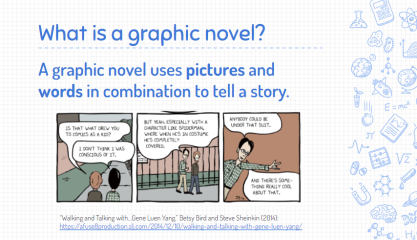
“What Are Graphic Novels (and why are they so great)?“ is an attempt to introduce adult readers to a format that might be new for them, and to dispel the harmful idea that graphic novels aren’t “real” books. (Graphic novels ARE real books! If your kids/students are reading graphic novels, they’re reading! And they probably have better visual literacy skills than you do. While I’m up here on my soapbox, audiobooks are real books, too.)
Links will take you to Google Slides presentations. For both sets of slides, I used SlidesCarnival (shout-out to my grad school friend Becca for introducing me to this resource).
Readers, I hope you check some of these books out from the library, or buy (local if you can!). School and public librarians, feel free to copy and remix if that’s helpful to you; please give credit. Neither of these presentations is intended to be comprehensive – just some award winners and lots of my own personal favorites. Happy reading!
This year’s Massachusetts Library Association (MLS) Annual Meeting was at Fort Devens, where I have been many times – but only to play in ultimate frisbee tournaments. The meeting involved no cleats, frostbite, or heatstroke, which was an altogether different experience!
After a brief welcome from MLS Executive Director Sarah Sogigian and MLS Executive Board President Anna Bognolo (also the director of the Greenfield Public Library, which has a beautiful new building!), reporter Matt Shearer delivered a morning keynote full of short, funny videos of hyper-local news stories, such as the famous (in internet circles) story of one of the three Market Baskets on Boston Road closing in Billerica, and the sad tale of the Dunkin Donuts-less town of Stow, MA. Matt’s approach to reporting is, “I show up in small towns and try to find something cool.” After much exploring, he has concluded, “It is the people who make these towns special.” He says, “I’m trying to find the things that aren’t getting covered, the people whose voices aren’t getting heard.” And he recommended, when creating content, to have fun with it, and people will find it engaging.
The way that people respond to Matt’s videos – locally and more broadly, as many of his videos have gone viral – makes me think of the decrease in local news coverage over the past few decades, as local and regional papers fold, and people are left to rely on social media (e.g. Facebook, NextDoor) or national papers like The New York Times. This has contributed to a lack of trust in the print media, as there can be such a great distance between the issues that have a real impact on peoples’ day-to-day lives and the issues that national papers cover. Matt’s use of humor helps, too, and his genuine curiosity about people’s lives.
The business meeting was short and sweet, followed by an update from MBLC Director James Lonergan. He urged everyone to continue contacting state representatives to support library budget lines, all of which have seen increases recently. The focus next year will be on continued support for State Aid to libraries, and a bigger increase for the Massachusetts Center for the Book. Lonergan also mentioned MLS’ partnership with Unite Against Book Bans (MLS, MLA, and MSLA are all partners).

Uniting against book bans tied in nicely to William Adamczyk’s update from the MLA Legislative Committee. There was a hearing on Monday, October 30 that was relevant to several different library interests (you can watch it here), including library access to e-books and digital audiobooks, freedom to read, and protection against book bans. MLA has been working closely with MSLA and with EveryLibrary to have a funded, effective school library program and a licensed school librarian in every school in the commonwealth (see “The Top 5 Reasons for having a Licensed School Library Teacher in Every School“). The Massachusetts Teachers Association (MTA) is in full support of this effort. Another goal is for the MA Department of Elementary and Secondary Education (DESE) to designate a school library point person – someone who understands the importance and value of librarians in schools.
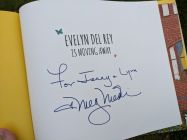
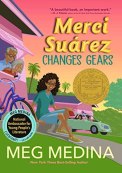
After lunch, it was time for MEG MEDINA! Yes, she’s caps-lock-worthy: she’s the National Ambassador for Young People’s Literature, a faculty member of the Hamline MFA program, and the author of Merci Suárez Changes Gears, which won the Newbery Medal in 2019. She has written two sequels to Merci, as well as picture books Mango, Abuela, and Me; Tía Isa Wants A Car; and Evelyn Del Rey Is Moving Away. Most recently she has contributed to Chelsea Clinton’s She Persisted series of biographies, with entries on Sonia Sotomayor and Pura Belpré.
Medina graciously answered questions from Christi Showman Farrar and Kristi Chadwick from MLS. Some excerpts from their conversation:
When did storytelling start for you? When did you decide to become a writer? Medina’s family moved to the U.S. in the 1960s, due to political turmoil in Cuba; she believes that her family “used story to deal with the trauma of loss of homeland.” She did not begin writing fiction until she turned 40.
How do you decide whether the story is a novel, a picture book…does the story tell you what it’s going to be or do you make that decision? A little of both. Tía Isa would have made a funny middle grade novel. “When you sit with a story for a second, your heart sort of tells you the piece of it that matters most, and that helps you navigate” what age to write it for. What matters to you the most in that moment about telling that story?
When books are published simultaneously (or nearly) in English and Spanish, what is the translation process like?“We have all points of language” in Latino families, with some fluent in English, some in Spanish, some in both. Availability of books in both languages allow the family to experience the story together, in the language they’re most comfortable with. “More language is more people you can talk to.”
What was your involvement in the graphic novel adaptation of Yaqui Delgado Wants to Kick Your Ass? Medina said it takes her a while when she sees visual representations of her work, even book covers, because the artist’s representation is always different from what she sees in her head. “I feel about graphic novels the way I feel about movies….This is a new generation and it’s a different art form….[I’m] glad it’s coming to a new generation of readers.”
What was the research process like for Burn Baby Burn? “You think you remember everything accurately…you don’t!” It was fascinating to dig into the research, including the NOW archives at NYU, which covered the Women’s March in much more detail than The New York Times. She asked, “Who’s telling the story? And what was omitted?” and added, “That idea of not being erased is vitally important right now.”
Question from a school librarian: How do you help teachers who are attached to classics understand that there is so much new talent? You’re not throwing away the classics, but nothing can become a classic if no one reads it. Medina suggested shelf talkers that pair the classic with the new, like Little House on the Prairie with Linda Sue Park’s Prairie Lotus. “Give people a way to think about those books. Give them a way to preserve both, if they must.”
Other questions and answers covered what it was like to get “the call” (from the Newbery committee), what she does in her role as the National Ambassador (“Book friend to America’s children”), outreach to Latino populations, how to get kids passionate about stories, and challenges to youth materials (she spoke to both the Senate and the House).
Thank you, Meg, for coming to our meeting, and for everything you do for children’s literature!
When I started as the children’s librarian, I had to make one change almost right away, taking away the Monday morning storytime because I don’t arrive at work on Monday until 11:30 (then I’m here till we close at 8pm). However, I didn’t want to reduce the number of storytimes, so I decided to try offering an evening one – a pajama storytime! Also, it was a way of expanding access for families who can’t get here mid-morning on a weekday. I wasn’t sure if it would take off, but I spent a month talking it up, and attendance has been good so far!
Pajama Storytime happens in the Storytime Room, where we have a rug and some colorful, cozy bean bags. I brought in a string of twinkle lights and stuffed them into a clear glass jar (my “star jar”) and I put that on the table with the books. We start right at 6:30 and read till 7. Most attendees are older – first through fourth grade – but a few toddlers show up too, so I try to put the shorter, simpler books first in the lineup, and save longer ones for after the toddlers’ attention span is exhausted.
Not every book I read at Pajama Storytime is specifically bedtime-themed, but a lot of them are. Here’s what we’ve read so far:
Goodnight Veggies by Diana Murray/Zachariah Ohora
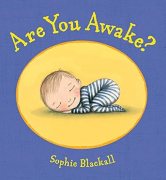
Are You Awake? by Sophie Blackall
Goodnight, Everyone by Chris Haughton
In the Night Garden by Carin Berger
Interrupting Chicken by David Ezra Stein
Everyone’s Awake by Colin Meloy
Time for Bed by Mem Fox/Jane Dyer
Awake, Asleep by Kyle Lukoff/Nadia Alam
Just Because by Mac Barnett/Isabelle Arsenault
How to Put Your Parents to Bed by Mylisa Larsen
City Moon by Rachael Cole/Blanca Gomez
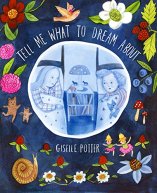
Tell Me What to Dream About by Giselle Potter
Bedtime Monsters by Josh Schneider
Hoodwinked by Arthur Howard
There Is A Crocodile Under My Bed! By Ingrid & Dieter Schubert
The Yawns Are Coming by Christopher Eliopoulos
A Spoonful of Frogs by Casey Lyall and Vera Brosgol
Night in the City by Julie Downing
Chicken Wants A Nap by Tracy Marchini
Every Dreaming Creature by Brendan Wenzel
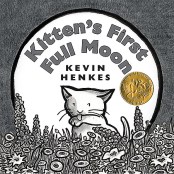
Kitten’s First Full Moon by Kevin Henkes
In the Night Kitchen by Maurice Sendak
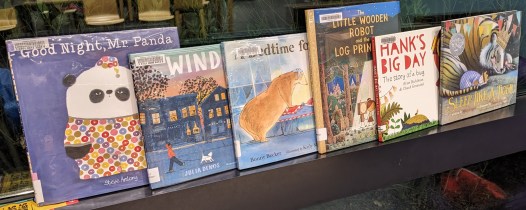
Good Night, Mr. Panda by Steve Antony
Windows by Julia Denos
A Bedtime for Bear by Bonny Becker/Kady MacDonald Denton
The Little Wooden Robot and the Log Princess by Tom Gauld
Hank’s Big Day by Evan Kuhlman & Chuck Groenink
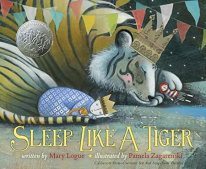
Sleep Like A Tiger by Mary Logue/Pamela Zagarenski
As you can see, there’s a mix of longer and shorter ones, dreamy and goofy stories, rhyming and not, silly and soothing. I even had one parent thank me because no one had read a story to her in such a long time! (Children’s programming is important for the caregivers, too!)
Is there a Pajama Storytime at your library? What do you like about it? What would you change?
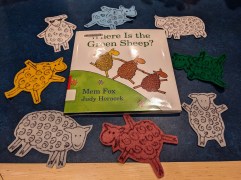
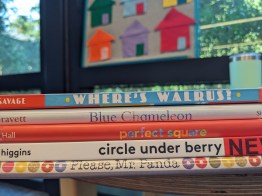
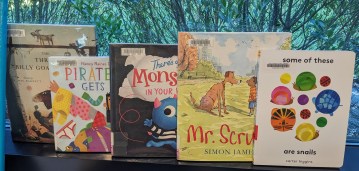
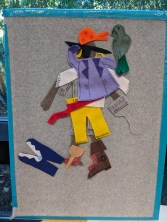
A month flies by! Storytime is always one of my favorite parts of the work week. Here are the books and art projects we’ve done for the past few weeks, and of course we look for Little Mouse every time (“Little mouse, little mouse, are you in the [color] house?”), and open and close with “Hello Friends” and “Goodbye Friends.”
September 28 Storytime
I Want My Hat Back by Jon Klassen
The Very Hungry Caterpillar by Eric Carle (with flannel board)
Carrot & Pea by Morag Hood
Where is the Green Sheep? by Mem Fox and Judy Horacek
Craft: Coloring with crayons on butcher paper taped to the floor
October 5
Please, Mr. Panda by Steve Antony
Circle Under Berry by Carter Higgins
Perfect Square by Michael Hall
Blue Chameleon by Emily Gravett
Where’s Walrus? by Steven Savage
Craft: Collage with tissue paper and glue sticks on construction paper
October 12
The Three Billy Goats Gruff by Mac Barnett and Jon Klassen
Pirate Jack Gets Dressed by Nancy Raines Day (with flannel board)
There’s a Monster in This Book by Tom Fletcher
Mr. Scruff by Simon James
Some of These Are Snails by Carter Higgins
Craft: Decorating die-cut paper pumpkins with markers and crayons
October 19
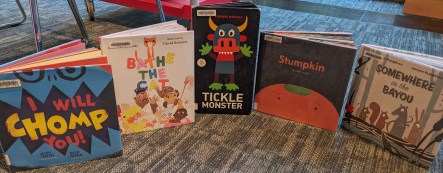
I Will Chomp You by Jory John and Bob Shea
Bathe the Cat by Alice B. McGinty and David Roberts
Tickle Monster by Edouard Manceau (with flannel board)
Stumpkin by Lucy Ruth Cummins
Somewhere in the Bayou by Jarrett and Jerome Pumphrey
Craft: Flannel board play with different shapes, colors, and sizes
October 26
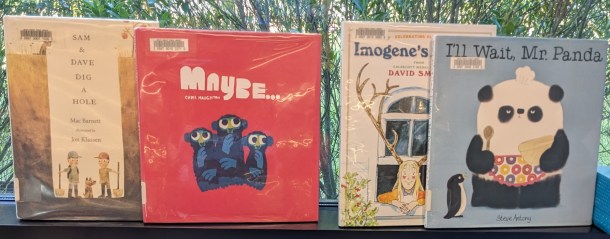
Sam and Dave Dig A Hole by Mac Barnett and Jon Klassen
Maybe… by Chris Haughton
How do you say? = ¿Cómo se dice? by Angela Dominguez
Imogene’s Antlers by David Small
I’ll Wait, Mr. Panda by Steve Antony
Craft: Dot markers, crayons, markers on butcher paper on the floor (collaborative)
Storytimes I’d done plenty of before coming to SHPL, but Rhyme Time was a new program for me to lead. It’s kind of like storytime, but without books (although, I think I am going to start adding in one book each time). We do lots of songs, rhymes, fingerplay, and movement, followed by free play. I lead a lot of the songs and rhymes myself, but I also have a computer and speakers to play music. Soon, everyone will be singing and dancing along to Caspar Babypants’ “Butterfly Driving A Truck”!
I start every Rhyme Time with the same three songs:
The Name Song (“If your name is _____, jump up and down”). This is great because each child gets their moment in the spotlight (if they want it – some just sit on laps and that’s fine!) and it creates a sense of community, helping us all get to know each other.
Then we do a selection of these songs/rhymes with movement and fingerplay. Some of them are on my song cubes (homemade tissue-box creations with a different picture on each side, corresponding to a song, like a teapot for “I’m A Little Teapot” or a spider for “The Itsy-Bitsy Spider.” Because these are short little songs, we sometimes do them three times: regular/fast/slow or regular/loud/quiet.
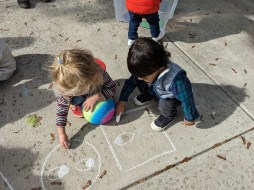
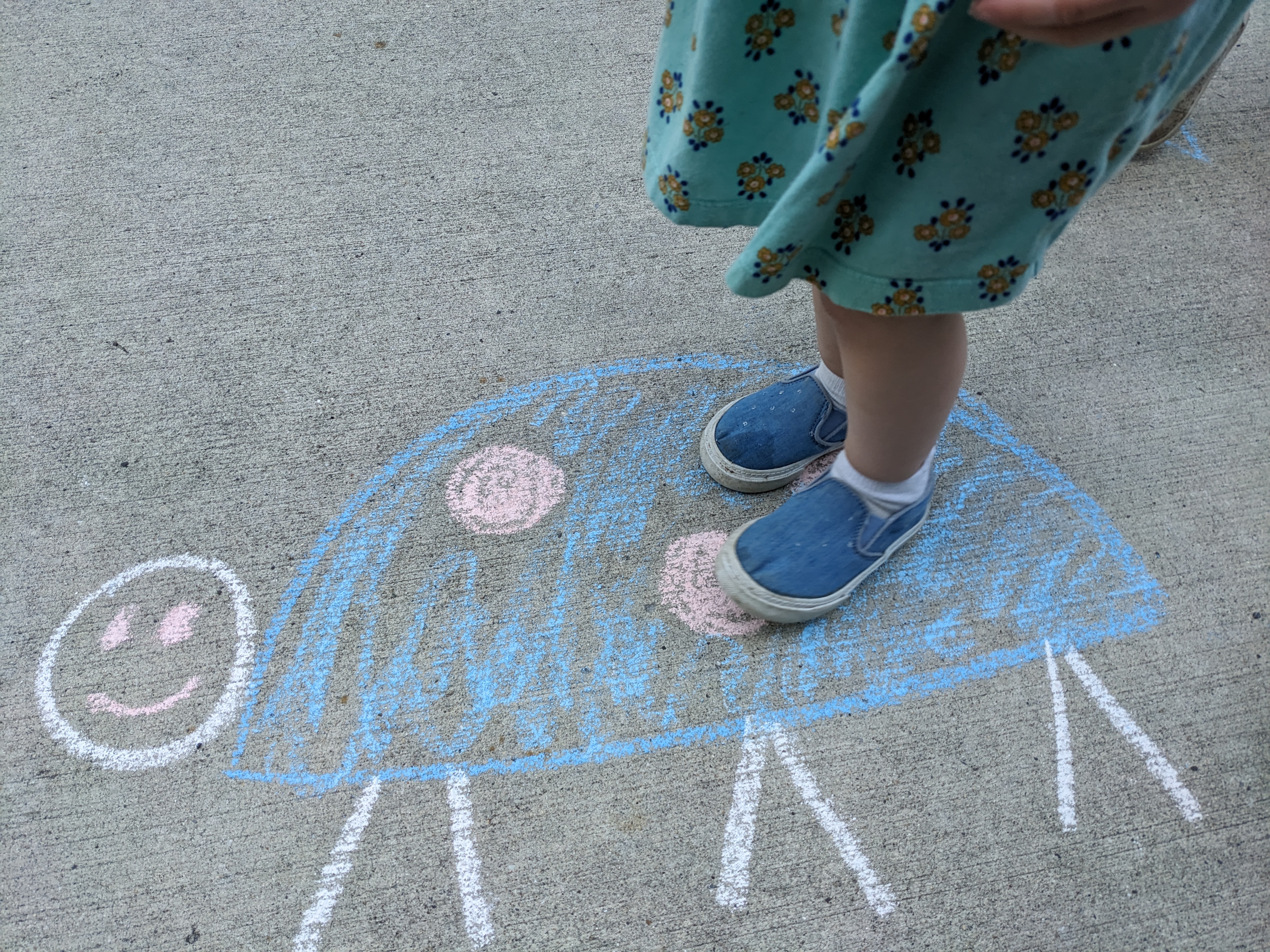
If the weather is nice (or, okay, decent) and we’re outside, I bring out sidewalk chalk and balls for the kiddos to play with. If we’re inside, it’s parachute and bubbles. This gives everyone a chance to move around and socialize.
This month I returned to public libraries and am really enjoying being a children’s librarian again, serving kids and their caregivers with book recommendations, weekly storytimes and rhyme times, arts and crafts, and all those “did you know…?” hidden gems that the library offers, like the OpenDyslexic font built into Libby.
I’m especially thrilled to be doing storytimes again. I’ve modeled my current program on the “Step Into Storytime” I did at the Winchester (MA) Public Library, which was aimed at two- and three-year-olds and their siblings and caregivers. I don’t intentionally choose themes (although three of today’s five books involved elephants), and I lead off with the longest book, as attention spans tend to wane over time.
Here’s my storytime format, with today’s books and activities as an example:
Welcome, introduction
Early literacy tip: the five ECRR practices (TALK, SING, READ, WRITE, PLAY) all support children’s early literacy skills
“Little Mouse” game with flannel board (“Little mouse, little mouse, are you in the [color] house?”)
A Parade of Elephants by Kevin Henkes with flannel board (today it just so happened that there were five kids, and I have five elephants! So they each got to hold one the whole time, and stick them to the board at the end)
Craft: Rubber stamps and stamp pads on construction paper
Last week’s books were Mina by Matthew Forsythe, Huff & Puff by Claudia Rueda, Pete’s A Pizza by William Steig, Matilda’s Cat by Emily Gravett, and Lots of Dots by Craig Frazier. Books that have interactive elements, like Huff & Puff, or can be made interactive (like pretending to roll out dough and sprinkle cheese for Pete’s A Pizza) are great for holding the attention of little ones and the engagement of adult caregivers as well, who can help the littles with the actions, improving large and fine motor skills.
Books we read the first week of September were The Giant Jumperee by Julia Donaldson, Spots in a Box by Helen Ward, Triangle by Mac Barnett, and Grumpy Pants by Claire Messer. Both Jumperee and Triangle were checked out afterward, which I take as a mark of success; I always tell families that they are welcome to borrow anything I read aloud at storytime.
As it’s September, one batch of kids has just started preschool or kindergarten, so the storytime regulars are on the younger side; lots of them come to Rhyme Time also (more on that later). I’ve been pulling from my list of great books to share with two- and three-year-olds, as well as newer picture books (I made that list in 2019). I’ve also been keeping crafts basic and process-oriented: so far, we’ve used dobbers/dotters (“do-a-dot art sponge tip applicators”), glue sticks, and rubber stamps – all washable and nontoxic, of course.
What are your favorite read-aloud books to share with littles? Favorite arts and crafts?
MSLA President Jen Varney introduced Monday’s keynote speaker, the Director of Amherst College Libraries, Dr. Martin Garnar, who spoke about Fighting the Good Fight: Supporting Intellectual Fredom in Your Library. He asked, “What is intellectual freedom?” It is actually three freedoms: freedom of expression, freedom of access, and freedom from surveillance (i.e., privacy). Garnar handed out scenarios on slips of paper, and each table group considered how we would respond to, for example, a parent challenging a book from the school library collection and the principal removing the book to their office; or, for another example, a parent requesting a list of every book their child has checked out from the school library. (Pro tip: remind your administrators, public or private, that if they ignore their own school’s policy, they are open to lawsuits. Pro tip #2: Make sure you have a solid, up-to-date policy! More on that soon.)
“It’s not enough to have equal access, it has to be equitable access.”
After the keynote, Garnar offered another session: The Importance of Policies: Promoting Our Principles in Practice. There are six key policies for libraries to have in place:
Collection development and resource reconsideration
Internet use (required by law if the library receives E-rate or LSTA funding; can be a district-wide policy)
User behavior and library use (e.g. anti-bullying)
Privacy and confidentiality (FERPA and state laws)
Social media (if the library uses it)
Use of meeting rooms and exhibit spaces
Garnar went in depth on each of these types of policies (I won’t do that here), and also offered solid reasoning about why are policies are important. Well-written, board approved policies and up-to-date procedures based on those policies achieve several things:
Encourage stability and continuity in the library’s operations while reducing ambiguity and confusion
Demonstrate that the library is running a businesslike operation
Give credence to the library’s actions
Inform the community about the library’s intent, goals, etc. (e.g. equity)
Give the public a means to evaluate library performance and show that the library is willing to be held accountable for its decisions
Help disarm critics
Serve as evidence of the library’s normal practices
Best Features of the Statewide Databases for school libraries, Tressa Santillo, Massachusetts Library System (MLS)
Tressa (on behalf of MLS and also Transparent Language) and representatives from Gale, Britannica, and PebbleGo described and demonstrated some of the features and resources of their respective databases. I’m so grateful that Massachusetts libraries (public and school) work cooperatively to share print and digital resources; all school libraries with a certified librarian have access to databases for students and staff to use. I’ve been guiding patrons and students through and around these databases for years, but there are more resources than I realized – like alignments to standards and frameworks from PebbleGo, and a media literacy guide from Britannica. (Also from PebbleGo: an axolotl coloring page.)
Well, I was hooked by the axolotl coloring sheet, so I went to hear Dr. Kelli Westmoreland talk more about PebbleGo and PebbleGo Next: Databases for Elementary. (Also, the only other session was the MA Teen Choice Book Awards, and since I’m not working with a teen population right now, PebbleGo made more sense. You can see the MA Teen Choice Book Award Nominees here.) Dr. Westmoreland offered a tour of PebbleGo and PebbleGo Next, explained the importance of modeling digital literacy – especially given the increased amount of time students spend on screens – and spoke about the science of reading and the importance of nonfiction texts. She showed off some of the features of PebbleGo, like the randomizer and the question of the day, and gave examples of how it can be used to support classroom teaching (e.g. librarians can create text sets). She showed examples of simple graphic organizers for inquiry (Person/Action/Trait, It Says/I Say/And So, Somebody/Wanted/And/So).
Perhaps one of the neatest features is the correlation to standards: you can look up content by standard, or standard by content.
My goal at every conference is to have at least one useful takeaway from each session, and that definitely happened this year! Plus, it was just lovely to see people in 3D. (Previous conference committees did an amazing job the past few years putting together virtual conferences full of engaging presentations from librarians and authors, and I definitely enjoy “attending” from home, but it was nice to mingle in person too, and even meet some people I’ve known for years now, but only via zoom!)
I’ve already put some of Liza’s ideas and resources about comics to use (is it possible to say enough good things about Liza Halley? I don’t think so), and I’m looking forward to adding some of the new books I picked up at vendor booths to my school library collection and seeing kids scoop them up off the New Books shelf. Thanks again to everyone involved in the conference – please leave a comment if I missed anything here, or if you want to share something about a different session you attended!
The annual Massachusetts School Library Association (MSLA) conference was in-person again this year for the first time in a few years. The conference committee, sponsors and vendors (especially Odyssey Bookshop, which also put together the author panel), presenters, and venue all did a wonderful job putting together two very full days of learning and creating the opportunity for connections among colleagues, who are so often siloed in our own buildings, to share ideas and resources.
Here are recaps of the sessions I attended. I’ll try to keep it concise!
Sunday Keynote: Librarians as Leaders in DEIB, Lawrence Q. Alexander II
“Diversity is a fact. Equity is a choice. Inclusion is an action. Belonging is an outcome.” -Arthur Chan
Alexander spoke engagingly on the topic of Diversity, Equity, Inclusion, and Belonging and the value proposition of a culturally inclusive curriculum. “It’s not enough to fly the flags, wave the banners, make the statements” – school districts must have policies that support DEIB, accountability, and money in the budget to support it. Alexander listed four questions students might ask about their school environment: “Do you see me? Do you hear me? Will you treat me fairly? Will you protect me?” Can students bring their full selves to school and feel welcomed, valued, and safe? (Think of the “Circles of My Multicultural Self” exercise.)
Alexander explained why it’s important to talk about race in schools: “When we ban dimensions of identity, when we ban books, we ban students. When we say that conversations are not important, we say that students and families are unimportant…Where can a student learn when they cannot fully be themselves?” He cited Batts, Capitman, and Brown’s Multicultural Processes of Change, from monoculturalism to pluralism. Reflection questions for faculty and administrators include: (1) Who feels at home here? (2) Who feels like they’re just visiting? (3) Who feels tolerated?
Alexander encouraged us to consider: “Where is our community on this continuum? What will it take to move us forward? Who do we need on our team to advance this work?” and concluded with the three dimensions of change for individuals and organizations: cognitive, affective, and behavioral – with a warning not to jump directly into behavioral changes without doing the cognitive and affective work first.
Medium Matters: Using Graphic Novels in the Classroom, Liza Halley
The brilliant Liza, who insists she is not an expert on comics (but who is totally an expert on comics, and is also an excellent teacher) started us off with a variety of hands-on activities to choose from, as part of her presentation on how to teach comics/graphic novels in school, and how to get teachers, administrators, and parents on board (because GRAPHIC NOVELS ARE REAL BOOKS; this is supported by research).
“This is the gateway for students to become avid readers. Do not shame kids for reading what they want! We want to grow lifelong readers. We want them to be excited to pick out a book.”
Liza shared teaching materials, sample lessons, research, and resources (see her Medium Matters site for more resources). Each year, she teaches a three- or four-week unit to all her students (K-5) on graphic novels, and she showed us some examples of assignments and student work. She also writes about the topic on the MSLA Forum Newsletter (like this piece from February 2022). I’m excited to borrow many of Liza’s ideas and collaborate with the art teacher at my school to design a comics unit for at least one grade this year, and more next year!
Building Research Consistency K-12, Dr. Georgina Trebbe
Research K-12 Mindset
Dr. Trebbe is “passionate about information literacy” and has spent much of her career and education on it. In this session, she took us through the steps of building a research plan, from “pre-search” to the “a-ha moment” to developing a thesis statement (the “rudder” that steers the research) and questions (the “oars” that propel research forward); considering lenses (e.g. political, social, environmental, ethical), developing sub-research questions, recognizing multiple perspectives, creating an outline, identifying keywords and key phrases, selecting resources, recording information, and reporting. Reporting doesn’t need to be a paper or a report: it could be in the form of a board game, a comic, a quiz, a timeline, a diorama, a speech, or more. Throughout her presentation, Dr. Trebbe used two examples, one for elementary (beavers) and one for secondary (Puritan hysteria over witchcraft). She also described how to build citation awareness: young students can identify the title, author, illustrator, and publication date of a resource, and “gradually build appreciation for the creativity of others.”
Middle Grade Booktalks, Laura Gardner
One of the 80+ slides
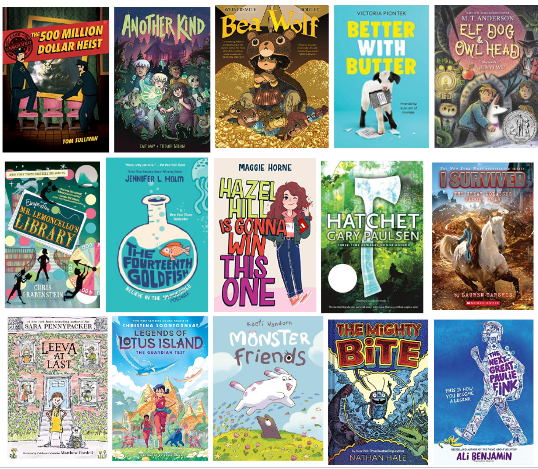
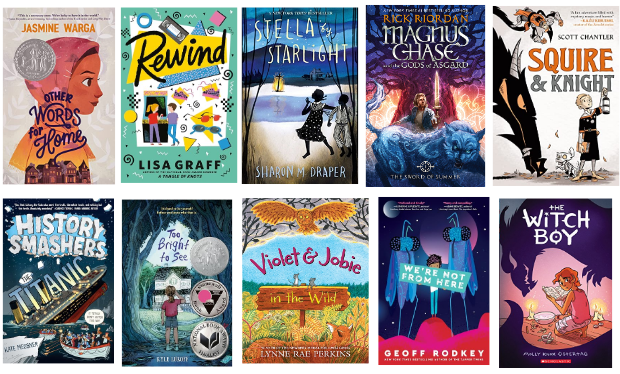
When Dartmouth Middle School librarian (and Newbery committee member!) Laura said she was going to talk about 50 books (during her allotted 50 minutes), I was pretty sure it was some sort of verbal typo, but it was not. She shared her collection of 80+ slides that she created during remote schooling and has continued to maintain because some students like using it. (Books with blue stars are novels in verse; in her library, these are shelved together, and it’s a very popular collection.) She focused on realistic fiction, mysteries, sports, survival, animals, graphic novels, historical fiction, and nonfiction, quickly highlighting appeal factors of dozens of titles: a unique setting, a compelling main character, a strong hook, interesting conflict, and any awards or honors the book has won. I spoke with Laura briefly after her presentation, and she encouraged me to copy her slides and adapt them for my library, which I would love to do…on a smaller scale, and over time. This is not a project to be done overnight!
Teaching Students Why Media Literacy is Important, Colleen Simpson
Essential Understandings for the course (slide)
Middle school library media specialist Colleen Simpson teaches a six-week unit for eighth grade students guided by two essential questions: (1) Why is media literacy important for citizens in today’s democracy? (2) What role do individuals play as digital citizens? This course covers several of the DESE frameworks for Digital Literacy and Computer Science. Students complete a First Amendment project on a topic of their choice (Colleen showed examples of student work).
“To be news literate is to build knowledge, think critically, act civilly and participate in the democratic process” -Robert R. McCormick Foundation
The final event of the day was the author panel, organized by Odyssey, and moderated by yours truly (thus, not nearly so many notes). Here are the panelists, followed by their most recent (or soon-to-be-released) book in parentheses:
Janae Marks (On Air with Zoe Washington)
Hannah Moushabeck (Homeland: My Father Dreams of Palestine)
Jeannine Atkins (Hidden Powers: Lise Meitner’s Call to Science)
Sarah Prager (Kind Like Marsha: Learning from LGBTQ+ Leaders)
Charnaie Gordon (Lift Every Voice and Change: A Sound Book: A Celebration of Black Leaders and the Words that Inspire Generations) (Charnaie also has a new book coming out in October, in collaboration with Roda Ahmed, author of Mae Among the Stars. I am so excited for this!)
I asked the panelists about their inspiration (how did you come to write this book, at this time), their research process, collaboration with illustrators, and important takeaway messages. Regarding the latter, Jeannine said: “Take time to find small beauties in life.” Charnaie: “Be kind to one another. Show empathy.” Sarah: “LGBTQ+ people have been here throughout history.” Janae: “There’s always hope. Anyone of any age has the power to make change.” Hannah: “It’s the first Palestinian picture book [by a Palestinian author] in 30 years.”
Whew, and that’s a wrap on Day 1. Notes on Day 2 coming soon!
Last year, I followed the ALA YMA on Twitter while preparing to teach seventh graders online research skills; the year before, I watched in my pajamas with my five-year-old on my lap. This year, I missed the beginning of the livestream, but the timing worked out so that a third grade class was in the library when the Caldecott awards were announced, and they were so excited!
As I watched not just the Caldecotts but all the other awards roll in, it struck me more than any previous year how many deserving books there are. Not that I disagree with the committees’ choices – plenty of books I cheered for, others I hadn’t read – but there are just so. many. good. books in any given year! And because I was on this year’s Heavy Medal committee (Mock Newbery) and ran a Mock Caldecott program at my school, I was more attuned than usual to award predictions.
So rather than recap today’s winners, I’m going to list a few middle grade and picture books I think could have gotten awards, and just happened not to, but are still wonderful and you should read them:
Middle grade:
A Rover’s Story by Jasmine Warga
Violet and Jobie in the Wild by Lynne Rae Perkins
The Ogress and the Orphans by Kelly Barnhill
Different Kinds of Fruit by Kyle Lukoff
Where the Sky Lives by Margaret Dilloway
The Insiders by Mark Oshiro
The Door of No Return by Kwame Alexander
Black Bird, Blue Road by Sofiya Pasternak
A Duet for Home by Karina Yan Glaser
Picture Books
Mina by Matthew Forsythe
Blue: A History of the Color as Deep as the Sea and as Wide as the Sky by Nana Ekua Brew-Hammond, illustrated by Daniel Minter
Sweet Justice by Mara Rockliff, illustrated by R. Gregory Christie
A Spoonful of Frogs by Casey Lyall, illustrated by Vera Brosgol
I Don’t Care by Julie Fogliano, illustrated by Molly Idle and Juana Martinez-Neal
Endlessly Ever After by Laurel Snyder, illustrated by Dan Santat
Farmhouse by Sophie Blackall
Snow Horses by Patricia MacLachlan, illustrated by Micha Archer
Squirrels that turn out to be cats, magic doors that lead to a refuge and friendship, a Mars rover with human emotions, a choose-your-own-adventure fairytale, escaping frogs, an unsung civil rights hero, some beautiful collage, and more – there’s something for everyone, and awards are only a piece of it all. Congratulations to all authors and illustrators who put something out into the world in 2022; readers are grateful.