All year, every year, I read like it’s my job. (It kind of is, but in case anyone still believes the myth that librarians get to read while at work, let me swiftly debunk that one for you: NO.) However, I don’t hold a candle to librarian/reviewer extraordinaire Betsy Bird, so I want to recommend her “31 Days, 31 Lists” feature for School Library Journal, which is comprehensive. There’s also no shortage of year-end lists from other sources, including but certainly not limited to:
- Kirkus “Best of 2019” (separated by section: fiction, nonfiction, middle grade, picture books, young adult, indie)
- Publishers Weekly “Best Books of 2019” (Top Ten in many categories)
- The Parnassus Books (Nashville, TN) blog, Musing, offers staff and reader picks
- New York Public Library (NYPL) Best Books of 2019 (in five categories: kids, Spanish-language kids, teens, adults, poetry)
- NPR’s Book Concierge 2019 (past years are available and worth browsing too!)
- Horn Book Fanfare 2019 Booklist(for children’s/YA)
- “31 Days, 31 Lists” by Betsy Bird at SLJ (yes, again. She’s just that good. Check out her podcast with her sister, Fuse 8 ‘n Kate, where they discuss classic children’s books and whether they still deserve to be remembered)
I do read a lot of new books, so there are plenty of 2019 titles on my list(s), but there are older ones as well. Publication year is noted along with author and title. If I listened to an audiobook, I’ll note that as well with “(audio)” (if I only listened to it) or “(+audio)” (if I listened and read it in print as well). I may winnow this down to a Top Ten list later in the month (after all, the #libfaves countdown on Twitter is starting soon has already started, see below), but it’s hard to leave out books that I feel deserve more eyeballs! All of my reviews are on LibraryThing.


Picture Books (Fiction)
Lambslide by Ann Patchett (2019)
Little Taco Truck by Tanya Valentine (2019)
The Little Guys by Vera Brosgol (2019)
Red Light, Green Lion by Candace Ryan (2019)
Truman by Jean Reidy (2019)
Is 2 A Lot by Annie Watson (2019)
Penny and Penelope by Dan Richards (2019)
Here and Now by Julia Denos (2019)
Twins by Mike Ciccotello (2019)
Just Because by Mac Barnett (2019)
Amy Wu and the Perfect Bao by Kat Zhang (2019)
Bilal Cooks Daal by Aisha Saeed (2019)
Don’t Touch My Hair! by Sharee Miller (2018)
Thank You, Omu! by Oge Mora (2018)
The Very Last Castle by Travis Jonker (2018)
Prince & Knight by Daniel Haack (2018)
Ginny Goblin Is Not Allowed to Open This Box by David Goodner (2018)
It’s Springtime, Mr. Squirrel by Sebastian Meschenmoser (2018)
Pirate Jack Gets Dressed by Nancy Raines Day (2018)
I Am Not A Fox by Karina Wolf (2018)
Waltz of the Snowflakes by Elly MacKay (2017)
I Really Want the Cake by Simon Philip (2017)
World Pizza by Cece Meng (2017)
Are You A Monkey? by Marine Rivoal (2017)
My Dog’s A Chicken by Susan McElroy Montanari (2016)
Best Frints in the Whole Universe by Antoinette Portis (2016)
Worm Loves Worm by J.J. Austrian (2016)
Interstellar Cinderella by Deborah Underwood (2015)
Strictly No Elephants by Lisa Mantchev (2015)
Down Here by Valerie Sherrard (2015)
Spots in a Box by Helen Ward (2015)
The Angry Little Puffin by Timothy Young (2014)
Froodle by Antoinette Portis (2014)
Fraidyzoo by Thyra Heder (2013)
I’m the Biggest Thing in the Ocean by Kevin Sherry (2010)
Pete’s A Pizza by William Steig (1998)


Picture Books (Nonfiction)
If Pluto Was A Pea by Gabrielle Prendergast (2019)
Pluto Gets the Call by Adam Rex (2019)
Skulls! by Blair Thornburgh (2019)
The Spacesuit by Alison Donald (2019)
Magic Ramen by Andrea Wang (2019)
Just Like Beverly by Vicki Conrad (2019)
You Are My Friend by Aimee Reid (2019)
Ladybugs by Gail Gibbons (2013)


Early Readers/Chapter Books
Penny and Her Sled by Kevin Henkes (2019)
Charlie & Mouse; Charlie & Mouse & Grumpy; Charlie & Mouse Even Better by Laurel Snyder (2017, 2017, 2019)
Louise Loves Bake Sales by Laura Driscoll (2018)
The Princess in Black by Shannon Hale and Dean Hale (2015)
Bink & Gollie; Bink & Gollie, Best Friends Forever; Bink & Gollie, Two for One by Kate DiCamillo and Alison McGhee (2010, 2012, 2013)
Can I Play Too? by Mo Willems (2010)
Ivy & Bean by Annie Barrows (2007) (+audio)
Clementine by Sara Pennypacker (2006) (+audio)
Fortunately, the Milk by Neil Gaiman (2013) (+audio)
The One in the Middle is the Green Kangaroo by Judy Blume (1981)


Middle Grade
Indian No More by Charlene Willing McManis and Traci Sorell (2019)
Lalani of the Distant Sea by Erin Entrada Kelly (2019) (audio)
All the Greys on Greene Street by Laura Tucker (2019)
The Year We Fell From Space by Amy Sarig King (2019)
Sunny and Ghost by Jason Reynolds (2019) (audio)
A Tale Magnolious by Suzanne Nelson (2019)
Dear Sweet Pea by Julie Murphy (2019)
Roll With It by Jamie Sumner (2019)
The Remarkable Journey of Coyote Sunrise by Dan Gemeinhart (2019)
For Black Girls Like Me by Mariama J. Lockington (2019)
The Lost Girl by Anne Ursu (2019)
Eventown by Corey Ann Haydu (2019)
Sweeping Up the Heart by Kevin Henkes (2019)
We’re Not From Here by Geoff Rodkey (2019)
Wild Bird by Wendelin Van Draanen (2019)
To Night Owl from Dogfish by Holly Goldberg Sloan and Meg Wolitzer (2019)
The Next Great Paulie Fink by Ali Benjamin (2019)
My Jasper June by Laurel Snyder (2019)
This Promise of Change by Jo Ann Allen Boyce (2019) (nonfiction)
The Season of Styx Malone by Kekla Magoon (2018)
The Science of Breakable Things by Tae Keller (2018) (audio)
Blended by Sharon M. Draper (2018) (audio)
The Dollar Kids by Jennifer Richard Jacobsen (2018)
Harbor Me by Jacqueline Woodson (2018) (audio)
Princess Academy by Shannon Hale (2005) and Princess Acacemy: Palace of Stone (2012)
A Single Shard by Linda Sue Park (2011) (audio)
The Penderwicks by Jeanne Birdsall (2005)
Frindle by Andrew Clements (1998)
Mrs. Frisby and the Rats of NIMH by Robert C. O’Brien (1971) (audio)


Middle Grade Graphic Novels
New Kid by Jerry Craft (2019)
Sunny Rolls the Dice by Jennifer and Matthew Holm (2019)
Mighty Jack and Zita the Spacegirl by Ben Hatke (2019)
Stargazing by Jen Wang (2019)
Guts by Raina Telgemeier (2019)
Best Friends by Shannon Hale (2019)
Queen of the Sea by Dylan Meconis (2019)
Be Prepared by Vera Brosgol (2018)
Princeless: Save Yourself by Jeremy Whitley (2014)
The Babysitters Club: Kristy’s Great Idea by Ann M. Martin and Raina Telgemeier (2015)
Hamster Princess: Harriet the Invincible by Ursula Vernon (2017)
Awkward; Brave; Crush (Berrybrook Middle School) by Svetlana Chmakova (2015, 2017, 2018)


YA
The Book of Dust: The Secret Commonwealth by Philip Pullman (2019)
The Poet X and With the Fire on High by Elizabeth Acevedo (audio) (2018, 2019)
The Downstairs Girl by Stacey Lee (2019)


Adult fiction
The Ten Thousand Doors of January by Alix E. Harrow (2019)
Famous Men Who Never Lived by K Chess (2019)
The Future of Another Timeline by Annalee Newitz (2019)
The Seven or Eight Deaths of Stella Fortuna by Juliet Grames (2019)
The Starless Sea by Erin Morgenstern (2019)
The Swallows by Lisa Lutz (2019)
Dominicana by Angie Cruz (2019)
Manhattan Beach by Jennifer Egan (2017)
The Dutch House by Ann Patchett (2019)
Magic for Liars by Sarah Gailey (2019)
City of Girls by Elizabeth Gilbert (2019)
Here and Now and Then by Mike Chen (2019)
Lost and Wanted by Nell Freudenberger (2019)
Normal People by Sally Rooney (2019)
The Age of Light by Whitney Scharer (2019)
Milkman by Anna Burns (2018)


Adult Nonfiction
The Witches Are Coming by Lindy West (2019)
Dear Ally, How Do You Write A Book by Ally Carter (2019)
Will My Cat Eat My Eyeballs? by Caitlin Doughty (2019)
Invisible Women by Caroline Criado Perez (2019)
Wordslut by Amanda Montell (2019)
Shout by Laurie Halse Anderson (2019)
Hamilton: The Revolution by Lin-Manuel Miranda (2016)
Peacerunner by Penn Rhodeen (2016)
Shakespeare by Bill Bryson (2016)
The Sixth Extinction by Elizabeth Kolbert (2015)


YA and Adult Graphics
Pumpkinheads by Rainbow Rowell and Faith Erin Hicks (2019)
Kid Gloves by Lucy Knisley (2019)
Good Talk by Mira Jacob (2019)
The Unwanted by Don Brown (2019)
The Mental Load by Emma (2018)
March (Books 1-3) by John Lewis (2013, 2015, 2016)
My #libfaves19 picks (Updated 12/17/19)
The Ten Thousand Doors of January by Alix E. Harrow
The Year We Fell From Space by Amy Sarig King
Good Talk by Mira Jacob
Invisible Women by Caroline Criado Perez
Wordslut by Amanda Montell
The Book of Dust: The Secret Commonwealth by Philip Pullman
The Starless Sea by Erin Morgenstern
The Seven or Eight Deaths of Stella Fortuna by Juliet Grames
Famous Men Who Never Lived by K Chess
The Downstairs Girl by Stacey Lee
Honorable mention #11: New Kid by Jerry Craft


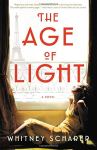 Whitney Scharer was up first, showing slides and then reading from her debut novel about Lee Miller, known as a model for Vogue and surrealist Man Ray’s muse, though she was a photographer in her own right, and co-inventor of the technique of solarization. (Aside: Every student should have a project like the one mentioned in Meg Wolitzer and Holly Goldberg Sloan’s new middle grade novel, To Night Owl From Dogfish, “Give the right person the credit.”) Scharer discovered Miller at an exhibit featuring Man Ray at the Peabody Essex Museum in 2011, and was interested in the two of them “being in love and making art together.” (Miller went on to be a war reporter; she reminded me of Robert Capa’s partner, Gerda Taro, who was killed while documenting the Spanish Civil War.) Scharer read a scene from her novel in which Miller describes what she calls “wild mind”: her ability to set any expression on her face while modeling, yet thinking of anything she wants, setting her mind free. The scene (possibly the whole novel?) was in present tense.
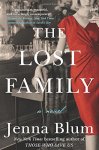 Next, Jenna Blum (The Stormchasers, Those Who Save Us) talked about and read from her new novel, The Lost Family, set in New York and centered around a Holocaust survivor, Peter, who lost his wife and daughters. He now owns and runs a restaurant called Masha’s, after his late wife, and has sworn not to get involved with anyone again – but, of course, he does. The novel is about Peter and his second wife and their daughter, “a whole family trying to put its arms around a loved one’s PTSD.” Blum didn’t have slides, but she did share a cocktail of her own invention, and cream puffs called “Masha’s Little Clouds”; she said that she invented and kitchen-tested all the menu items in the book.
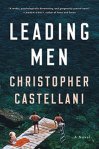 Finally, Christopher Castellani (A Kiss From Maddalena, The Saint of Lost Things, All This Talk of Love) talked about his newest novel, Leading Men, which imagines a party thrown by Truman Capote in Portofino in 1975, the guests, and the aftermath. Castellani said that people always want to know “how much is true and how much is not true,” so he explained that the party did happen, and that Tennessee Williams and his lover Frank Merlot really were invited, but that Williams’ journal does not mention the party in the days or weeks following it. Using both “real and invented people,” Castellani imagined and invented “between the cracks of what was known about these people.” Merlot is his main character; Williams isn’t a “point of view character” largely because he is too well-known, has written and been written about too much; Merlot, though not obscure, is less of a known quantity. Castellani admitted that it was daunting to write dialogue for characters like Capote and Williams; he would often use an “anchor quote” from their writings in order to get the tone of the dialogue and scene, and would sometimes remove the “scaffolding” once the scene was finished.







 Despite “winter storm Toby,” PLA went more or less as planned. Over the next week or so, I’ll be condensing and revising my sixteen (16) pages of notes into a more easily readable, digestible format to share here, but for now, here is an outline of my conference activities: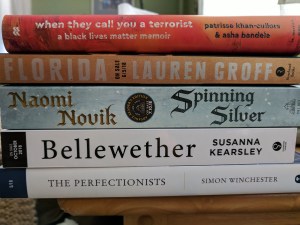
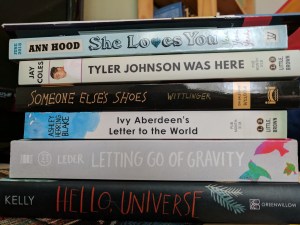
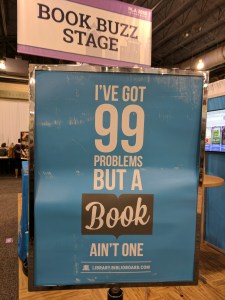
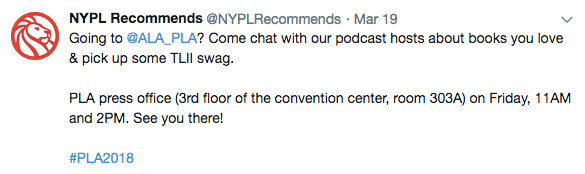
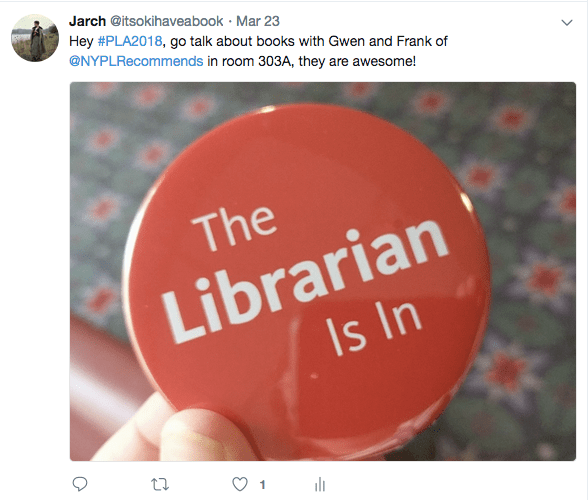
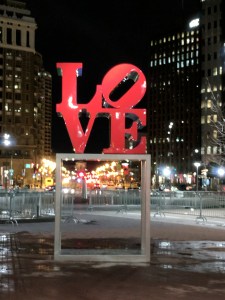 Throughout the conference, I met library people from all over. I tried to strike up conversations everywhere, and met people from Grand Forks, North Dakota; Peterborough, New Hampshire; The Portland (ME) Public Library; Arkansas; New York (the Brooklyn Public Library and the NYPL); and Calgary, Canada. The Convention Center itself was also great: easy to navigate, pretty temperate (many conference centers are either overheated or like refrigerators), and full of art. And the section of Philly where it’s located is on that lovely, lovely grid, which makes it so easy to get around. Overall, a great conference!
 Jenny Arch