In terms of politics and world events, 2016 has perhaps not been the best year. But in terms of books, it has been stellar. I’m going to combine two Top Ten Tuesday topics: favorite releases so far this year, and most anticipated releases for the rest of the year. As usual, Linda has beat me to it and we’re anticipating many of the same titles.
Once again, this has sat half-finished in the draft folder for so long that several of the titles I was anticipating I have now read. When I started this, the two categories were more evenly balanced. Well, now you know what I was doing while I wasn’t writing blog posts.
Looking at this list, it’s almost as if all my favorite authors got together and said, “We know she has a baby (now a toddler) and reading time is precious, so let’s each publish a book this year and see if she can still read them all.” Challenge accepted! (Just one question: Why wasn’t Audrey Niffenegger invited to the party? I am going to have the teaser section of “Alba, Continued” memorized by the time she publishes the rest of the novel. Come on, Audrey…)
The Pharos Gate by Nick Bantock: I thought my precious boxed set of Griffin & Sabine books was complete, but – surprise! – there is a new one. I received a copy through the LibraryThing Early Reviewers program and am happy to say that it fits in perfectly with the other six books; the magic remains intact.
Everyone Brave is Forgiven by Chris Cleave: Chris Cleave is one of my favorite authors, and I love historical fiction. This is a good book, but there is so much WWII fiction that the bar is quite high, and I think Cleave’s contemporary fiction is stronger. This one didn’t stay with me the way that Gold did.
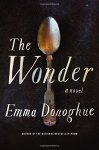 The Wonder by Emma Donoghue: Donoghue switches fluidly between contemporary and historical novels, and she excels at both. The Wonder is the story of Nightingale-trained English nurse Lib Wright, who takes a two-week job watching Irish eleven-year-old Anna O’Donnell, who claims not to have eaten in four months. Is it a miracle or a hoax? Lib is sure it’s a hoax and that Anna is a liar, but she quickly comes to care for the girl, and concern at her deteriorating condition compels her to ask not how Anna is maintaining her fast, but why she feels the need to fast at all. The answer is a tangle of religious beliefs and a dark family secret.
Leave Me by Gayle Forman: A mother of four-year-old twins can’t get a break even when she is recovering from a heart attack, so she simply leaves town to find the rest and recovery she needs. Difficult to read at times, but Forman (If I Stay, Where She Went, Just One Day, Just One Year) has such compassionate for and empathy with her characters; she makes the transition from YA to adult seamlessly.
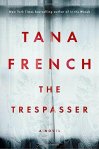 The Trespasser by Tana French: I’ve been devoted to Tana French’s psychological suspense novels since In the Woods, and I’m always eager to read her new books, though I think The Likeness will always be my favorite. The Trespasser takes place largely in the police office and interview rooms rather than out on the scene; it was a touch long but never felt sluggish, as Conway and Moran dug into what was apparently a domestic murder but turned out to be more complicated than that.
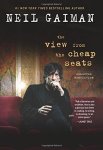 The View From the Cheap Seats: Selected Nonfiction by Neil Gaiman: This one sneaked up on me; it was not preceded by a lot of fanfare. I’d read a few of the pieces already but enjoyed them again, particularly “Why Our Future Depends on Libraries, Reading, and Daydreaming: The Reading Agency Lecture, 2013.” Nearly every piece in the collection is quite short, and I browsed rather than read straight through in order, so there are some pieces I missed.
Something New by Lucy Knisley: Relish is still my favorite book of hers, but this story of engagement and wedding planning is perfect for those who are in the same stage of life, particularly those with an artsy-craftsy hipster DIY style.
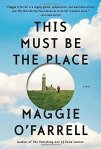 This Must Be the Place by Maggie O’Farrell: O’Farrell is another of my favorite authors and I read an e-galley of this novel in a few huge gulps, the result being that I don’t remember it as well as if I’d read it more slowly. It’s the story of Daniel Sullivan and his various family members, in various parts of the world (Donegal, Paris, California, New York, Chile), at various times (from the 1980s to 2016). O’Farrell has a genius for character; I would read this again and probably enjoy it just as much.
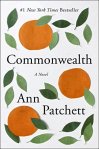 Commonwealth by Ann Patchett: On my admittedly long list of favorite authors, Patchett is firmly in the top five. Commonwealth is the story of two families who break apart and combine, leaving the children to cope with divorce, cross-country moves, and a singular tragedy. Various family members (but not all of them) narrate over a long time frame, during which their personal tragedy is made public in a famous author’s thinly fictionalized account.
On Bowie by Rob Sheffield: I was a Bowie fan without realizing it; when he died, I checked a greatest hits CD out from the library and discovered I knew plenty of Bowie songs, I just hadn’t known they were Bowie songs. Sheffield’s book is somewhere between a Bowie biography and a personal memoir – an fan’s extended paean to a cultural idol.
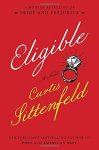 Eligible by Curtis Sittenfeld: I had high expectations for this book (Curtis Sittenfeld! Pride & Prejudice!), and though some reviews were negative or mixed, I thoroughly enjoyed it, as did the other members of my book club. Sittenfeld brings the P&P story and characters into present-day Cincinnati, and she does it very well: with cleverness and wit and invention. She makes one or two significant changes from the original plot and characters, but remains true to the heart of the story.
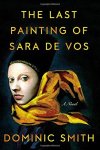 The Last Painting of Sara de Vos by Dominic Smith: I do love a good art history story, and this one didn’t disappoint. It takes place in three time periods: Holland in the 1630s, when the painting is created; Manhattan in the 1950s, when the painting is stolen and copied; and Sydney, Australia in 2000 when both the original and the forgery arrive at a museum show. Suspenseful and satisfying, a good choice for those who liked The Art Forger (B.A. Shapiro) or The Miniaturist (Jessie Burton).
The Raven King by Maggie Stiefavater: I have inhaled each of these four books, reading them so quickly it’s hard to remember the details. This was a satisfying conclusion to this uniquely magical quartet.
Our Hearts Will Burn Us Down by Anne Valente: The title snagged my attention, and the description and comp titles were enticing, so I requested and received the e-galley. For a story about a school shooting and a series of subsequent fatal house fires, I found it to be pretty slow-paced, and ended up skimming the last third just to find out who/what was causing the fires. On a political note, stories like this make our lack of national legislation on gun control even more frustrating.
Father’s Day by Simon Van Booy: Yet another of my favorite authors, Van Booy never disappoints: his poetic language, beautiful settings, and gift for bringing characters together in unexpected ways is delicate and touching.
Anticipating
The Muse by Jessie Burton: The second novel by the author of The Miniaturist takes place in Spain in 1936 and England in 1967. I like historical fiction in general, and Jessie Burton’s writing, and Spain in the 1930s is particularly interesting. I’m hoping to pick this up in the next month or two.
Today Will Be Different by Maria Semple: Plenty of buzz about the new novel by the author of Where’d You Go, Bernadette? A library copy just came in so I’ll be giving it a try soon.
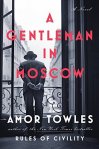 A Gentleman in Moscow by Amor Towles: I loved Rules of Civility so much that I was doubtful his next novel could be nearly as good, but my library colleague raved about it and it’s gotten very good reviews. I’ve just started reading and am enjoying it so far.
See also:
Top Ten Books I’ve Read So Far in 2015 (7/1/15)
Best Books I’ve Read in the Second Half of 2016 (12/25/15)
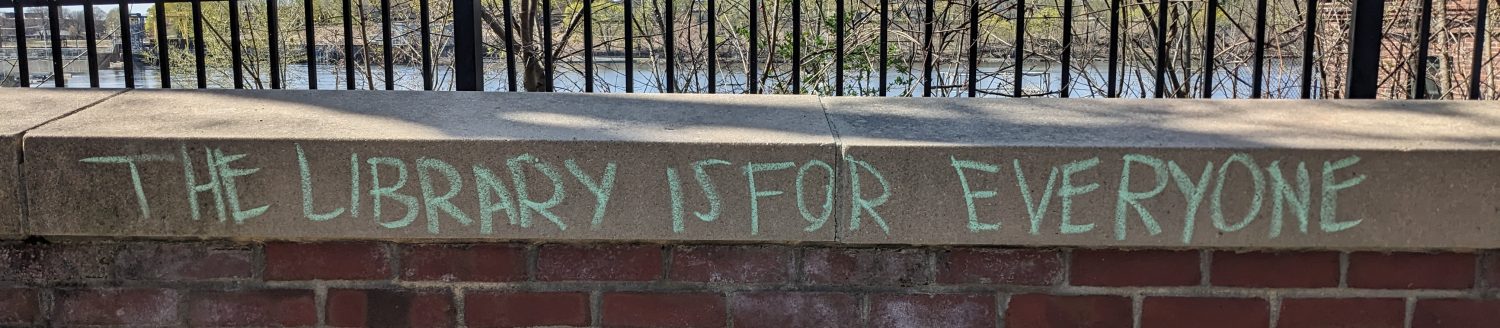
 Where do we go from here? We need more diversity at all levels of publishing, in libraries, in schools, in the bookselling business. We need to write, publish, read, and promote diverse books; “multicultural books don’t sell” is no longer a valid argument, if it ever was. We need more stories about more different people and places. We’re getting there, but too slowly.
 Recently finished or in-progress:
 Jane, Unlimited by Kristin Cashore(!!!): Just heard about this from
  At the end of
  And because October is always a big month for publishing,
 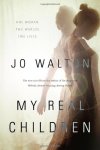 Adult Fiction
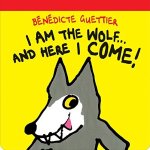 Children’s board books and picture books
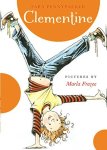 The Clementine series by Sara Pennypacker – I listened to all seven of these audiobooks (narrated by Jessica Almasy) and loved every single one. Clementine reminds me of Ramona Quimby (especially when adults tell her to “pay attention” and she says that she was paying attention…to something else. Perfect kid logic). The parents are great characters too.
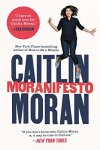 On November 30, journalist and author Caitlin Moran (pronounced CAT-lin mo-RAN) spoke in conversation with Boston Globe columnist Meredith Goldstein at the Brattle Theater in Cambridge, hosted by the



 Jenny Arch