Recaptains to the rescue

allegiantAllegiant, Veronica Roth’s third and final installment of the trilogy that began with Divergent, has finally hit the shelves (and promptly been snatched up by eager readers). I’m still waiting for a library copy, but in the meantime I needed to refresh my memory of the first two books. I’m in the habit of writing reviews of nearly everything I read, and indeed I wrote about Divergent and Insurgent, but with series there are always details that fade, and I try not to give away the ending in my reviews. However, I also don’t want to re-read all the preceding books in a series every time a new one comes out, so what to do? (Hannah Gomez at The Hub has one solution, but I don’t have the willpower for that.)

Recaptains to the rescue! I forget where I originally heard about the Recaptains. (If it was you who told me about them, please let me know. I have a feeling it may have been via Maggie Stiefvater, who wrote the recap for her own book, The Raven Boys.) The Recaptains, as the name suggests, write recaps – not reviews – of series books, including spoilers to help those who read the first book(s) but want a refresher before starting the next in the series.

If you, too, are waiting for a copy of Allegiant, here are the recaps of Divergent and InsurgentThey aren’t perfect, but they serve their purpose. And if you’ve read them both but still aren’t sure about continuing on with the final book, the FYA review of Allegiant is pretty safe (no major spoilers).

What to read and how to read it: RSS feeds and library blogs

When Google Reader announced it was shutting down, I considered several options and chose to migrate to The Old Reader. The migration took a few days because of heavy traffic, but once that was done and I started using it, I liked it a lot; it was the most similar and therefore least disruptive change.

However, right around the time I went to NELLS, The Old Reader was having some issues and it looked like it was going to be down for quite a while. To their credit, they’re doing everything they can to make The Old Reader sustainable in the long term, but I didn’t want to be without my RSS feed for that long.

feedly-logo1-640x297Instead of looking back at my first post on the topic (see link in first paragraph), I went ahead and chose Feedly. If I had looked back at my own research, I probably would have gone with Newsblur, but I’ve been fairly happy with Feedly. It’s easy to organize your subscriptions into folders and move the folders around; there are a number of view options; the app for the tablet is good. The left-hand sidebar menu tends to disappear (to give more room to what you’re reading), but reappears when you float over it.

But the RSS tool is only the how, not the what. The what, of course, is the content itself, and since NELLS I have added a few more blogs to my “Library Blogs” folder, including friends and fellow NELLS participants Anna at LCARSLIBRARIAN and Sarah at librarysarie. (Those links go directly to their posts about NELLS.)

A few of my other favorite library blogs:

  • Brian at SwissArmyLibrarian: SwissArmyLibIn addition to the always-interesting Reference Question of the Week, Brian also writes clear, concise, thoughtful posts relevant to the public library world. He has a lot of experience as a librarian, but I think his blog would be interesting for library patrons as well as other librarians. Plus, he works in Massachusetts, so if you’re in New England there’s a good chance you’ll see him in person at a conference. Say hi!
  • Sarah at LibrarianInBlack: Opinionated, honest, and unafraid to stand up for herself and her library, Sarah is the director of a public library in California. As she says on her “About” page, “I am a big technology nerd and I believe in the power of libraries to change lives.  Combined, they make a fearsome cocktail.”
  • Jessamyn at Librarian.net: Jessamyn writes from Vermont about libraries, technology, politics and government (she covered the Kirtsaeng v. Wiley case, for example). A great writer, relevant and interesting content. LibraryLoon
  • Gavia Libraria, the Library Loon: the pseudonymous Loon writes about issues within library school and academic libraries. I enjoy her opinionated style as well as the substance of each post. She recently linked to Meredith Farkas’ piece, “Managing the ‘whole person,'” which I highly recommend, especially to NELLS folks. Meredith’s blog is another good one for those interested in academic libraries and instruction in general.
  • Julie at Perfect Whole: Julie is a librarian, reader, and writer who until recently wrote twice-monthly essays, published on the first and 15th of the month. This schedule has been suspended recently but there are plenty of thoughtful, well-crafted essays as well as the occasional current post.  Her “I can’t believe you’re throwing out books!” essay sparked a lot of conversations about weeding.
  • Linda at ThreeGoodRats: Linda is one of my co-workers (we both write for the Robbins Library blog) and ThreeGoodRats is where she reviews the many, many books she reads. Her reviews are neat, to-the-point, honest, helpful (if you’re trying to decide whether or not to read that particular book), and insightful. She also has a Sunday knitting feature that will knock your (handmade) socks off. YALSATheHub
  • Young Adult blogs: I enjoy the unique review style at Forever Young Adult, though I don’t read 100% of the content. Some of their reviews are now featured on Kirkus. They also write TV show recaps. YALSA’s The Hub is another YA blog I browse (Anna of LCARSLIBRARIAN writes for them sometimes). There is a high volume of content so I don’t read everything, but a recent favorite post is “Too Many Trilogies.”

So those are a few blogs I make a point of reading. What are your favorites? And what have you found to replace Google Reader (assuming you were using it in the first place), and are you happy with it? Comment below!

ALA Chicago

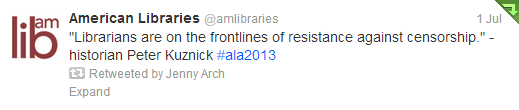
I didn’t get to attend ALA’s Annual Conference in Chicago this year, but I followed along virtually on Twitter (#ala2013) and through others’ blog posts and articles.

alaRT

On June 27, Maureen Sullivan announced the launch of the “Authors for Library eBooks” initiative. A District Dispatch blog post, “Bestselling authors call for library ebook lending,” quotes Jodi Picoult: “Whether it’s a digital file or a paper copy, I want readers to find my books—and all books—in their libraries!” (As readers of this blog know, not all publishers make all their ebooks available for libraries to purchase.)

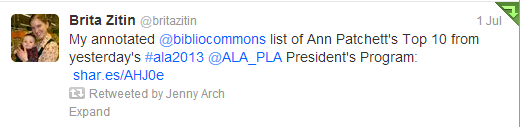
My friend Brita, who attended the conference through the Student-to-Staff program (the same way I did in 2011), wrote this great piece on Ann Patchett’s PLA President’s Program: “Ann Patchett, Readers’ Advisor Extraordinaire.” She also created a Bibliocommons list of Patchett’s top ten recommendations.

ALAbibliocommons

YA Authors Decode Dystopia“: I would have loved to have been in the audience for this author panel on dystopian fiction, featuring Lois Lowry, Cory Doctorow, Veronica Roth, and Patrick Ness. The authors identified “an important component of dystopian fiction that makes it so appealing: the ability to place oneself intimately in the action. The ‘what if’ factor draws readers into dystopian fiction, making them imagine how they would react if faced with calamity.”

I would have loved to sit in on PLA’s “Long e-Overdue” panel as well, which featured Jamie LaRue of the Douglas Country (CO) Libraries, Mary Minow of Library Law, and Michael Porter of Library Renewal. The idea of “library-managed e-content platforms”  as an alternative to middleman-style vendors such as OverDrive and 3M is a great goal to aim for.

I also followed along with the “New Adult: What Is It & Is It Really Happening?” panel on July 1 via Twitter (#ala13na). The panelists provided a huge list of “new adult” resources, including articles, blog posts, and booklists. Depending on who you listen to, “new adult” is either a “hot new category” in publishing, or a useless and annoying marketing ploy; it’s either fiction that features main characters in the 18-25 (ish) age range, bridging the gap between YA and adult, or it’s typical YA but with sex scenes. It’s definitely an emerging niche, though, and there’s lots to discuss.

Finally, from American Libraries Magazine, there’s a list of “10 Steps to a Better Library Interior.” The first step (“fresh perspective”) even includes one of my favorite cleaning/de-cluttering tips, which is to take everything out, then only put back the things you really want to keep. (Or at least imagine you’re doing so: obviously it’s impractical to move computers, furniture, and tens of thousands of books out of the library and into the parking lot.)

Conferences are both exhausting (travel, long days, rushing from one room to another, meeting lots of new people) and energizing (meeting new people, encountering new ideas, thinking about how you can bring those ideas back to your own library or workplace). I’m glad I was able to follow along virtually this year, thanks to those who wrote, tweeted, and linked.

Edited to add: My friend and fellow Student-to-Staffer (2011) wrote a great recap of all the programs, panels, and roundtables she attended at ALA 2013, including sessions on young adult literature, graphic novels, ARCs, and the New Adult panel. It’s worth a read, especially if you’re a YA librarian and/or a school librarian.

The Sea of Tranquility by Katya Millay

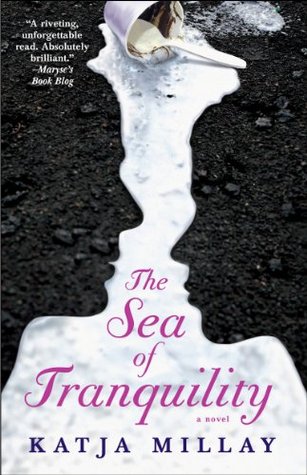
sea of tranquilityNote: The Sea of Tranquility was initially self-published. It was well-reviewed by book bloggers, and picked up by a mainstream publisher, the Atria imprint of S&S, which will issue a paperback edition in June 2013. The version I read was an advance copy of the Atria edition.

The Sea of Tranquility is narrated in the first person, alternating between Josh Bennett and Nastya Kashnikov (not, as we learn eventually, her real name). Josh is seventeen; following the death of his mother and sister in a car accident when he was eight, and the subsequent death of his father and grandparents, he has been emancipated and lives alone.

A former piano prodigy who has suffered a terrible trauma, Nastya has come to live with her aunt Margot and begins attending the same high school as Josh, where she does everything possible to alienate people. Most significantly, Nastya doesn’t talk; she hasn’t spoken out loud to anyone in over a year.

Despite, or perhaps because of, Nastya’s silence, her handsome and charming classmate Drew becomes attached to her, and occasionally drags her out to parties. After she gets too drunk at one of them, he brings her to his friend Josh’s house for help; though they don’t hang out at school, Drew is Josh’s only close friend.

It’s not rocket science to see where the book is headed; though both Josh and Nastya are closed off to others, afraid of being hurt again, they are attracted to each other. (This setup practically begs for a voiceover: Will they share their secrets and help each other heal from past hurts? Will they learn to love again?) Though there is little real suspense, I found the characters compelling, and the book strangely hard to put down; Josh and Nastya certainly do have chemistry, and Nastya’s backstory is eventually revealed through a coincidence that doesn’t feel too contrived.

The author follows Rule #1 of YA novels (and fairy tales): get rid of the parents. Josh’s parents are dead, and Nastya lives with her aunt, but Margot is a nurse, and their schedules rarely have them home at the same time. Nastya has little contact with her parents and her brother, Asher, except for a couple visits and a few necessarily one-way phone calls.

In terms of genre, I’d call it literary fiction/YA romance; it has some dark scenes and heavy themes, but the characters are 16-18 years old and much of the book takes place in or around the high school or the characters’ homes. The writing is good, and if it’s sometimes melodramatic, well, so are teenagers. Though I was skeptical, I definitely enjoyed The Sea of Tranquility, and would read more from this author.

Cory Doctorow at the Harvard Bookstore (or, Cory Doctorow gave me a high five!)

20130304_twitter_repliesThe first thing I noticed, looking around at the other audience members before the event began, was that there were more men in the audience than women. If you have ever book to an author event before, you’ll realize this is unusual. But of course, Cory Doctorow isn’t just an author; he’s also an activist, the co-editor of Boing Boingand an all-around nerd hero (see xkcd comics featuring him here and here). Plus, the Harvard Bookstore is a stone’s throw from Harvard and just two stops from MIT on the red line.

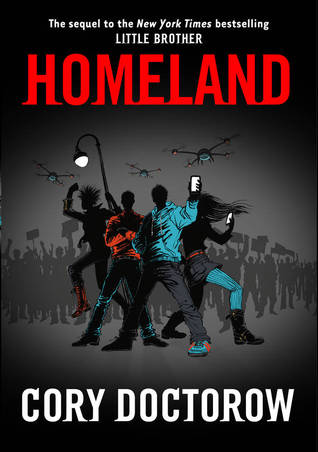
Doctorow started off by complimenting the Harvard Bookstore as “one of the most awesome-sauce dispensaries in the northeast,” and saying that he wasn’t actually going to read from his new book, Homeland; there was an audio clip of him reading online (Internet Archive), and there were other things to talk about.
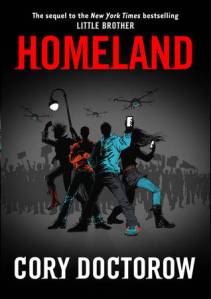
homeland_doctorowFirst, he outlined the case of Robbins vs. Lower Merion School District (PA), wherein the school equipped its students’ laptops with spyware and took pictures of the students in their rooms at home, unbeknownst to students or their parents. The school denied wrongdoing.

Next, Doctorow talked about the German Chaos Computer Club’s (CCC) discovery and cracking of government spyware, which was not only illegal but also, apparently, dangerously easy to hack.

Then there was the case of spyware on rent-to-own laptops. Allegedly, the spyware was installed in order to prevent theft – one of the same reasons there was spyware on the students’ laptops in Lower Merion – but of course it was used more nefariously than that.

Next, Doctorow moved on to those long, impenetrable Terms of Service we all sign, which he called “weird” and “totally objectionable.” Signing a contract with an employer is one thing, he said, but since when have consumers signed contracts with manufacturers?

Now, of course, it’s almost impossible not to. Do you use facebook? iTunes? Online banking? Twitter or Tumblr? Then you might have a vague memory of scrolling through a vast amount of fine print to get to that “I Agree” button so that you can use the service in question. (Ed Bayley at the Electronic Frontier Foundation proposes that the buttons should read “I Agree” and “I Have No Idea What This Says.” Read the white paper, “The Clicks That Bind.”)

We might all skim and disregard the Terms of Service or Terms & Conditions, but under the 1998 Digital Millennium Copyright Act (DCMA), breaking ToS/T&C “isn’t a little illegal, it’s a lot illegal” (Doctorow’s words, not the legislation).

The scary part is that even though most people don’t read before agreeing, it’s still a legally binding document (though there is some question about the enforceability), and breaking the agreement is a felony under the Computer Fraud and Abuse Act (CFAA). After Aaron Swartz’s suicide, two years after being charged under the CFAA, Rep. Zoe Lofgren (D-CA) introduced “Aaron’s Law,” which would amend it.

Doctorow then segued into speaking about the late Aaron Swartz, computer programmer and activist; Aaron was involved with the development of RSS, the Creative Commons, and reddit (he also wrote an afterword for Homeland). By now, most will be familiar with the JSTOR debacle, but before that, Aaron was involved with an attempt to liberate U.S. legal documents from the PACER (Public Access to Court Electronic Records) database. For a relatively short overview of that case, see the New York Times article from February 2009; for more in-depth (and fascinating) explanations, check out Steve Schultze’s article (February 2011) and Tim Lee’s piece on Ars Technica (February 2013).

Lee points out, “The documents in PACER—motions, legal briefs, scheduling orders, and the like—are public records. Most of these documents are free of copyright restrictions, yet the courts charge hefty fees for access” (reminiscent of the way that government (i.e. taxpayer)-funded science research ends up behind paywalls). What Aaron did was help Schultze with the code to download a high volume of documents from PACER during a free trial; with those documents, RECAP (“turning PACER around”) was born. RECAP is still going strong.

Aaron was also involved in leading a grassroots campaign to fight the Stop Online Piracy Act (SOPA). The bill was defeated when, as Doctorow put it, “Congress realized that as hard as it is to get reelected without campaign finance, it is really hard to get reelected without votes.”

Finally, there was the JSTOR case. JSTOR is a database that contains a tremendous volume of research, much of which was funded directly or indirectly by the federal government. However, this research resides behind a paywall. Aaron had access through MIT, and downloaded a vast quantity of articles. The government cracked down, with federal agents charging Aaron under the CFAA. Two years later, facing jail (“You’re gonna put me in jail for 35 years for checking too many books out of the library?”), and seeing no other way out, Aaron committed suicide.

Doctorow emphasized the importance Aaron’s cause: that people have the right to access information, whether or not they happen to be affiliated with an institution of higher education. “We never know where the next great thing is going to come from,” he said. “This isn’t GOING to be a matter of life and death, it IS a matter of life and death….This is the beginning of the future.”

Doctorow referred to computers and the internet as “the nervous system of our world. The world is made of computers…We put our bodies in computers [e.g. cars]…we put computers in our bodies [e.g. headphones, medical equipment]….We’ve gotta get this right….And it matters. It matters a lot.” He is concerned, to say the least, about regulating this technology and making sure it is secure. (A recent article about NASA highlights the danger of collecting personal data and failing to protect is closely.) Doctorow said, “I’m not interested in how something succeeds, I’m interested in how it fails.” His sincere and urgent concern doesn’t prevent him from using colorful, humorous language to make his case: “We regulate them like…a fax machine attached to a waffle iron.”

It can all seem like an overwhelming problem, too large to tackle, too impossible to change. But the campaigns against SOPA (and PIPA) were powerful; they proved that people do care about their rights, and about the worst case scenario consequences un-thought-out legislation can have on the internet and other technology. There has been an outpouring of support for Aaron’s cause since his suicide (he also had strong supporters before his death). The open access (OA) movement is gaining power in higher education, especially as journal prices continue to skyrocket and become unaffordable for even the Harvard Libraries. And awareness is growing as consumers begin to wonder who really owns the content they produce (on facebook, twitter, etc.) and the digital products they buy (or are they really only licensing?). One thing you can do, Doctorow said, is “refuse to use technology that takes away your freedom.”
littlebrotherOther gems from the evening:

“Information doesn’t want to be free. If anything it wants us to stop anthropomorphizing it.

Referring to smartphones: “A police tracking device that happens to make phone calls.”

“Don’t talk to cops without a lawyer present.”

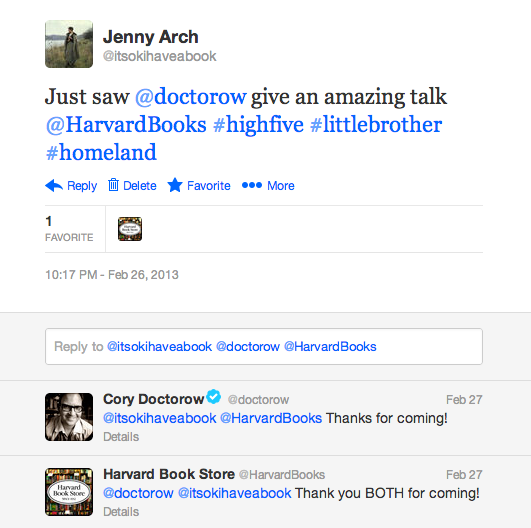
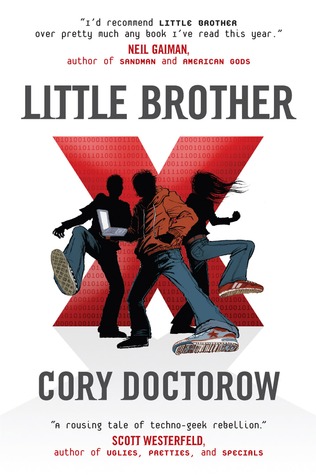
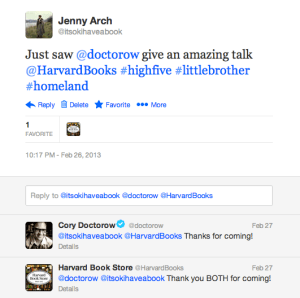
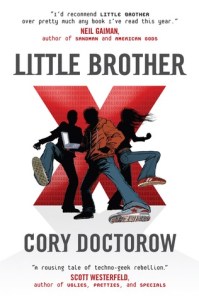
After the energetic and inspiring talk, Doctorow stayed around to sign books. I hadn’t read Homeland yet, but I read its prequel, Little Brother, and I told him that I’d recommended it to many people in my capacity as a librarian…at which point he gave me a high five.
Just One Day by Gayle Forman

justonedayJust One Day by Gayle Forman (published January 2013)

Those who read a lot of YA fiction have doubtless encountered many trilogies recently. Often, the second book is the least satisfying, merely providing a bridge from the first book (in which most of the world-building takes place and the characters are introduced and established) to the final book (which, one hopes, provides the exciting and dramatic conclusion).

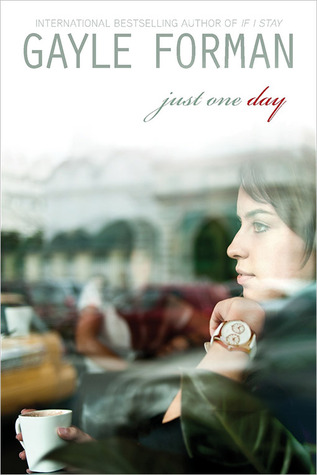
Gayle Forman wisely avoids this trap, opting to write books in pairs rather than in sets of three. I adored If I Stay and Where She Went, which together tell the story of Mia and Adam; she narrates the first book, he narrates the second. I was looking forward to Just One Day (the next book in this pair, Just One Year, comes out in the fall), and it did not disappoint.

Just One Day is Allyson’s story. Like Mia and Adam, Allyson is leaving high school and entering the world beyond: in her case, college, preceded by a summer tour through Europe. Allyson, always a good girl who lets her mother run her life to a degree unfathomable by me, impulsively takes a day trip to Paris with a young actor she meets in London, Willem. Their day and night is eventful and wonderfully romantic, until she wakes up the next morning and discovers him gone; heartbroken, she returns to London and then home, vowing to forget him, but when that strategy proves a failure, she decides she has to find him, and find out what happened.

There are so many great things about this book: it covers that transitional period between high school and college; the writing is lovely; Allyson’s friendships are realistic (she grows apart from a high school friend, miscommunicates with her roommates, finally makes a friend in her Shakespeare class), as are her relationships with her parents. For those who are partial to Shakespeare and European travel, those are bonus elements. Most of all, this is a story of personal growth, but it’s not a formulaic coming-of-age story; the author lets Allyson flounder for a while before getting back on her feet.

This story ended in a perfect place, and I can’t wait to read Just One Year.

Recent Reads: Fiction

I will never get through my “to-read” list, because writers keep writing books and publishers keep publishing them. Alas! Here are a few new-ish novels that I’ve read recently and really enjoyed. Somewhat incidentally, all but one feature teen narrators, and that one (Accelerated) has an eight-year-old character.

 Son by Lois Lowry

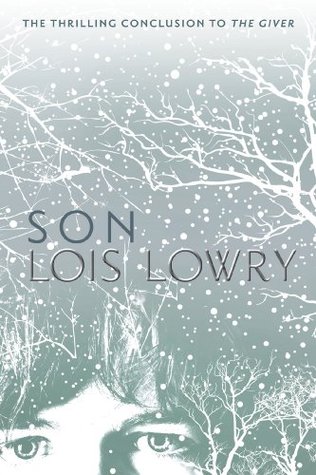
Son is the final book in The Giver quartet: The Giver, Gathering Blue, and Messenger. After The Giver, it is my favorite; it ties every strand of story and character together. It begins with Claire, a Birthmother in the community where Jonas lived in The Giver. In fact, Claire is only a few years older than Jonas, and it is her son, Gabe, who Jonas takes with him when he leaves for Elsewhere. Due to an oversight, Claire does not receive the emotion-suppressing pills that all other community members take, and she grieves over Gabe’s disappearance; the rest of the book is her journey to find him again. Dark and heart-wrenching, this is a satisfying end to the quartet, though I believe it can also stand alone.

 Where’d You Go, Bernadette? by Maria Semple

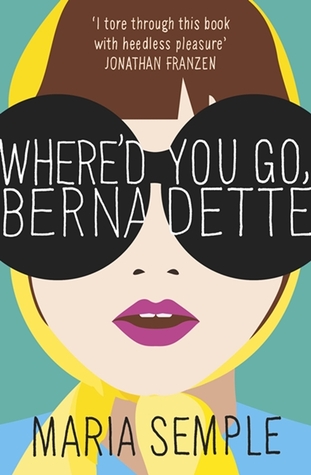
I read this on the strength of Ken Jennings’ recommendation, and loved it. Precocious, teenage Bee narrates: her father is a high-ranking Microsoft employee and her mother, the titular Bernadette, is an award-winning – but reclusive and eccentric – architect. Bee narrates, but the narrative is interspersed with letters, e-mails, and official documents to and from the adults in her life. The settings come alive as well: tech-savvy, hippie-filled Seattle; competitive, nutty Southern California; a peek into an east coast boarding school; and of course, Antarctica. Where’d You Go, Bernadette? is Bee’s unraveling of that very question: she is in search of her mother, figuratively and literally. A smart, funny book that also delves into deeper issues, such as mental illness and mother-daughter relationships.

 Tell the Wolves I’m Home by Carol Rifka Brunt

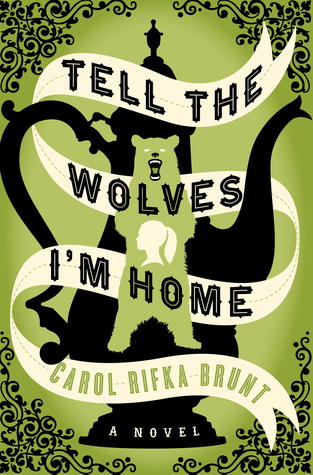
In Westchester, NY, in 1987, thirteen-year-old June Elbus is grieving over her uncle (and godfather) Finn, who died from AIDS. Her family, especially her mother and sister, don’t think June’s grief is appropriate, but Finn’s “special friend” Toby reaches out to June, and after a few awkward hitches, they form a friendship. From Toby, June begins to learn things her family has kept her in the dark about, and some things that even her family doesn’t know. The author evokes the power and complication of sibling relationships, both between June and her sister Greta, and their mother and her brother Finn. The treatment of AIDS, especially the fear, stigma, and ignorance surrounding it, is a compelling reminder of they way things were twenty-five years ago.

 Accelerated by Bronwen Hruska

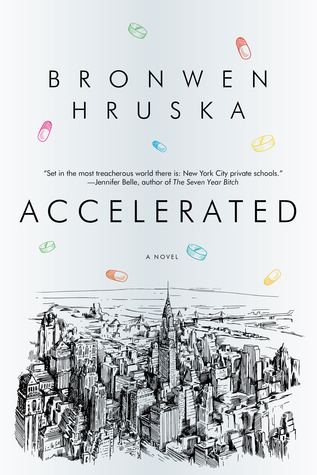
Sean’s wife Ellie has left him and their eight-year-old son, Toby. Sean struggles along in single-dad mode, but Toby’s private prep school – paid for by Ellie’s parents – is pressuring Sean to have Toby evaluated for ADD/ADHD and put on drugs that Sean doesn’t think Toby needs. Eventually he knuckles under, with disastrous consequences, which spur him to investigate why so many of the kids at the Bradley School are on these meds. He enlists the help of Toby’s new teacher, Jess, and the two of them become romantically entangled as well. This is a literary novel with some thriller elements. Certain aspects require a willing suspension of disbelief, but the larger issue of medication in education remains.

The Perks of Being a Wallflower

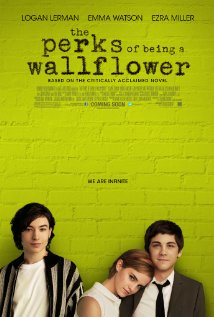
 The Perks of Being A Wallflower, the 1999 young adult cult classic by Stephen Chbosky, is that rare thing: a timeless high school book, and now also an excellent book-to-movie adaptation. Chbosky wrote and directed, which surely has something to do with the adaptation’s success, and the casting was superb. Logan Lerman is an utterly believable Charlie, Ezra Miller is a fabulous Patrick, and Emma Watson is an enchanting Sam (and she maintains a pretty good American accent throughout, with only one real slip-up that I noticed).

Some material (e.g. the Thanksgiving holiday; Charlie’s favor for his sister) was cut from the book, and there were a few other changes here and there, but the spirit of the movie was the same as in the book; even the new dialogue was true to the original, and of course many of the most emblematic and resonant lines from the book made it into the movie (“I feel infinite,” “We accept the love we think we deserve”). Needless to say, the soundtrack is also stellar; the Smiths’ “Asleep” appears early on.

 What was most captivating and touching about Perks the book was Charlie’s voice. The book is structured as a series of letters to an anonymous recipient: “Dear friend, I am writing to you because she said you listen and understand and didn’t try to sleep with that person at that party even though you could have…” (In this Chbosky interview on NPR, he almost reveals who Dear Friend is, but doesn’t.) The movie manages to capture Charlie’s voice; it reminded me how much I loved the book, while also being satisfying and enjoyable on its own.

Read my review of The Perks of Being A Wallflower (the book) on Goodreads. If you haven’t already read the book, I encourage you to do so. Then go see the movie.

Banned Books Week: Celebrating the Freedom to Read

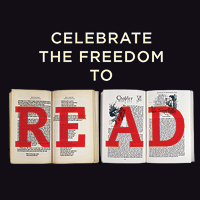
Preparing for Banned Books Week at the library (September 30-October 6), I’m getting excited ahead of time. The American Library Association (ALA) has several cool badges and banners available to download for free (remember to give credit for the images if you use them).

Reprinted by permission of the American Library Association.

On the ALA site, you can also see lists of the most frequently banned/challenged books, by author, year, or decade. You can also see that almost half of the Radcliffe (now Columbia) Publishing Course Top 100 Novels of the 20th Century have been challenged or banned; if you did any of your assigned reading in school, I can pretty much guarantee that at least one of those books is on that list.

The most frequently challenged/banned books list is overwhelmingly comprised of classics (think To Kill A Mockingbird and Brave New World) and young adult literature (The Giver, A Wrinkle in Time, Harry Potter). The most common reasons for challenges are “sexually explicit,” “offensive language,” and “unsuited to age group,” and the most likely challenger, by a tremendous margin, is a parent.

I was fortunate that during my childhood and adolescence, my parents, teachers, and librarians never told me I couldn’t read a book. Reading has always been a positive part of my life, not something that ever harmed me – even when I was reading material “unsuited to my age group.”

Let’s all celebrate our freedom to read, not just September 30-October 6, but all year, every year – because reading is magic.


YA for Grown-ups

You know that xkcd comic, “Someone is WRONG on the internet”? I actually don’t feel that way too often. Not because there isn’t plenty of misinformation on the internet, or a lack of opinions out there with which I disagree, but because I don’t spend most of my time looking around for things to argue with and get all bent out of shape about.

However, I followed a link from this new “Y.A. for Grownups” column, and wouldn’t you know it, SOMEONE IS WRONG ON THE INTERNET. Joel Stein, columnist for Time magazine, believes that “Adults Should Read Adult Books.” And ONLY adult books. And here is something that gets me bent out of all recognizable shape: someone telling me what I can’t (or shouldn’t) read. (Remember “no one ever told me no”? Or the simple fact that telling a kid – or anyone, really – s/he can’t read/do/have something is a surefire way to get them to want to read/do/have that thing with every fiber of their being?)

Maybe I’m just contrary. However, I believe there is value in YA literature for adults as well as teens. First of all, remember, most adults reading fiction are reading fiction for pleasure and entertainment, so who’s to tell them (us!) what to read or not read? Second, Stein admits he hasn’t read any of the major YA books out there now: not The Hunger Games, not Twilight, not Harry Potter. So right off the bat there’s the issue of passing judgment on something he isn’t familiar with, and only citing the biggest blockbuster names out there. Yeah, okay, he happens to be right that Twilight is not literary, but neither is Nicholas Sparks (yes, it’s pick-on-Nicholas-Sparks week here), and Stein isn’t bashing adults who read The Notebook.

But Joel Stein, I dare you, I dare you, to read Jennifer Donnelly’s A Northern Light and write it off in the same fashion. Read it and say it has no value and that adults should only read “adult” books. That we should read only the books – literary or not – aimed at our age group. (Speaking of age groups, “YA” is just the publishers’ designation for marketing purposes. There’s no strict definition, but usually the main character is a child or teenager, the book is from their point of view – first person or third limited – and it takes place in the present or recent past.)

You know what? Whatever Joel Stein thinks, I’m not embarrassed to read YA books in public. Maybe I feel like re-reading The Giver or Bridge to Terabithia or The Boggart or The Golden Compass, or maybe I feel like keeping abreast with newer YA books, like The Hunger Games or Uglies or A Fault in Our Stars – wait, how did I even get to this point in this tirade without mentioning John Green? Joel Stein, I dare you to read A Fault in Our Stars as soon as you’re done with A Northern Light.

Anyway, the point is, look: I was in middle school once, so while I won’t say I’m 100% immune to embarrassment, I am most emphatically NOT embarrassed to read YA books in public, and I’m years beyond caring what anyone else on the train thinks about it. What books make me cringe? None.*

*Fine, one: I had to read Pretty Little Liars for a YA Lit class and it was awful. I did not want to read it in public. You can have that one, Joel.