YA for Grown-ups

You know that xkcd comic, “Someone is WRONG on the internet”? I actually don’t feel that way too often. Not because there isn’t plenty of misinformation on the internet, or a lack of opinions out there with which I disagree, but because I don’t spend most of my time looking around for things to argue with and get all bent out of shape about.

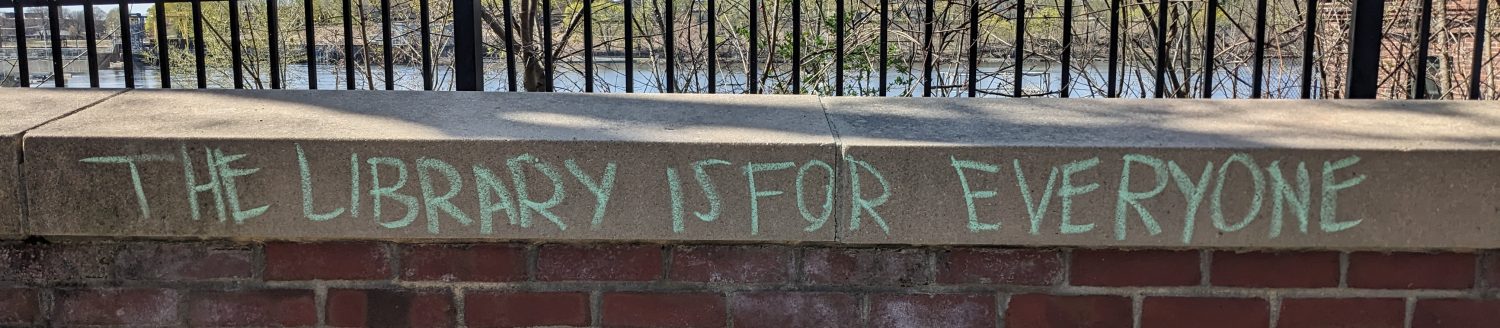
However, I followed a link from this new “Y.A. for Grownups” column, and wouldn’t you know it, SOMEONE IS WRONG ON THE INTERNET. Joel Stein, columnist for Time magazine, believes that “Adults Should Read Adult Books.” And ONLY adult books. And here is something that gets me bent out of all recognizable shape: someone telling me what I can’t (or shouldn’t) read. (Remember “no one ever told me no”? Or the simple fact that telling a kid – or anyone, really – s/he can’t read/do/have something is a surefire way to get them to want to read/do/have that thing with every fiber of their being?)

Maybe I’m just contrary. However, I believe there is value in YA literature for adults as well as teens. First of all, remember, most adults reading fiction are reading fiction for pleasure and entertainment, so who’s to tell them (us!) what to read or not read? Second, Stein admits he hasn’t read any of the major YA books out there now: not The Hunger Games, not Twilight, not Harry Potter. So right off the bat there’s the issue of passing judgment on something he isn’t familiar with, and only citing the biggest blockbuster names out there. Yeah, okay, he happens to be right that Twilight is not literary, but neither is Nicholas Sparks (yes, it’s pick-on-Nicholas-Sparks week here), and Stein isn’t bashing adults who read The Notebook.

But Joel Stein, I dare you, I dare you, to read Jennifer Donnelly’s A Northern Light and write it off in the same fashion. Read it and say it has no value and that adults should only read “adult” books. That we should read only the books – literary or not – aimed at our age group. (Speaking of age groups, “YA” is just the publishers’ designation for marketing purposes. There’s no strict definition, but usually the main character is a child or teenager, the book is from their point of view – first person or third limited – and it takes place in the present or recent past.)

You know what? Whatever Joel Stein thinks, I’m not embarrassed to read YA books in public. Maybe I feel like re-reading The Giver or Bridge to Terabithia or The Boggart or The Golden Compass, or maybe I feel like keeping abreast with newer YA books, like The Hunger Games or Uglies or A Fault in Our Stars – wait, how did I even get to this point in this tirade without mentioning John Green? Joel Stein, I dare you to read A Fault in Our Stars as soon as you’re done with A Northern Light.

Anyway, the point is, look: I was in middle school once, so while I won’t say I’m 100% immune to embarrassment, I am most emphatically NOT embarrassed to read YA books in public, and I’m years beyond caring what anyone else on the train thinks about it. What books make me cringe? None.*

*Fine, one: I had to read Pretty Little Liars for a YA Lit class and it was awful. I did not want to read it in public. You can have that one, Joel.

What You Read When You Don’t Have To

Someone I know is leaving soon to take a job in a foreign country. He will be away for a long time, and wanted to stock up on books (ebooks, actually, on his Kindle) before leaving. I did a little reader’s advisory interview, and he said he had read and enjoyed fantasy and sci-fi in the past but wasn’t much of a reader otherwise and was looking to expand. Here’s what I recommended, with occasional genre/subject/additional works notes in parentheses (forgive me for not putting each title into italics):

Classic dystopia
1984, George Orwell
Brave New World, Aldous Huxley
Fahrenheit 451, Ray Bradbury
Anthem, Ayn Rand
The Giver, Lois Lowry (and sequels Gathering Blue and Messenger; YA)
The Handmaid’s Tale, Margaret Atwood
Oryx and Crake, Margaret Atwood

Classic fantasy/sci-fi
The Hitchhiker’s Guide to the Galaxy, Douglas Adams
His Dark Materials (trilogy: The Golden Compass, The Subtle Knife, The Amber Spyglass), Philip Pullman (YA)
A Wrinkle in Time, Madeleine L’Engle (also: A Wind in the Door, A Swiftly Tilting Planet, Many Waters; YA)
Neverwhere, Neil Gaiman (fantasy)

Contemporary Literary Fiction
The Amazing Adventures of Kavalier & Clay, Michael Chabon (comic books, history; Pulitzer Prize)
High Fidelity, Nick Hornby (music)
The Prince of Tides (and/or The Lords of Discipline), Pat Conroy (the South, violence, families)
The Story of Edgar Sawtelle, David Wroblewski (dogs)
The Poisonwood Bible, Barbara Kingsolver (missionary family in Africa)
The Brothers K, David James Duncan (brothers, baseball)
Faithful Place, Tana French (mystery/suspense)
This Is Where I Leave You, Jonathan Tropper (crazy families, funny)
A Thousand Splendid Suns, Khaled Hosseini (Afghanistan)
Edited to add (4/13/12): Life of Pi, Yann Martel
Edited to add (4/13/12): The Septembers of Shiraz, Dalia Sofer (Iran)

Classic American Literature
East of Eden, John Steinbeck
Lolita, Vladimir Nabokov (though English was the author’s third language)
The Great Gatsby, F. Scott Fitzgerald
For Whom the Bell Tolls, Ernest Hemingway
Ordinary People, Judith Guest

Nonfiction
Science/Environment
The Ghost Map, Steven Johnson
The World Without Us, Alan Weisman
A Short History of Nearly Everything, Bill Bryson
The Immortal Life of Henrietta Lacks, Rebecca Skloot
In Defense of Food, Michael Pollan

History
The Professor and the Madman, Simon Winchester
Under the Banner of Heaven, Jon Krakauer (also Into the Wild and Into Thin Air)
Unbroken, Laura Hillenbrand (also Seabiscuit)
In Cold Blood, Truman Capote (true crime)
How the Irish Saved Civilization, Thomas Cahill
The Wordy Shipmates, Sarah Vowell (Massachusetts Bay Colony)
In the Garden of Beasts, Erik Larson (American family in Germany, pre-WWII)

Popular Psychology
The Tipping Point, Malcolm Gladwell
How We Decide, Jonah Lehrer

Biography/Memoir
The Happiness Project, Gretchen Rubin
What I Talk About When I Talk About Running, Haruki Murakami
On Writing, Stephen King
Charles & Emma, Deborah Heiligman (YA)

Essays
Manhood for Amateurs, Michael Chabon
How To Be Alone, Jonathan Franzen
The Polysyllabic Spree, Nick Hornby (books/music)
-anything you can find by Ann Patchett, including The Getaway Car and This is the Story of a Happy Marriage

The title of this post borrows from an Oscar Wilde quote, “It is what you read when you don’t have to that determines what you will be when you can’t help it.” Feel free to add additional recommendations in the comments.

Best of 2011, Part the First: Young Adult

Saving the two major categories – adult fiction and nonfiction – for later, here are a few of the best young adult (YA) books that I read in 2011 (not necessarily published in 2011).

Looking for Alaska, by John Green
I was utterly blown away by this book. It is set at a boarding school in Alabama, where the main character Miles Halter (a.k.a. Pudge) comes seeking a “great perhaps.” What he finds is a teacher who makes him think, a friend who makes him laugh, and a girl who makes him dream – and breaks his heart. The structure of the book is unique: it is divided into two parts, Before and After, and instead of chapter headings there are countdowns (e.g. 121 days before; 29 days after). Looking for Alaska is a classic, tragic coming-of-age story, along the lines of Bridge to Terabithia and A Separate Peace. (I highly recommend John Green’s other books as well, including his newest, The Fault in Our Stars.)

Little Brother, by Cory Doctorow
Warning: This book will make you paranoid, for at least as long as it takes to read it and several days after. It features Marcus, a high school hacker who uses his intelligence primarily to evade the school’s efforts to invade his privacy. Marcus and his friends get drawn into a much bigger battle against a much more powerful enemy when the Department of Homeland Security picks them up after the Golden Gate Bridge is blown up. Part thought experiment, part meditation on privacy, security, and freedom (though meditation is too quiet a word to describe this book), Little Brother is thought-provoking, action-packed, and a little bit frightening – it’s our world, once-removed.

The Body of Christopher Creed, by Carol Plum-Ucci
Simply one of the best YA mysteries I have read in ages. Social outcast Christopher Creed goes missing after leaving an ambiguous note, and his classmate Torey Adams cannot let the disappearance rest – especially when rumors that Chris was murdered begin swirling, and fingers are pointed at people that Torey is sure are innocent. Torey is often introspective, musing on the nature of popularity and friendship, but this intensifies the suspense of the story rather than slowing it down. (There is also a sequel, Following Christopher Creed, which does not disappoint.)

Uglies, by Scott Westerfeld
A dystopian novel in a sea of dystopian novels, Uglies exceeded my expectations. In Tally Youngblood’s world, everyone is surgically transformed from an Ugly to a Pretty when they turn 16, and Tally can’t wait – but her transformation depends on betraying her friends, who ran away to escape being turned Pretty. When Tally goes after them, her journey and the people she meets open her eyes to what being Pretty really means. (This series continues through Pretties, Specials, and Extras. I read Pretties, and enjoyed it, but did not feel compelled to continue after that.)

A Northern Light, by Jennifer Donnelly
Fans of historical fiction: stop whatever you’re doing, go find this book, and read it. Set in the Adirondacks in 1906, A Northern Light is 16-year-old Mattie Gokey’s story. Mattie’s mother is dead, and Mattie has shouldered her duties on the farm, including taking care of her younger siblings. Mattie dreams of being a writer, and has a teacher who believes in her and encourages her; but a future as a writer is incompatible with the deathbed promise she made to her mother. Will Mattie put her family first, or her own dreams? Her decision hinges on a bundle of letters that a visitor leaves in her care, with instructions to destroy them – but Mattie reads them, and it changes the course of her life. (Inspired by the same case that inspired Theodore Dreiser’s An American Tragedy.)

When Will There Be Good News?

Yes, I borrowed the title of a Kate Atkinson book for this post (although if you’re going to read her, I highly recommend Case Histories instead). It is now a full week into the new year (happy 2012!) and this is my first post; I have written others but they did not seem like the right ones with which to begin the year.

This morning, however, I read an article in the Boston Globe about a 13-year-old Massachusetts boy who contacted artists to create trees, which he would then donate the the nonprofit Reach Out and Read; the organization could auction off the artists’ trees at their annual fundraiser to raise money for early literacy.

Not only is this a cool idea, and an admirable (and successful) effort on the part of a teenage boy, but what really got to me was his quote at the end of the article: “Sometimes when people say they don’t like to read, the truth is they just haven’t found a book they like.’’ Sounds like a future librarian to me…

More “adult” than “young”

The “young adult” sector is generally considered to encompass the 12-18 set. This is a pretty huge span: there’s much more of a developmental difference between, say, a 14-year-old and a 16-year-old than there is between a 30-year-old and a 32-year-old. Obviously, some YA books are aimed toward the younger end of the spectrum – the “tweens” – and some are pitched toward an older audience. Add to this that YA is beginning to encompass a few more years in either direction – so it might span from 10 to 25 (according to YALSA) – and that’s not exactly a homogenous demographic.

Additionally, there’s no switch that gets flipped when you turn 19, and all of a sudden you are totally uninterested in The Perks of Being a Wallflower and are picking up  Jonathan Franzen’s Freedom instead. Readers in their late teens and early twenties may go back and forth between YA and adult fiction – especially if there isn’t much out there featuring main characters in that age range, as seems to be the case (“Where Are All the Young ‘Adults’?”, Young Adult Review Network; “The College Experience in YA Books,” YALSA’s The Hub). Both of those articles have a few suggestions for YA fiction featuring late teen/early 20s protagonists; I’ve added a few below as well. Feel free to add more in the comments!

Love is the Higher Law, David Levithan (set in New York; characters are high school seniors/college freshmen)

Prep, Curtis Sittenfeld (set at a Massachusetts boarding school)

I Am Charlotte Simmons, Tom Wolfe (set at a fictionalized Duke University)

The House of Sleep, Jonathan Coe (set at an English university)

Lucky Girls, Nell Freudenberger (short stories)