A year of read-alikes

readalike logo/graphic, made in Canva
Logo designed in Canva

This year on the library blog, I started writing a new monthly post suggesting “readalikes” for one of our most popular books that month. It’s been a useful readers’ advisory tool, both for readers eager to read the most popular books, and for those who have already read them and are looking for similar titles.

Of the most popular books each month, I   featured books from different categories or genres, from literary fiction to nonfiction, young adult fiction to cookbooks.

January: The Woman in Cabin 10 by Ruth Ware – a psychological thriller

February: Hillbilly Elegy by J.D. Vance – a personal account of growing up as part of the declining white working class

March: A Gentleman in Moscow by Amor Towles – a popular work of literary historical fiction set in the Metropol hotel in Moscow in the 1920s, by the author of Rules of Civility

April: The Hate U Give by Angie Thomas – YA fiction inspired by the Black Lives Matter movement and racial inequality

May: Anything Is Possible by Elizabeth Strout – short stories by the author of My Name is Lucy Barton

June: Saints for All Occasions by J. Courtney Sullivan – literary fiction about a complicated family, set in Ireland and Boston

July: Al Franken, Giant of the Senate by Al Franken – a leftist political humor memoir (note: Franken has since resigned from the Senate after accusations of sexual harassment)

August: Dying by Cory Taylor and The Bright Hour by Nina Riggs – memoirs and other nonfiction on the topic of death and dying

September: What She Ate by Laura Shapiro – culinary historian Shapiro looks at three famous women through the lens of food and cooking

October: Glass Houses by Louise Penny – the newest Three Pines mystery featuring Armand Gamache

November: Smitten Kitchen Every Day by Deb Perelman – a second cookbook by the blogger with a dedicated following

December: Manhattan Beach by Jennifer Egan – a new work of historical fiction by the Pulitzer Prize-winning author of A Visit From the Goon Squad, set in WWII-era New York


Early literacy and 1000 Books Before Kindergarten

1000 Books Before Kindergarten logoThe 1000 Books Before Kindergarten initiative is one I first heard about via the Cambridge Public Library. Like all the best arts & crafts projects and recipes, it looks wildly impressive, but is actually quite simple and manageable. As their mission statement says, “Numerous studies estimate that as many as one in five children have difficulties learning to read. Reading has been associated as an early indicator of academic success. Public formal education does not typically start until ages 5-6. Before then, parents and caregivers are the first education providers during the 0-5 early critical years.” The goals of the organization are simply “to promote reading to newborns, infants, and toddlers” and “to encourage parent and child bonding through reading.”

A thousand books sounds like a lot, but remember that picture books are short, and board books are really short. If you read just one book a day, that’s 365 books in one year, 730 books in two years, 1,095 books in three years, and 1,460 books in four years. It doesn’t have to be a thousand unique books, either; young children love (and learn from) repetition, growing more familiar with words, rhymes, and patterns.

If your parents, caregivers, and teachers read to you when you were a young child, then you’ve already shared this experience and it will be easier for you to model it from the other side. If reading aloud to/with a child isn’t as natural for you, or if you aren’t sure why it is important, here are some resources to help:

  • Reading Tips for Parents from the Department of Education (in English and Spanish)
  • Early Learning tips from the Hennepin County Library: “Learn how all family members and your public library can help prepare young children to be readers with five early literacy activities [talk, sing, read, write, play] that are fun yet powerful ways to encourage early learning.”
  • The Six Early Literacy Skills [PDF] from Every Child Ready to Read (ECRR)

If you don’t know what books to read to (or with) your child, librarians can help! If you can get to a storytime, that’s great – a good storytime librarian will model great read-aloud strategies, and for younger ages will often include fingerplay, songs, and rhymes; reasonable people don’t expect two-year-olds to sit still and listen quietly for half an hour! A decent bookstore is also likely to have a weekly storytime, and staff who can recommend great books for little ones.

If you can’t get to a storytime, just ask a librarian or bookseller what they recommend, and they should be able to give suggestions based on your child’s age and interests. Here are some other resources for finding great books to share with your child:

Does your library, bookstore, school, or other organization support 1000 Books Before Kindergarten? Have you participated with your child? There are participation resources on the site, from reading logs to certificates to apps to hashtags, though my favorite idea is keeping a handwritten reading journal. In general I don’t like incentives (e.g. “if you read 100 books you get a sticker”) because reading is its own reward (intrinsic motivation), but I like the T-shirt – it reflects pride in an accomplishment, and helps spread the word about the program.

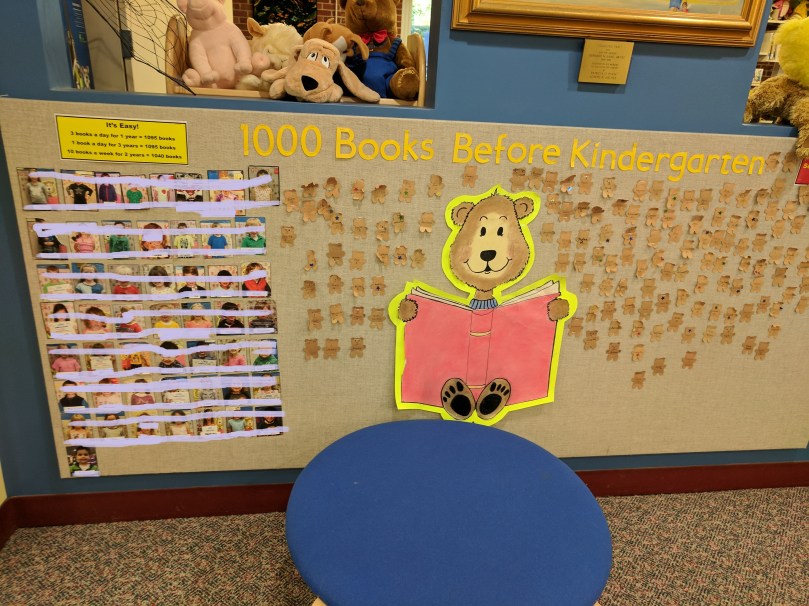
1000 Books Before Kindergarten display at the Guilford (CT) Public Library
1000 Books Before Kindergarten display at the Guilford (CT) Public Library (names and faces obscured for privacy purposes)

Quotes from books, part VIII

Continuing the “quotes from books” series, this batch of quotes is from books I read between May 2017 and August 2017. The tenth quote here sums up the year pretty nicely.

  1.  “My mother always said that kindness was love in disguise.”Dodger, Terry Pratchett
  2.  “Every act of communication is a miracle of translation.” -from the preface of The Paper Menagerie and Other Stories, Ken Liu
  3.  “I am not one thing. I am everyone and everything that has touched me. This is the basic principle of forensic science: every contact leaves a trace.” (accompanied by an illustration)You Are Here, Jenny Lawson
  4.  “It’s not moving on…it’s moving differently.”Holding Up the Universe, Jennifer Niven
  5.  From “A Short History of Silence” in The Mother of All Questions by Rebecca Solnit: (a) “If the right to speak, if having credibility, if being heard is a kind of wealth, that wealth is now being redistributed”; (b) “Silence protects violence.”
  6.  From Elizabeth Wein’s author’s note at the end of The Pearl Thief: “This is what authors do: we make up stuff that might be true.”
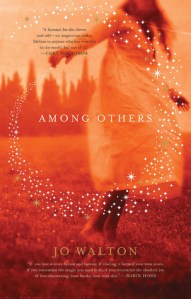
  7.  Quoted in Jennifer Niven’s All the Bright Places: “We do not remember days, we remember moments.” (Cesare Pavese)Cover image of Among Others
  8.  “It is hard to see who a person is, through all of those memories of who they were.” –When the English Fall, David Williams
  9.  “How terribly hard it is to accept that other people feel what we feel.” –Wedding Toasts I’ll Never Give, Ada Calhoun
  10.  “There are some awful things in the world, it’s true, but there are also some great books.” –Among Others, Jo Walton

See previous installments in this series here:

Part I | Part II | Part III | Part IV | Part V | Part VI | Part VII

Top Ten Mix and Match

Skimming the list of Top Ten Tuesday topics at The Broke and the Bookish, I noticed several for which I had a single instant answer, but not a list of ten. So I decided I’d make a list of ten of the Top Ten Tuesday topics for which I had one (okay, one-ish) answer each:

  1. Most Intimidating Books: Anything over 600 pages, really. It makes no sense – it just means reading one book instead of two in the same amount of time – but it’s a deterrent nevertheless.
  2. Books I Wish I Read As A Kid: Alanna and the whole Song of the Lioness quartet by Tamora Pierce. And Adulting by Kelly Williams Brown would have been useful right after college.
  3. Characters (and Literary Figures) That I Would Did Name My Children After: Lyra from The Golden Compass. (Also strongly considered Clare, from The Time Traveler’s Wife.)
  4. Hilarious Book Titles: I Was Told There’d Be Cake by Sloane Crosley

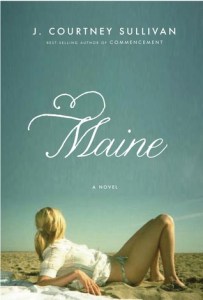
    Book cover of Maine
    NOT an accurate representation of the novel Maine.
  5. Book Covers I Wish I Could Redesign: Maine by J. Courtney Sullivan. The photo of a young woman in a bathing suit on a beach does not represent this book AT ALL. I didn’t love the paperback cover for Gold by Chris Cleave, either, but the hardcover design was great.
  6. Books That Broke Your Heart: The Amber Spyglass was the first book I remember reading where I got to the end and thought the exact word heartbreaking.
  7. Most Frustrating Characters: Harry Potter in the fifth book, Harry Potter and the Order of the Phoenix, was so whiny and angsty, and so terrible to Ron and Hermione, that I actually hated reading some parts of the book, no matter how realistic his behavior for a character that age. Be better, Harry!
  8. Series I’d Like to Start, but Haven’t Yet: The Broken Earth trilogy by N.K. Jemisin, and the Daughter of Smoke and Bone series by Laini Taylor. Maybe also something by Leigh Bardugo. I’m taking suggestions…
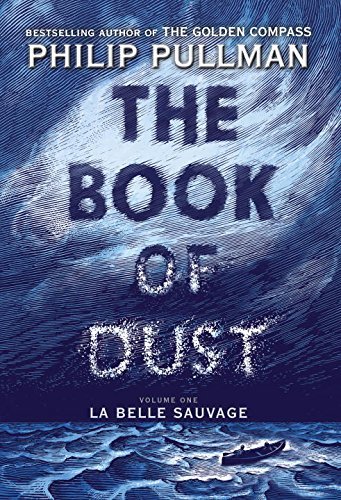
  9. Sequels We Can’t Wait to Get Our Hands On: I’m eager for the next book in any good series I start…but I remember being particularly desperate for each new book in Maggie Steifvater’s Raven Cycle, and I’ve been waiting for the second volume in The Book of Dust since the moment I read the last page of the first volume, La Belle Sauvage.
  10. Book Covers I’d Frame As Pieces of Art: I actually have two (2) pieces of Time Traveler’s Wife-related art on my walls: a Litograph, and an acrylic painting of the cover, done by a good friend. I wouldn’t mind a Litograph of Inigo Montoya in The Princess Bride, either. Oh, and we have Mo Willems’ Pigeon, as well. I probably could come up with ten pieces of bookish art I’d want…

Quotes from books, part VII

After a long hiatus (in my drafts folder), we return to the “quotes from books” series. This batch includes quotes from books I read between August 2016 and April 2017.

  1.  Shrill by Lindy West was so excellent I have three quotes from it: (a) “I was working at a cashier at an “upscale general store and gift shop” (or, as it was known around my house, the Bourgeois Splendor Ceramic Bird Emporium & Money Fire)…”; (b) “Shame is a tool of oppression, not change….You know what’s shameful? A complete lack of empathy”; (c) “Just because you haven’t personally experienced something doesn’t make it not true.”
  2.  I re-read a longtime favorite, Barbara Kingsolver’s Pigs in Heaven, which is full of beautiful language, and this line is as true as ever: “It occurs to her that there is one thing about people you can never understand well enough: how entirely inside themselves they are.”
  3.  From David Levithan’s story “Your Temporary Santa” in My True Love Gave to Me, : “And in that moment, in that momentary loss of logic to wonder…”
  4.  From Leigh Bardugo’s “Head, Scales, Tongue, Tail” in Summer Days and Summer Nights: “Some of us wear our hearts. Some of us carry them.”
  5.  “None are so blind as those who will not see.”The Wonder, Emma Donoghue
  6.  “If underneath anger was fear, then underneath fear was love. Everything came down to the terror of losing what you love.”Today Will Be Different, Maria Semple
  7.  “The past was never perfect, and we never reach the future.”Moranifesto, Caitlin Moran
  8.  “If there’s a word for something, we’re much more likely to ‘see’ it and treat it as real.”Waking Up White, Debby Irving
  9.  “I tell her: Maybe if you take off all that armor, you won’t feel so heavy.”Still Life With Tornado, A.S. King
  10.  “There is one kind of thought that’s always useful and always gracious. That kind of thought is, “What can I do for someone else?””Gracious, Kelly Williams Brown

See previous installments in this series here:

Part I | Part II | Part III | Part IV | Part V | Part VI


Top Ten Friday: the to-read list

Back in June, I wrote about books that I was looking forward to. Coming into the end of the year, it’s time to take stock:

  • The Pearl Thief by Elizabeth Wein: read and liked this little peek into Julie’s life before the war and Code Name Verity.
  • Holding Up the Universe and All the Bright Places by Jennifer Niven: read/listened, liked; would recommend to anyone looking for realistic YA fiction.
  • Ramona Blue by Julie Murphy: read and liked, but it’s her first novel, Dumplin’, that has stayed with me more. I may re-read or listen (I’ve heard the audio is good). Related: Moxie by Jennifer Matthieu was another excellent teen novel set in a small Southern (Texas) town.
  • Girl in Disguise by Greer Macallister: haven’t read yet
  • Eleanor Oliphant is Completely Fine by Gail Honeyman: read and loved. Eleanor is such a unique character and her story is difficult and quiet and strong.
  • The Summer Before the War by Helen Simonson: read this for book club and loved it – it was like Jane Austen meets Downton Abbey.
  •  Miller’s Valley by Anna Quindlen: haven’t read yet
  • Between the World and Me by Ta-Nehisi Coates: read for book club. Important, especially for those in a position to ignore or forget the effects of institutional racism and police violence (i.e. most white people).
  • Life on Mars by Tracy K. Smith: read and liked, but I’m not sure I’ll return to it, even though I bought a copy. I did love the line “perhaps the great error is believing we’re alone” (from “My God, It’s Full of Stars”).
  • The Book of Dust: La Belle Sauvage by Philip Pullman: read as soon as it was published, loved it, read it again, am waiting for the next one already. Review here, contains spoilers.
  • Jane, Unlimited by Kristin Cashore: read and loved. Different from the Graceling books of course, but equally immersive, and structurally interesting (it’s sort of a Choose Your Own Adventure, but with all the options).
  • Young Jane Young by Gabrielle Zevin: read and liked this one very much, and included it on a “Books on the Bright Side” list I made for my library.
  • The Runaways by Brian K. Vaughan and others: I really liked the first two volumes, didn’t like the third and fourth as much (the Young Avengers crossover lost me), but still excited for whatever Rainbow Rowell comes up with.
  • Turtles All the Way Down by John Green: just as good as expected, possibly better; review here.
  • Genuine Fraud by E. Lockhart: haven’t read yet and might not; a trusted fellow reader found it disappointing.

Girl in Disguise and Miller’s Valley are the only two remaining from that list, but of course there are always more to look forward to; Gayle Forman, Maggie O’Farrell, and Jo Walton all have books coming out in 2018. Others I’d like to read:

  • Fun Home by Alison Bechdel (graphic novel/memoir)
  • Far from the Tree by Robin Benway (YA)
  • Mrs. Queen Takes the Train by William Kuhn (fiction)
  • The Broken Earth trilogy by N.K. Jemisin (sci-fi/fantasy)
  • The Hate U Give by Angie Thomas (YA)
  • Rebecca by Daphne Du Maurier (I read this when I was much younger and I think it went entirely over my head; at least, I don’t remember anything from it)
  • Thinking, Fast and Slow by Daniel Kahneman (nonfiction)
  • Hunger by Roxane Gay (memoir)
  • The Bear and the Nightingale by Katherine Arden (myth/fairytale – I’d love to hear from someone who read this and would recommend it. Reviews look good.)
  • Walking Home by Simon Armitage (nonfiction/memoir/poetry)

And hey, that’s ten! If you count a trilogy as one. (Bear and Nightingale already has a sequel, as well.) What books are you looking forward to? Have you read any of the books above? What did you think?

Edited to add (12/12/17): Kate Atkinson has a new novel called Transcription coming out in September 2018!

Edited to add (12/13/17): Ken Jennings’ Planet Funny: How comedy took over our culture is coming out May 2018!

Fake News, a.k.a. Information Disorder: an ongoing reading list

Since before the first Libraries in a Post-Truth World conference at the beginning of this year, I’ve been keeping a list of relevant articles. This list has expanded to include books, studies and reports, and other materials, and I am sharing it here. If you have relevant materials to add, please leave a comment here. If you would like to use this list for library programming, teaching, or related work, please feel free – I’d love to know about it if you do.

Though “fake news” is a term most people recognize these days (unfortunately), it is not the best term to use, for reasons Claire Wardle and Hossein Derakhshan state in their Council of Europe report:

We refrain from using the term ‘fake news’, for two reasons. First, it is woefully inadequate to describe the complex phenomena of information pollution. The term has also begun to be appropriated by politicians around the world to describe news organisations whose coverage they find disagreeable. In this way, it’s becoming a mechanism by which the powerful can clamp down upon, restrict, undermine and circumvent the free press.
We therefore introduce a new conceptual framework for examining information disorder, identifying the three different types: mis-, dis- and mal-information.

Misinformation is when false information is shared with no harmful intent; disinformation is when false information is shared to cause harm; and mal-information is when genuine information is shared to cause harm (e.g. by moving it from the private to the public sphere). Unfortunately, again, we are dealing with all three today (plus satirical sources like The Onion, which are the only good kind of fake news).

Fake News a.k.a. Information Disorder: A Resource List

Again, feedback is welcomed; please let me know if you use this list, or have anything to add. I am particularly interested in using the rise of interest in the topic of fake news to advocate for librarians in schools, as they are the ones who do the important work of teaching research skills, critical thinking, information literacy, and media literacy.


Top Ten Unique Book Titles

As usual, I am using Linda’s list for inspiration, and it’s not a Tuesday at all. Also, there are eleven twelve, and I could keep going. This is a fun one.

    1.  Cover image Heartbreaking Work of Staggering GeniusA Heartbreaking Work of Staggering Genius by Dave Eggers: This book mystified me when I read it – was it fiction? Memoir? What? – but I always liked the brash confidence of the title. And the bit about French fries.
    2.  We Are All Completely Beside Ourselves by Karen Joy Fowler: I think I came to this as an Ann Patchett recommendation, but the title would have made me want to pick it up anyway.
    3.  Call Me By Your Name by Andre Aciman: It may have been the title that made me pick this book up, I can’t remember now. Either way, I’m glad I did.
    4.  I Was Told There’d Be Cake by Sloane Crosley: This one is on Linda’s list, but I liked the book better than she did. It probably helped that I read it in New York in my early twenties (the essays are about the author in New York in her twenties), and the title always makes me smile.Cover image of Men Explain Things to Me
    5.  Eleanor Oliphant Is Completely Fine by Gail Honeyman: Well, obviously she’s not.
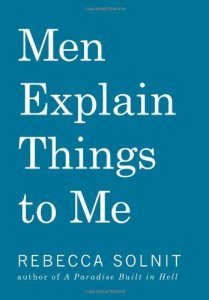
    6.  Men Explain Things to Me by Rebecca Solnit: The title is so good, and so appropriate, that it’s the only thing on the cover of this book: white text on a deep blue background. (I hate to think what Solnit would have done to a cover designer who put a pair of heels on the front of her book.)
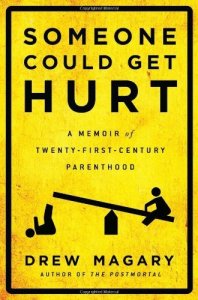
    7.  Someone Could Get Hurt by Drew Magary: A perfect title for a laugh-out-loud parenting memoir.
    8.  I Crawl Through It by A.S. King: My least favorite of her books – I really didn’t get it at all – but I love the title. Her others are good too (e.g. Please Ignore Vera Dietz).Cover image of Someone Could Get Hurt
    9.  Charlotte Sometimes by Penelope Farmer: I heard the song by The Cure before I read the book; both are atmospheric. I love discovering literature via music and vice-versa; when done well, it adds to both. (I discovered The Smiths’ song “Asleep” via The Perks of Being a Wallflower by Stephen Chbosky.)
    10.  A Burglar’s Guide to the City by Geoff Manaugh: The title was more promising than the book itself turned out to be, but then, how could that not be the case?
    11.  Shh! We Have A Plan by Chris Haughton: Initially, I didn’t think this picture book quite lived up to its funny title, but after enough re-reads I came to love it.
    12.  A Supposedly Fun Thing I’ll Never Do Again by David Foster Wallace: I’ve never read this collection of “essays and arguments,” but I’ve thought about this phrase a lot over the last two years. It’s rarely apt, but when it is, it’s so perfect.

Least favorite title:

Baking With Less Sugar by Joanne Chang: This doesn’t sound appealing at all.

What are your favorite titles? Least favorite? Book you read because of (or in spite of) its title?

Edited to add (12/5/2017): Everything Ravaged, Everything Burned by Wells Tower is a great title, as is Tim Kreider’s essay collection We Learn Nothing.

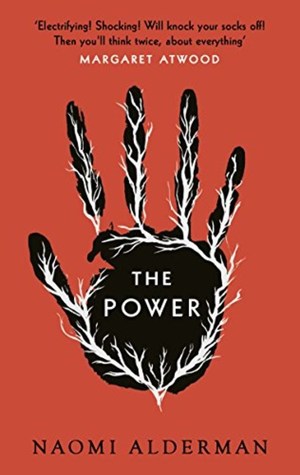
The Power by Naomi Alderman

US cover of The Power by Naomi AldermanAn absolutely remarkable thought experiment that is also an engaging, suspenseful novel. The premise is simple: “An environmental build-up of nerve agent…released during the Second World War…changed the human genome.” As a result, all girls have “the power,” the ability to send out an electrical jolt through their fingertips. Adolescents can “wake up” the power in older women. Some have more power (and better control) and some have less, but it’s not going away – which means that the historical gendered imbalance of power has flipped. Suddenly, women are more powerful than men, and in places where women have been most oppressed, “justice is at last being meted out.”

The framing device for this story is a letter from the author, Neil Adam Armon (an anagram of Naomi Alderman), to Naomi, asking for feedback on his “historical novel.” His novel is set in a time close to our present, but Neil and Naomi’s exchange takes place about five thousand years after the “Cataclysm,” in a future where women have been dominant for five thousand years.

A few characters, some of whose stories intersect, take us through the momentous emergence of the power: Roxy, daughter of a London crime boss; Allie, an orphan suffering sexual abuse at the hands of her foster parents; Tunde, a young male journalist who follows the most explosive events; and Mayor Margaret Cleary and her daughter, Jocelyn. Also throughout are Kristen and Tom, TV news anchors whose gender power balance shifts subtly but definitively throughout the novel.

The Power succeeds marvelously in its aim, and is therefore disheartening: it shows that when the disempowered attain power, they do not necessarily wield it any better than those who were previously in power. (As the voice in Allie’s head tells her, The only way to be safe is to own the place.) The solution, it is implied, is not simply to flip the gendered power imbalance, but to make it so that everyone is equal. And as the voice in Allie’s head also says: You can’t get there from here.

The Book of Dust

Cover image of The Book of Dust, volume one: La Belle SauvageIt’s been seventeen years since we left Lyra and Will under the hornbeam trees in their two separate Oxfords; twenty-two years since we met Lyra and Pan, scurrying through Jordan College. When the kind bookseller at Porter Square Books slid my copy of The Book of Dust across the counter, I teared up. “A lot of people are excited about this book,” she said, smiling. I mentioned that my daughter’s name was Lyra, and that today was her birthday. “Oh,” she replied, “You’re really excited.”

True. I took that day off and the next to read La Belle Sauvage, and when I finished, before noon on the second day, I immediately wanted the next volume. Alas, it will be another wait – so I simply began reading this one again.

Pullman brings us back to Oxford ten or eleven years before The Golden Compass begins, when Lyra is a six-month-old baby, and Malcolm Polstead – our new protagonist – is the eleven-year-old son of the owners of the Trout Inn, across the river from the Priory of St. Rosamond. Malcolm does work around the inn and and for the nuns, goes to school, and paddles around in his canoe, which he has named La Belle Sauvage. But things are changing, in Malcolm’s small world and in the larger one: the Magisterium (the Church) and the Consistorial Court of Discipline (CCD) are growing more powerful and frightening, and the League of St. Alexander comes to the schools, encouraging children to sign up and turn in anyone disloyal to the Church; this encouragement to inform on friends and family felt reminiscent of 1930s Germany.

This swing to the political/religious right is countered by liberal forces working in secret; one of these, Oakley Street, has a few familiar members, including scholar Hannah Relf and gyptian Coram van Texel (later to become Farder Coram). Malcolm becomes involved, meeting with Hannah weekly, but his true loyalty is to baby Lyra, who is in the care of the nuns at the priory. When a flood comes – as Coram warned – Malcolm and Alice Parslow (Parslow being another familiar name from The Golden Compass) take Lyra and flee in the canoe, but they are pursued by the CCD and by Gerard Bonneville, a scholar with knowledge of the Rusakov field whose daemon is a terrifying three-legged hyena.

The second half of the book takes place on the water, as Malcolm and Alice try to keep Lyra and themselves safe. First they plan to head to Jordan College in Oxford, where Malcolm thinks they could ask for sanctuary for Lyra, but the river is flowing too fast, and they head for London instead, hoping to find Lord Asriel and deliver Lyra to him. On the way they have several run-ins with scary figures, lose Lyra and get her back, and meet a fairy (a different sort of magic than any Lyra or Will encountered in His Dark Materials, but consistent with British fairy lore; Pullman has said he was inspired by William Blake). In the very last pages, Malcolm and Alice do find Asriel, and he manages to get them all to Jordan, where he entrusts the Master of the college with Lyra’s care; there the book ends.

Although La Belle Sauvage takes place about a decade before The Golden Compass, it has much the same feel. The CCD is immediately sinister, and unsurprisingly, Mrs. Coulter is behind the League of St. Alexander. Lord Asriel is much the same as he is in His Dark Materials. Hannah is to Malcolm much as Mary Malone is to Lyra; a scholar who mentors him, though she is somewhat in the dark herself. Baby Lyra’s brief time in a sort of orphanage, and Malcolm’s rescue of her there, is reminiscent of Bolvangar. But the most similar part, oddly enough, is Malcolm himself: he is like a blend of (older) Lyra and Will, with her facility for thinking on her feet (making up false names, for example) and his ability to be unnoticed. In their steadfastness to each other, despite initial antagonism, Malcolm and Alice are a bit like Lyra and Will as well; they rely on each other because they’re all they have, and that bonds them.

Now, we wait for the second volume of The Book of Dust, and we wait even longer for the third. I am confident that both will be worth the wait.