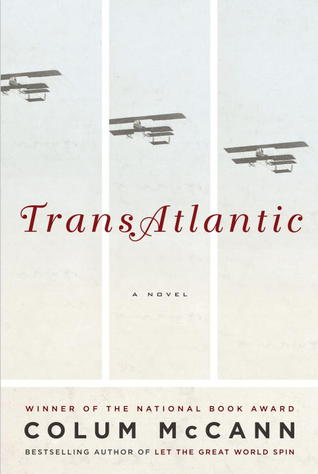
TransAtlantic by Colum McCann

LibraryThing’s batch of author interviews for the month include Julie Wu, author of debut novel The Third Son (which I wrote about in March) and Colum McCann, author of Let The Great World Spin and, most recently, TransAtlantic. I picked up a galley of TransAtlantic from the Random House booth at the Massachusetts Library Association conference last month, in part because I had both enjoyed and been impressed by Let The Great World Spin. Many books are enjoyable, and many books are impressive, but the two don’t always overlap.

TransAtlanticTransAtlantic takes place in three discrete time periods around three significant events: Frederick Douglass’ trip to Ireland in 1845, WWI pilots Jack Alcock and Teddy Brown’s flight from England to Ireland in 1919, and George Mitchell’s diplomatic efforts to end the Troubles in 1998. However, these characters are not the only main characters; four generations of women, beginning with Lily Duggan, a maid in the household that hosts Frederick Douglass, are also connected to these events.

The different time periods, events, and character relationships are a lot for a reader to keep track of, and in the end I found that the book left impressions rather than memories. Any one of the three central stories would have been enough for a book on its own, but McCann’s style is to twine many narratives together into one. I’m not sure he succeeds here as completely as in Let The Great World Spin, but the writing is absolutely beautiful (especially if you happen to be a fan of sentence fragments, which I am).

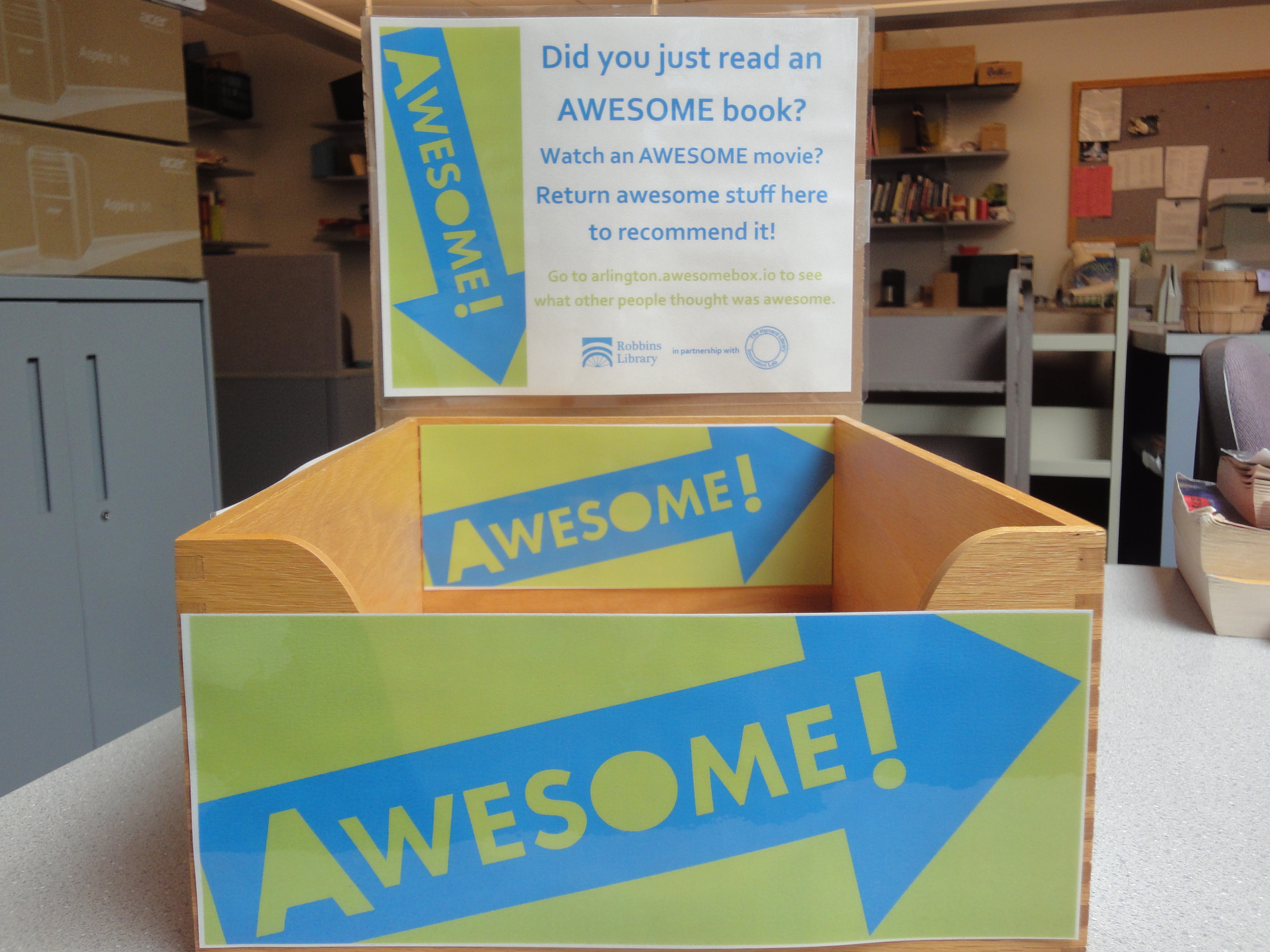
Making the library a little more Awesome

As soon as I read about the Awesome Box at the Somerville Public Library, I thought it was a fantastic idea and I wanted to bring it to Arlington as well. The Awesome Box, dreamed up by the capable inventors at the Harvard Library Innovation Lab, allows library users to “cast a physical vote for an item they found amazing or useful” by returning it to the “Awesome Box” instead of the regular Returns bin. Library staff then scans the “awesome” items, and they appear on the library’s web page.
arlingtonawesomebox

Awesome at the Somerville Public Library

Awesome at the Harvard Library

Awesome at the Robbins and Fox Libraries (We just launched this week so there aren’t very many items yet, but keep checking!)

We’ve also devoted one of our four Staff Picks display shelves at Robbins to items that have been “awesomed” – so it has, in effect, become a Patron Picks shelf. It will be interesting to see what turns up there, and I hope it will be a conversation starter for library users and staff alike.

Talking about books (a.k.a. readers’ advisory) is one of my favorite parts of librarianship, which is why I pushed so insistently to bring Awesome Box to our library. Fortunately, there was a lot of in-house enthusiasm in all departments, and the folks at the Harvard Library Innovation Lab have been absolutely great to work with. SPL librarians also responded helpfully when I asked them about their experiences with implementation, and based on their answers I was able to make up a simple FAQ for our staff here in Arlington.

I’m looking forward to seeing what people think is awesome. I expect to see a lot of popular, high-profile books, movies, and TV shows, but I think it will also be a great way to discover some more obscure items as well.

Because my reading list isn’t already long enough.

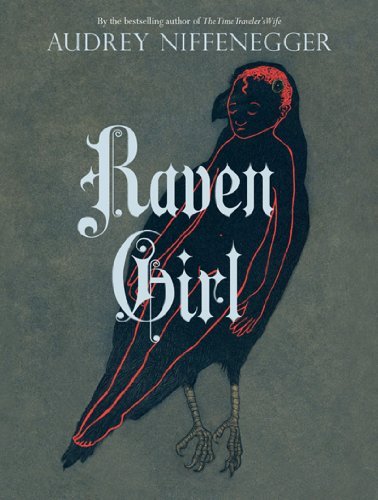
Raven Girl by Audrey Niffenegger

ravengirlToday I’m feeling quite grateful to book publicists, particularly to one who works at Abrams Comic Arts, publisher of Audrey Niffenegger’s new graphic novel, Raven Girl. In a time when libraries and publishers are sometimes on opposite sides of the fence, this is a good reminder that on both sides are people who love books and want to share them.

Audrey Niffenegger is best known for her novel The Time Traveler’s Wife, in which Clare (the wife) and Henry (the time traveler) are often separated against their will; it is an unusual and powerful love story. Her next novel, Her Fearful Symmetry, features identical twins who inherit their aunt’s London flat next to Highgate Cemetery; it is a ghost story, but the ghost realm and the human realm prove to be more porous and permeable than in other ghost stories.

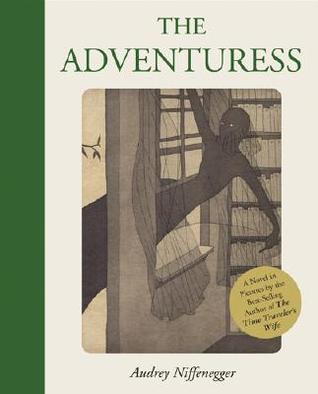
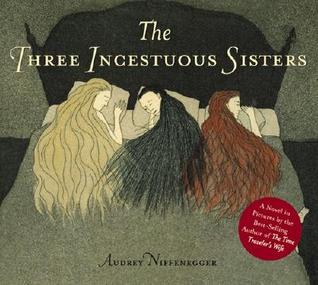
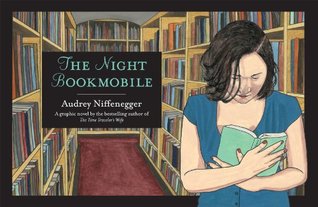
Readers of these novels, however, may have missed Niffenegger’s other work; she is both an author and an artist, and these two talents come together in her graphic novels. The Night Bookmobile was serialized in The Guardian before being published in book form in 2010. The Three Incestuous Sisters (2005) and The Adventuress (2006) preceded it. And now, we have Raven Girl, in which readers of Niffenegger’s previous graphic novels will recognize her characteristic style in both the art and the story itself.

Raven Girl was conceived as “a new fairy tale,” and that is exactly what it is. A postman falls in love with a raven; their daughter is born with the form of one, but she longs for what she feels is her true form. Instead of a witch or a fairy godmother, she finds a doctor who can help her effect the change. As in a fairy tale, some details and impossibilities are glossed over; as in a fairy tale, the animal and human worlds overlap; as in a fairy tale, some characters have happy endings, and some come to unfortunate ends.

In the illustrations paired with the text, remarkable detail contrasts with simple, flowing lines, and muted browns, blues, and greens. As you read, you may find yourself looking back and forth between the text and the art, as together, they amplify the power of the story.

Like most of Niffenegger’s work, Raven Girl is magical, dark, and unusual. I highly recommend it, not just for those who are already fans of the author, but as an entry point for those who have not yet discovered her.

adventuressthreeincestuoussistersnightbookmobile


Disclosure: I received my copy of this book from the publisher. I received no compensation for this review. Raven Girl will be available May 7.

The Great Migration

The Amazon acquisition of Goodreads came right on the heels of another major change that I didn’t blog about here (though I did do plenty of reading about it): Google is shutting down its RSS tool, Google Reader, on July 1 of this year. This news sent its millions (but not enough millions, apparently) of loyal users in search of alternatives.

Google_Reader_logo_GalliganFor those who don’t use any RSS feed: how they work is that you add subscriptions – to blogs, news sites, or webcomics, for example – and all new content from those sites is collected in one place. It’s a great way of keeping track of content from many places on the web, especially if they post content at irregular intervals; by highlighting new content when it appears, the RSS feed ensures that none of the sites you want to follow disappear from your radar.

So, which tool to use to replace Google Reader? I don’t have a smartphone, but I wanted something that I could access from my home computer, my work computer, and my tablet; I wanted something browser-based, not an app or plugin I’d have to install. Lifehacker’s March 13 article about Google Reader alternatives is worthwhile if you’re still trying to decide which one to switch to, as is the March 14 article from Extreme Tech.

the-old-reader-logoIf I’d had a smartphone, I might have gone with Feedly (my roommate’s choice), and I’m not ruling out changing to NewsBlur (Cory Doctorow’s choice) in the future, but for now I’ve switched to The Old Reader. It did feel a bit like going back in time, and because so many others were switching over at the same time, it took a few days(!) to import the OPML file that I had exported from Google Reader, but it’s been working well so far.

Uploading my exported Goodreads data to LibraryThing took a little time as well, but not as long as I expected, and I was very pleased with the outcome; all my Goodreads “shelves” became tags in LibraryThing (e.g. young adult, science, cooking, magic, to-read). I’m still getting used to navigating around the LT interface, as I’ve only really used it for cataloging before, but I’ve had no major problems so far, and the documentation is very good, so I can often find the answers to my questions.

The LT staff, including Tim Spalding, are active and responsive members of the site. The “LibraryThing: How to Succeed in an Amazon/Goodreads World” thread has been so active that it has spawned several additional topic threads. Barbara Fister has also written a good overview about the “culture clash” that occurred when a wave of Goodreads users joined LibraryThing (“culture shock: when Goodreads and LibraryThing collide“).

LT_logoIf you’re thinking of becoming a member of LT, or if you’re just curious to learn more about what it is, you can’t do better than this collaborative piece from LT staff and members, “What Makes LibraryThing LibraryThing?” They address the difference between users and customers (LT is free only up to 200 books; after that, you’re required to pay, but the amount is “suggested” and you can get either annual or lifetime membership at a very reasonable price): “We have no ‘users.’ If you’re not the customer, you’re the product. If a social website can’t support itself on customers and straightforward products, it’ll eventually sell out what you gave it—your data, your friends, and the community itself….We want what paying creates—customers, with loyalty and rights—not “users.'”

The “user vs. customer” difference is becoming more apparent as platforms launch and close, are bought and sold. As Alex Kantrowitz noted in an article for Forbes (“Google Reader Shutdown a Sobering Reminder That ‘Our’ Technology Isn’t Ours,” March 13), “The death of Google Reader reveals a problem of the modern Internet that many of us likely have in the back of our heads but are afraid to let surface: We are all participants in a user driven Internet, but we are still just the users, nothing more. No matter how much work we put in to optimize our online presences, our tools and our experiences, we are still at the mercy of big companies controlling the platforms we operate on.”

This is something to consider seriously: the major social media sites (e.g. Facebook, Twitter) are free, and users produce the content, signing away more rights than they’re aware of by agreeing to the various sites’ Terms & Conditions. Though everyone likes free, there are some things worth paying for, and having a little more control in the content you produce, and a little more confidence that the platform on which you’re creating it won’t be unceremoniously pulled out from under you, is sometimes worth it. (Not to say, of course, that just because you pay for something, it will always be reliable, TIME WARNER. Companies go under, or they’re sold, or they change.)

demandprogressSpeaking of Terms & Conditions, the Computer Fraud and Abuse Act (CFAA) makes it extremely perilous to violate T&C (or Terms of Service); according to the Department of Justice, it can even be a felony. Read more and find out how you can take action to protect the internet as we know it.

This just in: Academic publisher Elsevier just acquired Mendeley, to the dismay of many of Mendeley’s users. Elsevier is notoriously expensive and anti-open access, whereas Mendeley is (was?) a free research and reference management tool. Many users will probably be jumping ship to Zotero, a similar service.

Amazon buys Goodreads

I experienced that sinking feeling as soon as I saw the link, even before I clicked on it: http://techcrunch.com/2013/03/28/amazon-acquires-social-reading-site-goodreads/. The full headline from Tech Crunch is “Amazon Acquires Social Reading Site Goodreads, Which Gives the Company A Social Advantage Over Apple.”

My immediate and unconsidered reaction is that this can only be bad news. Goodreads is a site I have been using since 2007: the user experience is excellent, the communication from the company is of high quality and transparency, and they seem trustworthy and reliable in the way that they handle their users’ information (unlike, say, facebook, which has made a number of massive missteps where users’ private information is concerned).

Amazon, on the other hand, mines its users’ data voraciously: they know not just what you’ve bought, but what you’ve considered buying, and what other people who bought the thing you’re looking at bought. If you have a Kindle, they know not just what you’re reading, but what you’ve highlighted, where you’ve made notes and comments, where you’ve stopped reading, where you’ve lingered – far more than I, for one, really want them to know. (Part of the reason I don’t have a Kindle.)

In a PaidContent article, “Amazon acquires book-based social network Goodreads,” Laura Hazard Owen writes, “Goodreads has served as a fairly “neutral” hub for readers until now — a place where publishers and authors can market and promote their books without being tied to a specific retailer. Until 2012, Goodreads sourced all of its book data from Amazon, but it then decided that the company’s API had become too restrictive and switched its data provider to the book wholesaler Ingram. “Our goal is to be an open place for all readers to discover and buy books from all retailers, both online and offline,” Goodreads told me at the time of the switch. While being an “open place for all readers” may still be Goodreads’ goal, it’s now clearly tied to promoting books for sale on Amazon.”

Below is a screenshot I took today, 3/28/13. You can see the page for Homeland by Cory Doctorow; there’s the cover image, a blurb (usually provided by the publisher), the cataloging data (publisher, publication year, language, format, etc.), and below that, my review, because I was logged in at the time I took the screenshot and I’ve read and reviewed Homeland (I recommend it).


goodreads_getacopy

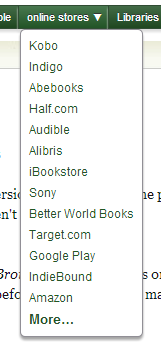
Between the book info and my review, it says “Get a copy” and there are three buttons. The first one goes to Barnes & Noble; the third one goes to WorldCat, so you can find the book in a library near you, wherever you are in the world (very cool!); the middle one, “online stores,” has a drop-down menu, which includes the following retailers in this order: Kobo, Indigo, Abebooks, Half.com, Audible, Alibris, iBookstore, Sony, Better World Books, Target.com, Google Play, IndieBound, and last of all, Amazon. (If you click “more” after that, it takes you to a page where you can compare booksellers’ prices for used and new editions.)

goodreads_dropdown


I don’t know what else will change once Amazon is in charge of Goodreads, but I bet Amazon moves up that list from the bottom. Will Goodreads even continue linking to other booksellers? I hope so.

There is an open letter on Goodreads now from the founder, Otis Chandler, rhapsodizing about bringing Goodreads to the Kindle. There’s a press release on Amazon where VP of Kindle content Russ Grandinetti talks about Goodreads and Amazon’s “share[d] passion for reinventing reading.” All of it makes me more wary than excited, but we’ll see what happens.  Meanwhile, I’ll be backing up my data more religiously than usual (if you have an account, you can export all the content you’ve added to Goodreads from the import/export page).

The Great Gatsby

“I want to write something new – something extraordinary and beautiful and simple + intricately patterned.” -Fitzgerald in a letter to his editor, Maxwell Perkins, July 1922 (from The Sons of Maxwell Perkins: Letters of F. Scott Fitzgerald, Ernest Hemingway, Thomas Wolfe, and Their Editor, edited by Matthew J. Bruccoli, University of South Carolina Press, 2004)

This week at work, I led a book discussion about F. Scott Fitzgerald’s The Great Gatsby. (We celebrated “Gatsby Month” in March, planned around the new movie version, the release date of which was unfortunately pushed back. However, I believe we’ve drummed up some excitement for its eventual release in our area.)

Gatsby_1925_jacketI’ve read Gatsby a number of times: first in eleventh grade, again before the end of high school, at least once in college and at least once since. I’ve written multiple papers on it, and would give it my vote for Great American Novel if I had to choose just one. Which is to say, I felt I knew it sufficiently well so that I didn’t need to re-read it again before my book discussion at the library.

However, a few days before the discussion, a co-worker (who had led a discussion the week before) sent me this article from Salon, entitled “Nick Carraway is gay and in love with Gatsby.” Though I’d noticed in my readings that Nick never seemed all that interested Jordan Baker, it hadn’t occurred to me that it was because he was gay; I figured she just wasn’t all that likable. (She plays golf. She cheats at golf. Or at least, that’s the rumor.)

Greg Olear, author of the Salon piece, included significant textual evidence to back up his claim. As the narrator, Nick is responsible for introducing each of the other characters to the reader. He describes the men and the women very differently; he notes Daisy’s voice, Jordan’s posture, and Myrtle’s dress, but he describes Tom’s physicality and Gatsby’s air of favorable understanding. Olear also draws the reader’s attention to the scene between Nick and Mr. McKee, which I had forgotten about, or never really noticed or understood; but, as Olear points out, in a book that is so economical with words, surely Fitzgerald wrote that scene for a reason.

Why does it matter if Nick Carraway is gay? Because he is the narrator, and we trust him to be impartial (or at least to tell us when he isn’t). If, as Olear suggests, Nick is in love with Gatsby, then Nick “romanticizes Gatsby in the exact same way that Gatsby romanticizes Daisy.” (Olear also sums up something I’ve felt since my first reading of the book – that Daisy is “unworthy of [Gatsby’s] obsession.”)

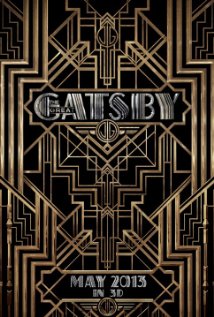
gatsbymovieEven if it isn’t true – and who’s to say? – it’s an interesting lens through which to read the book, and it will be interesting to see how they reinterpret the story for the screen this time around (IMDB now says the release date is May 10).

Speaking of books being adapted into movies, Book Riot ran a recent piece on just that topic: “What do readers really want from literary adaptations?” See the excerpt below (emphasis is mine):

“[A] big reason for the challenge [of adapting a book to the screen] is that it’s so difficult in the first place to determine exactly what we readers (presumably a sizable portion of these films’ audience) want from our adaptations. There are, as I see it, two general modes of thought. On the one hand are those who want replication–a careful, detailed transfer from page to screen. These folks ask that the director and writer(s) revere the book and recognize the grave responsibility with which they have been entrusted. On the other hand are those who simply want the spirit of the work to reach the screen, and willingly cede the often proprietary instincts that come with loving a particular book to those charged with adapting it….The lesson here should be obvious: the bigger a fan you are of a given book, the less sensible you’re likely to be when it comes to its adaptation.” 

Funny Books

I read (and recommend) a lot of literary fiction. Also a fair number of (auto)biographies and a decent amount of narrative nonfiction about science and history, a lot of young adult literature (not that YA can’t be literary – it often is), and a smattering of other genres. But a couple weeks ago I saw a Kirkus list of “10 Great Books That Will Make You Laugh Out Loud,” and I thought I’d compile my own list. I originally wrote this post for the library blog, but I’ve tweaked some things, and changed all the links below so they go to Goodreads instead of the library catalog.

Heather Armstrong: Better known to the Internet as Dooce, Heather Armstrong is a blogger and a mother, but to call her a “mommy blogger” would be misleading. Ex-Mormon Armstrong writes with passion, humor, obscenity, and honesty about her life, her family, and her mental health. Her 2009 book, It Sucked and Then I Cried: How I Had a Baby, a Breakdown, and a Much Needed Margarita, is probably the funniest book about post-partum depression in existence.

iwastoldtheredbecakeSloane Crosley: The titles of her two essay collections, I Was Told There’d Be Cake (2008) and How Did You Get This Number? (2010) should give an indication of Crosley’s wit, attitude, and willingness to write about situations so embarrassing that most of us would never speak of them aloud, let alone commit them to paper and make them publicly available. Yet, after reading either of these books, you will probably want her to be your new best friend.

Tina Fey: The star of 30 Rock and one of the reigning queens of comedy, Tina Fey’s Bossypants (2011) chronicles her childhood, adolescence, and her entry into the world of comedy. She’s matter-of-fact, down to earth, and extremely funny. (“If you retain nothing else, always remember the most important Rule of Beauty: ‘Who cares?'”) I have heard that the audiobook version of Bossypants is also excellent.

goodomensNeil Gaiman and Terry Pratchett: These two sci-fi/fantasy geniuses collaborated on the 1990 novel Good Omens: the Nice and Accurate Prophecies of Agnes Nutter, Witchwhich begins: “Current theories on the creation of the Universe state that, if it was created at all and didn’t just start, as it were, unofficially, it came into being between ten and twenty thousand million years ago. By the same token the earth itself is generally supposed to be about four and a half thousand million years old. These dates are incorrect.” And away we go. [This is the only one on the list I haven’t read, but it comes to me highly recommended, and I have enjoyed other Neil Gaiman books.]

Justin Halpern: You might be inclined to write off Sh*t My Dad Says as no more than flash-in-the-pan Twitter material, but give this book a chance: Halpern’s dad’s quotes are grouped by theme, and the sections are divided by short, heartfelt, insightful essays that make it really worthwhile. Plus, the essays give your laughing muscles a break.

On Accidents: “I don’t give a shit how it happened, the window is broken…Wait, why is there syrup everywhere? Okay, you know what? Now I give a shit about how it happened. Let’s hear it.” –Sh*t My Dad Says

mindykalingMindy Kaling: Is Everyone Hanging Out Without Me? (and Other Concerns) (2011) reads like the younger generation’s Bossypants. Kaling’s writing style is casual and conversational, amusing (“The staircase in our third-floor walk-up was the steepest, hardest, metal-est staircase I have ever encountered in my life. It was a staircase for killing someone and making it seem like an accident”) and sometimes even wise (“One friend with whom you have a lot in common is better than three with whom you struggle to find things to talk about”).

lawson_letspretendJenny Lawson: Otherwise known as The Bloggess, Lawson’s first book, published last year, is called Let’s Pretend This Never Happened: (A Mostly True Memoir). I have yet to meet someone who has read this hilarious and bizarre book without laughing. For a little taste what you’re in for, check out this blog post: “Would you like to buy a monkey?”

Karl Pilkington: Ricky Gervais (The Office, U.K. version) needs someone to be unkind to, and it’s very often Karl Pilkington. Pilkington has a wholly original worldview, and the three of his books that I’ve read – Ricky Gervais Presents: The World of Karl Pilkington (with Ricky Gervais and Stephen Merchant, 2006), Happyslapped by a Jellyfish (2007), and Karlology: What I’ve Learnt So Far (2008) – are bound to delight fans of absurd British humor. (I also recommend the Ricky Gervais Show podcasts.)

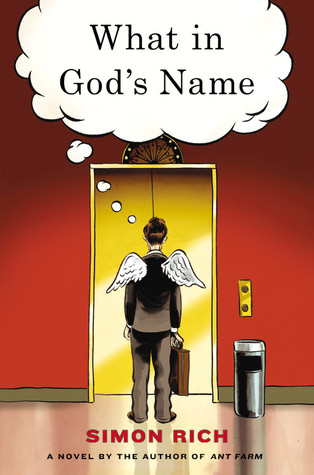
Simon Rich: Former Harvard Lampoon president and a writer for SNL, the prolific Rich is also the author of several short story collections and short novels, including Ant Farm: and Other Desperate Situations (2007)Free Range Chickens (2008), and What in God’s Name (2012)From what the dalmatians on the fire truck are really thinking to what angels do in heaven, Rich has a wildly humorous explanation for things it hasn’t even occurred to you to wonder about yet.whatingodsname

David Sedaris: Where to begin? Sedaris has written many books, including essay collections, memoirs, and short stories; his work has often appeared in The New Yorker. Start with a relatively recent essay collection, When You Are Engulfed in Flames (2008), or go earlier and check out Me Talk Pretty One Day (2000). If you’re feeling festive, try Holidays on Ice (1997); if you’re in the mood for very dark versions of Aesop’s fables, try Squirrel Meets Chipmunk: A Modest Bestiary (2010). Most of his work is also available in audio.

eatsshootsleavesLynne Truss: Does it infuriate you when you see “your” when it should be “you’re,” or when someone answers a cell phone in the middle of dinner? English author Lynne Truss is the champion of proper punctuation and modern manners. Eats, Shoots & Leaves: the Zero Tolerance Approach to Punctuation (2004) is “a book for people who love punctuation and get upset when it is mishandled”; Talk to the Hand: the Utter Bloody Rudeness of the World Today, or Six Good Reasons to Stay Home and Bolt the Door (2005) is Truss’s “rallying cry for courtesy.”

wordyshipmatesSarah Vowell: Laugh and learn as Sarah Vowell explains history with a modern (liberal) perspective and incisive sense of humor. From the Massachusetts Bay Colony (The Wordy Shipmates, 2008) to Hawaii (Unfamiliar Fishes, 2011) to dead presidents (Assassination Vacation, 2005), Vowell provides some of the most entertaining scholarship out there. Like David Sedaris and Tina Fey, she narrates her own audiobooks.

Did I neglect to mention your favorite funny book? Let me know in the comments.

The Third Son by Julie Wu

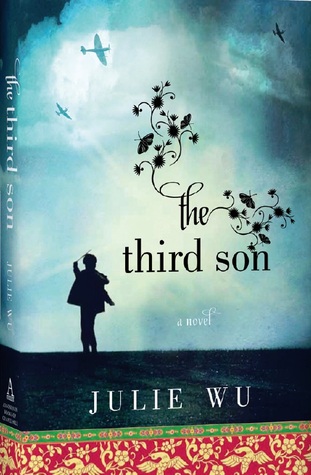
thirdsonThe Third Son by Julie Wu (Algonquin Books, expected publication date April 30, 2013)

In one of those “small world” occurrences, I heard about this book from a friend I met through ultimate frisbee; he had been in contact with the author via Twitter. I read a description of the book and was interested; historical fiction set in the post-WWII era is right up my alley. I went to NetGalley and requested an advance reader’s copy (ARC), which the publisher, Algonquin, graciously granted, and I read the book over the course of a few days.

“A wound that never healed. A promise never to be fulfilled. That was family.”

Saburo, the titular third son of a Taiwanese family in Japan-occupied Taiwan, has been maltreated by his family ever since the death of his younger brother, Aki. Both his father and mother punish him physically, and he gets the smallest share of every meal, causing him to be diagnosed with malnutrition. He is bright but dreamy, and neither his teachers nor his parents appreciate his intelligence. One of his few tender experiences as a young boy is when he meets young girl, Yoshiko, during an air raid; he also experiences kindness from his cousin Toru, a doctor.

Once the Japanese have been defeated, the Chinese come, and once again Taiwan is under another country’s rule. Amidst chaos, oppression, and death, Saburo finds Yoshiko again. Saburo’s older brother Kazuo makes advances on Yoshiko, but she and Saburo marry. Saburo vows to take the legendarily difficult exam to go to America and study at a university, despite the fact that, unlike Kazuo, he did not attend the best university in Taiwan. He studies on his own, with Yoshiko’s support, and passes; he then must leave Yoshiko and their new baby, Kai-ming, to go to America.

Throughout the novel, Saburo faces many obstacles; some are political (his father is a politician; quotas from Taiwan to the U.S. make visas difficult to get; there is corruption on both/all sides), but many stem from his family’s unjust treatment of him. The difficulties Saburo faces because of his family are worse than any he encounters because of the political events in Taiwan; this has the twin effects of lessening the impact of important political events (e.g. the anti-government uprising in February 1947 and the “White Terror” that followed) and making the story more universal and Saburo more relatable.

Once in the U.S., Saburo faces a new choice: to do as his family instructed, spending only one semester studying engineering (his talent and passion) and one studying pharmacy, to help with the family business upon his return, or spend all his time on engineering. His loyalty to his family in spite of their treatment of him is incomprehensible to many Americans he meets, who encourage him to put himself first for once and follow his dream of earning a Master’s in engineering and bringing Yoshiko to live with him in the States. Saburo is torn between the two value systems, but with Yoshiko’s encouragement, he finally makes his choice.

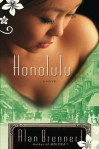
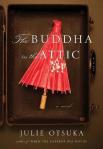
The Third Son is a well-written historical novel, an immigration saga that illuminates core differences between two cultures. Those who enjoyed Alan Brennert’s Honolulu or Julie Otsuka’s The Buddha in the Attic will almost certainly enjoy The Third Son.

honolulubuddha_attic

Cory Doctorow at the Harvard Bookstore (or, Cory Doctorow gave me a high five!)

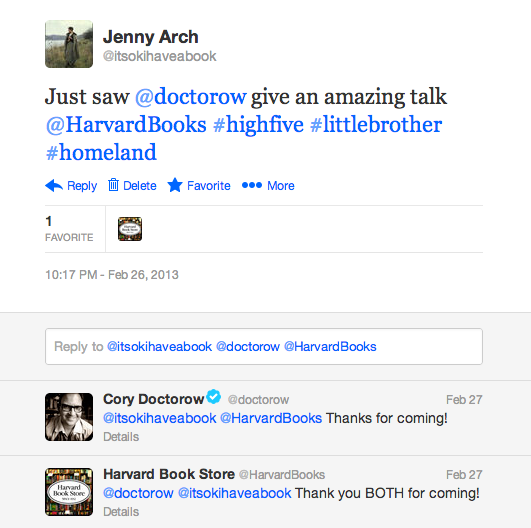
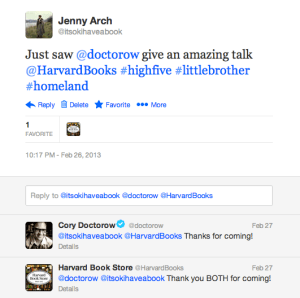
20130304_twitter_repliesThe first thing I noticed, looking around at the other audience members before the event began, was that there were more men in the audience than women. If you have ever book to an author event before, you’ll realize this is unusual. But of course, Cory Doctorow isn’t just an author; he’s also an activist, the co-editor of Boing Boingand an all-around nerd hero (see xkcd comics featuring him here and here). Plus, the Harvard Bookstore is a stone’s throw from Harvard and just two stops from MIT on the red line.

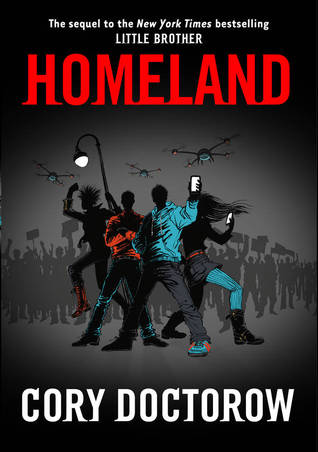
Doctorow started off by complimenting the Harvard Bookstore as “one of the most awesome-sauce dispensaries in the northeast,” and saying that he wasn’t actually going to read from his new book, Homeland; there was an audio clip of him reading online (Internet Archive), and there were other things to talk about.
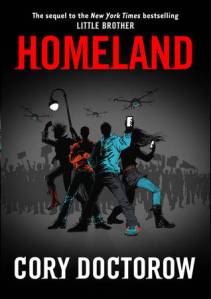
homeland_doctorowFirst, he outlined the case of Robbins vs. Lower Merion School District (PA), wherein the school equipped its students’ laptops with spyware and took pictures of the students in their rooms at home, unbeknownst to students or their parents. The school denied wrongdoing.

Next, Doctorow talked about the German Chaos Computer Club’s (CCC) discovery and cracking of government spyware, which was not only illegal but also, apparently, dangerously easy to hack.

Then there was the case of spyware on rent-to-own laptops. Allegedly, the spyware was installed in order to prevent theft – one of the same reasons there was spyware on the students’ laptops in Lower Merion – but of course it was used more nefariously than that.

Next, Doctorow moved on to those long, impenetrable Terms of Service we all sign, which he called “weird” and “totally objectionable.” Signing a contract with an employer is one thing, he said, but since when have consumers signed contracts with manufacturers?

Now, of course, it’s almost impossible not to. Do you use facebook? iTunes? Online banking? Twitter or Tumblr? Then you might have a vague memory of scrolling through a vast amount of fine print to get to that “I Agree” button so that you can use the service in question. (Ed Bayley at the Electronic Frontier Foundation proposes that the buttons should read “I Agree” and “I Have No Idea What This Says.” Read the white paper, “The Clicks That Bind.”)

We might all skim and disregard the Terms of Service or Terms & Conditions, but under the 1998 Digital Millennium Copyright Act (DCMA), breaking ToS/T&C “isn’t a little illegal, it’s a lot illegal” (Doctorow’s words, not the legislation).

The scary part is that even though most people don’t read before agreeing, it’s still a legally binding document (though there is some question about the enforceability), and breaking the agreement is a felony under the Computer Fraud and Abuse Act (CFAA). After Aaron Swartz’s suicide, two years after being charged under the CFAA, Rep. Zoe Lofgren (D-CA) introduced “Aaron’s Law,” which would amend it.

Doctorow then segued into speaking about the late Aaron Swartz, computer programmer and activist; Aaron was involved with the development of RSS, the Creative Commons, and reddit (he also wrote an afterword for Homeland). By now, most will be familiar with the JSTOR debacle, but before that, Aaron was involved with an attempt to liberate U.S. legal documents from the PACER (Public Access to Court Electronic Records) database. For a relatively short overview of that case, see the New York Times article from February 2009; for more in-depth (and fascinating) explanations, check out Steve Schultze’s article (February 2011) and Tim Lee’s piece on Ars Technica (February 2013).

Lee points out, “The documents in PACER—motions, legal briefs, scheduling orders, and the like—are public records. Most of these documents are free of copyright restrictions, yet the courts charge hefty fees for access” (reminiscent of the way that government (i.e. taxpayer)-funded science research ends up behind paywalls). What Aaron did was help Schultze with the code to download a high volume of documents from PACER during a free trial; with those documents, RECAP (“turning PACER around”) was born. RECAP is still going strong.

Aaron was also involved in leading a grassroots campaign to fight the Stop Online Piracy Act (SOPA). The bill was defeated when, as Doctorow put it, “Congress realized that as hard as it is to get reelected without campaign finance, it is really hard to get reelected without votes.”

Finally, there was the JSTOR case. JSTOR is a database that contains a tremendous volume of research, much of which was funded directly or indirectly by the federal government. However, this research resides behind a paywall. Aaron had access through MIT, and downloaded a vast quantity of articles. The government cracked down, with federal agents charging Aaron under the CFAA. Two years later, facing jail (“You’re gonna put me in jail for 35 years for checking too many books out of the library?”), and seeing no other way out, Aaron committed suicide.

Doctorow emphasized the importance Aaron’s cause: that people have the right to access information, whether or not they happen to be affiliated with an institution of higher education. “We never know where the next great thing is going to come from,” he said. “This isn’t GOING to be a matter of life and death, it IS a matter of life and death….This is the beginning of the future.”

Doctorow referred to computers and the internet as “the nervous system of our world. The world is made of computers…We put our bodies in computers [e.g. cars]…we put computers in our bodies [e.g. headphones, medical equipment]….We’ve gotta get this right….And it matters. It matters a lot.” He is concerned, to say the least, about regulating this technology and making sure it is secure. (A recent article about NASA highlights the danger of collecting personal data and failing to protect is closely.) Doctorow said, “I’m not interested in how something succeeds, I’m interested in how it fails.” His sincere and urgent concern doesn’t prevent him from using colorful, humorous language to make his case: “We regulate them like…a fax machine attached to a waffle iron.”

It can all seem like an overwhelming problem, too large to tackle, too impossible to change. But the campaigns against SOPA (and PIPA) were powerful; they proved that people do care about their rights, and about the worst case scenario consequences un-thought-out legislation can have on the internet and other technology. There has been an outpouring of support for Aaron’s cause since his suicide (he also had strong supporters before his death). The open access (OA) movement is gaining power in higher education, especially as journal prices continue to skyrocket and become unaffordable for even the Harvard Libraries. And awareness is growing as consumers begin to wonder who really owns the content they produce (on facebook, twitter, etc.) and the digital products they buy (or are they really only licensing?). One thing you can do, Doctorow said, is “refuse to use technology that takes away your freedom.”
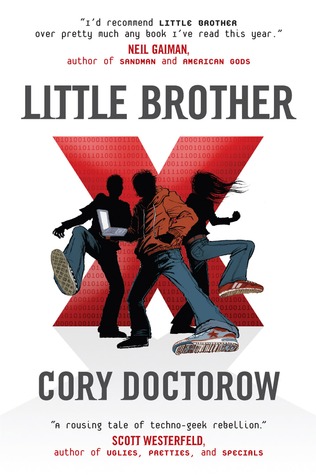
littlebrotherOther gems from the evening:

“Information doesn’t want to be free. If anything it wants us to stop anthropomorphizing it.

Referring to smartphones: “A police tracking device that happens to make phone calls.”

“Don’t talk to cops without a lawyer present.”

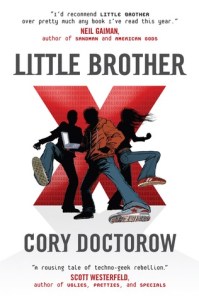
After the energetic and inspiring talk, Doctorow stayed around to sign books. I hadn’t read Homeland yet, but I read its prequel, Little Brother, and I told him that I’d recommended it to many people in my capacity as a librarian…at which point he gave me a high five.
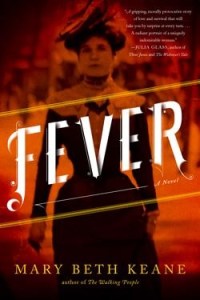
Fever by Mary Beth Keane

feverFever by Mary Beth Keane (Scribner, publication March 12, 2013)

Fever is a richly imagined, sympathetic portrait of Mary Mallon, the Irish immigrant better known as Typhoid Mary.

Mary, who makes her living as a chef to fancy households in New York, is one of the first known carriers of typhus; she is immune, but can pass on the disease through her cooking. Eventually, a government “sanitation engineer” tracks her down, and she is essentially kidnapped and imprisoned. Three years later, she finally wins her freedom, but only by agreeing to give up her life’s work and passion: cooking.

Giving up cooking means not just giving up her livelihood, but admitting that the health officials were right: that she is a carrier, that she did – inadvertently – bring sickness and death to many families. It is a difficult truth to face. Mary acknowledges, “It was possible to live in such a way as to keep one’s back to the things that were not convenient….She’d taken a risk, but living was itself a risk, and more people agreed it was a risk worth taking.”  And toward the end of the novel, Mary reflects: “[She] wondered whether it was possible for a person to know something and not know something at the same time. She wondered whether it was possible to know a truth, and then quickly un-know it, bricking up that portal of knowledge until every point of light was covered over.”

Most of the book is written in close third person from Mary’s perspective, which encourages the reader to sympathize with Mary. There are also a few sections with just Alfred, Mary’s longtime partner (but not husband), which explain his side of the story, but which probably aren’t entirely necessary.

Overall, Fever was a rich, engrossing, compelling novel. In fact, I so enjoyed it that I read two follow-up books: the short, nonfiction Typhoid Mary by Anthony Bourdain, and Keane’s earlier novel, The Walking People – both of which I recommend.

Thanks to Greg Mortimer at Scribner for a pre-pub copy of the book.