The gleam in the dark: writing and reading fiction

I’ve been a fan of Lauren Groff’s writing for years, so I was delighted to find this interview with her (via Twitter). The interviewer, Jason Skipper, asked Groff about her research for Monsters of Templeton and Arcadia, and Groff replied, “Research is about following the gleam into the dark.” She followed this beautiful sentence by talking about the difference between “creative” facts that spur one’s imagination, as opposed to those facts that dampen the process. This makes sense: just think about researching for work of historical fiction. Some facts will be fascinating, suggesting plot points all on their own, while others will seem like obstacles to the story.

Skipper then asked Groff about connection, “as a person born on the cusp of the digital age – making you old enough to remember a time without it, and young enough to realize its potential.” I have copied most of Groff’s resonant reply: “We are cuspies, aren’t we? There’s a glow to that time before things went all matrix on us, before everyone was plugged into the mainframe by their fingertips….I do remember people talking more. Nostalgia is dangerous, though, and I can’t tell whether those days actually were more authentically connected, whether they seemed so because I was an adolescent, or whether memory is spackling everything over with a thick layer of pretty-pretty.”

She continued, “In terms of writing, I think what most fiction writers treasure more than anything is the feeling that they’re living for the length of a book inside another person.” This echoes the sentiment in editor Jennifer Jackson’s publicity letter in the ARC of Peter Heller’s The Dog Stars: “[The book] reminded me why I became a reader in the first place: because it is the best chance you will ever have to live another life.” Both author and reader see books as a means of escape and of empathy.

This isn’t a coincidence. In an article entitled “Your Brain on Fiction” in The New York Times earlier this year, professor of cognitive psychology and novelist Keith Oatley suggested that reading produces “a vivid simulation of reality.” The article’s author, Annie Murphy Paul, wrote, “Fiction with its redolent details, imaginative metaphors and attentive descriptions of people and their actions offers an especially rich replica. Indeed, in one respect novels go beyond simulating reality to give readers an experience unavailable off the page: the opportunity to enter fully into other peoples thoughts and feelings.”

Paul continued, “The novel, of course, is an unequaled medium for the exploration of human social and emotional life,” and cited work by Dr. Oatley and Dr. Raymond Mar indicating that “individuals who frequently read fiction seem to be better able to understand other people, empathize with them and see the world from their perspective…novels, stories and dramas can help us understand the complexities of social life.”

Just over a month after the “Your Brain on Fiction” article ran in the Times, the Boston Globe ran a piece by Jonathan Gottschall called “Why Fiction is Good for You.” (Originally, I was going to cite both these pieces in a post called “A spoonful of fiction makes reality go down,” about why kids should be able to read what they want without parents or teachers fearing that the content of the books will damage them somehow; it seems that rather the opposite is true.) Gottschall reports, “Research consistently shows that fiction does mold us…mainly for the better, not for the worse.” When people read fiction, they imagine themselves in the characters’ lives – which may be completely different from their own. This encourages empathy, and “by enhancing empathy, fiction reduces social friction.”

Imagination leads to understanding; understanding leads to empathy. It turns out – surprise, surprise – that stories are good for us.

10/4/2013 Edited to add: A study published in the journal Science found that after reading literary fiction, “as opposed to popular fiction or serious nonfiction, people performed better on tests measuring empathy, social perception and emotional intelligence.” Read the article from the New York Times “Mind” section, in which author Louise Erdrich is quoted: “For Better Social Skills, Scientists Recommend a Little Chekhov”
From Jane Eyre to Gemma Hardy

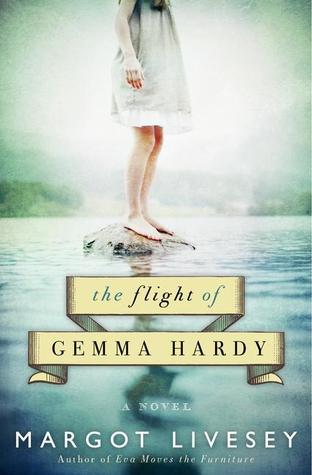
Last night, I had the pleasure of hosting Margot Livesey at the library for a reading and booktalk. You know that Sourcebooks T-shirt, Authors Are My Rockstars? That pretty much sums it up for me, but I think I managed to be somewhat graceful and well-spoken (keeping the “likes” and “ums” to a minimum). Margot herself was just lovely (you can listen to an interview with her on the Leonard Lopate Show if you missed last night’s event), and I was so excited to do this program with her.

Check out the library blog post to read more about the books we discussed and recommended: The Song of Achilles by Madeline Miller, Billy Lynn’s Long Halftime Walk by Ben Fountain, Bring Up the Bodies by Hilary Mantel, Rules of Civility by Amor Towles, and Gold by Chris Cleave.

After reading from The Flight of Gemma Hardy and recommending some other books, Livesey answered questions from the audience. One person asked how autobiographical the novel was; Livesey said, “Like Charlotte Bronte, I stole from my own life…I borrowed recklessly and exaggerated wildly.”

Livesey also discussed why she chose to “re-imagine a novel” that was published in 1847 and hasn’t been out of print since (165 years)? “It’s preposterous,” she allowed, but the story clearly has “enduring appeal,” the nature of which has to do with the combination of two old and powerful narratives: that of the orphan and that of the pilgrim/traveler on a journey. Jane Eyre – and Gemma Hardy – combine these two into one.

Also, by setting the story in the 1950s-1960s, Livesey was able to “write back” to Bronte, showing how far women have come (though, as she noted last night and in the interview linked to above, the “swinging ’60s” didn’t reach parts of Scotland until the 1970s). As a reader, it was deeply satisfying to see Gemma standing up for herself in ways that Jane couldn’t.

So, if you haven’t already read it, do add The Flight of Gemma Hardy (and also perhaps my other favorite Livesey novel, Eva Moves the Furniture) to your to-read list.

The Growing Pains of E-Books

Like many librarians in public libraries, I spend a fair amount of time explaining how various e-readers work, how the digital media catalog (separate from the regular library catalog) works, and how to accomplish the many steps required to download an e-book from the library collection.

I know that we live in a time of unprecedented and rapid technological growth and change, and that what we are going through now is just growing pains. The book industry, like other media industries (music, film), is trying to figure out how to deal with this change.

But it’s not happening fast enough, or thoughtfully enough. The prevalent model right now is one book, one reader: libraries buy (or, more often, license) one digital copy of a book, and one library user can borrow it at a time. With vendors and digital rights management (DRM), publishers are attempting to make the digital world obey the same rules as the print world, but this is artificial and must give way to a better model.

Even with the current model, most major publishers are not participating; they refuse to sell or license e-books to libraries. This comes as a surprise to many library users, which means librarians must do a better job of raising public awareness, notes San Rafael Public Library Director Sarah Houghton (a.k.a. the Librarian in Black).

There are other models out there: Brian Herzog (a.k.a. the Swiss Army Librarian) explains a newer platform called Freading, a token-based system that eliminates waiting lists. The main catch is that Freading’s 15,000+ books don’t include any from the “Big Six” publishers (HarperCollins, Random House, Penguin, Macmillan, Hachette, Simon & Schuster), and therefore many popular titles.

Eventually – sooner rather than later, one hopes – the major publishers will see that their fears are unfounded, and that selling or licensing e-books to libraries will not gut their sales. (After all, selling print books to libraries didn’t kill the book industry.) In an article that reported research findings showing “a symbiotic relationship between library patronage and consumer book purchasing,” School Library Journal editor-in-chief Rebecca Miller said, “It’s exciting to have data to back the sense that library use is also an economic engine for the book industry. Publishers now have proof of how libraries support their business models.”

For years, articles asking “Are libraries obsolete?” and wondering, “Will [fill in the blank] be the death of libraries?” have abounded. Libraries are still here, though, and most want to remain relevant; we want to continue offering “the highest level of service to all library users through appropriate and usefully organized resources” (ALA Code of Ethics). In many cases, libraries offer not just access to resources but also a community center, a place for people to meet, learn, work, and create. Now, with the rise of self-publishing, the question has become: Are publishers relevant? Are publishers obsolete?

Not quite yet. The mainstream publishing industry still has value. Its editors and publicists have decades of experience in identifying great work, improving it and polishing it through the editorial process, spreading the word about it through publicity and advertising, and printing and distributing it.

But the Big Six aren’t the only game in town. While they drag their feet, libraries would do well to consider other sources of e-content. As Jamie LaRue points out in his recent Library Journal piece, “All Hat, No Cattle: A call for libraries to transform before it’s too late,” independent publishers have shown themselves to be much more open to working with libraries than mainstream publishers have been. Additionally, digitization projects throughout the country have made more content available online; and of course there is self-published material.

So, publishers: what’s stopping you from reaching more readers by selling e-books to the “staggeringly effective marketing machine” (LaRue) that is the library? And librarians: it’s time for us to work together to explore other options instead of letting the Big Six call the shots. As LaRue points out, “If we pay public dollars for content, then we must be able to take possession of the copies. Anything else is sheer vendor lock-in and shirks our obligation to preserve the public record.”

Libraries and librarians are waiting, impatiently but often too quietly, for publishers to work with us on this. It has the potential to be a situation where everyone wins: publishers profit, authors reach a wider audience, libraries provide excellent service, readers have access to a wide variety of resources.


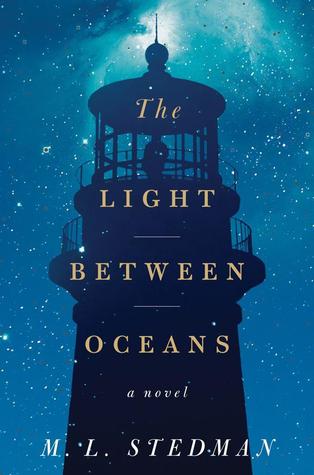
The Light Between Oceans

M.L. Stedman’s debut novel The Light Between Oceans is published today. I had the opportunity to read an advance copy of the book this past spring, and it was fantastic; I reviewed it on Goodreads at the time, but here it is again for those who are interested:

In the aftermath of the Great War, Tom Sherbourne returns to Australia, and works alone on an island as a lighthouse keeper. On occasional trips back to the mainland, he meets and then marries Isabel Graysmark; they return to the island together, where Isabel conceives and miscarries three times.

Shortly after the third miscarriage, a boat washes up on the island, containing a dead man and a living baby. Isabel persuades Tom not to report it – to bury the man and keep the baby as their own. He uneasily agrees; but back on the mainland, the baby’s mother grieves for her lost husband and son.

The Light Between Oceans is an extraordinary story of the difference one decision makes; how the future must be lived when the past cannot be changed; of right and wrong and love. Not only is it a beautiful book with strong characters, its thought-provoking central dilemma makes it a great discussion starter and excellent book club pick. Also: bonus points for a gorgeous cover.

Reviewers and Readers: what do we want?

I read a lot of books (understatement of my life), and a lot of book reviews (especially since it’s now part of my job), but until recently I did not know about Bookmarks Magazine. They have their own reviews, but they also provide links to reviews elsewhere. Two of the most useful features on the site are “see all of this week’s reviews” and “see most-reviewed books (last 8 weeks).”

For collection development purposes (i.e. buying books for the library), I’ve been relying on traditional sources, like Publishers Weekly, Booklist, Kirkus Reviews, and Library Journal. These are all great resources, but I also really appreciate being able to go to Bookmarks to read several reviews of a book at once.

Recently, having just read Gold by Chris Cleave (and having attended a reading at the Brookline Booksmith), I was curious as to how it was being reviewed in the mainstream press. Thanks to NetGalley, I had the opportunity to read Gold before its official publication date, knowing little about it except the basic premise, and form my own opinion (in a word: lovefest) before I read the opinions of others. Reading some of the reviews Bookmarks linked to, I found that others’ opinions were decidedly mixed, with at least one reviewer (LA Times) complaining of “a feeling of being manipulated.”

Now, book reviewing is a subjective thing, but this seemed to be an odd complaint. No one really likes the word “manipulate,” but isn’t that what all writers, fiction and nonfiction, aspire to do? Nonfiction authors nearly always have an agenda; they are trying to convince you to see things a certain way. (Granted, while plenty of nonfiction has an obvious bias, other nonfiction aspires to be bias-free. It’s basically impossible, but points for effort.)

Fiction, on the other hand…fiction is made up. Invented. Imaginary. Necessitates, frequently, a “willing suspension of disbelief.” We read fiction because we are hungry for stories, and because even though characters and places might be made-up, they are also often deeply true. The authors who can manipulate us best are the ones we love most.


Book it to the library

I just wrote a long-ish post on “the value of your library,” most of which applies whether you’re an Arlington, MA resident/library user or not. The main point of the post is that public libraries, even if you only visit yours two or three times a year, are a pretty amazing deal. Arlington, for example, spends $44.57 per capita on its public library.

If you live in Massachusetts and are interested in the per capita spending for your local library, check out this report (PDF) from the Massachusetts Board of Library Commissioners (MBLC), which has that data for every one of Massachusetts’ 350 towns. Average per capita spending is $37.15 (or 1.30% of the municipal budget); the medians are slightly lower.

Can you think of a better deal for forty bucks? I can’t. Check out ilovelibraries.org’s Library Value Calculator to see what the library is worth to you.

Swifter, Higher, Stronger

Last night, I went to listen to Chris Cleave talk at the Brookline Booksmith, an excellent independent bookstore. (Earlier in the day, Cleave spoke at Porter Square Books, another lovely indie.) The talk was completely worth the crosstown trip in rush hour. Cleave is a delightful speaker; he’s energetic, articulate, intelligent, funny, and self-effacing. He talked about his writing process and about the research he did for each book, and then read a little bit from his newest, Gold, and answered questions from the audience.

Cleave’s approach, as a journalist-turned-author, is to investigate “timeless questions in a timely manner.” For Incendiary, the question was, “Why do governments take better care of rich people than poor people?” For Little Bee (published as The Other Hand in the U.K.), the question was, “Should we step outside our comfort zone to bring others into it?” And for Gold, the question was, “How much ambition should we give up in the name of love?”

Olympians, Cleave pointed out, have “a different scale of ambition.” For Olympic athletes, unlike the rest of us, it is “necessary for everyone else in the world to fail” for them to win. Rivalries are intense; but rivalry is similar to “romantic love…[it] lifts both people up better than they could have been individually.” In Gold, Zoe and Kate train together and push each other to be their best, each hoping that her best is the best.

In researching Gold, Cleave interviewed top-level athletes, as well as doctors and nurses at a children’s hospital. “These people operate at such emotional extremes….It’s my job to describe indescribable things…[to visit the] extreme edges [of] exceptional lives and report back.” Cleave also trained on a bicycle himself, discovering a “savage joy” in winning (“That’s why you do the research, to go out and find things you weren’t expecting”), as well as the “unbridgeable gulf” between top athletes and the rest of us. Cleave said that the race scenes between Kate and Zoe are the heart of the book (“reclaiming action for literary fiction”). As a reader I’m not sure I agree, though the race scenes are well-written and intense.

Of the two high-level struggles in Gold – Kate and Zoe’s rivalry, eight-year-old Sophie’s fight against leukemia – Cleave said, the characters either see the difference or they don’t. Kate, as Sophie’s mother, has more often sacrificed ambition for love than love for ambition; Zoe is the opposite, and whether she will or can change is one of the central questions of her character and of the book.

After Cleave read a brief passage from Gold (Kate and Zoe’s coach Tom Voss speaking with Zoe’s agent on the phone, early in the book), there was a Q&A period. The first question was, “How do you write children well?” As a father of three children (or “experimental subjects”), he observes closely, with special attention to speech patterns; Charlie, from Little Bee, was closely modeled on Cleave’s eldest son. “Moments are ephemeral, you have to preserve them,” he said. “I’m nostalgic for the present even before it’s become the past.”

Why, I asked, did all three of his books contain infidelity? “I’m interested in people who are in transition,” he answered. People in steady states aren’t interesting; you don’t see many novels about happy marriages. When characters are in flux/in crisis/changing, “there’s only so much you can change” – your city, your job, your partner. Infidelity isn’t one of Cleave’s “timeless questions,” and his writing about it is remarkably free of judgment.

Another woman in the audience asked how Cleave wrote women characters so well. “Well there is a lot of dressing up involved,” he joked. Asking taboo questions during interviews was one successful tactic; wearing headphones (sound off) in public was another. He then explained an early rule he set for himself: “[I’m] not writing about me.” Counter to the common advice to “write what you know,” Cleave sets out to “cross a boundary every time” he picks up a pen. “I’m very curious about people,” he said, and one can tell from his books that he is a careful listener and close observer indeed.

During the book signing after the reading and Q&A, Cleave was polite and engaging. When I asked him if he had ever considered another outcome for Sophie, he said right away that he had, in the first draft, but he changed it. “Sensitive readers,” however, will pick up on certain sentences that are so full of foreboding that they have nearly the same impact as another outcome would have done. (Sorry if that’s vague; I’m trying to avoid spoilers.)

All in all, I now have even more respect for this author than before. If he comes through your city or town on his tour, I encourage you to go see him, and of course I highly, highly recommend picking up a copy of Gold.

Read the Goodreads interview with Chris Cleave.

Chris Cleave’s books on Goodreads:

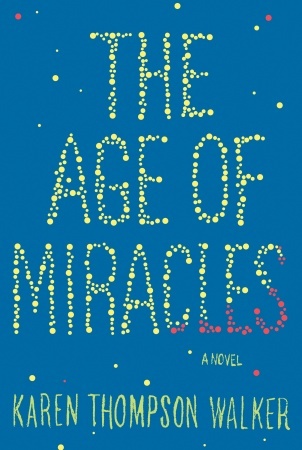
The Age of Miracles by Karen Thompson Walker

There’s been plenty of buzz about Karen Walker Thompson’s debut novel, The Age of Miracles. Often I’m skeptical of hype, but I did enjoy this book very much. Rather than jumping on the post-apocalyptic or dystopian bandwagon, The Age of Miracles is a slightly different genre, “speculative fiction.” It reminds me of Alan Weisman’s nonfiction thought experiment book, The World Without Us, which examines what would happen to the planet if humans disappeared. In this case, however, the premise is that the earth’s rotation – for some undiscovered and unexplained reason – has slowed.

This, of course, has immediate and drastic effects on ordinary life for the narrator, Julia, and her family and friends. Unlike most post-apocalyptic or dystopian books, here the reader gets to experience the transition itself, rather than being dropped into a world after the catastrophe – whether natural or man-made – has occurred. In addition to “the slowing,” there are the changes Julia would be going through anyway as an eleven-year-old girl; the author’s focus is on character and theme, on the effects of the slowing rather than its cause.

Julia narrates her childhood in the past tense, at a distance of several years. Her reflection is more matter-of-fact than nostalgic: “One thing that strikes me when I recall that period of time is how rapidly we adjusted. What had been familiar once became less and less so…But I guess every bygone era takes on a shade of myth” (82).

There is no definite solution to the slowing, no wrapping up of loose ends or determination of the narrator’s ultimate fate. Julia and her friend Seth’s message, written in wet concrete, serves as the conclusion: We were here.

Beautifully written and thought-provoking, I can see this inspiring great discussions in book clubs.

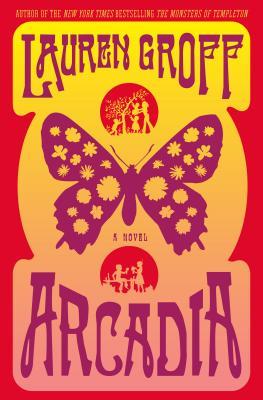
Arcadia by Lauren Groff

He keeps his deepest belief tight to him: that people are good and want to be good, if only you give them a chance. That’s the most magnificent thing about Arcadia, he knows. It is the shell that protects them. (98)

I just finished Arcadia by Lauren Groff two days ago, and I’m inclined to agree with the back-of-book blurb from Richard Russo: “It’s not possible to write any better without showing off.” I have enjoyed Groff’s previous work (The Monsters of Templeton, Delicate Edible Birds) and she just seems to be getting better. Arcadia is the story of Bit, who was born to hippie parents on a commune – Arcadia – in rural New York. The first sections of the book are his childhood and teenagerhood in Arcadia, as the commune evolves and eventually dissolves. Then there is a skip forward in time, and Bit is an adult living in New York City, with a small daughter and a disappeared wife. The final section, which takes place in the near future (2018), is full of hope and fear: a pandemic, SARI, is sweeping the globe. At the same time, Bit’s mother Hannah is dying of ALS. Hannah, Bit, and Bit’s daughter Grete return to the house Bit’s father Abe built in Arcadia to wait out the pandemic and take care of Hannah.

The imagination required to create the atmosphere of Arcadia and the character of Bit is similar to that of Room, Emma Donoghue’s novel about a boy who has spent his whole life in one room, and is overwhelmed by the world when he escapes. As the 1970s end and the commune crumbles, Bit’s entire way of life, everything he has known and that has been normal to him, disappears, and he has to learn to live in the world “outside.” (Regretfully, this transition doesn’t get its own section, but it is briefly sketched out in the adult Bit’s memories.)  Everyone must leave their childhood behind, but it is a rare case in which the whole community and its way of life ceases to exist as well. “It isn’t important if the story was ever true,” Bit realizes. “…He knows stories don’t need to be factual to be vital. He understands, with a feeling inside him like the wind whipping through a room, that when we lose the stories we have believed about ourselves, we are losing more than stories, we are losing ourselves (208).

One of the things that does remain is Bit’s relationships with others from Arcadia; most of them reconnect later in life. Many also end up in New York City, which would seem to be the opposite of a commune, but in fact has similarities. as Bit says to his father Abe, “It wasn’t the country that was so beautiful about the whole Arcadian experiment, don’t you see? It was the people, the interconnection, everyone relying on everyone else, the closeness. The villages are all dying now, small-town America is dying, and the only place where the same feeling exists now is here, in the city, millions of people all breathing the same air” (208).

Overall, this is a work of tremendous imagination and empathy. I would suggest it to anyone, particularly those who enjoyed Groff’s earlier work, Emma Donghue’s Room, or Jennifer Egan’s A Visit From the Goon Squad.

Summer Books

It’s been far too long since I’ve posted any book reviews here (though I’m always active on Goodreads). I realized recently that the last several books I’ve read are either very new or haven’t been published yet, but all come out this summer, so I’m offering a little preview.

Broken Harbor by Tana French (July 24, 2012)
This is the fourth Dublin Murder Squad book. I hesitate to call it a series, because you can read the books in any order and they are all perfectly good standalone novels; however, characters in one book often appear in the other books. Broken Harbor features detective Scorcher Kennedy, who investigates what looks like a quadruple-homicide in a housing development called Brianstown (an area that used to be called Broken Harbor). Together with his rookie partner, Kennedy digs for the truth, relying on expertise and instinct. French does a beautiful job maintaining the suspense throughout, and there’s real character development there as well. I’d rank this just below The Likeness (my favorite of hers), and if you’re looking for a good creepy murder mystery with some good twists and turns, this one’s for you.

The Red House by Mark Haddon (June 12, 2012)
Author of The Curious Incident of the Dog in the Nighttime and A Spot of Bother, Haddon follows those two successes with another. It may take some time to adjust to the style of storytelling – point of view often changes from one paragraph to another – but once you get to know the characters, the reading experience becomes smoother. The Red House is the story of eight people on holiday, and the way in which Haddon tells the story shows their relationships to each other as well as what is going on in their own lives. It’s nothing earth-shattering, but it is very well done.

The Lost Prince by Selden Edwards (August 16, 2012)
I had high hopes for this one, as it is a follow-up to The Little Book, which I adored. The Little Book involved time travel to fin de siecle Vienna, and was fascinating because of its setting, characters, and plot (the time travel bit). The Lost Prince simply isn’t as good. The main character, Eleanor Burden, returns from Vienna with her destiny in her hands: specifically, in a journal that sketches out future events that she must help bring about. She struggles to follow the incomplete instructions, never knowing if her actions are the right ones. She is determined and brave, but the sense of magic and adventure that The Little Book had is lacking in The Lost Prince. Even twists that should have the impact of revelations (relating, for example, to Arnauld “the Haze” Esterhazy’s true past) lack power.

One Last Thing Before I Go by Jonathan Tropper (August 21, 2012)
If you liked Tropper’s previous work – How to Talk to a Widower, for example, or This is Where I Leave You – then picking this up is a no-brainer. Again, Tropper delivers a heartbreaking suburban comedy. Silver, our middle-aged male narrator, has an ex-wife, an estranged daughter, supportive parents, and friends in situations similar to his own. His life is stagnant, but when he discovers that he has a life-threatening medical condition, he has to decide if he wants to live or wants to die. For most, this isn’t a tough question, but it takes Silver the length of the book to decide. Meanwhile, there are moments of laughter, introspection, shame, and love. Recommended, especially for fans of Nick Hornby and Michael Chabon.

Gold by Chris Cleave (July 3, 2012)
I missed Cleave’s first two books, Incendiary and Little Bee, but now I see I shall have to go back and look them up, because Gold blew me away. It is the story of three Olympic cyclists – Zoe, Kate, and Jack – their coach, Tom, and Jack and Kate’s eight-year-old daughter Sophie, who has leukemia. Zoe, Jack, and Kate met at age nineteen, and Zoe and Kate have been friends and rivals ever since. They are now thirty-two, and London 2012 will be their last Olympics. Due to a rule change, however, only one of them will be able to qualify to go. Will it be Zoe, who has been racing away from events in her past since childhood, and for whom winning is everything? Or will it be Kate, who, having missed out on Athens and Beijing to take care of Sophie, inarguably deserves to go? The relationships between these five characters, as much as the actual events of the story as it unfolds, are the reason to keep reading. This is a five-star (five-Olympic ring?) book.