More “adult” than “young”

The “young adult” sector is generally considered to encompass the 12-18 set. This is a pretty huge span: there’s much more of a developmental difference between, say, a 14-year-old and a 16-year-old than there is between a 30-year-old and a 32-year-old. Obviously, some YA books are aimed toward the younger end of the spectrum – the “tweens” – and some are pitched toward an older audience. Add to this that YA is beginning to encompass a few more years in either direction – so it might span from 10 to 25 (according to YALSA) – and that’s not exactly a homogenous demographic.

Additionally, there’s no switch that gets flipped when you turn 19, and all of a sudden you are totally uninterested in The Perks of Being a Wallflower and are picking up  Jonathan Franzen’s Freedom instead. Readers in their late teens and early twenties may go back and forth between YA and adult fiction – especially if there isn’t much out there featuring main characters in that age range, as seems to be the case (“Where Are All the Young ‘Adults’?”, Young Adult Review Network; “The College Experience in YA Books,” YALSA’s The Hub). Both of those articles have a few suggestions for YA fiction featuring late teen/early 20s protagonists; I’ve added a few below as well. Feel free to add more in the comments!

Love is the Higher Law, David Levithan (set in New York; characters are high school seniors/college freshmen)

Prep, Curtis Sittenfeld (set at a Massachusetts boarding school)

I Am Charlotte Simmons, Tom Wolfe (set at a fictionalized Duke University)

The House of Sleep, Jonathan Coe (set at an English university)

Lucky Girls, Nell Freudenberger (short stories)
The Case of the Missing Hypertext Novel

Right below the Nobel article in Salon, there was an article about hypertext novels, titled “Why the Book’s Future Never Happened,” Hypertext fiction, according to Wikipedia, is electronic literature with hyperlinks that allow for non-linearity and reader interaction. (Not having read one, the impression that I get is something between a choose-your-own adventure novel and a novel told in a non-linear fashion, e.g. with flashbacks or different character perspectives.)

Apparently there was a lot of hype about hypertext fiction back in the ’90s – it was supposed to be “the next big thing,” but it never really took off. The author of the Salon article posits that hypertext fiction was “born into a world that wasn’t quite ready for it,” and additionally, its failure had more to do with its content than with the its format. That is, the first hypertext novels simply weren’t very good. (“True, the hypertext offers you the puzzle-solving pleasure of making sense of the story, arranging the pieces in your head to see the whole mosaic, but why would you do that, if the pieces don’t suggest a picture you care to see? Not every puzzle has an interesting solution.”)

The article’s author suggests that hypertext novels are even more difficult to write than regular novels, because “the sections have to be readable along multiple paths; they have to be richly related in multiple ways; and they have to keep you reading.” However, non-linear fiction has been written before: the author offers Pale Fire by Vladimir Nabokov and and Hopscotch by Julio Cortazar as examples, and I might add to that: The Time Traveler’s Wife?

Breaking news: Americans are self-involved

For those who are interested in Nobel prize politics, there’s an article in Salon.com titled “Why American Novelists Don’t Deserve the Nobel Prize.” The author cites the problem of (American) Great Male Narcissists and the “write what you know” message drilled into MFA students. I find it difficult to offer my two cents here – as many contemporary novels and “modern classics” I’ve read, it doesn’t seem to be enough to form a decisive opinion the way the Salon author (and the Nobel committee) has.

Also, like most Americans, I have not read widely outside of American and British literature, despite the admirable efforts of publishers like Europa Editions to offer works in translation (Europa published Muriel Barberry’s The Elegance of the Hedgehog; about two-thirds of the books they publish are works in translation). Furthermore, the stated criteria for the prize seem a bit vague: the Nobel prize shall be awarded for “achievements in literature,” to “the person who shall have produced in the field of literature the most outstanding work in an ideal direction.” (See the official Nobel Prize in Literature page, and the list of laureates.)

I’m sure there are tacit criteria as well, but surely of all the authors in the world, there are many who could justly receive the prize; it’s a bit like applying to a top Ivy – there are a lot of qualified applicants who don’t get in. Also, it seems unlikely that Europe is producing all the best literature. I’m not necessarily arguing that American literature is superior, but there are a number of other countries and continents in the world, and I believe there are authors there too…?

*UPDATED* I found a bit more background/insight to the Nobel issue in the New York Review of Books. Here’s a quote from the article:

“Now, let’s imagine that we have been condemned for life to making, year in year out a burdensome and near impossible decision to which the world increasingly and inexplicably ascribes a crazy importance. How do we go about it? We look for some simple, rapid and broadly acceptable criteria that will help us get this pain out of the way. And since, as Borges himself noted, aesthetics are difficult and require a special sensibility and long reflection, while political affiliations are easier and quickly grasped, we begin to identify those areas of the world that have grabbed public attention, perhaps because of political turmoil or abuses of human rights, we find those authors who have already won a huge level of respect and possibly major prizes in the literary communities of these countries and who are outspokenly committed on the right side of whatever political divide we’re talking about, and we select them.”

Read the whole article: “What’s Wrong With the Nobel Prize in Literature?”

Updates

  • The folks at SF Signal have devised a flowchart to add context to NPR’s list of top science fiction and fantasy books (though if you follow that link to NPR, you’ll see they did at least add a blurb about each book – the initial list was really just a list). I originally posted about it here.
  • Sadly, there were technical difficulties recording the GSLIS Perspective on ALA panel, and there will be no podcast. There is, however, a podcast of the ASIS&T event from the day before.
  • James Patterson’s article on CNN links out to a number of good readers’ advisory resources for children and teens, especially boys.
  • My YA Literature class has a blog where we’ll each be posting a review of one YA book.
That’s it for now – have a great weekend!


Amy Pattee quoted in Salon.com article

This fall I’ll be taking Amy Pattee’s course on Young Adult (YA) Literature. I’ve been working my way through the reading list already: Forever by Judy Blume (I somehow missed this when I was younger, though I did read Are You There, God? It’s Me, Margaret), Boy Meets Boy by David Levithan, Stitches by David Small (actually I read this in galley form before it was published – they were giving it away at BEA a couple years ago), and many others.

One of Amy’s articles was quoted in a Salon.com piece back in July, “The case for raunchy teen lit.” Generally speaking, in the U.S., when parents or other adults get upset about or offended by a book and want to censor it, it is often because they (the books, not the adults) are “sexually explicit.” (Offensive language is next, followed by violence. See statistics on challenges on the ALA site.) In Europe, on the other hand, violent content is much more likely to raise opposition than is sexual content; one could extrapolate from this and say that Europeans are more comfortable with sex, and Americans are more accepting of violence.

Either way, the Salon article makes a good point; it’s much safer to explore these topics through literature than in person.

Top 100 Sci-Fi and Fantasy books (according to NPR poll)

A comment thread in the ALA group on LinkedIn alerted me to an article about an NPR poll’s Top 100 list of science fiction and fantasy books. Science fiction (or sci-fi, or SF) and fantasy are generally regarded as two quite distinct genres by people who read one or the other (or both); people who read neither tend not to distinguish as much. It was a little jarring to see them all mixed together – William Goldman’s The Princess Bride, at #11, is sandwiched between Neil Gaiman’s American Gods and Robert Jordan’s The Wheel of Time series – but it’s certainly a great list.

Readers’ Advisory, or, What do I read next?

For my summer class, I’ve been working on designing an evaluation of readers’ advisory services at a public library. “Readers’ advisory” is the library-speak term for suggesting books that people will like, either directly (through a conversation or “readers’ advisory interview”) or indirectly (e.g., displays).

I’ve been doing this for family and friends for years without realizing it was a “service” – we just called it talking about books. But it is definitely something that people expect from libraries (and from bookstores), and of course now there are online tools as well, from Amazon’s “If you like this, you might also like…” feature to social networking sites like Goodreads and LibraryThing to the subscription-based NoveList.

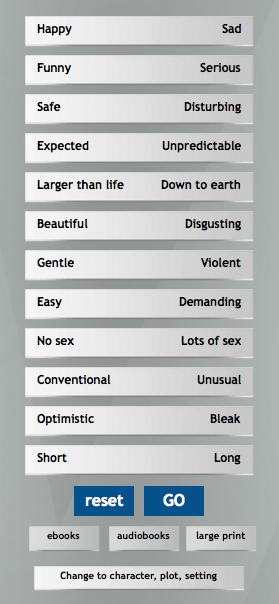
Whichbook is a site I learned about recently, and it’s unique in a number of ways. First, it’s incredibly browsable – I got pulled in right away. I don’t think any online experience can really replicate the experience of wandering around in a bookstore or library, but this comes closer than anything else I’ve found.

You can manipulate a number of factors (see below) to get results, and you can also look through lists (“weird and wonderful,” “bad luck and trouble,” “a terrible beauty”), or search by author.


Whichbook’s About page explains that all of the books are fiction or poetry, written in or translated to English, and published within the last ten years. They focus on “books people won’t find for themselves,” not bestsellers, and have a wide range.

The site is British, and once you’ve found a book that interests you, there are links to borrow from a library or buy through Amazon. If you’re not in the UK, there’s a link to WorldCat, so you can find a copy of the book in a library near you. I’ve played with the variables a lot, and the results are promising: a few books that I’ve already read and enjoyed came up, as well as a number of titles I hadn’t heard of before but that looked good. Try it out!

Summer InfoLink

Still a bit backlogged with more New Orleans posts to come, as well as a post about the Wikipedia in Higher Education Summit; meanwhile, here’s a short piece I wrote on GSLIS After Dark for this summer’s issue of InfoLink. I’m also in the “Summer Reading” article.

Speaking of summer reading, I just finished Ben Nugent’s American Nerd: The Story of My People, and would definitely recommend it to anyone interested in the evolution and psychology of the nerd. It’s a great blend of well-researched history and the author’s personal experience.

And for those who are looking for a tech-heavy young adult novel set in a dystopian but not-too-distant future (lots of people are looking for that kind of book, right?), try Cory Doctorow’s Little Brother. The main character is well-written and compelling, and you will learn a lot about technology, privacy, and security in a painless way. Warning: it may make you a little paranoid.

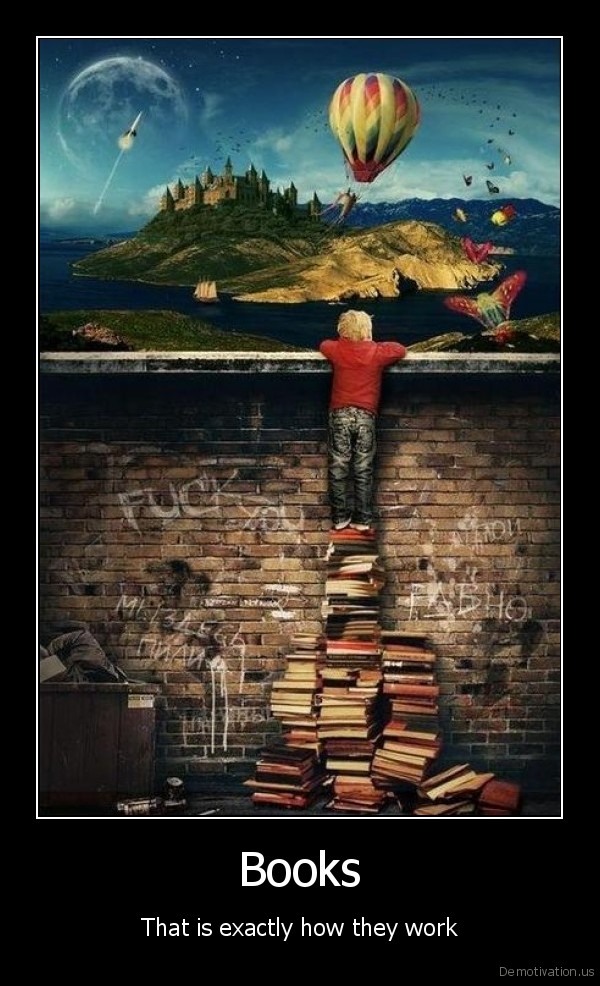
Books: How they work.

This post is not related to the ALA Annual Conference, except in that probably a lot of people who were there would agree. I just wanted to share this image, which someone sent to me and which I have described to many people:

Here’s a larger image from the original source.

HarperCollins Book Buzz and Modernist Cuisine

Lumping two events together so as not to be a complete commercial for either. The HarperCollins Book Buzz consisted of a panel of HarperCollins marketing people talking about upcoming HC titles (including The Lantern by Deborah Lawrenson, galleys of which they distributed at the event). They also mentioned several readers’ advisory-type blogs (all quotes below are taken from the respective sites’ About pages):

NetGalley is a “connection point for book publishers, reviewers, media, librarians, booksellers, bloggers and educators…Professional readers–reviewers, media, journalists, bloggers, librarians, booksellers and educators–can join and use NetGalley at no cost.”

EarlyWord is “a Blog and Web site on a mission — to give libraries the earliest information possible on the books their customers will be looking for, so they can stay ahead of demand. By giving readers what they want, when they want it, we believe libraries can increase their circulation and their support.”

The Book Report Network (BookReporter) provides “thoughtful book reviews, compelling features, in-depth author profiles and interviews, excerpts of the hottest new releases, literary games and contests, and more every week.”

And now for something completely different…(except in that it is a book, or more accurately several volumes)…

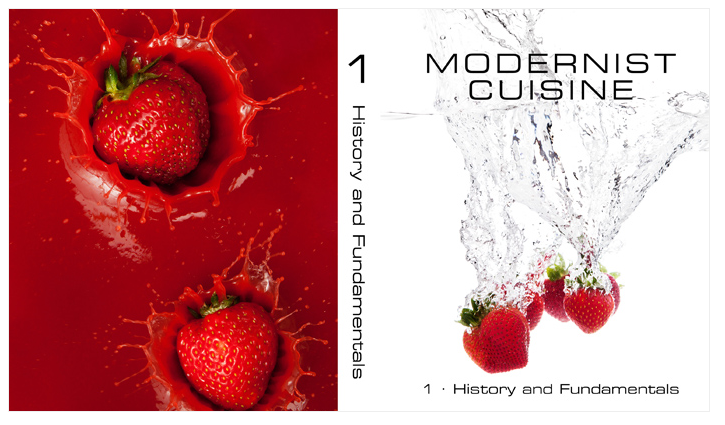
“In Modernist Cuisine: The Art and Science of Cooking, Nathan Myhrvold, Chris Young, and Maxime Bilet—scientists, inven­tors, and accom­plished cooks in their own right—have cre­ated a six-volume 2,400-page set that reveals science-inspired tech­niques for prepar­ing food that ranges from the oth­er­worldly to the sub­lime. ”

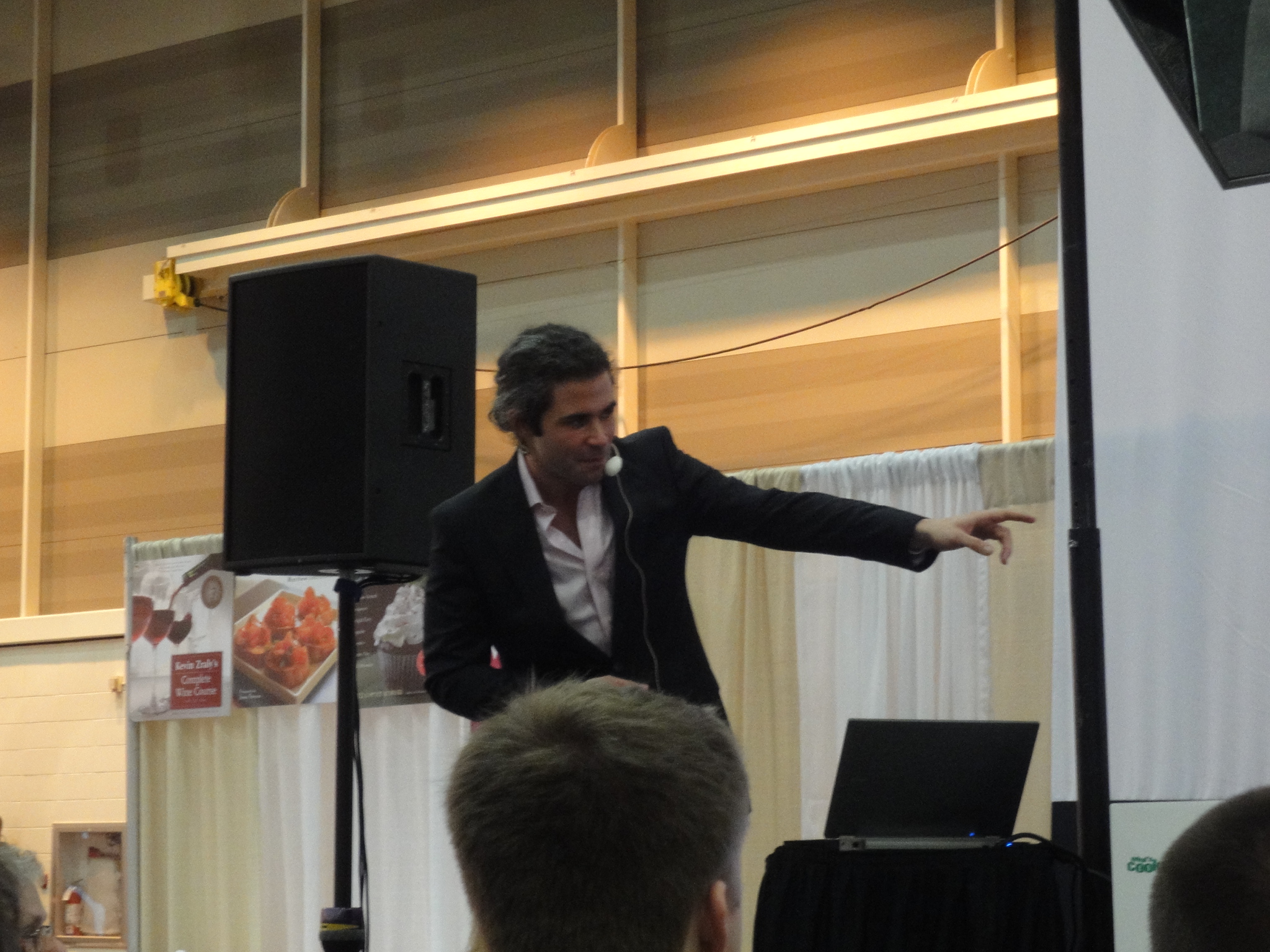
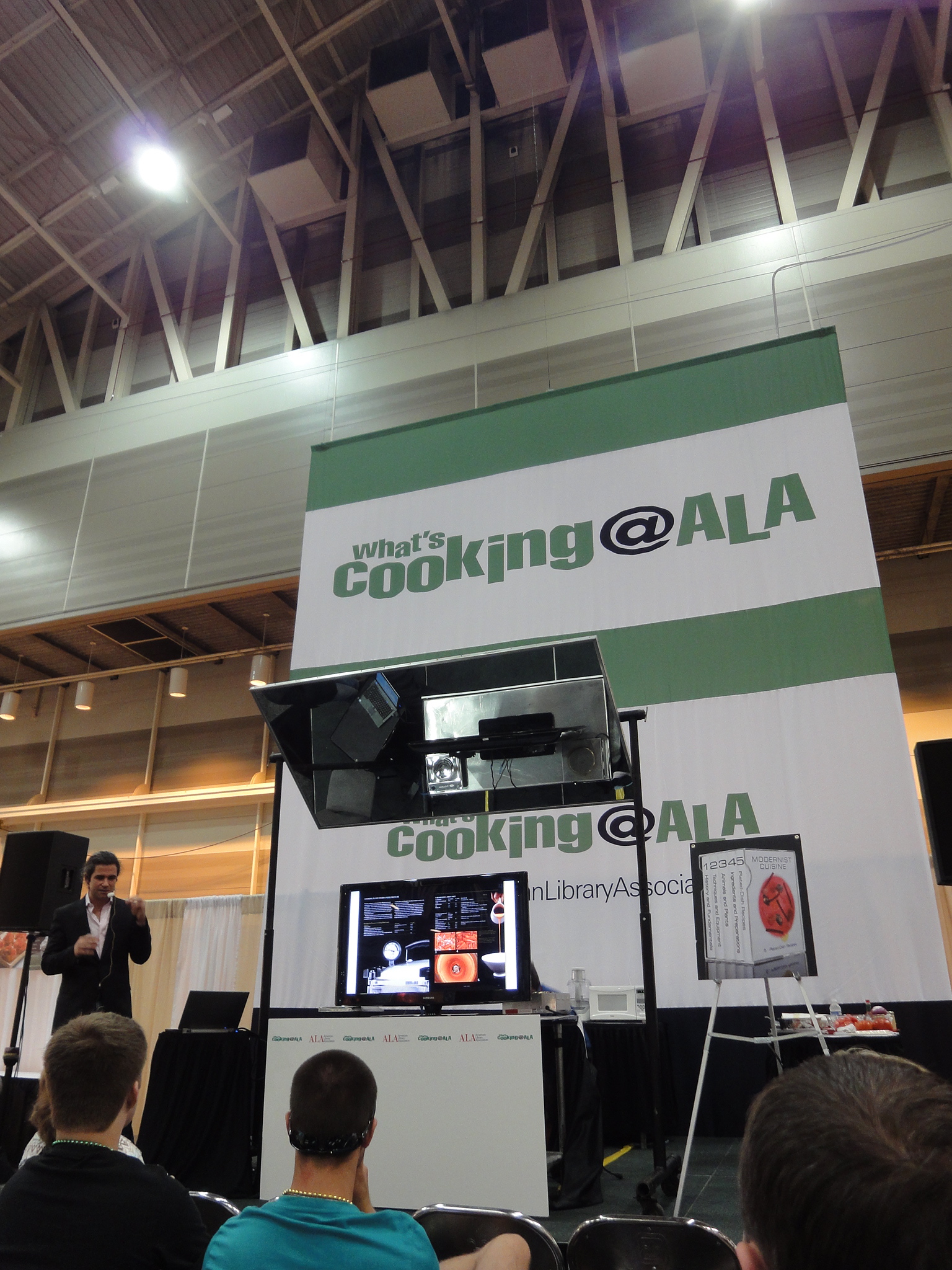
Maxime Bilet himself was at the What’s Cooking at ALA? stage, demystifying Modernist Cuisine. I have actually had the opportunity to browse through it, and was completely overwhelmed, but Bilet helpfully pointed out that recipes for superior macaroni & cheese and caramelized carrot soup can be found in Vol. 3, and that recipes for beurre blanc, pistachio gelato, and chocolate mousse can be found in Vol. 4.

And for those who are wary of “modernist,” scientific cooking, Bilet says, “Cooking relies on science…Healthful cooking is flavorful cooking.” Another helpful tip: you can oxidize wine in a blender.

Now you know.