What makes a picture book funny? A sense of humor is unique and personal – what makes one person laugh out loud might elicit only a small smile from another, and vice versa – but there are a few themes. Slapstick, physical comedy is one; “potty” humor is another (the farting pony in The Princess and the Pony by Kate Beaton, Who Wet My Pants? by Bob Shea). Cleverness is appreciated, especially the kind that winks at the reader and lets them in on the joke; kids like the feeling of knowing more than the main character does (hide-and-seek books use this tactic). Interactive, fourth-wall-breaking humor often works equally well in storytimes and one-on-one reading, as kids are ready and willing to engage. Some readers delight in the absurd (the increasingly strange to-do list in Bathe the Cat, the pile of unlikely “solutions” in On Account of the Gum). A twist or surprise ending can be very effective as well, such as in A Hungry Lion or Tyrannosaurus Wrecks!, especially if it follows a sweet emotional moment of resolution.
Recently I ran into a friend who is a youth services librarian at a public library. She said that they’d just put up a display of funny picture books, but realized they were not a diverse bunch. She thought I might have some ideas, and…I do!
 To be quite upfront, the first picture book that jumped into my head in the “funny” category was Adam Rex’s On Account of the Gum, which I maintain is one of the all-time funniest books to read aloud, and which absolutely does not get old, no matter how many times you read it. Though adults tend to think of picture books as being for little kids, this one appeals just as much or more to older kids, and even teens and adults; they can use the rhyme scheme to anticipate what’s coming next, and they have more context (e.g. they know what Picture Day is). But littles enjoy the over-the-top illustrations and the pattern and flow of the story…it’s just, hands-down, a brilliant read-aloud. Rex also wrote Pluto Gets the Call, illustrated by Laurie Keller (just think about the title for a minute) and School’s First Day of School, illustrated by Christian Robinson. (This book, narrated by a brand-new school building, contains the phrase “nose milk.”) Rex is a funny guy, but let’s move along…
 I Don’t Want to Be A Frog by Dev Petty, illustrated by Mike Boldt, is told entirely in dialogue between a young frog (who, you guessed it, would rather be a rabbit or an owl or a pig or anything but a frog), their dad, and…I won’t give it away, but this book really lends itself to the read-aloud experience, and it has delightful companions (I Don’t Want to Go to Sleep, I Don’t Want to Be Big, and There’s Nothing to Do). Dev Petty also wrote Claymates, which has some of the most unique illustrations (by Lauren Eldridge) I’ve ever seen, and plenty of humor.
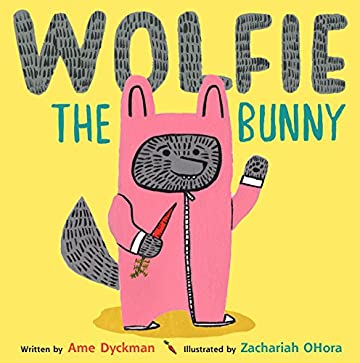 If you can hear the title Wolfie the Bunny and NOT want to read that book immediately, then we probably don’t have much in common. Ame Dyckman’s words paired with Zachariah Ohora’s illustrations absolutely live up to the promise of the title. In a neighborhood based on Park Slope, Brooklyn, a family of rabbits finds a wolf pup on their doorstep, but only little Dot is freaked out by the new addition to the family (“He’s going to eat us all up!”).
 Zachariah Ohora also illustrated Tyrannosaurus Wrecks! by Sudipta Bardhan-Quallen. (Every list of picture books has to have a dinosaur book, right? Pretty sure that’s a rule.) This is a sure-bet hit for the toddler and preschool set, and there’s a sweet social-emotional learning (SEL) component in addition to the slapstick humor. (While we’re talking about Zachariah Ohora, he also illustrated Who Wet My Pants? by Bob Shea, another very funny book, despite its serious-sounding title.)
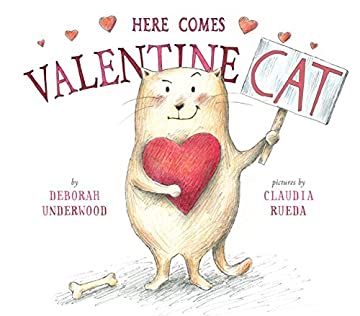 Deborah Underwood and Claudia Rueda’s “Here Comes…Cat” books (Tooth Fairy Cat, Valentine Cat, etc.) star a cat that only communicates through signs (sometimes with words, often with images), facial expressions, and body language. The narrator is in dialogue with the curmudgeonly cat, and these books definitely tickle my funny bone; Valentine Cat makes an appearance at our house every February.
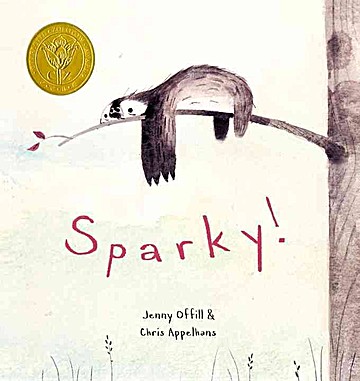 Jenny Offill has produced such delightful gems as Sparky! (a book about a girl and her pet sloth; just look at the juxtaposition between the name – with an exclamation point! – and the sloth on the cover), While You Were Napping, 11 Science Experiments That Failed, and 17 Things I’m Not Allowed to Do Anymore. The titles are descriptive enough, I think, and any grown-up who has read Offill’s books for adults is in for something completely different with these.
 A Hungry Lion, Or, A Dwindling Assortment of Animals by Lucy Ruth Cummins: The sheer genius of this title, oh my goodness. And the vocabulary. And the smile on the little turtle’s face. And the moment the lights go out. And the double twist ending. And, and, and….If you liked the slightly macabre humor of Jon Klassen’s I Want My Hat Back but you haven’t read this, go ahead and remedy that now.
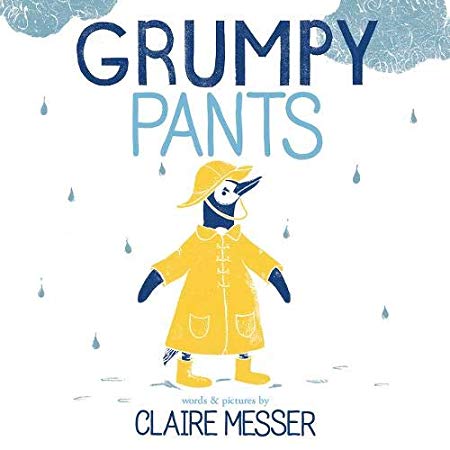 Grumpy Pants by Claire Messer: “I’m grumpy,” declares a little penguin, and it tries a number of solutions to improve its condition, finally stripping off its clothes piece by piece and diving into a nice cold bath. Children (and adults, too!) might find that a bath, clean clothes, and a cup of cocoa are just the thing to soothe a grumpy mood.
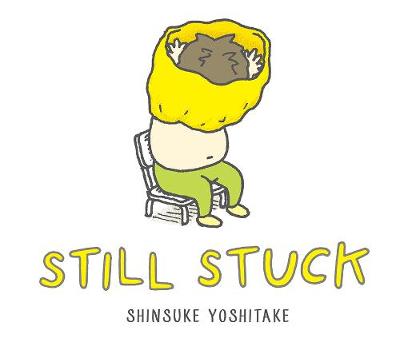 Still Stuck by Shinsuke Yoshitake: You’re getting undressed and your shirt gets stuck over your head – it’s happened to everyone, right? It happens to this kid, who definitely does not want assistance from Mom, and decides to accept their new state. In their imagination, they spin out what life will be like with a shirt over their head. Despite the kid’s adaptability (or resignation), Mom does swoop in to move the bedtime process along, but there’s another snag when it’s time to put on pajamas.
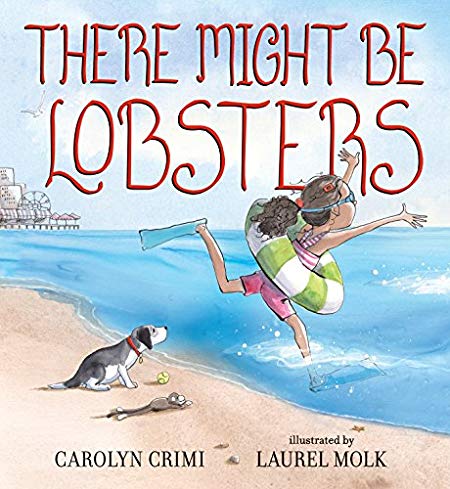 There Might Be Lobsters by Carolyn Crimi, illustrated by Laurel Molk: Poor little Sukie is afraid of everything at the beach, but when beloved toy Chunka Munka is swept out to see, Sukie must find her courage. This is an excellent read-aloud for summer storytimes for all ages – get kids to repeat the titular refrain together – and if you happen to have props with you for this read-aloud (a stuffed lobster, say, or a beach ball) all the better.
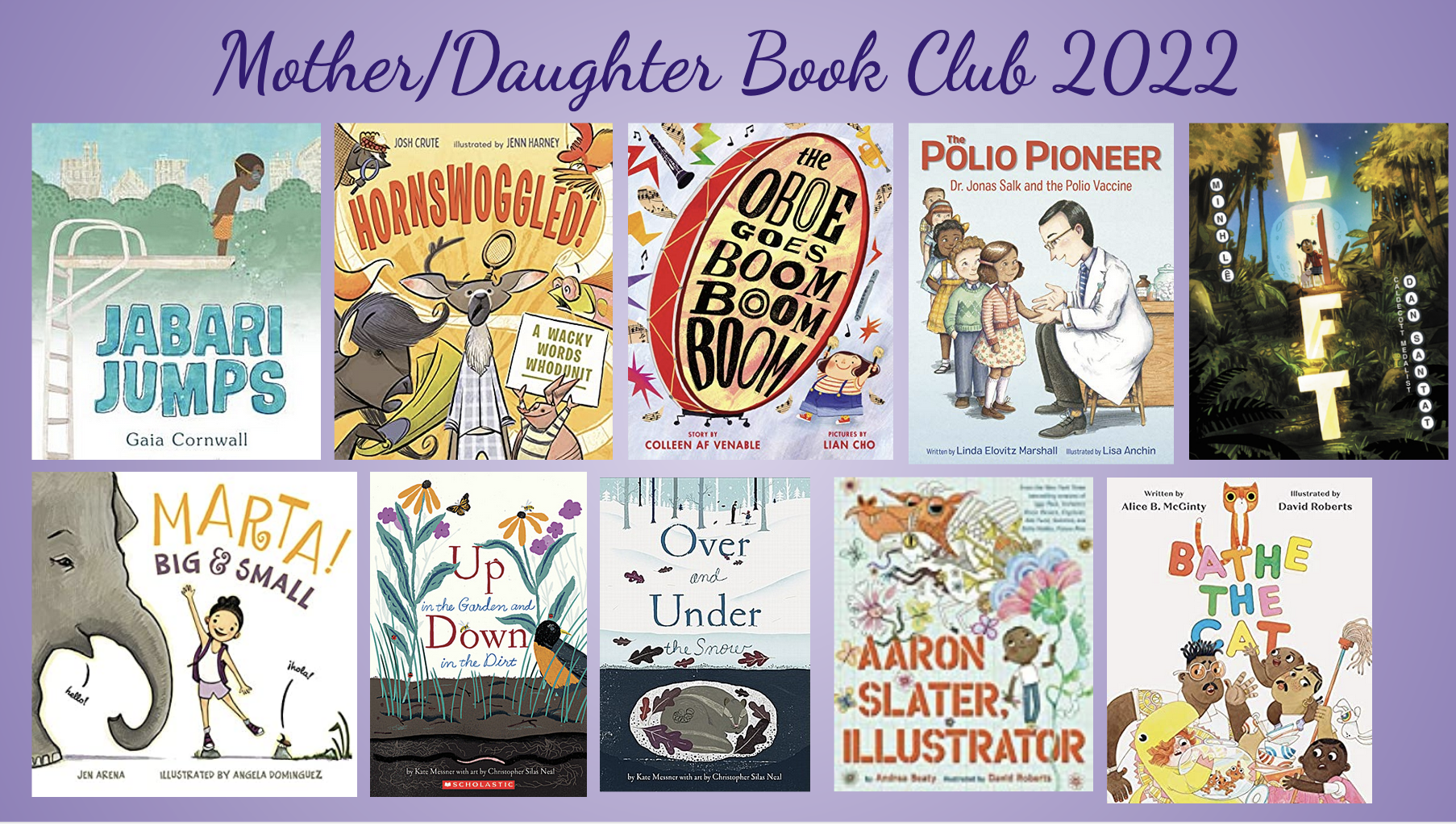
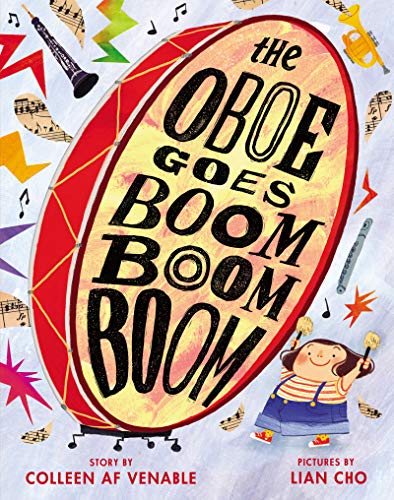 The Oboe Goes BOOM BOOM BOOM by Colleen AF Venable, illustrated by Lian Cho: A band director introduces instruments one by one, but little Felicity just can’t wait to bang on the drums and keeps interrupting – until she’s blown away by the sound of the tuba. There’s actually quite a lot of information in here about different instruments, and the way that Cho translates sound into a visual medium is outstanding.
 I Am Not A Penguin: A Pangolin’s Lament by Liz Wong: A poor pangolin wants to give a presentation, keeping its cool while confused audience members interrupt, until a penguin arrives to steal the show. One little girl remains for the pangolin’s informative presentation. (See also: The Angry Little Puffin by Timothy Young, which taught me permanently that penguins live “at the bottom of the world” (i.e. Antarctica) while puffins live “at the top of the world.”)
 King Baby by Kate Beaton might be funnier for adults than for kids, but kids enjoy it too; it’s one of my go-to recommendations for families who are about to add a sibling. And let’s not forget Beaton’s other picture book, the crowd-pleasing The Princess and the Pony (pony farts feature prominently).
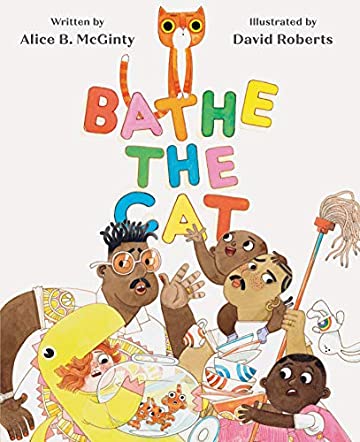 Bathe the Cat by Alice B. McGinty and David Roberts: A cat who definitely does not want a bath scrambles up a family’s to-do list as they rush to tidy before grandma arrives. Clever use of fridge magnet alphabet letters, plenty of pride, and increasingly ridiculous tasks all add to the joyful hilarity.
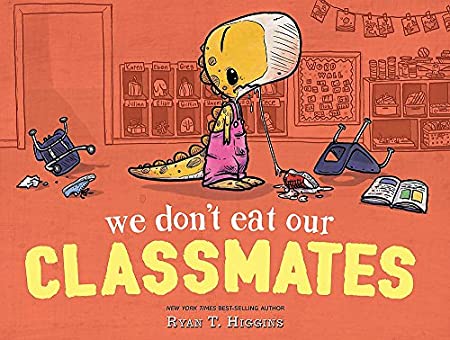 We Don’t Eat Our Classmates by Ryan T. Higgins: Pink, overalls-wearing Penelope is nervous about the first day of school, and indeed, it doesn’t go as well as she’d hoped…she discovers that it’s hard to make friends when everyone is afraid you’ll eat them. Penelope learns to exercise self-control with the help of Mrs. Noodleman and a fearless goldfish named Walter.
Finally, every kid I know would insist that The Book With No Pictures by B.J. Novak be included on any list of funny picture books, and they’re right. BLURP.
What are your favorite funny picture books?


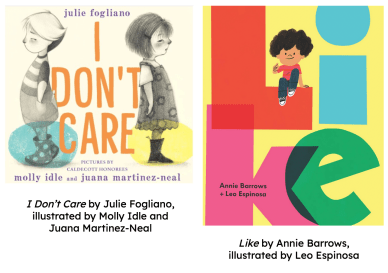
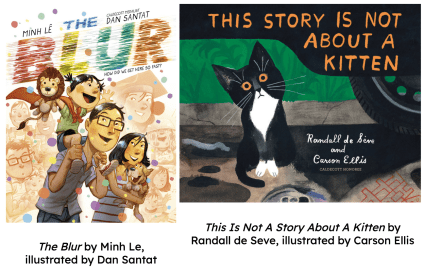
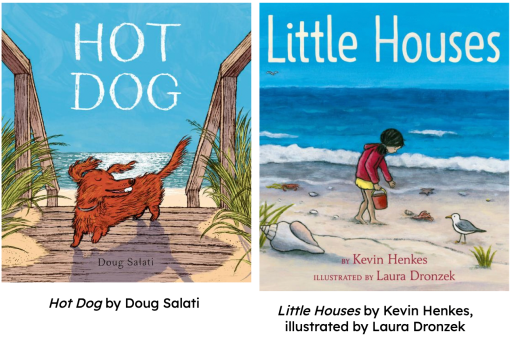
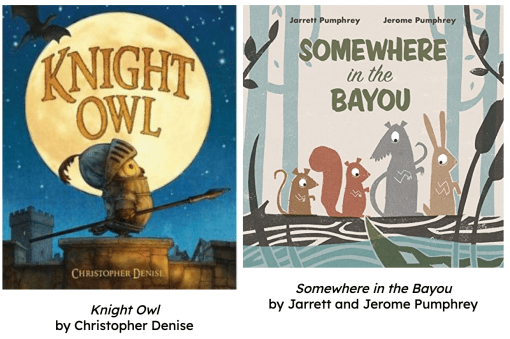
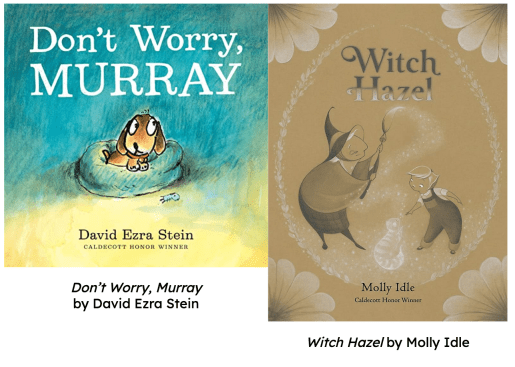
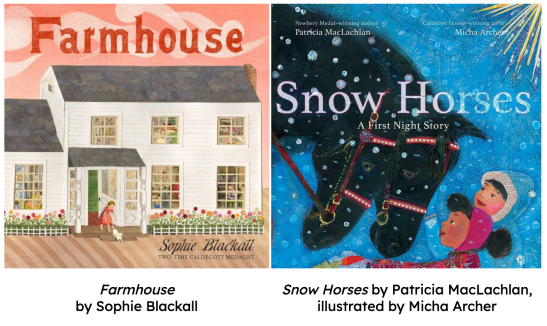
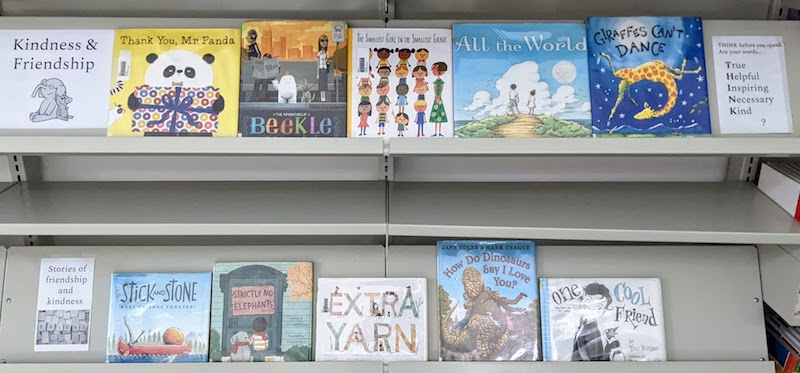
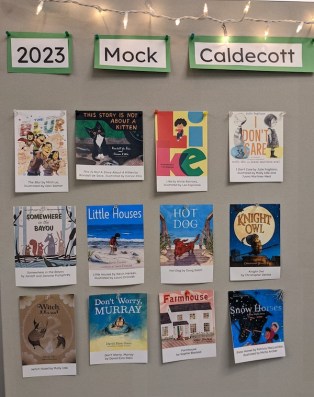 Visual supports: The award is for illustration, after all, so I wanted to create a visual environment to support our Mock Caldecott. Here are a few ways I did that:




 Jenny Arch