Last January’s Harry Potter trivia was so successful that we decided to do it again on the last Saturday of July, as close to Harry’s birthday (7/31) as possible. Once again, registration filled up and we had a few on the waitlist (not as many as last time, but I suspect that has to do with it being summer and lots of people being away on vacation).
The program still required plenty of (team)work to run, but it was easier and smoother the second time around.
Ahead of time
- Make up new questions and print two copies (one for MC and one for scorer)
- Set up a new spreadsheet for scoring
- Create calendar event (registration opened three weeks before the program)
- Promote on social media (Facebook, Twitter, Instagram)
- Order prizes
- Plan music (we used a library laptop streaming Harry Potter music from the London Studio Orchestra via hoopla)
- Make refreshments
- Gather decorations (re-used from last time: stuffed owls, Golden Snitches)
- Gather supplies (“quills” from last time, pads of post-its, raffle tickets)
LEGO Hogwarts
Another added element to the program this time around was the display of LEGO Hogwarts, which had been build in the preceding weeks by kids (10+), teens, and adults in eight separate weekend and evening sessions. They did an incredible job and finished just in time! (Now, we’ll have to see if anyone wants to take it apart in such a way that it can be built again.)


Registration table with door prize raffle, quills, and post-its; owls; Golden Snitches
Day of trivia
Despite opening the doors and starting registration before our 2pm start time, the program did run past 4pm. I’m not entirely sure why, but I think it was in part due to some younger teams taking longer to turn in answers, and partly me adding short breaks between most question rounds. Next time, just one break about halfway through, and full steam ahead (from Platform 9 3/4, naturally) the rest of the time.
Like last time, we had seven rounds of five questions each, one round per book in the series. We started with a practice question (for no points) and had some between-rounds questions for no points too – teams would just raise their hands, and I tried to let everyone who wanted a turn get to answer.
 There were some really clever team names (Granger Danger was my favorite), and I was so happy to hear that at least one team at the event had been waitlisted for trivia in January, and were able to come to this one. There was also a team that left after round four because the kid on the team hadn’t read books five through seven yet, but said they’d had a wonderful time.
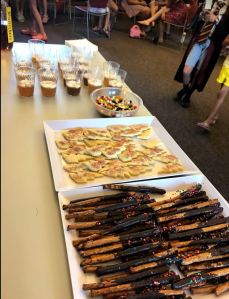
The questions were just about right, with most teams being very successful but not perfect (we didn’t want a fourteen-way tie for first!). Most of the snacks got eaten; we had pretzel wands, lightning bolt sugar cookies, jelly beans, and butterbeer. Some people used the Daily Prophet photo frame to take pictures.
Our door prizes were House-themed socks (Gryffindor socks for the Gryffindor winner, etc.), first prizes were Harry Potter postcard coloring books, and two teams tied for second place. One of the “teams” was a girl playing on her own, so I let her have first choice between Harry Potter themed socks (“Mischief managed,” etc.) and a vial of Felix Felicis (not edible! but good for putting on a necklace). The other second place team also chose between socks and Liquid Luck and everyone seemed pretty happy.
What to do differently next time
Other than running slightly over time, which no one seemed to mind, everything went smoothly, but there are always small improvements to be made – mostly to do with making the scorekeeper’s job easier.
- Our participants got very sugared up on the snacks, so next time we might replace “Every Flavour Beans” (jelly beans) with popcorn. And maybe have pumpkin juice instead of Butterbeer.
- Have teams bring their team names to the scorekeeper as soon as they decide on them – before the practice question.
- Add a question for no points between each round, to give the scorekeeper time to catch up.
- Multi-part questions are fine, but space them out – don’t do two in a row.
- Design questions so the answers can be as short as possible (a few words, not a sentence or a paragraph!).
- Calculate the total possible score in the spreadsheet (i.e. a perfect score), in case teams want to know how many they missed.


LEGO Hogwarts on display; a happy team on the front page of the Daily Prophet; a pile of answers on post-it notes


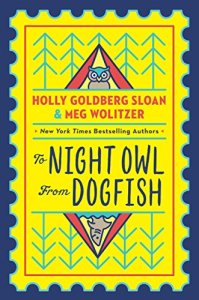 New(ish) middle grade books: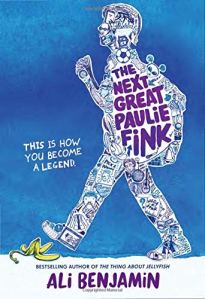
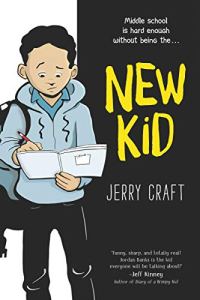 Graphic Novels:
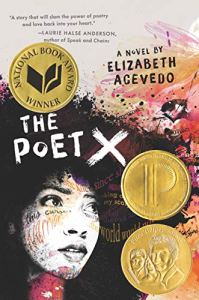 Young Adult:
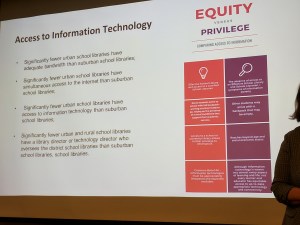 James Lonergan from MBLC (Massachusetts Board of Library Commissioners) mentioned a number of other possible partnerships and stakeholders, including
 “Everyone deserves to be trained in kid’s services, but not everyone is” – Brennan gave an overview of the areas of the library (fiction/nonfiction, picture books, early readers, chapter books) and the different levels (Lexile, Fountas & Pinnell, DRA). Kids need books at their “level” to learn certain skills and grow as a reader, but can “reach” for books they’re interested in and are motivated to read. She is a big fan of the NoveList K-8 database, which can be a useful tool for those who aren’t as familiar with children’s books.
 Chelmsford came up with a great logo and acronym;
 There was a break after the keynote, and then the next set of morning sessions. I chose to stay with Plummer for the “Communicating Across Differences Workshop,” which included some of the same material as her keynote with additional exercises and examples, starting with a few of the classic Psych 101 images to demonstrate our ability to make perceptual shifts. You can’t actually hold multiple realities or perspectives at once, but you can shift back and forth between them – and if you don’t see another reality on your own, sometimes you can once someone points it out to you. (Ah, see what she did there? Clever.)
 Next was a “diversity petal” exercise: we identified the dominant or “up” identities for race, gender, age, mental/physical ability, sexual orientation, class, education, and religion and then our own identities within each category, then placed a check mark next to any category where our own identity matched the dominant one. Plummer pointed out that marginalized people know more about the dominant culture; part of privilege is not having to learn about how life is for others.



 Jenny Arch