My librarian friend Brita, who knows about everything before I do, recently wrote a blog post about her submissions to the Manual for the Future of Librarianship project (under the auspices of the ALA Center for the Future of Libraries, inspired by the Long Now Foundation’s Manual for Civilization). She inspired me to do the same, and I’m sharing my submissions here as well.
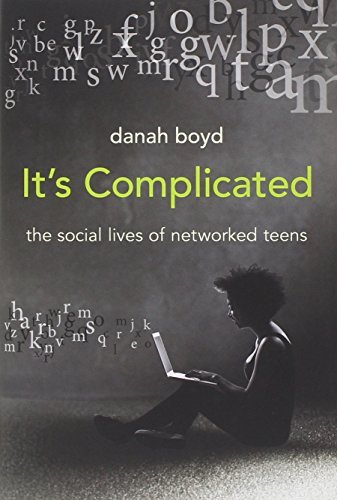
1. It’s Complicated: The Social Lives of Networked Teens by danah boyd It’s Complicated is a must-read for teachers, parents, librarians, and anyone who disparages Millennials or “kids these days.” Researcher boyd unpicks the mindset that kids don’t care about privacy and shows how much of online life is “public by default, private through effort” instead of the other way around, making privacy difficult to obtain for those using social media. She makes the case that adults can best protect kids and teens by educating them about risks. boyd also addresses inequality and information literacy.
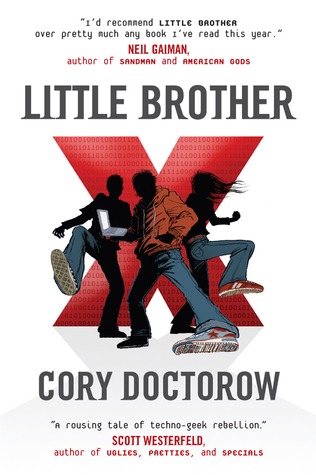
2. Little Brother by Cory Doctorow Little Brother is a young adult novel, but adults can learn a lot from it too: it’s a fast-paced story set in San Francisco before, during, and after a terrorist attack blows up the Bay Bridge. Seventeen-year-old high school student and hacker Marcus Yallow (a.k.a. w1n5t0n) and his friends are swept up by the Department of Homeland Security as the DHS cracks down on the city, and Marcus’ new mission is to expose their abuse of power. Marcus is more tech-savvy than most people, but Doctorow explains everything in a way that is interesting (and paranoia-inducing). It’s easy to imagine this scenario coming to life, and it leads readers to consider the relationship between privacy, security, and freedom. The follow-up novel, Homeland, is also worth reading.
Neil Gaiman in October 2013. Photo by Robin Mayes.
British author Neil Gaiman writes across genres and for all ages, and he’s a passionate advocate for libraries. In October 2013, he gave a particularly strong and articulate lecture on the importance of fostering literacy through teaching children to read and making sure they have access to books they enjoy. He also spoke about the positive correlation between fiction and empathy, which has now been shown in a number of studies, and the importance of libraries: “libraries are about freedom. Freedom to read, freedom of ideas, freedom of communication…Libraries really are the gates to the future.” [I wrote about this same speech at length soon after it was published online by The Guardian.]
On a night that introduced me to the concept of “ice mist” (I think that’s what it was), there was a packed house at the Weston Public Library to see Julia Glass read from her newest novel, And the Dark Sacred Night. I’d seen Glass speak once before, in conversation with her editor at the McNally Jackson bookstore in Soho in 2009, and thanks to a major tidying effort, I turned up my notes from that event just a few weeks ago. At the time, Glass said:
“All serious fiction is emotionally autobiographical.”
“If you choose fiction, you distort.”
“There are always mysteries and things we will never know [about the people we’re closest to]….You cannot know everything about the people you love the most.”
Her words, and especially the concept of emotional truth in fiction, stayed with me, enough to get me out of the house on an ice-misty night. (What is that, Massachusetts? Seriously.)
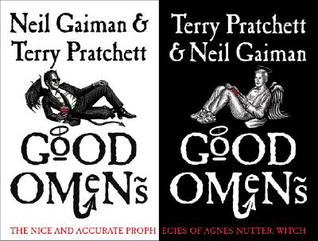
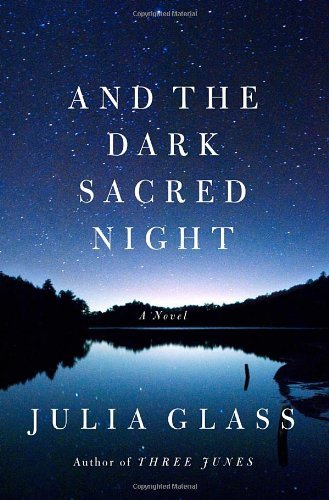
Hardcover book jacket
In Weston, Glass started by observing the difference between a hardcover tour and a paperback tour: during a hardcover tour, the material is fresher in the author’s mind, but most audience members haven’t had a chance to read the book yet. With a paperback tour, on the other hand, the author may have forgotten details about the book, but the audience is more likely to have read it.
She spoke about her local connection, having grown up in Lincoln, MA and worked in the library there: “I really regard that library as my third parent.” Glass also talked about how she begins her books. Writers approach stories in different ways, but Glass comes to her stories through character. Malachy Burns’s mother Lucinda, a secondary character in Three Junes, was inspired in a unique way: Glass and her partner were stuck in traffic*, and the bumper sticker on the car in front of them read “Life: What a Beautiful Choice.” That, Glass realized, encapsulated Lucinda’s Catholic outlook.
*Glass’s advice for couples stuck in traffic is: Don’t talk! It will only lead to fighting over whose fault it is that you’re stuck in traffic. She believes that the declining divorce rate is due at least in part to the rise of GPS devices.
Unlike some authors with ideas spilling out of their heads and onto scraps of paper everywhere, Glass says she doesn’t have lots of ideas for books. “Every time I’m coming to the end of one book, I’m terrified it’s the last one.”
“All of my books stand alone…but I do seem to be in the habit of bringing characters back.”
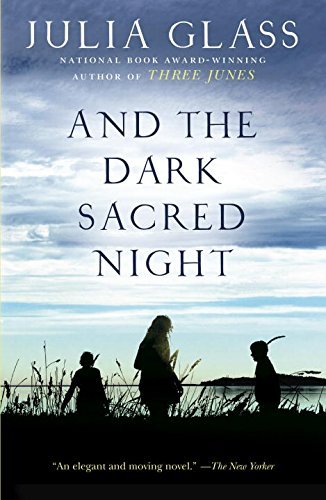
Paperback cover
Glass’s books are all set in the semi-recent past. Does she rely on her memory to fill in details appropriate to the decade or year? She laughed at the idea of relying entirely on memory, but said that “personal stories that people tell me make their way into fiction,” and her books are usually set on “familiar turf” (New York, New England). But “research is important for every book…I always want to give myself a challenge…What’s something I really want to know about?” Fiction writers, Glass said, “are the people who want to be everything,” and researching for books is a great way to learn more about other topics and vocations. “There are so many ways of being and living in this world. The ‘what-if’ questions drive us.” Glass is particularly interested not just in what people choose to do, but in how that vocation in turn shapes them.
But research, for Glass, comes after writing. “I bluff my way through writing first, and research later.” For her books, she has interviewed oncologists; doctors familiar with HIV/AIDS treatment in the early days of the disease; classical cellists; and professional bakers of wedding cakes. She has also explored YouTube, especially when seeking particular pieces of music, and has learned to look at the number of page views to find the best quality videos. “YouTube is very dangerous.”
She writes her books from beginning to end, not allowing herself to skip over difficult scenes. Her manuscripts tend to be much longer than the final published versions of her books. Glass’ editor Deb Garrison told her, “You have a wonderful sense of responsibility to your readers…[but] they don’t have to know everything.” This revelation led Glass to cut an entire section from Daphne’s point of view from And the Dark Sacred Night.
After Glass read two scenes from the novel (one from Kit Noonan’s perspective, one from Walter’s), an audience member asked if she could talk more about her third book, I See You Everywhere. “You could see it as a novel, perhaps,” Glass said, but it’s really a collection of linked stories, all of which stand on their own; in fact, one of the stories won the Chicago Tribune Nelson Algren award, which was, Glass said, one of the best moments of her life. I See You Everywhere is her most autobiographical novel, which she published once she decided she did not want to write a memoir; “I just wanted to write about a certain kind of sibling relationship.”
I haven’t read And the Dark Sacred Night yet, but I plan to read it soon, and I can definitely recommend Three Junes, The Whole World Over, I See You Everywhere, and The Widower’s Tale. Thanks to the Weston Public Library for hosting, and to Julia Glass for a lovely and inspiring evening.
Incidentally, the ice mist has now turned to snow.
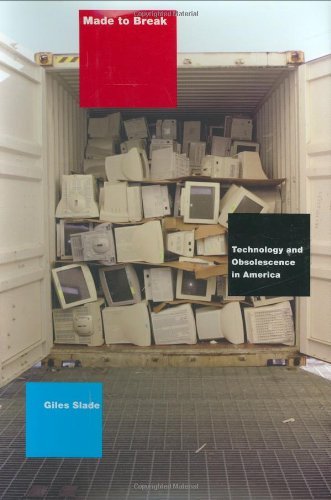
Back in March 2013, I was trying every avenue to find a timeline of obsolescence I’d seen once during grad school. Even with the help of the Swiss Army Librarian, I came up empty-handed (though we did find a lot of other cool stuff, like the book Made to Break: Technology and Obsolescence in America by Giles Slade).
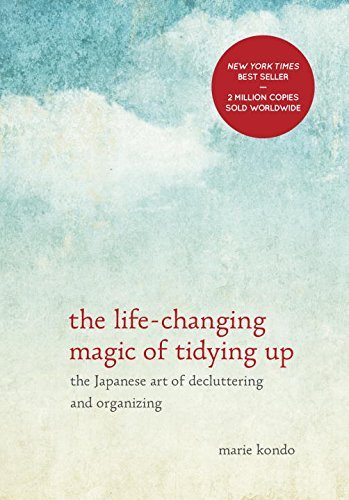
In the end – nearly two years later, as it happens – it was another book that led me to find the original piece paper I’d had in mind. That book was The Life-Changing Magic of Tidying Up by Marie Kondo (bet you didn’t see that coming, did you?). I’ve spent a good chunk of the past two weeks going through all the things in my apartment – clothes, books, technology, media, and lots and lots of papers – and at last, I found the timeline of obsolescence that I was looking for almost two years ago.
The Life-Changing Magic of Tidying Up by Marie Kondo
Repair shops – the reason I was looking for this timeline in the first place – apparently went out of fashion (or “significance”) just before 2010, as did mending things, generally. Fortunately, the “predicted death date” for the things on the timeline is “not to be taken too seriously,” and since “a good night’s sleep” is coming under the axe just before 2040, I just have to hope that they’re wrong about that one.
Future Files by Richard Watson
Check out the extinction timeline yourself. Anything strike your interest? Do you agree or disagree with the predictions for the next 35 years? Discuss.
One of my favorite things about librarianship is the culture of sharing. Libraries “do a lot with a little,” and we can’t afford to be reinventing the wheel all the time. If a librarian creates a display you admire, makes a useful handout, or runs a successful program, chances are she’ll be happy to help you duplicate or modify it for your library. So when some of us in the Adult Services department got a question from our former co-worker, an amazing all-around librarian who is now working in Adult Services, we were happy to help.
“The main part of my job is going to be programming. I am trying to strike a balance between providing what the community has embraced in the past (book groups, movies, etc.) with new and innovative ideas. Our director is new too and comes from an Adult Services background and is really invested in us trying out some new things.”
If there are ongoing programs (movie night, book club) that are already working, by all means keep those going.
You don’t want to try to do too much (or add too many new programs) at once and burn yourself out. Keep a list of all the good ideas you come up with or collect, and then you can refer to it when you want to try something new.
Do you have a programming budget? Will other library staff be helping you, or are you on your own?
Try to get ideas from the community – can you do a survey?
Can you partner with community organizations? What programs are already available elsewhere (at the senior center, etc.). Try to collaborate wherever possible, instead of competing/overlapping.
Go ahead and do something you’re interested in. Enthusiasm can be contagious!
Food programs tend to be popular. Even if you can’t cook in the library, can you assemble ingredients, or have a potluck, or discuss cookbooks or cooking tips?
Sign up for newsletters from libraries of a similar size so you can see what programs they are running and how you might adapt those (or use guest presenters). The Library Journal column “Programs That Pop” is a good source of ideas too, though some of those require a lot of staff hours.
Speaking of guest presenters, are there people in the community who would volunteer to run/teach a program? How can you support them?
Develop an evaluation form so that people who come to programs can let you know what they liked about it, what they didn’t like, how they heard about it, and ideas for other programs they’d like to see.
If a book club is too much commitment, try a book chat, where people can come talk about any books they’ve read, instead of one particular book. Plus, everyone gets lots of suggestions this way.
Be realistic. If you are expected to run multiple programs a month on your own, then create a schedule you know you can handle. Movies, book chats, a knitting group, or a discussion group on your favorite topic are things that shouldn’t take a lot of prep time but can be very popular. Mix in an author program, someone discussing bee keeping, or any interesting presenter you can find to round out the schedule.
Don’t feel bad about giving up on a failing program, even if people tell you how much they enjoy it! There is a big difference between people liking an idea for a program and programs people will drive to the library to attend. Unfortunately you don’t always know the difference until you try it.
Now it’s your turn, librarians who are reading this. What’s your best tip for programs? Where do you get your ideas? General advice, specific tips, and links to your favorite programming resources are all welcome. Please comment!
Today’s ALA/Booklist webinar, Why Your Library’s Policy Matters, was led by Cherie L. Givens, author of Information Privacy Fundamentals for Librarians and Information Professionals. The webinar seemed almost like a commercial for the book, because Givens only spoke generally, pointing listeners to the book for further detail. In fairness, it would be difficult to cover the topic of library privacy policies in depth in an hour, but I was still hoping for something slightly more concrete and practical. Nevertheless, here are the points she covered:
When drawing up a library privacy policy, make sure you are aware of relevant federal* and state legislation. State legislation (e.g. California) may be stricter than federal legislation.
*Particularly the Children’s Online Privacy Protection Act (COPPA), Family Education Rights and Privacy Act (FERPA), Protection of Pupil Rights Amendment (PPRA), No Child Left Behind (NCLB), the PATRIOT Act, Foreign Intelligence Surveillance Act (FISA), and National Security Letters (NSLs). (If your library does receive an NSL, the lawyers at ACLU would love to hear about it.)
The Federal Trade Commission (FTC) is a good resource for consumer protection (“We collect complaints about hundreds of issues from data security and deceptive advertising to identity theft and Do Not Call violations”).
People should have control over their Personally Identifiable Information (PII), including sensitive personal data such as Social Security Numbers. People should know when, how, and what PII is being communicated to others. It’s always best to collect as little information as possible, only what is necessary; minimize data collection and retention.
Every library needs a privacy policy, but the policy is just step one. The next step is to make sure your procedures match the policy, and that you contract for privacy with third parties (vendors) to ensure that they handle patron data according to the same standards.*
Perform a privacy audit/assessment: what information do you collect and how do you use it?
Look at other libraries’ privacy policies, and the privacy policies of small/medium-sized businesses.
The library privacy policy should be visible to users: hand it out with new library cards, post it near computers, keep a copy at the reference desk. (And on the library website?)
Privacy is important not just for intellectual freedom, but intellectual curiosity.
*I haven’t seen the contract language, but I would imagine this is much more difficult than it sounds, especially if a library is working with Overdrive, which allows patrons to check out Kindle books through Amazon. Amazon is a data-hungry beast.
These fair information practice principles I copied directly from slide 10 of Givens’ presentation:
Notice/Awareness: Provide notice of information collection practices before information is collected.
Choice/Consent: Give the subjects of data collection options about whether and how their personal information may be used.
Access/Participation: Provide access to an individual’s personal information so that the individual can review and correct it.
Integrity/Security: The data collector must take reasonable steps to make sure the data is accurate and secure.
Accountability or Enforcement/Redress: There must be a mechanism for addressing and resolving complaints for failing to abide by the above four principles.
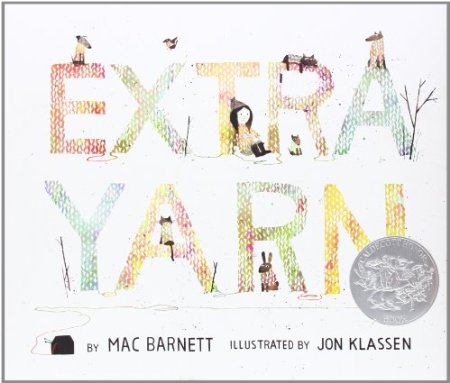
Tuesday was Veterans’ Day, and the library was closed. A librarian friend was in town, so what did we do? Went to bookstores, of course. This friend is a children’s librarian, so naturally we ended up in the picture book section, discovering new titles and sharing our favorites. She read Mac Barnett and Jon Klassen’s newest, Sam and Dave Dig A Hole, but I decided to wait for the library copy to come in so I could read it with my husband. (He’s hooked now too. We just read Barnett and Klassen’s Extra Yarn and loved it.)
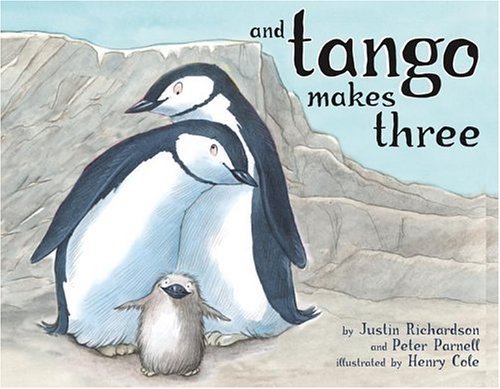
I tried Paul Schmid’s Oliver and His Egg again, but I still didn’t love it as much as Oliver and His Alligator, one of my all-time favorites (“…a lady who was NOT his mom…”). I finally read And Tango Makes Three, the oft-banned nonfiction book about penguins in the Central Park Zoo, and thought it did a beautiful job telling the story in a straightforward way. (The illustrations of the fuzzy-headed baby penguins didn’t hurt, either.) I discovered Marcel the Shell in print (The Most Surprised I’ve Ever Been), and Birgitta Sif’s Oliver, about a little boy whose only friends are toys and puppets…until he chases his tennis ball into another little girl’s yard and finds someone who’s different in the same way he is.
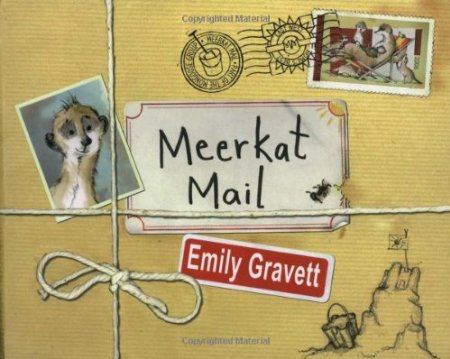
At home, we’ve been on an Emily Gravett (Orange, Pear, Apple, Bear) kick; my favorites so far are The Odd Egg and Meerkat Mail. The latter might be the first epistolary book I’ve seen for the picture book crowd: Sunny the meerkat goes visiting relatives and sends postcards home to his family.
Before Gravett’s books, I brought home a stack of Peter Reynolds’ books, after seeing him speak at this year’s NELA conference. We both loved The Dot and Ish, colorful books with lots of white space that encourage readers to let their creative and artistic sides flourish.
Reading picture books as a grown-up is different from reading them as a kid (or having them read to you), when pattern and rhyme are particularly important. As an adult reader of picture books, I like a blend of cute, funny, and sincere: too much of one quality and not enough of the others makes the book less enticing to me. (However, I remember reading Patricia Polacco’s The Keeping Quilt and Robert Munsch and Sheila McGraw’s Love You Forever as a kid and not finding them cloying at all – though Love You Forever did make my parents tear up. And don’t even mention Bob and Jack: A Boy and his Yak by Jeff Moss and Chris Demarest to my father unless you want to see a grown man cry.)
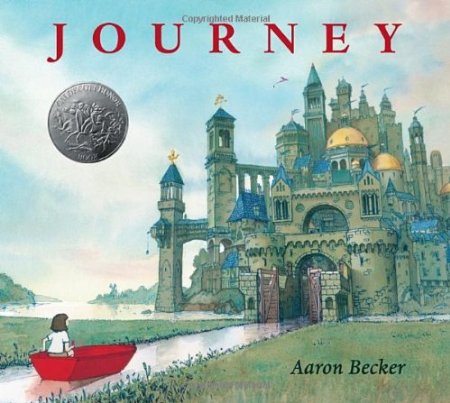
The best books are those that maintain their appeal, reading after reading. One way to achieve this lasting appeal is by making the reader do the work: books with minimal text, such as David Wiesner’s Mr. Wuffles and Aaron Becker’s Journey, let the reader narrate from the illustrations alone. The story can change from reading to reading, depending on who is reading it. (Mr. Wuffles can get particularly vehement at our house.)
Stories that encourage a lot of expression in the reader, and reaction or participation in the listener, are also sturdy favorites; one of these is Bark, George! by Jules Feiffer, which always seems to be checked out of the library. George is a dog, but instead of barking, he meows, quacks, and moos. George’s mom hauls him to the doctor/vet, who reaches deep down inside George and pulls out the true cause of George’s curious sounds. George’s mom’s mounting frustration and surprise, and George’s own innocent surprise, make this book a favorite, even before the ending – but I won’t ruin it for you. Read it yourself!
Got any favorite picture books I haven’t mentioned here (or here)? Please share in the comments.
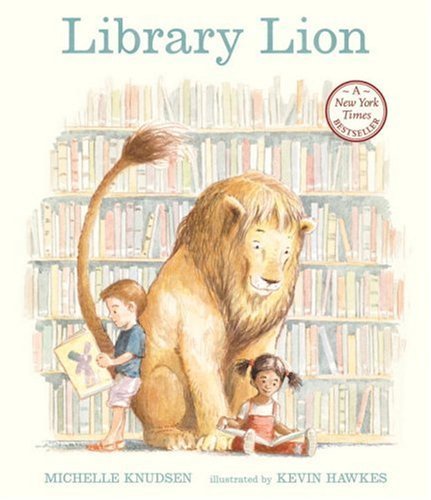
The title of this post comes from Michelle Knudsen and Kevin Hawkes’ book Library Lion, which should be the default graduation gift for any library school student.
One of the first arguments that comes up in the privacy debate – whether the issue at hand is a police search of your vehicle or Amazon keeping a record of every Kindle book you read – is that only people who have “something to hide” care about privacy.
To say this is disingenuous, and if the people who made this argument thought for even five minutes, I bet they could come up with a few things about their lives that aren’t illegal, or even morally or ethically wrong, but that they’d like to keep private anyway. Let’s consider the issue of library books, and what the books you check out may reveal about you. (Notice The Anarchist Cookbook is not on the following list. I don’t know the statistics about where terrorists get their bomb-making instructions, but I doubt most of it comes from the public library. There’s this thing called the Internet, you see.)
What to Expect When You’re Expecting, or other books that might indicate you’re trying to start a family before you’ve told anyone else.
Cracking the New GRE, or other test-prep books for grad school or a planned career change you aren’t ready to tell your current boss about.
Managing Your Depression, The Lahey Clinic Guide to Cooking Through Cancer, or other books about medical conditions you or someone close to you may be experiencing.
Bankruptcy for Small Business Owners might prove worrisome to your clients or your bank.
The Guide to Getting It On, or any books on the topics of sexuality, sexual health, safe sex, etc. (In many libraries, kids can get their own library cards at a young age, and parents aren’t allowed to monitor their accounts.) See also: It Gets Better: Coming Out, Overcoming Bullying, Creating a Life Worth Living, or Transgender Lives, etc.
God Is Not Great or other anti-religious texts would likely be poorly received if you’re part of a religious family or community.
A Gentle Path Through the Twelve Steps, or other books about personal struggle and recovery.
How to Buy a House; How to Sell A House, or other real estate books when you haven’t told anyone you’re thinking of moving.
These are just a few examples of information that people might justifiably want to keep personal and private, but not because of any wrongdoing. And this is why librarians strive to protect patron privacy.
“We protect each library user’s right to privacy and confidentiality with respect to information sought or received and resources consulted, borrowed, acquired or transmitted.” -ALA Code of Ethics
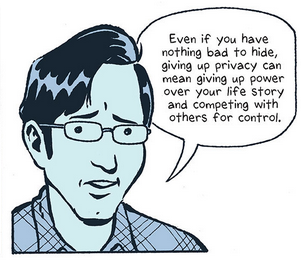
“Even if you have nothing bad to hide, giving up privacy can mean giving up power over your life story and competing with others for control.”
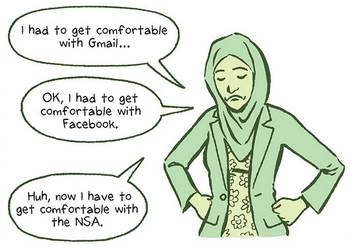
“Maybe we’ve been given a false choice between opting in and giving up control over how that information is used–” “–between sharing and being left out.”
11/3/14 Edited to add: Kevin O’Kelly from the Somerville Public Library reminded me of Glenn Greenwald’s excellent TED Talk, “Why Privacy Matters.” In it, Greenwald says, “People who say that…privacy isn’t really important,they don’t actually believe it,and the way you know that they don’t actually believe itis that while they say with their words that privacy doesn’t matter,with their actions, they take all kinds of stepsto safeguard their privacy.They put passwords on their emailand their social media accounts,they put locks on their bedroomand bathroom doors,all steps designed to prevent other peoplefrom entering what they consider their private realmand knowing what it is that they don’t want other people to know.“
And also: “We as human beings,even those of us who in wordsdisclaim the importance of our own privacy,instinctively understandthe profound importance of it.It is true that as human beings, we’re social animals,which means we have a need for other peopleto know what we’re doing and saying and thinking,which is why we voluntarily publish information about ourselves online.But equally essential to what it meansto be a free and fulfilled human beingis to have a place that we can goand be free of the judgmental eyes of other people.”
Greenwald is the author of No Place to Hide: Edward Snowden, the NSA, and the U.S. surveillance state (2014). His TED talk is well worth 20 minutes of your time.
The good news: E-books are available to library users in most places for free (well, you know, taxes, but only a very tiny amount of the taxes you pay actually go to supporting the library [PDF]. We do a lot with a little).
The other news: E-books are still mostly only available to one person at a time (the “one copy, one user” model); the physical restrictions of print books are artificially imposed on e-books, despite the fact that the technological capability exists for an unlimited number of people to read an e-book at one time (the “simultaneous use” model). To enforce the 1C1U model, e-books come wrapped in Digital Rights Management (DRM) technology; enter private, third-party vendors in all their clunky, privacy-invading glory.
But at least e-books are cheap, right? Not to libraries, they aren’t. While consumers often see deals on e-books, and prices are generally lower than print books, libraries get gouged. Depending on the publisher’s model (see below), prices for a single 1C1U book may be as high as $90.
A note: I appreciate that publishers are dipping their toes into strange and scary waters with the whole e-book thing, and that no transition is without hiccups. I also believe that books have value, whether they’re printed on paper or in e-ink; what you’re paying for isn’t the dead tree matter, but the work of the author and editor, as well as the other services publishers provide, like publicity, marketing, and distribution.
On the other hand, it would be nice if publishers, in turn, recognized libraries’ role in the book ecosystem: we are both customers (there are more libraries in the U.S. than McDonalds, and we buy a lot of books) and promoters. Readers discover new books and authors at the library, and often go on to purchase those books.
Publishers and libraries share the goal of getting books into readers’ hands, or onto their e-readers. But it can be frustrating for librarians to buy e-books for their libraries, not least because every publisher has a different set of lending rules. In Overdrive, for example – the third-party e-book vendor that the Minuteman Library Network uses – here’s what we’ve got from the “Big Six” publishers (Penguin and Random House have merged, but still retain different models), all of which only offer the 1C1U model:
HarperCollins: 26 checkouts, then the book expires and needs to be “purchased” (licensed) all over again.
Penguin: 1 year of unlimited downloads (“unlimited” in the sense that there isn’t a 26-checkout cap like HC, but it’s still a 1C1U model)
Random House: Books do not expire, but are very expensive.
Macmillan: 2 years or 52 checkouts, whichever comes first. Previously, Macmillan would only sell to individual libraries, but recently they have made their titles available to consortia.
Hachette: Books do not expire, but are only available to individual libraries, not consortia.
Simon & Schuster: 1 year, and requires the added “feature” of a “Buy It Now”* button, so readers who don’t want to wait in line for the e-book from the library can choose to buy it from another service instead.
*The add-BIN-or-no-books-for-you blackmail was not received well at all by librarians. Personally, I am much more concerned about Amazon collecting reading data from Kindle users, and Adobe collecting data from everyone; it’s an invasion of privacy with no choice to opt out, whereas the BIN button does not cause users to purchase a book accidentally if they only mean to borrow. Protecting patrons’ privacy and confidentiality is a core value of librarianship.
Another core value is resource sharing, which makes some publishers’ refusal to sell to consortia particularly aggravating. (The books are the same price regardless.) Being part of a larger network of libraries offers tremendous advantages to the people we serve. It allows libraries to specialize somewhat, by developing a foreign language collection, for example, and eases some of the “a lot with a little” burden. (Academic libraries face the problem of not being able to share digital materials because of publisher and vendor restrictions as well, which is a threat to the InterLibrary Loan (ILL) system on which they rely.)
So that’s a little snapshot of where we are now, at least those of us using Overdrive as a vendor. There are those who are trying to break out of this mold (e.g. the Douglas County Libraries, and now the Massachusetts State E-book Project), and their efforts are admirable, especially considering the significant hurdles they face. It may be a brave new world, but it has librarians in it.
Stand Up and Shout: The Youngish Leader on Changing Direction, Zach Newell and Peter Struzziero (Monday, 4:30pm)
Peter and Zach presented a polished talk on some of the challenges of being a young leader in libraries. Peter is the director of the Winthrop Public Library (MA), and Zach is the Humanities Librarian at Salem State University (MA). In addition to their experience in NELLS (the New England Library Leadership Symposium), both have been involved on several committees at the local, state, and regional levels; this is one way to acquire leadership experience as library staffs shrink and the middle management level disappears. With little or no middle management, the route to the top is quicker, but people aren’t always excited to step up; they may fear they’re underqualified, or they may not want a different job than the one they have. However, Zach and Peter pointed out, younger/newer librarians can use other experiences and committee work as leadership training, and they can learn on the job by listening and observing.
Being a library director is “a different job from librarianship” – you’re removed from the “front lines,” and have to deal with things like union negotiations, staff issues, the budget, statistics, old buildings, new websites, and new programs. As Zach said, “We never stop to admire a job well done, because it’s never done.” (While it’s true that we’re always working toward our goals, I do think there’s time to appreciate progress and achievement.)
Advice:
Building relationships is essential; communicate with staff and with others in the town and community, even/especially when you don’t need anything from them.
Get involved in the community. Be a familiar friendly face. Go to Town Hall meetings.
Take risks to make positive change.
Recruit good Trustees, and build a Friends group if there isn’t one (or if they all quit on you…)
Get involved in your town library board (if you live in a different town than the one you work in)
Collect before-and-after stats to illustrate progress; “the proof is in the pudding.”
Consider the future of libraries, but also YOUR future.
Look at job postings for library director jobs, even if you don’t feel ready yet. See what skills and abilities are required. (“You may be ready now, even if you don’t feel ready. You never feel ready.”)
There are lots of places to acquire MBA skills without actually getting an MBA. Try edX, lynda.com, and TED talks; ask for informational interviews. There are also NELA and ALA (ALSC, YALSA, NMRT) mentoring programs.