Alba, Continued

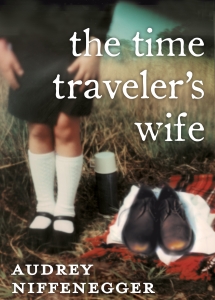
For those who do not know, The Time Traveler’s Wife is my favorite book. This is not hyperbole. I first read it approximately nine years ago, and I’ve never really stopped reading it. We have at least four print copies in the house: two U.S. editions, a limited edition with a cover by the author, and a U.K. edition (purchased during a semester abroad in Spain; I lasted about two months without a copy, then went to London and bought a new one at Paddington Station. First agenda item, before museums or anything).

I have also followed Audrey Niffenegger’s other work: her novel Her Fearful Symmetryher artist’s books and graphic novels, and recently her exhibit at the National Museum of Women in the Arts, “Awake in the Dream World.” 

TTW_zolaFor a long time, The Time Traveler’s Wife was not available as an e-book*, but recently it has become available from Zola Books, which sells platform-agnostic DRM-free e-books that work on all devices. (That bears repeating: platform-agnostic DRM-free e-books that work on all devices. How marvelous.) So of course I bought the e-book. I probably would have anyway, but I was (am) especially excited because this version had a new author’s note, and – and – a snippet of the sequel. Tucked at the end, after the permissions, are 18 (Zola says 25, but I counted, it’s 18) beautiful, magical, perfect pages – “Alba, Continued.”

*Here is Audrey in an interview with UR Chicago on the subject of e-books:

“…E-book feels like a misnomer. There’s nothing booky about it. It’s like when Gutenberg invented the printing press….What he was doing was imitating, as best he could, the handwritten word. Every time you get a new technology, it tries to kind of impersonate the old technology until everybody calms down, and then it can go ahead and progress and be whatever it is going to be. That’s the stage I’m waiting for, because I’m getting kind of grumpy with this thing that is trying to impersonate a book.”

But back to “Alba, Continued.” This is very much like, if you happen to be a Narnia fan, someone casually opening the door to the wardrobe and inviting you to step on in. Or if you are a Harry Potter fan, receiving a letter from Hogwarts (never mind that you aren’t eleven years old anymore). Or if you are a Philip Pullman fan, and you come across a window into Lyra’s Oxford. If all three of those things happened to me simultaneously, I could not be more excited.

Part of the excitement comes from surprise; unlike Narnia, Hogwarts, and Lyra’s Oxford, Henry and Clare’s Chicago was never part of a series; I never expected there to be any more of it. For years after the publication of TTW, the author said she was done writing about Clare and Henry and Alba. In an interview with Dear Author, she said,

“I wasn’t planning to write a sequel so this is still new to me. Joe Regal of Zola Books asked me if I had any Time Traveler’s Wife material that hadn’t been published; he was looking for something to publish with the e-book of TTW as an extra. I had nothing that would have made any sense to a reader, just notes and revisions. So I promised to write something new.

It was a funny experience, writing about Alba. I have always made a point of not imagining the lives of Clare and Alba and the other characters beyond the scope of the book, but when I tried to think about them many things came flooding in, as though I knew them already. The imagination is a strange thing, it often works best when you don’t watch it too closely.”

And so the wardrobe, when you least expect it, opens.

Neil Gaiman: “Fiction is the lie that tells the truth”

I have spent my whole life in the world of books. I was lucky; my parents read to me every night while I was growing up, from before I could talk until the night I took the book away and started reading it myself, because that was faster and I wanted to know what happened next.  I was lucky, and I took that luck and ran with it: I’ve spent the last six years officially in book world, first in publishing, now in libraries.

Over the years, I have identified a few heroes, here in Book World: these people are authors, yes, but they are also, variously, library advocates, booksellers, privacy experts, generous public speakers, tirelessly creative, funny, kind, intelligent, empathetic. (At least, they are all of these things as far as I can tell.)

The-Library-Book-154x250_largeI’ve written about them all here before: Cory DoctorowAnn Patchett, and Neil Gaiman.  But the latter has gone and given another brilliant talk, so I must write about him again. An edited version of this talk, which Gaiman gave for The Reading Agency, was published in The Guardian. (Not coincidentally, The Reading Agency is the organization that The Library Book – not the easiest title to find, but well worth it – was published in aid of.)

In his “impassioned plea” to support libraries and librarians, Gaiman spoke about the importance of literacy, and the role of fiction in fostering literacy. Fiction, he said, “is a gateway drug to reading.” He said,

“The simplest way to make sure that we raise literate children is to teach them to read, and to show them that reading is a pleasurable activity. And that means, at its simplest, finding books that they enjoy, giving them access to those books, and letting them read them.

I don’t think there is such a thing as a bad book for children. Every now and again it becomes fashionable among some adults to point at a subset of children’s books, a genre, perhaps, or an author, and to declare them bad books, books that children should be stopped from reading. I’ve seen it happen over and over; Enid Blyton was declared a bad author, so was RL Stine, so were dozens of others. Comics have been decried as fostering illiteracy.

It’s tosh. It’s snobbery and it’s foolishness. There are no bad authors for children, that children like and want to read and seek out, because every child is different. They can find the stories they need to, and they bring themselves to stories. A hackneyed, worn-out idea isn’t hackneyed and worn out to them. This is the first time the child has encountered it. Do not discourage children from reading because you feel they are reading the wrong thing.”

Banned Book Week is still fresh in many librarians’ minds just now; it’s when we encourage everyone to celebrate the freedom to read. Some kids want to read Batman comics, some want to read Calvin & Hobbes, some want to read The Lion, The Witch, and the Wardrobe or Pride and Prejudice or The Catcher in the Rye or Twilight or The Hitchhiker’s Guide to the Galaxy. Let them; it won’t hurt. And once they love reading, once they want to know what happens next, maybe they’ll discover new books and new genres – but they’re much more likely to pick up a second book if they liked the first one.

Gaiman also discussed the relationship between fiction and empathy, which has been studied and written about recently. (There are several links in this Banned Books Week post about censorship.) Gaiman explains just how prose fiction stretches the imagination in ways that film does not:

“And the second thing fiction does is to build empathy. When you watch TV or see a film, you are looking at things happening to other people. Prose fiction is something you build up from 26 letters and a handful of punctuation marks, and you, and you alone, using your imagination, create a world and people it and look out through other eyes. You get to feel things, visit places and worlds you would never otherwise know. You learn that everyone else out there is a me, as well. You’re being someone else, and when you return to your own world, you’re going to be slightly changed.

Empathy is a tool for building people into groups, for allowing us to function as more than self-obsessed individuals….Fiction can show you a different world. It can take you somewhere you’ve never been. Once you’ve visited other worlds, like those who ate fairy fruit, you can never be entirely content with the world that you grew up in. Discontent is a good thing: discontented people can modify and improve their worlds, leave them better, leave them different.”

So: fiction leads to empathy as well as literacy. And literacy “is more important than ever it was, in this world of text and email, a world of written information. We need to read and write, we need global citizens who can read comfortably, comprehend what they are reading, understand nuance, and make themselves understood.”

Where then is one to acquire all this nutritious and delicious fiction? The library, of course. But the library, unfortunately, is frequently under attack, less from outright anti-library sentiment than from a need to cut municipal, state, or federal budgets. This problem isn’t specific to the U.S.; it’s just as bad, if not worse, in the U.K. Closing libraries, though, is shortsighted in a society that, presumably, wants literate, engaged, imaginative, problem-solving citizens:

“Libraries really are the gates to the future. So it is unfortunate that, round the world, we observe local authorities seizing the opportunity to close libraries as an easy way to save money, without realising that they are stealing from the future to pay for today. They are closing the gates that should be open….We have an obligation to support libraries. To use libraries, to encourage others to use libraries, to protest the closure of libraries. If you do not value libraries then you do not value information or culture or wisdom. You are silencing the voices of the past and you are damaging the future.”

For most of his talk, Gaiman was speaking as a reader, but he is also an author (quite a prolific one). He spoke out powerfully about writers’ obligations to their readers – what to do and what not to do:

“We writers – and especially writers for children, but all writers – have an obligation to our readers: it’s the obligation to write true things, especially important when we are creating tales of people who do not exist in places that never were – to understand that truth is not in what happens but what it tells us about who we are. Fiction is the lie that tells the truth, after all. We have an obligation not to bore our readers, but to make them need to turn the pages. One of the best cures for a reluctant reader, after all, is a tale they cannot stop themselves from reading. And while we must tell our readers true things and give them weapons and give them armour and pass on whatever wisdom we have gleaned from our short stay on this green world, we have an obligation not to preach, not to lecture, not to force predigested morals and messages down our readers’ throats like adult birds feeding their babies pre-masticated maggots; and we have an obligation never, ever, under any circumstances, to write anything for children that we would not want to read ourselves.”

This single paragraph gets at the heart of reading and writing, fiction and truth. We have an obligation to write true things…when we are creating tales of people who do not exist in places that never were. Truth is not in what happens but that it tells us about who we are

My friend Kelly just co-wrote an article for the YALSA (Young Adult Library Services Association) blog that explores the common prejudice against fantasy and science fiction. She and her co-author make a strong case for these genres, and arrive at the same conclusion as Gaiman: “The way that we receive guidance from books is not a literal process. We are influenced by something much deeper in literature, which is the connections we share as humans and the ways in which some experiences are unique, and some are universal.” All fiction, whether it’s realistic or fantastical, stretches the reader’s imagination and builds empathy.

Gaiman’s final point – “We have an obligation never…to write anything for children that we would not want to read ourselves” – is important, too, and it explains why so many adults have not just lingering nostalgia for the books they loved as children, but a fierce love for them, and even an interest in reading them still. Many, many grown-up readers today are passionate about YA fiction (despite some others’ judgment on the matter); the people waiting for the library copies of Every Day by David Levithan, The Fault in Our Stars by John Green, Fangirl by Rainbow Rowell – not to mention the dystopian trilogies by Suzanne Collins (The Hunger Games, etc.) and Veronica Roth (Divergent, etc.) – aren’t all teenagers.

If all of this isn’t a strong enough argument for reading and libraries, check out Amanda Ripley’s The Smartest Kids in the World: And How They Got That Way I’ll give you a hint: their parents read to them.

National Novel Writing Month (NaNoWriMo)

Last year, on the last day of November, Dana Sachs published an essay in Publishers Weekly called “Doing 50,000 Words in 30 Days.”  The title of the article refers, of course, to National Novel Writing Month (NaNoWriMo), which started in San Francisco in 1999 and has grown and spread since then. Now there are participants all over the world – over 300,000 in 2012 – and hundreds of “write ins,” many at libraries.

NaNoWriMo2013bannerThe idea behind NaNoWriMo is simple: write a novel in a month. Specifically, write 50,000 words in 30 days. This works out to 1,667 words per day. (For reference, Sachs’ essay in PW is 750 words.) Admittedly, 50,000 words is pretty short for a novel – about 200 pages – but still, to write that much in a month is nothing to sneeze at, regardless of quality.

In fact, quality isn’t the point of NaNoWriMo. As Sachs writes, “Many writers…suffer from a gnawing perfectionism that can, at its worst, torment us over the placement of a single comma. Forget completing a first draft; perfectionists have trouble completing even a paragraph. NaNoWriMo forces us to ignore our incapacitating inner critic and keep going. The genius of NaNoWriMo is that it obliges us to (temporarily) lower our standards.”

After November, the writer has a working draft; s/he can edit, cut, amend, tinker, and add. The novel may eventually go into a drawer (or computer folder, more likely), may be self-published, may be published through the traditional process with an agent and an editor. No matter the outcome, it’s still an achievement: you’ve made something. And NaNoWriMo provides an encouraging community in which to make that something.

nano_12_new_Come_Write_In_Logo1Library literature has been full of buzz about MakerSpaces lately. Many libraries are re-envisioning their mission and redesigning their space. This is an old idea with a new label (“making” instead of “crafting”) and new technology (e.g. 3D printers). The library was never purely a place for consumption; people have always come to libraries to create as well as consume. And what better place to write (or “make”) a book than a library?

That’s why I’m pleased to be hosting Write Ins at the Robbins Library for the second year in a row. Are you a writer in the Arlington area? “Come Write In.” 

“The real secret is that anyone can write a book… Writing is for everyone, and this is your chance to scrawl your name across the page. By month’s end, you’ll have done that which many dream of, but never accomplish.” -Gennifer Albin, author of Crewel

“As you enter this month of writing, write for yourself. Write for the story. And write, also, for all of the people who doubt you. Write for all of those people who are not brave enough to try to do this grand and wondrous thing themselves.”  -Kate DiCamillo, author of The Tale of Despereaux and Because of Winn-Dixie

Google redesign: from one click to two clicks

Not a long post, just an observation. It used to be that when you had Gmail open, all your menu options for other Google tools (calendar, etc.) were listed across the top of the page, like so:

google_menuSorry the image is so small; click to enlarge, or perhaps Google hasn’t forced you over to the new look yet.

It was just one click to get to your calendar, drive, groups, etc. As an avid user of the calendar and drive features, this was handy for me.

Now, all those menu options are stored almost invisibly over in the upper-right-hand side of the page. You have to know to click on the icon that is made of of nine squares:

google_menu_squares

In what language does “square of squares” mean “menu options”? To me it looks like a waffle.

Now, instead of taking one click to open my calendar, it takes two clicks: one click on the squares, which opens up the following menu, and a second click to choose which feature to open.

google_menu_open

Aha! Here they are.

Why make these items harder to access, when the principles of usability call to minimize the number of clicks it takes to accomplish a task? I don’t know.

The number of clicks is the more annoying part of this, but the vague icon is also bothersome. This isn’t Google’s only vague icon, to be sure. There’s also this:

google_menu_stripes

Three horizontal bars. I know that’s an I Ching trigram, but what does it mean in a web browser?

Google Chrome users will recognize the above image from the upper-right corner of the browser. The light blue parallelogram shape opens a new tab; its location is indicative of what it might do, so that’s okay. Minimize, maximize, and close are all standard icons. Clicking the star will bookmark whatever page you happen to be on. Three horizontal bars…? Oh hey, here’s the menu we’re used to seeing all the way over on the left: save, print, find, settings, etc. (Let me tell you, this confuses the less tech-savvy library patrons no end, and why shouldn’t it? There is no natural mapping.)

Speaking of icons, I remember reading one or two excellent articles (with examples) in my Usability and User Experience class at Simmons, but they were either saved in Google Reader (RIP) or Delicious (to which I am trying to regain access). If I’m able to dig it/them up, I’ll post them here; meanwhile, feel free to share any links about good design in the comments.

Edited to add (10/8/13): Found it! Thanks to the responsive team at Delicious, I was able to access my old account. The article, from UX Movement about two years ago,  is called “9 Rules to Make Your Icons Clear and Intuitive.”

The Queen of Dinner Parties: in which I discover The Yale Book of Quotations

yalebookquotationsThe Library Link of the Day for September 30…you know, I’m having trouble even putting into words how delighted I was to read it (“Who Really Said That?” by Corey Robin in The Chronicle of Higher Education) and to find, as a direct result, The Yale Book of Quotations on the library shelf. I have always collected quotes – from books, from songs, from anywhere really. I am a magpie, and quotes are my shiny objects.

How, then, did I not discover The Yale Book of Quotations previously? I do not know. But needless to say that when I did find it, browsing through it was a purely joyful experience. (Book nerd. Yes. That has been established.) At last, I could find out whether Oscar Wilde’s last words really were “Either that wallpaper goes, or I do.” (Close enough: “Decidedly one of us will have to go.”) I could verify the wording of Clarke’s Third Law (“Any sufficiently advanced technology is indistinguishable from magic”) and discover that he also said, “How inappropriate to call this planet Earth when it is clearly Ocean” (1990).

I could be indignant that the lyrics of Eminem’s “My Name Is” and “The Way I Am” were included nearly in full, but there was only one quote from The Princess Bride (“Life is pain…anybody that says different is selling something”). Incidentally, you’d have to know that William Goldman wrote the book (and the screenplay) to find the Princess Bride quote, because the contents are organized alphabetically by author last name. (Would anyone look under Morgenstern, I wonder?)

For anyone who believes, as I do, that correct wording is important, and correct attribution is equally important, The Yale Book of Quotations is a goldmine. (“Oh, you’re going to be the queen of dinner parties,” my husband said when I bombarded him with my new discovery. “You won’t be able to take me anywhere,” I agreed.) With over 12,000 quotes in 851 pages (plus a keyword index that brings the total page count to 1067), this is one of those times when a book might just be better than the internet. Here are a few of its many gems:

“Mother told me a couple of years ago, ‘Sweetheart, settle down and marry a rich man.’ I said, ‘Mom, I am a rich man.'” -Cher, 1995

“When Tolstoy wrote that all happy families are alike, what he meant was that there are no happy families.” -Susan Cheever, 1991

“What America does best is to understand itself. What it does worst is to understand others.” -Carlos Fuentes, 1986

“Diplomacy is to do and say / the nastiest thing in the nicest way.” -Isaac Goldberg, 1927

“Gentlemen, include me out.” -Samuel Goldwyn, 1933

“You lose more of yourself than you redeem
Doing the decent thing.” -Seamus Heaney, 1984

[J. Cheever Loophole, played by Groucho Marx, speaking:] “I bet your father spent the first year of your life throwing rocks at the stork.” –At the Circus (motion picture) (1939) Screenplay by Irving Brecher.

[Responding to a fan’s request that he autograph a school chemistry book:] “Sure thing, man. I used to be a laboratory myself once.” -Keith Richards, 1994

[On looting after the fall of Baghdad:] “Stuff happens!” -Donald Rumsfeld, 2003

“A rattlesnake that doesn’t bite teaches you nothing” -Jessamyn West, 1979

“I myself have never been able to find out precisely what Feminism is: I only know that people call me a Feminist whenever I express sentiments that differentiate me from a doormat or a prostitute.” -Rebecca West, 1913

“It was in dealing with the early feminist that the Government acquired the tact and skillfulness with which it is now handling Ireland.” -Rebecca West, 1916

[Mother:] It’s broccoli, dear.
[Child:] I say it’s spinach, and I say the hell with it.
-E.B. White, New Yorker cartoon caption, 1928

“Our deepest fear is not that we are inadequate. Our deepest fear is that we are powerful beyond measure. It is our light, not our darkness, that most frightens us.” -Marianne Williamson, 1992 (frequently misattributed to Nelson Mandela)

I also wrote about this article and book on the Robbins Library blog.

Censorship and Invisibility

Barbara Jones, the president of the ALA Office for Intellectual Freedom (OIF), has written an excellent piece over at the Huffington Post. Here’s a short excerpt, but I encourage you to read the whole article:

“I am deeply concerned about the current deluge of removals of classic books from the American literary canon. I thought that, as a society, we had reached a consensus that the literary canon should represent diverse segments of U.S. society. Multicultural literary works are not being included because of some need for “political correctness.” They are included because they are excellent and have been acknowledged as such by countless awards for literary merit. Though books that deal with controversial topics may make some readers uncomfortable, such literature offers a vehicle for true learning and understanding.”

(Emphasis added.)

readbannedbooks2013As Rebecca points out in another great article on the Robbins Library blog (“Freedom to Choose”), “There’s great value in discussion, and books are, by far, the safest route into many of these discussions.” With a few exceptions, the books that get people up in arms are novels, not nonfiction. This only proves that fiction is powerful; that it engages readers’ imagination and empathy, allowing them to experience a time, place, culture, or situation that they might not otherwise be exposed to – or, if they are exposed to it, they may be unprepared.

A little over a year ago, I wrote about the power and importance of fiction (“The Gleam in the Dark”), citing “Your Brain on Fiction” by Annie Murphy Paul from The New York Times and “Why Fiction is Good for You” by Jonathan Gottschall from the Boston Globe. Those pieces are worth a re-read now, during Banned Books Week, to remind us all about the value of stepping into someone else’s shoes, and the magical power fiction has to let us do that.

booksthisishowtheywork


“Everyone has a different idea of what constitutes ‘appropriate content’”

There is lots of great Banned Books Week-related stuff on Twitter this week (#BannedBooksWeek), and today’s Library Link of the Day was an NPR segment from Tell Me More called “Could banning books actually encourage more readers?” (Answer: we hope so!) My favorite find via Twitter (so far, at least) is this post from Shoshana at the Brookline Booksmith. It was a good reminder that librarians aren’t the only ones fighting for intellectual freedom and defending everyone’s right to read; publishers and booksellers are in it with us. 

Shoshana wrote, “Everyone has a different idea of what constitutes ‘appropriate content.’ I’ve talked with a lot of parents about what’s right and what’s not right for their kids to read. Some parents want to avoid anything “scary.” Others ask about the The Hunger Games and relax as soon as they learn that although it’s about teenagers being forced to fight to the death, it doesn’t have any sexual content….What I love about the customers in our kids’ section, though, is that the question is pretty much always what’s appropriate for the particular kid in question, not what should be published or be on our shelves….People around here seem to get that what’s all wrong for one reader might be just right for another; even siblings have different levels of scariness tolerance or ability to understand difficult topics.”

She makes a great point: what is “appropriate” for one reader may not be appropriate for another (this is one of the reasons that putting ratings on books is a terrible idea). This is part of readers’ advisory, and it’s a great skill – as a bookseller or a librarian – to be able to talk with parents about what their kids are ready to read (or to talk directly with kids; I know an eight-year-old who didn’t feel ready to read Harry Potter when he was seven, but feels like he might be ready now).

Remember: Every reader his/her book, and every book its reader.


Banned Books Week 2013

bannedbooksweek2013banner

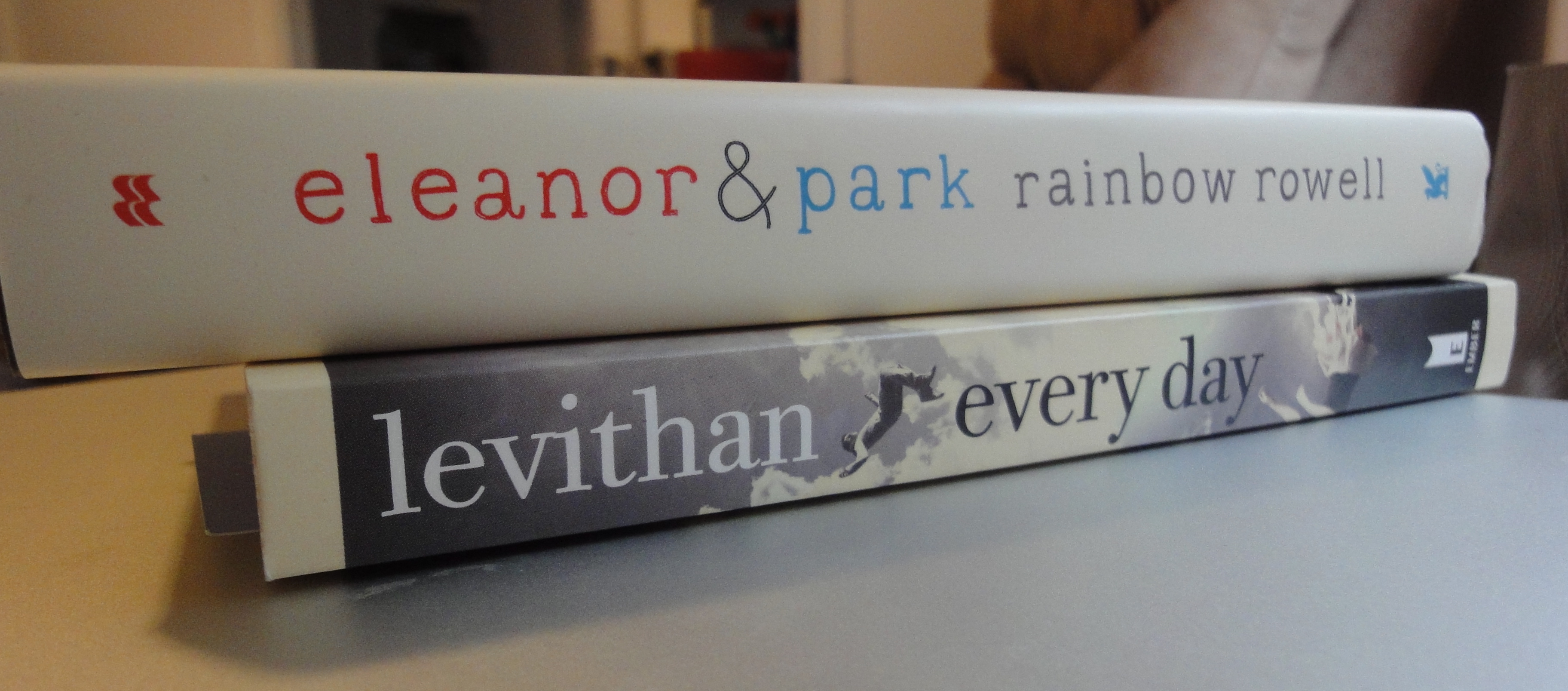
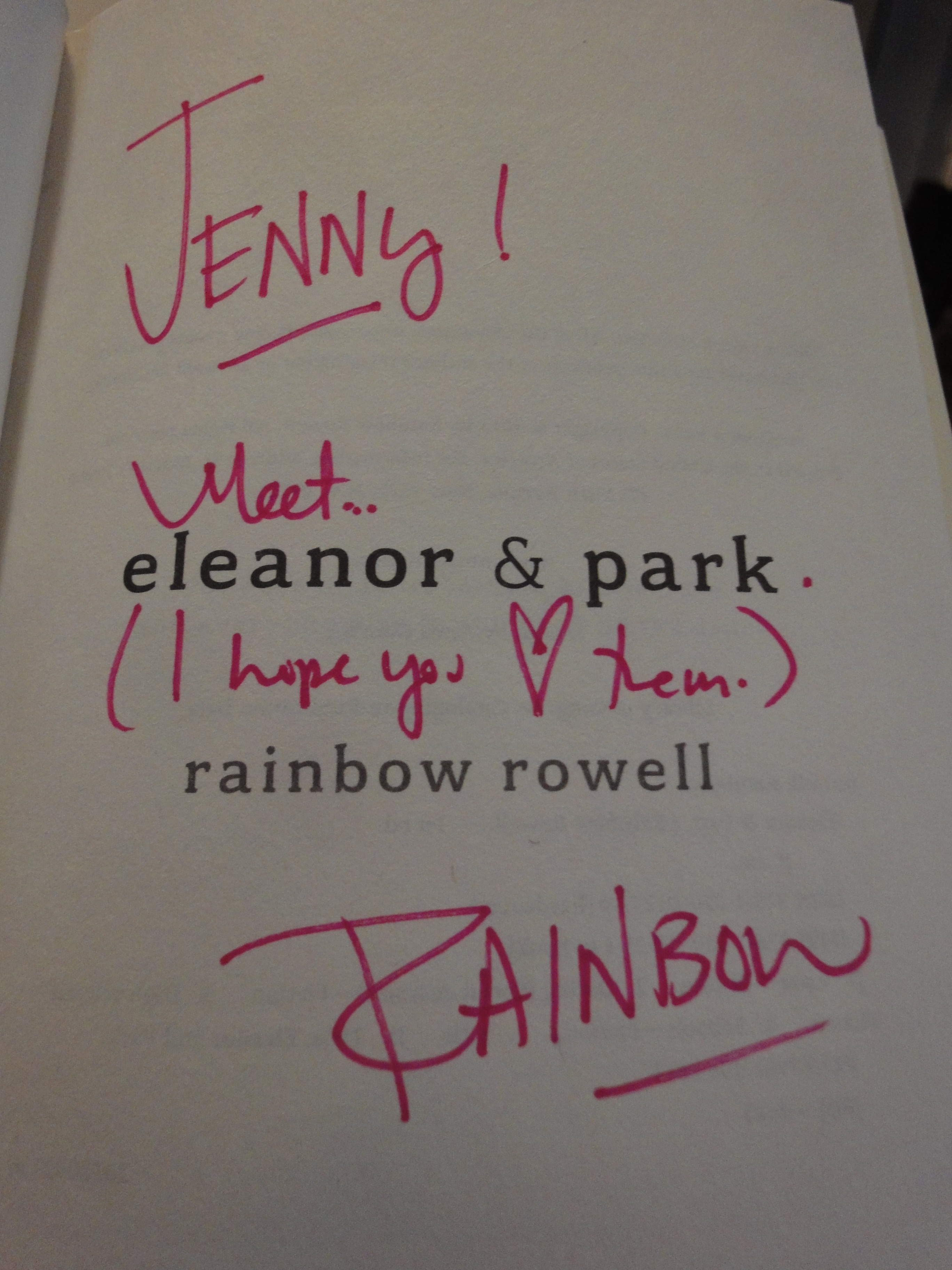
Banned Books Week is probably my favorite event on the calendar of library and literary events. It is a celebration of the freedom to read whatever you want, the freedom from censorship. It also provides encouragement to those who are still fighting for the right to read – those whose state Board of Education presidents want Toni Morrison’s The Bluest Eye out of the classroom, those who miss out on hearing Rainbow Rowell – author of the excellent Eleanor & Park – speak at their school or public library because a few parents in the community object to the swear words in the book. (Those are just two recent examples; read more about them in my Banned Books Week post on the Robbins Library blog.)

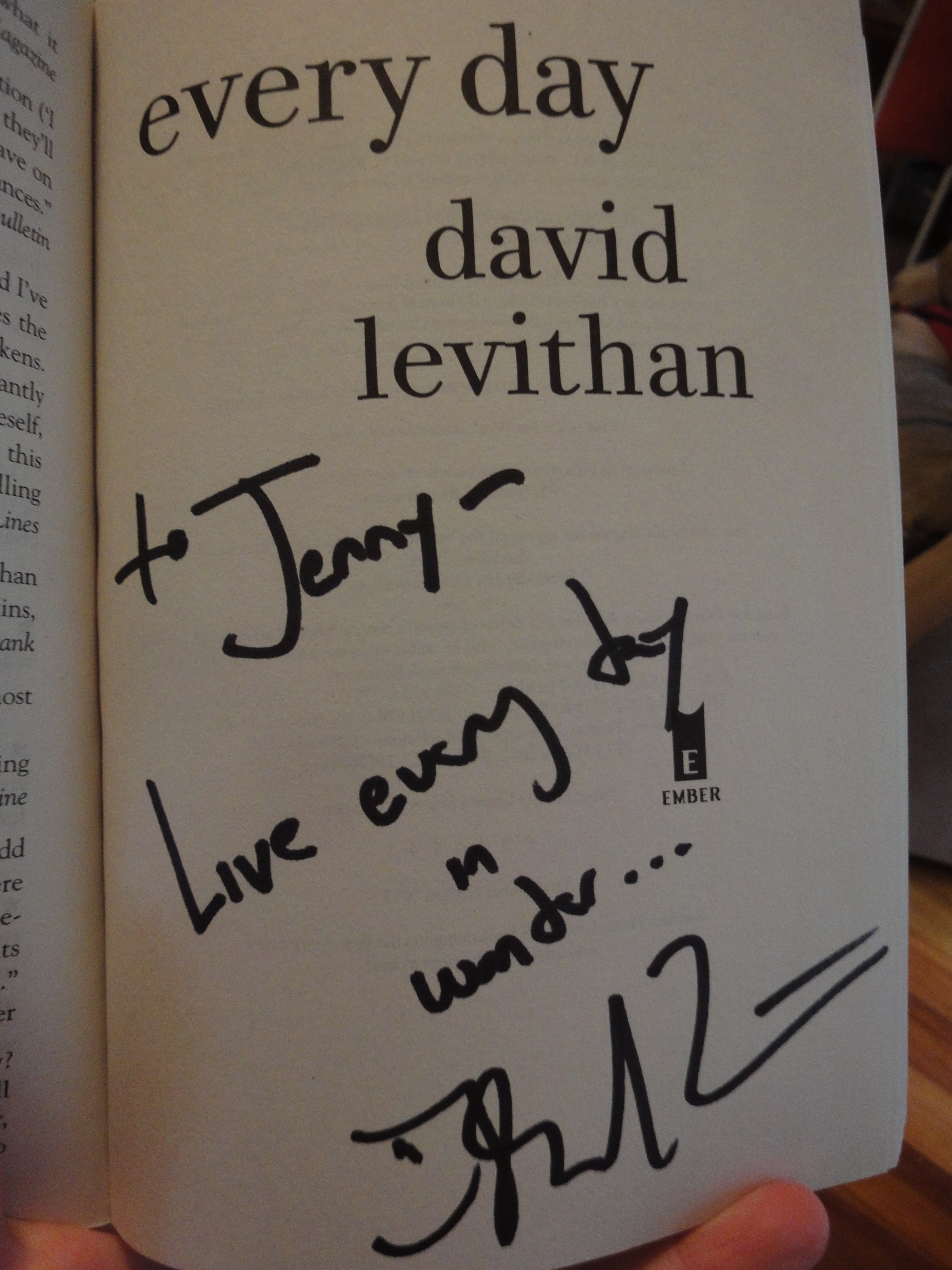
Last year for Banned Books Week, I wrote about which books were most commonly banned or challenged, and who did the challenging; I also shared a few of my favorite “better book titles for banned books.” Two years ago, less punctually, I shared a quote from Jenny Lawson, author of Let’s Pretend This Never Happened: A Mostly True Memoir (which I am certain has been challenged many times since its publication). Also in 2011, I wrote about attending the panel “Whose Common Sense?” at the ALA Annual Conference, where the four panelists (including David Levithan!) discussed why books for teens should not be labeled or censored.

Even if you don’t pick up a book this week, take a moment to appreciate the fact that you could, if you wanted, and that no one would try to control your reading choices, or keep something out of reach because they thought it was inappropriate. We should all get to make our own reading choices.

To close, I’ll quote my co-worker Rebecca, who authored a column for the local paper about Banned Books Week. She wrote, “There’s great value in discussion, and books are, by far, the safest route into many of these discussions (i.e., reading and talking about that book the deals with teen pregnancy is preferable to your teen talking to you about what it’s like to be pregnant).  Books are safe spaces to experience new things.  New thoughts.  New ideas.  Different points of view.  They are a way to journey back in time and careen far into the future.  Books teach us how to empathize with each other, how to stand up for the little guy, and how to recognize the bad guys in our lives….We experience strong emotion alongside our favorite characters – joy, catharsis, loss, excitement.  Books are a safe way to learn about life, without all the painful bumps and bruises.”

When the opportunity arises, stand up for your own right to read, and help defend others’ right to read as well. Books change lives – almost always for the good. What’s one book you read that changed your life? A book you’re glad you didn’t miss out on? A book you’d recommend to others? Here are a few banned/challenged books that I wholeheartedly love and recommend:

lookingforalaskaEleanorPark_cover2-300x450kiterunner

handmaidstale


Fall Titles: The Signature of All Things, The Lowland

This fall should be a good one for publishers and readers alike. Many beloved authors are coming out with new titles in September, October, and November, including Margaret Atwood (MaddAddam), Stephen King (Doctor Sleep), Amy Tan (The Valley of Amazement), and several others. I was lucky enough to read advance copies of two of these anticipated titles: The Lowland by Jhumpa Lahiri, and The Signature of All Things by Elizabeth Gilbert.

lowland First, and most eagerly awaited, The Lowland: a friend of mine who attended ALA in Chicago snagged a galley and generously let me borrow it. Lahiri (Interpreter of Maladies, The Namesake, Unaccustomed Earth) treads familiar ground with a story of an Indian family, some of whom move to the American Northeast, and some of whom stay behind in India.

Those who read the fiction section of The New Yorker may recognize the first several pages of The Lowland, in slightly altered form; it was published as “Brotherly Love” in the June 10 issue earlier this year. The brothers are Subhash and Udayan: the elder is cautious, the younger is reckless (“[Subash’s] parents did not have to worry about him and yet they did not favor him. It became his mission to obey them, given that it wasn’t possible to surprise or impress them. That was what Udayan did”).

Though the brothers grow up side by side, their paths diverge, with Udayan becoming involved in a dangerous political movement – the drastic consequences of which echo for decades after Udayan’s death and Subhash’s marriage to his brother’s widow, Gauri.

The narration is a close third person, shifting perspectives every so often, from Subhash, to Gauri, to their daughter Bela, to the brothers’ mother Bijoli, and finally to Udayan. Lahiri creates intensely believable characters in the Mitra family, and she covers a significant time span with her spare, beautiful prose.

The Lowland has been shortlisted for both the National Book Award and the Man Booker Prize.

signatureofallthingsThe Signature of All Things by Elizabeth Gilbert (Stern Men; Eat, Pray, Love; Committed) covers an even greater span of time, at a much more leisurely pace. For once, I could not agree more with the Publishers Weekly review, which is a marvel of conciseness. This thoroughly researched story begins with Henry Whittaker, a scrappy young thief whose father works at Kew Gardens. Henry eventually becomes one of the wealthiest men in Philadelphia, and his daughter, Alma, grows up on the family estate, White Acre.

Alma is given all the advantages Henry did not have, especially education; but, because she is plain (especially compared to her beautiful adopted sister, Prudence), she must resign herself to spinsterhood while Prudence and their mutual friend, Retta, both marry.

Alma devotes her time to business – after her mother Beatrix’s death, she is Henry’s right hand – and the study of mosses. Her life continues in this quiet, circumscribed, but more or less satisfying manner until the arrival of Ambrose Pike, an orchid artist. For the second time in her life, Alma falls in love, and she and Ambrose marry, but the marriage is not what either of them expected, and Ambrose leaves White Acre.

Soon afterward, the inimitable Henry Whittaker dies, and Alma decides, finally, to leave White Acre and travel. She follows Ambrose’s path to Tahiti, and after a few years there, makes her way to her mother’s homeland of Holland.

Gilbert incorporates her research into the story in a way that is natural, not distracting – a harder task than it appears. From beginning to end, she maintains control over the story and the characters; I was aware of the narrator’s voice and presence throughout the time I was reading. Perhaps this slight distance was the reason I did not feel the full emotional impact of admittedly dramatic events throughout Alma’s life. Still, this is a unique book, and an especially great choice for those who are interested in botany, science, history, or travel.

E-books in libraries

Cross-posted, in modified form, from the Robbins Library blog.

It’s a real struggle sometimes to refrain from prefacing the name Cory Doctorow with the phrase “my hero.” In addition to being an author (Little Brother and Homeland, among others), blogger, journalist, and the co-editor of Boing Boing, he is also a tremendous advocate for libraries. In particular, he often writes about the relationship between libraries and publishers.

Most public libraries have jumped on the e-book bandwagon, and have found some platform from which to lend e-books for patrons to borrow. However, these platforms are usually somewhat clunky (though they are improving), and publisher restrictions hamper what books libraries are able to buy and how we are able to lend them. Thus, for the most part, e-books work much the same way print books do: one person can use them at a time, and if more than one person wants to read a particular book, there is a waitlist.

The “one copy/one user” model, as it is called, is an artificial constraint put in place by the publishers, who require each e-book to come wrapped in digital rights management (DRM) software. DRM limits what readers can do with their e-books: an e-book with DRM will only work on certain devices, usually can’t be moved from one device to another, can’t be lent or shared, and can’t be copied.

Of course, publishers are correct to be concerned. E-books are new territory, and it’s much easier to copy a digital file than it is to copy a print book. However, as Doctorow points out, libraries are, and always have been, publishers’ greatest allies. Especially with the decline of brick-and-mortar bookstores, it is often librarians, not booksellers, who connect readers with new authors.

Here are a couple of paragraphs from one of Doctorow’s latest essays on the topic, but I encourage you to read the whole piece:

“There are libraries in every town, and even though they’re under terrible assault in the age of austerity, they remain the mark of a civilized society and benefit from librarians’ amazing organizational skills. The modern library has become something like a bookstore, where helpful staff who love books and authors take enormous pride in ‘‘hand-selling’’ the publishers’ products to their patrons. Libraries host some of the best author events, too, providing a vital space for readers and writers to connect.

Unlike every other channel for e-books, libraries are not the publishers’ competitors. They don’t want to sell devices. They don’t want to win over customers to a particular cloud. They just want readers to read, writers to write, and publishers to sell. They deserve a better deal than they’re getting.”

Librarians continue to push the conversation along, but meanwhile, we’re still buying (well, licensing) e-books for our patrons at unfair prices, under unfair restrictions. But it’s not all doom and gloom: some publishers, like sci-fi imprint Tor, are experimenting with DRM-free books, and so far that has not led to an explosion of e-book piracy, so perhaps more publishers will move in that direction.