The Day After

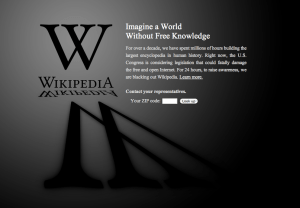
Here are several links regarding SOPA, PIPA, and yesterday’s blackout:

Columbia Law School professor Tim Wu pointed out the Web’s strength in this New York Times article, in which he was quoted as saying, “This is the first real test of the political strength of the Web, and regardless of how things go, they are no longer a pushover. The Web taking a stand against one of the most powerful lobbyers and seeming to get somewhere is definitely a first.”

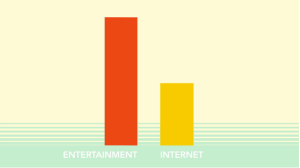
Political strength and economic strength are linked, and as the “Protect IP/SOPA Breaks the Internet” video notes, the “internet industry” now dwarfs the entertainment industry (most of Hollywood is for SOPA/PIPA, while most internet companies – including Google, Facebook, Wikipedia, and YouTube – oppose it). (See 2:48-2:57 – the yellow “internet” bar shoots skyward past the red “entertainment” bar.)

The American Library Association (ALA), which opposes SOPA/PIPA, put together this Quick Reference Guide (PDF), clearly delineating the basics and the structure of each bill. Read the District Dispatch in which ALA applauds the blackout.

Mashable offers a “read between the lines” deconstruction of the official White House response to two petitions (“Stop the E-PARASITE Act” and “Veto the SOPA bill”). The White House addresses legislative scope, non-legislative solutions, censorship and innovation, internet security and stability, and “demands of Congress a more intimate understanding of the Internet in general.”

Lastly, here’s a funny/poignant cover of Don McLean’s “American Pie” on TechCrunch.

SOPA/PIPA

As you may already be aware, today, January 18, a number of sites (including Wikipedia) are participating in a blackout to protest SOPA and PIPA – the Stop Online Piracy Act and the Protect IP Act. A few days ago I linked to a Digital Trends article with a good description of what both bills are and what they would do if passed.  The site sopastrike.com is also informative, though it’s a little overwhelmed with traffic today and may be slow. Here’s a video from Fight for the Future which is also clear and informative regarding what the bills are intended to do vs. the effect they are likely to have in reality.

It seems to be a case of “the road to hell is paved with good intentions.” Most can agree that online piracy is bad, and that intellectual property and copyright do and should entitle the creators of works to the proceeds from those works. “Stop online piracy” is a good goal, but SOPA will not be able to do this effectively. As is pointed out in the video, the government already has tools to regulate the internet: the Digital Millennium Copyright Act (DCMA, 1998), the Prioritizing Resources and Organization for Intellectual Property Act (PRO-IP, 2007), and the Anti-Counterfeiting Trade Agreement (2011).

What can you do? Read about SOPA and PIPA, educate yourself, and take action. There are a number of ways, from blacking out your own website if you have one, to contacting your representatives.


Education and Equality

I was going to call this “Nice Guys Finnish First,” but (a) it’s a bad pun, and (b) for those who don’t get the pun, it just looks like I’ve misspelled “finish.”

However, it seems to be true about nice guys, or at least nice countries: the Finnish education system (entirely public, by the way; there are no private schools in Finland) is overwhelmingly more successful than the U.S. one, primarily because it values cooperation over competition, responsibility rather than accountability, and equality over all. This excellent article in The Atlantic goes into detail: “What Americans Keep Ignoring About Finland’s School Success.”

By valuing equality in practice rather than just in speech, Finland has done what America says it wants to do: leave no child behind.

Searching for Context

Yesterday I attended Alison Head’s lecture “Searching for Context: Modeling the Information-Seeking Process of College Students” at the Berkman Center at Harvard. Head is affiliated with Project Information Literacy, and what she said about her research findings largely agreed with what I’d found through my User Instruction course last semester (though consulting the PIL reports would have been helpful at the time!).

Project Information Literacy (PIL) is an ongoing national study, including (so far) 11,000 students across 41 college campuses – community colleges as well as private and public four-year undergraduate institutions. Findings are not generalizable as the samples are voluntary, not random, but the methodology is sound (focus groups, surveys, content analysis, interviews) and the findings are certainly interesting.

Head’s presentation yesterday included four “takeaway points” from the PIL studies:

1. Students say research is more difficult for them now than ever before. Research – course-related and “everyday” – is a stressful process. Students must grasp the big picture, gather information, use appropriate language (search terms), and measure the information they find against their expectations. Unexpectedly, the PIL studies found that students were most likely to consult a librarian for help with search terms, rather than gathering information; also, the studies found that everyday, open-ended research questions were harder than research assignments.

2. Students turn to the same “tried and true” sources over and over again. Students use the same sources no matter what their contextual need is – whether it’s for an assignment or an everyday question, whether it’s for a science class or a literature class. Students reply on course readings first, then search engines, library databases, instructors, and Wikipedia; farther down the list is librarians. However, contrary to expectations, students use a hybrid model – they don’t search exclusively online, but also consult printed matter, teachers, and family and friends.

3. Students use a strategy of predictability and efficiency…as opposed to the librarian model of scholarly thoroughness. Students are risk-averse, preferring familiar resources, and placing a high value on currency (above other measures of quality, such as the publication, the author, etc.). Students say the most difficult step is getting started, then defining a topic, narrowing the topic, and sorting through irrelevant results. Seven out of ten students consulted Wikipedia, often as a “presearch” tool – to help with the big picture before really starting to research.

4. “Research and finding and using information is different than when you were in college.” Perhaps this was aimed at audience members who are no longer in their 20s; most everything Head described about PIL’s findings was relatively familiar to me. However, there has no doubt been rapid change: the amount of information available today is “staggering,” the level of connectivity is higher, there is a Web 2.0 culture of sharing, and expectations about information have changed. Group projects, for example, used to be objectionable to students because they did not want to share their work with others; today, group projects are still objectionable, but for different reasons – scheduling issues, personality conflicts, unequal contributions (not that these weren’t problems before as well).

To revisit takeaway #3 – this was much discussed in my User Instruction class last fall – librarians and faculty both can help alleviate student anxiety about research and improve their research strategies by providing clearer and more detailed guidelines in syllabi, assignment descriptions, and handouts. Head admitted that when she taught, she designed her syllabus largely based on that of her favorite professor at UC Berkeley; there is no class in a Ph.D. program where future professors learn how to craft syllabi and assignments.

On top of this, faculty tend to assume that students possess research skills already, when this is often not the case. High school research is different than college research, and students cannot learn all they need to know in one class session with a librarian during freshman year (some don’t even have the benefit of this). Ideally, professors’ assignment guidelines would include a description of what research means, how to do it, and what resources are available; they should point not just to library resources, but also to librarians. They should also discuss plagiarism – not just the standard warning that plagiarism is a punishable offense, but a description of what it is (it might seem obvious, but there are different levels – word-for-word copying, paraphrasing too closely, lack of attribution for others’ ideas).

Research does not have to be as stressful for students as it is. (Head gave an example of a professor who likened the research process to solving a mystery, complete with Sherlock Holmes analogy.) Librarians can reach out to both faculty and students; faculty can reevaluate their expectations of students’ research skills and craft their assignments accordingly; and of course, students can be more proactive in seeking help. But they’ll have to have a good reason to trade in their strategy of predictability and efficiency for a model of scholarly thoroughness.

Edited to add: There was an article on this topic in Inside Higher Ed in July 2010: “Assignments: Being Clear About What Matters,” by Barbara Fister.

The Importance of Spelling

An article in today’s Boston Globe covered a renewed interest in spelling; apparently, spelling has become “popular” again. Though many rely on spellcheck functions within word processing programs or e-mail, those can’t catch everything (and they often miss words that are spelled correctly but used in the wrong context – see The Oatmeal’s list of “10 Words You Need to Stop Misspelling”). Correct spelling may not be crucial in instant messages or texts, but it is still important in academic and professional contexts – and according to the Globe article, kids are eager to learn words in order to compete in spelling bees.

One interesting point the article raised was that maybe spelling hasn’t deteriorated; maybe it was always this bad, but it was less public. UC Berkeley professor and linguist Geoffrey Nunberg said, “People never knew how to spell…They kept it a secret unless you saw their shopping lists or Christmas letter. You didn’t see the comments they wrote on other people’s blogs. You didn’t see their own blogs. I think a lot of what is perceived as the decline of spelling is just that we see a lot more spelling by a much wider range of people than we used to.’’

Facebook and Privacy

On January 9, all Facebook users who haven’t already changed their profiles over to the new Timeline format will see their pages change anyway. As always with changes to Facebook, there have been mixed reactions, but Facebook at least ought to get credit for giving users a heads-up this time, instead of their usual MO (i.e., “it’s easier to get forgiveness than permission”).

Every time Facebook makes even a minor change is a good time to check your privacy settings (if you’re a Facebook user; not everyone is); with a major change like Timeline, definitely look at your privacy settings, because changes to the site mean changes to your privacy. Users can experiment with Timeline for a seven-day period before it goes live on the 9th – it’s not a bad idea to use this time not just to play around with the new layout, but also to see how the privacy settings have changed or been re-set. Unfortunately (intentionally?), these settings aren’t the easiest to manipulate or change, but it can be done.

And while you’re doing that, you might also reconsider what kind and how much personal information you share voluntarily – not just on facebook, but elsewhere on the internet. Geoff Duncan’s article in Digital Trends, “Why 2012 is starting to look like 1984,” is informative and sobering on the topic of personal privacy (or lack thereof). He also provides an excellent overview of the SOPA and PIPA bills (Stop Online Piracy Act and Protect IP Act, respectively), and this year’s National Defense Authorization Act (NDAA), which expands on the Patriot Act.

In a nutshell, it seems that whereas sharing personal information used to be an “opt-in” process, it’s now more “opt-out” – and sometimes you can’t.

Edited to add: While we’re on the topic of privacy, the Daring Librarian reminds us that it’s probably time to change all of our passwords. You may have dozens for all the different sites you go to; think about creating a formula so they’re easier to remember. (Here’s some more advice on password strength from xkcd.)

When Will There Be Good News?

Yes, I borrowed the title of a Kate Atkinson book for this post (although if you’re going to read her, I highly recommend Case Histories instead). It is now a full week into the new year (happy 2012!) and this is my first post; I have written others but they did not seem like the right ones with which to begin the year.

This morning, however, I read an article in the Boston Globe about a 13-year-old Massachusetts boy who contacted artists to create trees, which he would then donate the the nonprofit Reach Out and Read; the organization could auction off the artists’ trees at their annual fundraiser to raise money for early literacy.

Not only is this a cool idea, and an admirable (and successful) effort on the part of a teenage boy, but what really got to me was his quote at the end of the article: “Sometimes when people say they don’t like to read, the truth is they just haven’t found a book they like.’’ Sounds like a future librarian to me…

People just don’t make sense anymore

A brief round-up of mostly unrelated pieces of news/commentary:

In a blog post for the Harvard Business Review, Dan Pallotta discusses the problems of “abstractionitis,” “acronymitis,” “Valley Girl 2.0,” and “meaningless expressions” – in other words, people don’t use real words with real meanings anymore.

It would be great if there was Netflix for books…oh wait, there is! It’s called the library.

Borders employees take one last jab at Amazon, reminding customers of one advantage physical stores have over online ones.

Education and testing

Recently I have read several articles about various aspects of the education system in the U.S. Most people agree that our educational system is not wholly successful. However, that’s where the discussion about how to improve the system begins – and where the agreement ends. Everyone has a different idea about what success looks like and how to measure it.

Two recent articles in The Washington Post were critical of standardized testing. One describes the results (and implications) when an adult – a school board member – took the 10th grade standardized math and reading tests. The adult, to put it mildly, did not do well on the tests, and said, “It makes no sense to me that a test with the potential for shaping a student’s entire future has so little apparent relevance to adult, real-world functioning.” (Apparently this issue persists through higher education as well; employers are finding that college grads lack job skills.)

Another article cited the revolt of New York state school principals against students’ test scores being used to evaluate teachers. The most problematic part of this plan is that there has been no pilot testing. In an “open letter of concern,” the principals wrote, “We are very concerned…that at the state level, change is being imposed in a rapid manner and without high-quality evidentiary support. Our students, teachers and communities deserve better. They deserve thoughtful reforms that will improve teaching and learning for all students.”

After giving background and articulating specific concerns, they offer recommendations, one of which is, “Pilot and adjust the evaluation system before implementing it on a large scale. Any annual evaluation system should be piloted and adjusted as necessary based on field feedback before being put in place state-wide. In other words, the state should pilot models and then use measures of student learning to evaluate the model.”

Tests are an instrument of measurement; pilot tests are essential to ensure that the tests are measuring what they are supposed to be measuring. Furthermore, in the evaluation and assessment part of the research process, testing is only the “gathering data” step – but there’s no point doing assessment at all if you aren’t going to act on the results. Testing, in large part, confirms what we already know; what are we going to do about it?

An op-ed by Duke professor Helen Ladd and author of the Fiske Guide to Colleges Edward Fiske in The New York Times earlier this month cited the acknowledged and proven correlation between economic advantage and student performance. Federal education policy, they write, does not take this into account. Setting testing requirements will not help; supporting high-quality early childhood and preschool education programs will, they suggest.

There are a few takeaway points from all this. One: Standardized tests must be tested themselves before being used state- and nation-wide to assess student learning and achievement, or to assess teachers and principals. Two: There is little purpose in testing at all if the true problems are not going to be addressed, and if insufficient support is going to be given to solve these problems. And lastly: Education ought to prepare students for their adult life; it ought to arm them with higher-order thinking skills (i.e. application, analysis, synthesis, evaluation).


Amazon vs. Bricks-and-Mortar

It’s not even Amazon vs. the independent bookstores anymore; now it’s Amazon against any physical bricks-and-mortar bookstore that offers browsability, serendipity, and (hopefully) knowledgeable, informed, helpful staff who can make personalized suggestions tailored to your needs, likes, and dislikes.

Author Richard Russo wrote an op-ed in The New York Times on December 11 about Amazon’s competitive strategy of encouraging buyers to use its price check app in stores by offering credits to consumers, who then buy from Amazon instead of from stores. (It should be noted that while book prices can be checked with the app, they do not qualify for the promotion.)

Russo sent this news on to a number of other authors, including Scott Turow (president of the Authors Guild), Stephen King, and Ann Patchett. King called the strategy “invasive and unfair”; Turow suggested that it might not be “lawful” for Amazon to encourage consumers to go to a store solely to obtain pricing information without any intention of buying; and Patchett said, “I do think it’s worthwhile explaining to customers that the lowest price point does not always represent the best deal. If you like going to a bookstore then it’s up to you to support it. If you like seeing the people in your community employed, if you think your city needs a tax base, if you want to buy books from a person who reads, don’t use Amazon.”

Authors and bookstore owners and employees aren’t the only ones who object to Amazon’s price check promotion; Maine Senator Olympia Snowe said, “Amazon’s promotion – paying consumers to visit small businesses and leave empty-handed – is an attack on Main Street businesses that employ workers in our communities.”

Fortunately, it is not all bad news for bookstores. An “unusually vibrant selection” of books this season seems to have helped bookstore foot traffic and sales, which are up from this time last year. Former Borders customers are finding other bookstores, too. One bookstore owner in Seattle said, “What’s extraordinary about the books that are out there is that they’ve been so well written and such a pleasure to read. Maybe people have an appetite for nonfiction right now, just for some sort of grounding in reality.”

The book business is, as much as book lovers would like to deny it, a business, but Amazon’s price check app and promotion are “bare-knuckles” enough to leave a bad taste in one’s mouth. Before doing ordering all your holiday presents on Amazon, consider what you get for a few extra dollars at the bookstore: personal recommendations from people who read. Of course, the level of service stores offer varies, but if you’re in the Cambridge/Somerville area, I can recommend the excellent Porter Square Books in good faith.

And if you aren’t looking to buy, just looking to read, another great place to get a recommendation is your local library. 🙂