Ten Years of Reading

In the summer of 2007, I attended the Columbia Publishing Course. One of the tasks we had to complete before we started was to make a list of our ten favorite books. “My desert island, all-time, top-five” as Rob from High Fidelity would say, which means no separate lists for fiction and nonfiction, or children’s and YA and adult, just ten favorite, full stop. Naturally we all agonized over these and spent the first week discussing each other’s lists; it was a great icebreaker.

What does “favorite” mean? We each had different definitions. For me, it means I’ve read it (or listened to it) more than once. It means if I see it in a bookstore, I will reach out and touch its spine, even if I already have a copy (or more than one) at home. It means I’ve recommended it to others, probably many times.

It’s been a decade since that first list, and I wondered how different my list would look if I made it today. Which books on the original list would still be there if I made a new list? I’ve read a lot of books over these past ten years – 1,200 books is probably a low estimate – have any of them become favorites? And could I find the original list, to compare?

Turns out the answer to that last question was yes, because I may be a pack rat with a Depression-era mindset who saves kitchen string, but I am a highly organized pack rat; I found the list in less than fifteen minutes. Actually, what I found was a much longer list, divided into sections (children’s/YA and adult) with stars next to ten titles.

Favorite Books
May 26, 2007

Bridge to Terabithia by Katherine Paterson
The Face on the Milk Carton/Whatever Happened to Janie?/The Voice on the Radio by Caroline B. Cooney
The Boggart by Susan Cooper
The Bean Trees/Pigs in Heaven by Barbara Kingsolver
The Time Traveler’s Wife by Audrey Niffenegger
The Great Gatsby by F. Scott Fitzgerald
East of Eden by John Steinbeck
The Golden Compass/The Subtle Knife/The Amber Spyglass by Philip Pullman
The Brothers K by David James Duncan
Griffin & Sabine by Nick Bantock

The careful reader will notice that there are more than ten books on the list, because I used series to sneak extra ones in. I’m a little surprised at some of the books that aren’t there – A Wrinkle in Time, The Perks of Being a Wallflower – but a list of ten means tough choices.

[Note: This has been in my drafts folder for nearly a month, because I kept trying and failing to winnow my new list down to ten. But no one has set this assignment for me, and I have as much space as I like, so…fifteen it is!]

Favorite Books
Summer 2017

A Wrinkle in Time by Madeleine L’Engle
The Perks of Being A Wallflower by Stephen Chbosky
*The Golden Compass/The Subtle Knife/The Amber Spyglass by Philip Pullman
*The Bean Trees/Pigs in Heaven by Barbara Kingsolver
*Griffin & Sabine by Nick Bantock
*The Time Traveler’s Wife by Audrey Niffenegger
*The Great Gatsby by F. Scott Fitzgerald
The Magician’s Assistant by Ann Patchett
The Guernsey Literary and Potato Peel Pie Society by Annie Barrows and Mary Ann Shaffer
To A Fault by Nick Laird (poetry)
The Night Circus by Erin Morgenstern
The Likeness by Tana French
Greenglass House by Kate Milford
Station Eleven by Emily St. John Mandel
The Bone Clocks by David Mitchell

Honorable mention to Maggie O’Farrell, possibly my favorite fiction author I’ve discovered in the past few years without a book on this list.

What are your all-time favorite books? Are you made of sterner stuff than I, and able to keep your list to ten?

We Need Diverse Books

The most recent issue of Kirkus is a “diversity issue,” with about 40 pages of articles and essays that give different perspectives on diversity in literature. I’m still making my way through it, but I loved this quote from author Padma Venkatraman:

“Books are more than mere mirrors or windows; they are keys to compassion. And novels don’t just expose readers to differences, they allow readers to experience diversity. They allow us to live within another’s skin, think another’s thoughts, feel the depths of another’s soul. Novels transport, transform, and, most importantly, allow us to transcend prejudice. When we immerse ourselves in characters whose religions are different than our own, our empathy is enhanced. We move closer to embracing people of all religions.”

It reminded me a bit of the way Neil Gaiman talks about fiction (“Fiction can show you a different world. It can take you somewhere you’ve never been”), and what Caitlin Moran wrote in her essay “Alma Mater” about growing up in the library:

“The shelves were supposed to be loaded with books – but they were, of course, really doors….A library in the middle of a community is a cross between an emergency exit, a life raft and a festival. They are cathedrals of the mind; hospitals of the soul; theme parks of the imagination….They are the only sheltered public spaces where you are not a consumer, but a citizen instead.”

When Venkatraman writes about mirrors and windows, she is referencing Rudine Sims Bishop’s 1990 article “Mirrors, Windows, and Sliding Glass Doors.” Books that are mirrors reflect the reader’s self and own world back at them; books that are windows show the reader another person or people and world; books that are sliding glass doors allow the reader to “enter” another world.

The San Antonio Public Library page “Diversity in the Classroom: Building Your (Early Childhood) Library with Mirrors and Windows” has a video clip of Bishop from January 2015. In it, Bishop says, “Children need to see themselves reflected, but books can also be windows, so you can look through and see other worlds, and see how they match up or don’t match up to [your] own. But the sliding glass door allows you to enter that world as well, so that’s the reason diversity needs to go both ways.” She says that just as children of color need to see themselves in books, white children – who see plenty of themselves in books – need to see characters of other cultures, races, and religions as well, to provide a more accurate picture of the world as it is (“colorful”).

The #WeNeedDiverseBooks movement FAQ page cites an infographic produced by multicultural publisher Lee & Low Books (“About everyone. For everyone”), which used statistics from the Cooperative Children’s Book Center and census data. Although 37% of the U.S. population are people of color, only 10% of published children’s books contain multicultural content. Note that that includes books where the main character might not be a person of color, and it also doesn’t mean that the author was a person of color.

We Need Diverse Books virtual buttonWhere do we go from here? We need more diversity at all levels of publishing, in libraries, in schools, in the bookselling business. We need to write, publish, read, and promote diverse books; “multicultural books don’t sell” is no longer a valid argument, if it ever was. We need more stories about more different people and places. We’re getting there, but too slowly.

8/17/17 Edited to add:

As I made my way through the rest of the issue, I found two more quotes I wanted to share. The first is from Megan Dowd Lambert, an author, senior lecturer in children’s literature at Simmons, and Kirkus reviewer; she in turn is quoting Mary Robinette Kowel:

“It’s not about adding diversity for the sake of diversity, it’s about subtracting homogeneity for the sake of realism.”

Though our society is far more segregated than it ought to be, and some kids may rarely see people outside of their own race, culture, or class, the world is “colorful” and literature ought to reflect that. In fact, books are where many people encounter new ideas and perspectives and learn about the world. “Armchair traveling” isn’t just for seeing the lives of ancient royalty, dangerous mountain-climbing expeditions, or sea voyages; it may be a way to see into the next neighborhood.

“…Disability comes from scarcity and environment and other people’s prejudices as much as the body. Silencing the word can silence real injustices, emotions, and experiences. Diverse books are tools for empathy, but we can’t address what we won’t say.”

This is from Amy Robinson, children’s librarian and Kirkus reviewer. She makes an important point about environment contributing to disability. Are our built environments inclusive, or do they present barriers? (Do elevators work? Are aisles wide enough? Are there ramps or only stairs? Is signage large and clear? Are there curb cuts on sidewalks? Are sidewalks even or broken, covered in snow or cleared?) In many cases, a disability may only present extra difficulty because of obstacles in the world – in the built environment or as part of prevailing cultural and societal ideas. Let’s figure out what those obstacles are (it’s often very hard to imagine, so ask people who confront them) and start removing them.

Dewey Decimal visualization of reading

LibraryThing has introduced a new feature that enables its users to see their libraries broken down by Dewey Decimal categories.

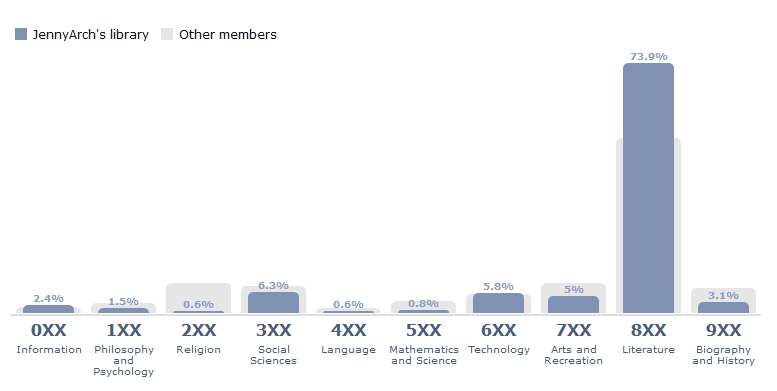
Screenshot of DDC overview of my LT library
Here’s the “top-level” view of my library. No surprise that nearly 75% of it is Literature (fiction and essays).

The purple bars on the chart are from my own LT library – which includes books that are on my “to-read” list as well as ones I’ve read – so these charts are not strictly a representation of my reading history, but a reflection of my reading interests overall. The pale gray bars represent the other members collectively; it’s clear that most LT users are overwhelmingly reading fiction as well.

I’m a little surprised that people aren’t reading more in nonfiction categories, particularly biography and history (and the 900s also include travel). I would guess that the LT user base includes more women than men, because – as a loose general tendency, not a hard-and-fast rule – when reading for pleasure, women tend to read more fiction, and men tend to read nonfiction. (Women also read more books than men.)

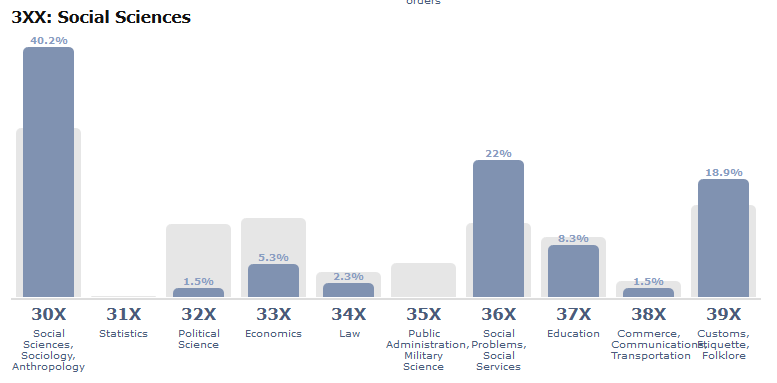
After the top-level breakdown, you can see the details within each range. For instance, here are the 300s:

Screen shot of 300s - Social Sciences - bar chart
The 300s are the Social Sciences, including political science, education, communication, etiquette, and folklore.

This new feature is mildly interesting to users, particularly those of us in the library field, but I wonder how it will inform future LibraryThing developments. Will knowing that most users are reading mostly fiction change anything about the site or service? The blog post announcing it doesn’t say.

Top Ten Tuesday: Favorite books I’ve read so far in 2017

I have yet to post one of these on a Tuesday, except by chance. Once again Linda inspired me with her list. Here are mine, listed from January (#1) to June (#10-11). Not only are there eleven instead of ten, I actually snuck (or sneaked, if you prefer) a couple extra onto the list using the “same author” justification.

  1. Waking Up White, and Finding Myself in the Story of Race by Debby Irving: This was one of the Arlington Reads Together candidates for last year, and I’m glad I finally read it – less because of the quality of writing (it was fine but not exceptional) or the format (workbook-type questions at the end of each chapter) than because of the messages about privilege, oppression, and how to work effectively for social justice. “Discrimination and privilege are flip sides of the same coin.
  2. The Wyrd Sisters and Dodger by Terry Pratchett: After years of other people indicating to me that I might really like Terry Pratchett, I read some…and I really like Terry Pratchett! The Wyrd Sisters was like Macbeth meets Oscar Wilde, and Dodger was pure fun (if you enjoy the details of the sewer system in Victorian London); I listened to the audiobook, and it was a splendid production.
  3. Talking As Fast As I Can by Lauren Graham: Having just watched the four Gilmore Girls reunion episodes, I was excited to read this, and it did not disappoint. I listened to the audiobook, which Graham reads herself of course, and it was just delightful; I was sad when it ended and wanted something just like it. (I ended up with Scrappy Little Nobody by Anna Kendrick, which was also good.)
  4. Pachinko by Min Jin Lee: A big, multi-generational novel that starts in 1910 and stretches into the late 1980s. I learned so much about Korean history, and particularly the difficult status of Koreans living in Japan (“For people like us, home doesn’t exist”).The Left-Handed Fate cover
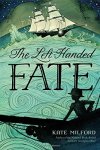
  5. The Left-Handed Fate and Bluecrowne by Kate Milford: I love Greenglass House so much and was thrilled to read a story even faintly connected. The Left-Handed Fate was a perfect historical adventure story with a touch of fantasy, and Bluecrowne provided a solid link between Fate and Greenglass. So satisfying.
  6. Pro: Reclaiming Abortion Rights by Katha Pollitt: If you’re anti-abortion, you’re unlikely to pick up this book, but if you do, it might change your mind or at least soften your position somewhat. If you’re already pro-choice, it will give you new angles to consider and strong ways to articulate your reasoning for your beliefs.
  7. The Lotterys Plus One by Emma Donoghue: I’ve read nearly all of Donoghue’s novels for adult readers, so I happily followed her into middle grade territory. The story of nine-year-old Sumac and her nontraditional (but normal to her) family celebrates diversity not by making a big deal out of it, but by making it seem like not a big deal. It’s realistic and funny and poignant.
  8. Gracious by Kelly Williams Brown: I should probably re-read this every six months or so. “There is one kind of thought that’s always useful and always gracious. That kind of thought is, “What can I do for someone else?” …This kind of thought makes the world, and you, a better place.”The Paper Menagerie cover
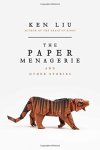
  9. The Paper Menagerie and Other Stories by Ken Liu: Someone in my book club suggested this, and I’m so glad she did. It’s long, and I had only intended to read the title story and a few others, but I read the whole thing. It’s an absolutely unique collection: stories are set in the past and future, alternative histories, on Earth and in outer space, and more. Liu has a tremendous imagination and a great gift for storytelling and character.
  10. Saints for All Occasions by J. Courtney Sullivan: This was as good as Maine, my favorite of Sullivan’s novels: a story of two sisters who come to Boston from Ireland in the 1950s, their diverging paths and stories, and how they come together again after a tragic event. Family secrets galore, and multiple perspectives, including those in the next generation.
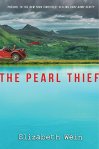
  11. The Pearl Thief by Elizabeth Wein: I devoured this novel about pre-Code Name Verity Julie in two days. It stands alone, but having already read Code Name Verity, it was especially wonderful to see Julie brought back to life, as it were, and at home in her native Scotland. She narrates in first person, which is a different perspective than the journal entries from Verity.

Have I interested you in any of the books above? What are your favorite books that you’ve read so far this year? What books are you looking forward to?

Board books for babies and toddlers

A friend with a four-month-old recently asked me for recommendations for board books for babies – not because she couldn’t find any, but because the selection in bookstores and libraries was overwhelming. Of course, I suggested she ask booksellers and librarians, who usually know exactly what book(s) to give to kids of every age, but here is my own list:

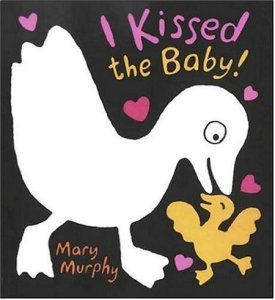
  • I Kissed the Baby by Mary MurphyI Kissed the Baby! by Mary Murphy: This is my favorite for little babies! It has the high contrast of Tana Hoban’s Black & White books, but also has repetitive, sing-song words and a touch of color.
  • Peek-a-Who? by Nina Laden: Another favorite for little babies, or kids of any age who still enjoy peek-a-boo.
  • The “That’s Not My….” series: These touch & feel books are thin on plot, but nice and tactile for when infants start reaching for the pages. They’ll start to remember where the different textures are on each page.
  • The BabyLit series: These board book versions of classics are a little silly, but a good introduction to the world of literature. We like Jabberwocky (though it’s not the complete poem), and Don Quixote, which is bilingual.
  • A Kiss Like This by Mary Murphy: Murphy’s books are sweet without being cloying. Again, this one has the repetition that kids love, and you can do the different kinds of kisses (gentle and tall, quick and small, etc.).Wow said the owl
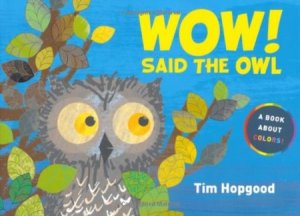
  • Wow! Said the Owl by Tim Hopgood: A little owl stays up all day and is wowed by all the colors she sees.
  • What a Wonderful World, illustrated by Tim Hopgood: Can you sing as well as Louis Armstrong? Give it a try! Or just read it.
  • Happy Hippo, Angry Duck: A Book of Moods by Sandra Boynton: Boynton is one of the queens of board books. I don’t love all of her books universally, but Happy Hippo, Angry Duck is just the right amount of goofy (and also teaches that moods change). Others of hers that I like are Hippos Go Berserk, But Not the Hippopotamus, Tickle Time, and The Belly Button Book.
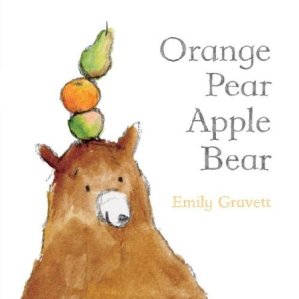
  • Orange Pear Apple Bear by Emily Gravett: Gravett’s watercolors are simple and charming. For babies who like single images on white backgrounds, this is a good choice; toddlers will enjoy the fruit and the bear.Orange Pear Apple Bear
  • I Dreamt I Was a Dinosaur by Stella Blackstone: These unique illustrations are made from felt, sequins, beads, and other craft supplies, and the text rhymes.
  • How Do Dinosaurs Say Goodnight? by Jane Yolen: A perfect rhyming goodnight book, this outlines all the bad behavior and ends with the good (“they tuck in their tails, they whisper ‘good night’…”).
  • All three of Chris Haughton’s board books: Oh No, George!, Shh…We Have A Plan, and Little Owl Lost. The first is my favorite but they all bear up well under endless repetition. The illustrations look like they were done in MS Paint, but don’t be put off.The Monster at the End of this Book
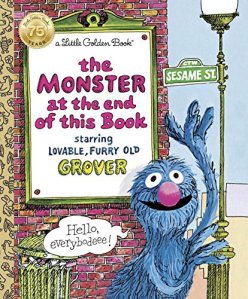
  • The Monster at the End of This Book (Sesame Street): Grover is frightened of the monster and implores the reader to STOP TURNING PAGES, taking more and more extreme measures…but it turns out the monster is not so scary after all. Great opportunity for dramatic reading here.
  • Hug by Jez Alborough: A baby monkey observes other animals hugging, then goes in search of its mommy for a hug.
  • Good Night, Gorilla by Peggy Rathmann: Should you get sick of Goodnight Moon, here’s an alternative featuring a mischievous gorilla and a clueless zookeeper.
  • Finger Worms by Herve Tullet: This book has holes in the covers and through the pages so readers can stick their fingers through to become part of the illustrations – very interactive! (Older kids will enjoy Press Here and Mix It Up by the same author.)
  • Mr. Brown Can Moo! Can You? by Dr. Seuss: Rhymes and sound effects, what could be better?
  • Dr. Seuss’s ABCs: The board book version is slightly abridged from the picture book version; both are good and include plenty of Dr. Seuss’s invented words.Chu's Day
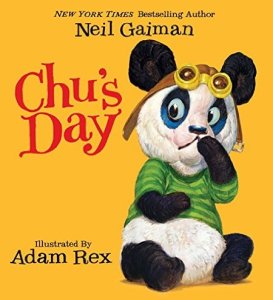
  • Chu’s Day by Neil Gaiman: This is a huge hit with my toddler (she also loves Chu’s Day at the Beach and Chu’s First Day of School). Fake sneezes are very entertaining! (See also: The Mitten by Jan Brett)
  • I Want My Hat Back and This Is Not My Hat by Jon Klassen: stories of hats stolen and retrieved, the implications are dark but babies won’t notice. Anything Jon Klassen and Mac Barnett write together is worth checking out; I love Extra Yarn.

Poems

  • My First Winnie the PoohClassic Mother Goose poems in board book form, such as The Real Mother Goose Board Book and Tomie’s Little Mother Goose (that’s Tomie dePaola, author/illustrator of Strega Nona).
  • My First Winnie the Pooh by A.A. Milne: short versions of the gentle poems we all know and love, including “The Engineer,” “Halfway Down,” and “Us Two.”
  • The Random House Book of Poetry for Children, compiled by Jack Prelutsky, is a collection that truly has something for everyone: poems short and long, funny and saccharine and sad, rhyming and not.

Read-aloud tip: “For infants, what book you read is less important than your enjoyment of it. If you have fun, baby will too!” (From my library’s pamphlet on Books for Babies, which also includes a book list by section: Board books, nursery rhymes, picture books, lullabies and songs, and poetry.)

Read-aloud tip: More often than not, the character(s) in children’s books is/are male. If this isn’t an important part of the story (e.g. the character is nameless), try using female pronouns some of the time. There’s no reason the default needs to be male.


Swooning over signage at the Medfield Public Library

It is a truth universally acknowledged that meetings are (a) boring, and (b) a waste of time. But! That is only true of poorly run and/or unnecessary meetings. I’m lucky that my presence is required at relatively few meetings on a regular basis: my department meets monthly (and we start off with a “lightning round” for everyone to share what they’re reading/watching/listening to), the network committee I’ve been on for the past four years meets quarterly, and those have been my only regularly scheduled meetings.

Now that my tenure on the network committee has come to an end, I’ve joined a new committee that meets every other month (and not at all in the summer, which I’m actually kind of sad about). This is a committee for library staff who plan programs at their libraries, so it’s a great way to gather ideas for programs and get contact information for good presenters. It’s also fun and interesting to hear what’s going on at other libraries, what’s working well and what isn’t. As a really excellent added bonus, most meetings are held at a different library each time, rather than our usual central meeting site, so it’s an opportunity to visit libraries I might not see otherwise.

That was the case with Medfield. “Enter, engage, enjoy,” their website says, and that’s exactly what I did. The staff let us in a few minutes before the library opened, and I darted around taking pictures of everything: their displays, their signage, their collection of “unusual items” to borrow, their seed library, their chalkboard, their amazing murals (not just in the children’s area!).

I created a Google album of all my photos, annotated with comments, but here are a few of my favorite signs, because signage is so important in communicating – not just information, but atmosphere and tone and mood.

Directional signage in main room near circ desk
Directional signage on the main floor, straight ahead from the entrance, near the circulation desk.
0530170953
On a computer table on the lower floor, this sign communicates that talking is allowed, and tells those looking for quiet space where they can find it.
0530170954
This sign in the teen space made me laugh. Check out a book to save it from extinction!
Study room door sign
This sign on a study room door tells users where to get the key.
Inside voices and walking feet
A sign in the children’s area asks for “inside voices & walking feet.”

I really think Medfield knocked it out of the park: their wayfinding/directional signage is helpful, their informational signage is concise and friendly, and they also use signage to draw attention to unique collections in clear ways. It’s also both consistent and tailored: the directional signage is the same throughout the building, with white (or off-white?) text on a gray background, but smaller signs in each area have some personality that’s appropriate to the area in which they’re located (children’s, teen, etc.).

And did I mention the murals?

TARDIS mural
A TARDIS mural in the stairwell
0530170952d
R2D2 on one of the study room doors

Do you frequent public libraries? What is some of the best signage you have seen?

Top Ten Tuesday: Books I was/am looking forward to

This list is a combination of two recent Top Ten Tuesday topics: most anticipated books for the second half of 2017, and books I’ve recently added to my to-read list.

The Pearl ThiefRecently finished or in-progress:

  • The Pearl Thief by Elizabeth Wein: I added this to my to-read list the instant I heard about it, and got a library copy as soon as it came out. It was a delight; I devoured it in two days. So lovely to see Julie (from Code Name Verity) again, at home in her native Scotland. With the first-person narration, her pride and courage are even more immediate, though the stakes are a bit lower this go-round, as she’s not a Nazi prisoner.
  • Holding Up the Universe and All the Bright Places by Jennifer Niven: I’ve been hearing good things about Jennifer Niven for a while now – the Not-So-Young-Adult book group at my library read All the Bright Places – so I finally picked up Holding Up the Universe on audio. I finished it on the way to a meeting at the Medfield Public Library at the end of May (more on Medfield later) and picked up All The Bright Places while I was there; I’m about halfway through now. I really like her writing: it reminds me of Cammie McGovern, Julie Murphy, and Rainbow Rowell.

Published recently(ish)

  • Ramona Blue by Julie Murphy: I loved Dumplin’ and was thrilled to learn about Murphy’s new novel; a co-worker has already read and liked it. I’m waiting for a library copy.
  • Girl in Disguise by Greer Macallister: I liked Macallister’s first novel, The Magician’s Lie, and the description of this one looks equally intriguing.Eleanor Oliphant
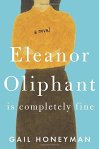
  • Eleanor Oliphant is Completely Fine by Gail Honeyman: How can you not want to read a book with this title? And it has a great cover. And it’s set in Scotland.
  • The Summer Before the War by Helen Simonson: Again, I’m cribbing my co-worker’s list; I too loved Major Pettigrew’s Last Stand and I don’t know why I didn’t read The Summer Before the War as soon as it came out.
  • Miller’s Valley by Anna Quindlen: I had this in my hand a couple months ago but didn’t bring it home on account of the already precarious height of my to-read stack. But I haven’t read Anna Quindlen in ages, this got great reviews, and the description is appealing.
  • Between the World and Me by Ta-Nehisi Coates: The word “essential” has been used in every review of this book that I’ve seen, and it’s a short book. There’s no reason I haven’t read it yet and I intend to read it before the end of the year.Life on Mars
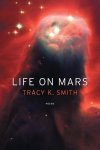
  • Life on Mars by Tracy K. Smith: I don’t pick up new poetry collections often, but she’s the new poet laureate, and this sentence from a review compelled me: “As all the best poetry does, “Life on Mars” first sends us out into the magnificent chill of the imagination and then returns us to ourselves, both changed and consoled.”

Not Yet Published

  • The Book of Dust by Philip Pullman, obviously. The first installment comes out October 19 (though I’m hoping to snag a galley before then) and is called La Belle Sauvage. There was already an extract in The Guardian.
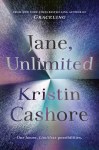
  • Jane, UnlimitedJane, Unlimited by Kristin Cashore(!!!): Just heard about this from a co-worker. Beyond excited for a new (standalone?) book from Kristin Cashore (Graceling).
  • Young Jane Young by Gabrielle Zevin: I’ve loved Zevin’s books in the past, and the Kirkus (starred) review said it’s pleasingly feminist.
  • The Runaways by Rainbow Rowell: I don’t read graphic novels or comics that much but I will follow Rainbow Rowell across genres and formats and anywhere else she goes. I want to catch up on the earlier volumes first, and Brian K. Vaughan’s Saga has also been on my list.

6/23/17 Edited to add: Turtles All The Way Down by John Green(!!!!!), coming October 10! And new E. Lockhart, Genuine Fraud, coming September 5.

MLA 2017: Charting Our Course, continued

This is part II of my recap of the Massachusetts Library Association (MLA) Conference on May 23. Read part I here.

Mind in the Making: Creating Play & Learn spaces at your library

Katrina Ireland-Bilodeau (Northborough Free Library), Mia Cabana (Jones Library, Amherst), Steve Fowler (Bellingham Public Library)

Mind in the Making (MITM) is an MBLC/LSTA grant that all three of the presenters’ libraries applied for and won; they presented about how they used the grants at their libraries. Mind in the Making: The Seven Essential Life Skills Every Child Needs is also a book by Ellen Galinsky of the Families & Work Institute.

MITM is an “effort to share the science of children’s learning with the general public, families and professionals who work with them” – including, of course, librarians. Why libraries? We already have engagement (parents bring their kids) and community partnerships (people trust libraries).

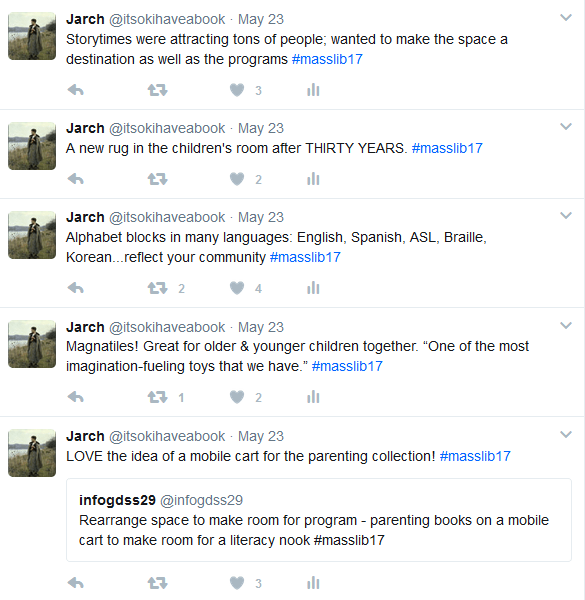
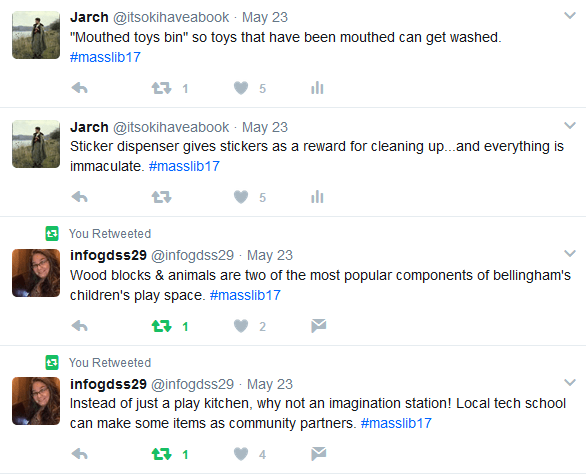
Katrina, Mia, and Steve all shared wonderful ideas they had implemented in their libraries, from making changes to the physical space, to buying new furniture and toys, to incorporating educational tips into storytimes and other children’s programs. Here are some of the ideas they put into action:

  • Repurpose under-utilized space
  • Refresh rooms with new carpets and paint
  • Define different play zones for different ages
  • Borrow ideas from children’s museums (the Fall River Children’s Museum was name-checked; I recently saw a “mouthed toys bin” at the Boston Children’s Museum)
  • Get new furniture and toys to fuel imaginative play
    • A “dramatic play center” can be a puppet theater, grocery store, bank, farmer’s market, doctor’s office, and more – rotate themes regularly
    • Train tables are always popular!
    • Lakeshore and Playscapes were mentioned, but if you don’t have a budget, look for donations or see if a local vocational school can build something that you can buy for the cost of the materials
    • MagnaTiles are “one of the most imagination-fueling toys” and good for all ages
    • Blocks and animal figures are a must-have. Get alphabet blocks in other languages – reflect your community
  • Incorporate play into storytimes
  • Label toy bins with pictures of the contents (for kids) and educational tips (for caregivers)
  • Make connections with other community organizations
  • Is a plain or ugly surface showing, like the back side of a shelf or desk? Cover it with felt and make a felt board. (Or make a chalk board or a magnetic board…)
  • Move underused collections around; one library put their parenting collection on a mobile cart so they can bring it in to children’s programs for caregivers to browse
  • Vroom cards were also mentioned (“Vroom turns shared moments into brain building moments”)

Screenshot of tweet about color maze

Screenshot of tweet about toys and research

Screenshot of several tweets about Mind in the Making

Screenshots of tweets from Mind in the Making session

As the libraries made the changes mentioned above, library staff saw changes in their children’s spaces: parents engaged with their children more, there was less arguing over toys, spaces were less messy because kids were better about cleaning up (“a place for everything and everything in its place” only works if everything has a place).

It’s not enough to get a bunch of new toys – there has to be intentionality. Librarians can model how to make connections between play and learning (for young children, play is learning) so caregivers can do the same.

YA Smackdown

During the “YA Smackdown,” about a dozen of us sat around on chairs and on the floor in one of the unused rooms at lunchtime. Prompts were pulled out of a box and anyone who had something to contribute spoke up. It was “a fun, low-key environment,” as promised. A comprehensive set of notes [PDF] are available from the MLA YSS wiki, so here is just a sample of our discussion from my notes:

Q: What’s the most successful Banned Books Week display you’ve done or seen?

A: (1) Covering book covers with brown paper and writing the reasons the books were banned on them (language, sex, violence, talking animals, etc.); (2) Making new book covers that illustrate the opposite of the book’s title (e.g. David Levithan’s Two Boys Kissing becomes Two Boys Not Touching At All).

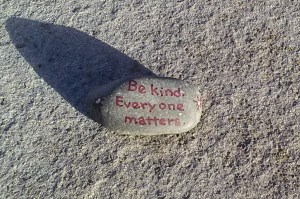
Kindness rocks: Be kind. Everyone matters.
I actually found one of the “kindness rocks” a few months ago!

Q: How do you encourage kindness?

A: Model it! Say hello to teens when they enter, goodbye and “hope to see you again soon” when they leave (even/especially if they’re being kicked out). Participate in the Kindness Rocks project, which leaves kind messages painted on stones for people to find. Don’t allow insults (“Did you mean that as an insult? You can’t say it”).

Q: How do you connect teens with community resources?

This can be tricky, but one good idea used by Mattapoiset is to create a binder full of resources in the teen area. They can look through it without checking anything out, and take copies of anything they might need.

Q: What’s your favorite part of the day?

Coffee! No, seriously, readers’ advisory – “let’s go browse” the shelves to find some books. When teens come up to ask questions. Ordering books, receiving and unpacking new books.

Q: Recommended books with good racial/ethnic diversity?

A: The Hate U Give by Angie Thomas, The Upside of Unrequited and Simon Vs. The Homo Sapiens Agenda by Becky Albertalli, the Ms. Marvel graphic novels, The Inexplicable Logic of My Life by Benjamin Alire Saenz, The Lotterys Plus One by Emma Donoghue (for tweens and up), The Sun Is Also A Star by Nicola Yoon, Midnight Riot by Ben Aaronovitch (first book in the Rivers of London series – for older teens and adults).

Step Into Your Office: The Library as a Coworking Space

Susannah Borysthen-Tkacz (Cambridge Public Library), Gregor Smart (Boston Public Library – Kirstein Business Library and Innovation Center), Patrick Yott (Northeastern University Libraries)

Susannah moderated this session, guided by the overarching question “Is coworking a novelty or a profound shift in how we do things?” Statistics indicate that more and more of the workforce is made up of entrepreneurs, “solopreneurs,” and nontraditional workers. How can the library best serve these people?

One type of place we can take inspiration from is paid co-working spaces, like Workbar, which offer physical space (sometimes with 24/7 access), open work space, desks, locking file cabinets and storage space, meeting rooms, phone rooms, mail, a dining area, event space, and access to the other members to create an instant network and encourage “accelerated serendipity.” Co-working spaces aren’t free, though, so many people may choose to work at the library instead.

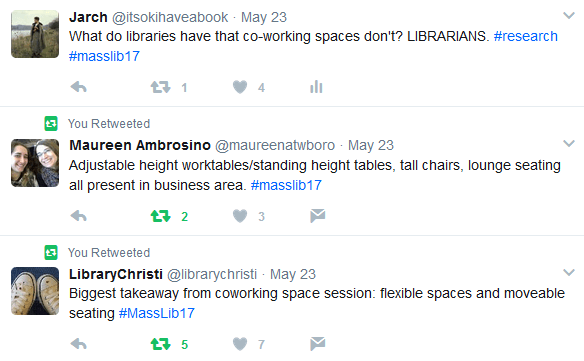
The library may not be able to offer all of the things that co-working spaces can, but we have one thing co-working spaces don’t: librarians. Most co-working spaces are unstaffed, and don’t offer research help or access to databases or other resources.

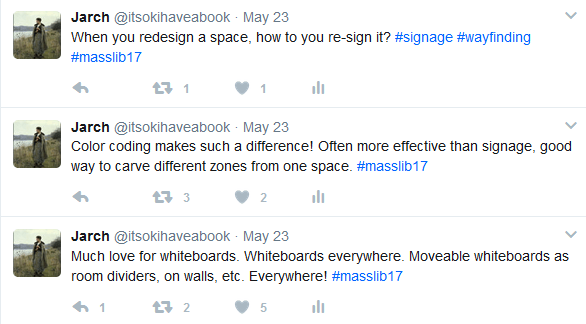
twitter-coworking2

Gregor and Patrick talked about the changes that have been made at Kirstein and Northeastern’s Snell Library, respectively. Gregor said that people want spaces for small meetings, webinars, learning languages, etc; it’s constantly a challenge to meet demand for collaborative workspaces. Both libraries use moveable screens (or, better yet, moveable whiteboards) so people can reconfigure the space as needed. Built-in alcoves are first-come, first-serve, while meeting rooms and work stations (Macs loaded with specialized software like Garage Band, PhotoShop, and Illustrator) can be reserved. Large event space can be rented.

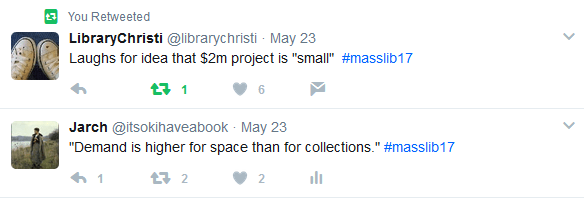
Screenshots of tweets about co-working spaces in libraries

Most libraries won’t have a budget for a major redesign like Kirstein and Snell, but there are ways we can serve those who are seeking space to work solo or collaboratively. In fact, “Demand is higher for space than collections” might be the theme of most of the sessions I attended at MLA this year, from “Transforming Teen Spaces” to “Mind in the Making” to “Step Into Your Office.”

Screenshot of coworking tweets

If there’s any space in your library that is under-utilized (and have you weeded your print reference collection yet??), see if you can carve out spaces with movable screens. If you are buying furniture, make sure it moves too. Consider: is your food & drink policy friendly to people who use the library for long stretches of time? What is your policy on cell phones? (On Wednesday, there was a session about Private Talking Spaces from the Harvard Library Innovation Lab. I am curious to know more!)

That was the last session of the day for me. I enjoyed reading tweets from the other sessions throughout the day and afterward; the conference hashtag was #masslib17 if you want to catch up via Twitter. Did you go to the conference? What were your most exciting/useful/important takeaways?


MLA 2017: Charting Our Course

Conference days are long and tiring, but energizing too: It’s great reconnecting with former colleagues, classmates, and other librarian acquaintances and friends from committee meetings, other conferences, etc., and sometimes putting a face to a name from e-mail or Twitter. (The official hashtag for the conference was #masslib17.) And of course, there are always plenty of new ideas to steal borrow and resources to consult.

This year I made the most of my one day of MLA, starting with an 8:30am session and including the “YA Smackdown” during lunchtime. Without further ado…the recap!

Why Don’t Patrons READ Library Signage? Graphic Design and Libraries

Presented by Larissa Farrell (YA) and Jessica Lamarre (Children’s) from the Duxbury Free Library, and Jed T. Phillips (Tech & User Experience) from the Ames Free Library

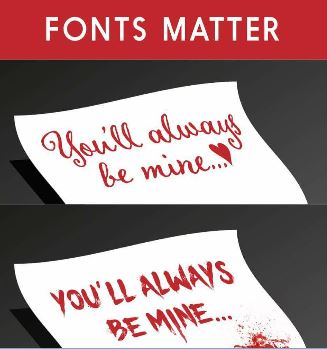
Fonts Matter example "You'll Always Be Mine" in two fonts
From the Duxbury presentation slides. Fonts matter!

This presentation was not about wayfinding signage, but about advertising and PR. Duxbury has a six-person marketing team, including one person from each department; they meet quarterly (at least) for some big-picture discussion, and work together to ensure a cohesive look across platforms (print, facebook, instagram, etc.). They suggested getting a mid-range digital camera that all library staff could use, to ensure a minimum photo quality.

The presenters explained pixels, resolution, file types, and hexidecimal (“hex”) colors, and then shared their favorite sources for free licensed fonts (fontspring.com, fontsquirrel.com) and copyright-free images (pexels.com, Google Creative Commons search, Canva, unsplash.com, pixabay.com, NASA, LOC, NYPL, Smithsonian). Remember, a picture’s worth a thousand words – but not clipart. (“Clipart is not ideal.” “Do not use clipart.”) Images, illustrations, and fonts will all begin to look dated over time, so if your library uses a template, consider refreshing your look every few years.

Screenshot of tweet: avoid comic sans and papyrus

All three presenters use the online design program Canva; libraries can get free business accounts that up to six people can use. In addition to Canva (and Canva Design School), other graphic design programs and software include Microsoft Publisher, Adobe Photoshop or InDesign, and classes through Lynda.com.

In addition to basic technical information and specific software recommendations, the presenters also discussed the principles of graphic design, and recommended Chip Kidd’s book Go: A Kidd’s Guide to Graphic Design, which I also recommend as both an intro and a refresher.

Screenshot of tweet: form after function. Hierarchy.

Additional takeaways: Make your entrance(s) welcoming. Remember that “Where is…?”-type signage can advertise your collections and services, as well as helping people orient themselves and find what they need.

Screenshot of a tweet: Clipart is not ideal.

Transforming Teen Spaces

Presented by Jennifer Forgit from the Cary Memorial Library in Lexington and Katrina Ealy from the Holbrook Public Library

While support for teen collections has grown in many libraries, spaces and programming haven’t necessarily. YALSA policy supports a space that is exclusively for teens (see YALSA’s Teen Space Guidelines). If you don’t have a dedicated teen space in your library, where do the teens congregate? Can you make that their space? Repurpose underutilized space or move things around. (Have you weeded your print reference collection lately? Really, really weeded it?)

In Lexington, Jen was part of a very long process culminating in a major shift that included renovation. “Lots of support means lots of stakeholders”: library director, staff, trustees, Teen Advisory Board (TAB), town facilities department, Friends, Foundation, architect, library patrons & donors. They were ultimately able to move adult fiction upstairs with the rest of the adult materials and create a teen space downstairs, on the same floor as the Children’s department, which made sense to most people: Jen said she encountered less resistance to change than she’d expected.

Both Jen and Kat recommended getting input from teens. Jen advised keeping your teens involved throughout the process: dreaming, planning, decision-making, fundraising, installation. Get them involved early. But don’t make promises you can’t keep. Get feedback on choices you already know are “safe” (e.g. furniture in your price range – but let them pick the color). Furniture and shelving on casters is a great idea, so the space can be reconfigured for different uses.

Screenshot of tweet: Teens love to sit on the floor. Get a cool rug.

Kat works at Holbrook now but presented about her former workplace, the South Yarmouth Library, which is a very small library in an old sea captain’s house. They were able to take over the Friends’ book sale room (“They made about five dollars a week”) to create a space for teens: they stripped old wallpaper and put on fresh paint, got a new rug and some furniture, and added cheap, cute decorations that can be replaced every so often. They didn’t have much of a budget – just enough to cover the rug and furniture – but “small changes can make a big difference.”

Once you’ve designated a teen space, post clear signage: Lexington’s Teen Space sign is about six feet tall and reads, “This room is exclusively for the use of library patrons who are in 6th-13th grade. Others are welcome to get books and other materials from the Teen Space, but please do not linger in the room.”

Advocacy tips:

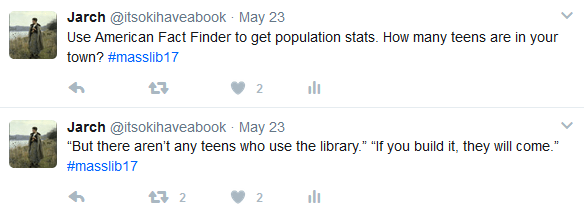
  • You can use American Fact Finder to look up population stats for your town. According to the 2015 American Community Survey, about 22.5% of Arlington’s population is 19 years old or under; nearly 10% are between 10-19 years old. That’s a not-insignificant chunk of the population.
  • The #1 reason teens try drugs is boredom (followed by anxiety and loneliness). We can help with that!
  • If someone objects, “But there aren’t any teens who use the library,” reply, “If you build it, they will come.”
  • Further resources: Teen Spaces: the step-by-step library makeover by Kimberly Bolan; VOYA’s YA Spaces of Your Dreams Collection edited by Anthony Bernier; and the aforementioned Teen Space Guidelines from YALSA.

Screenshot of two tweets about teen population stats from American Fact Finder and "if you build it, they will come"

Slides and notes from the Youth Services Section presentations are or will soon be available at the MLA YSS wiki. (Here is the MLA Conference 2017 link.) Stay tuned for my next blog post(s) on Mind in the Making, the YA Smackdown, and Step Into Your Office: The Library as a Co-Working Space.

Oh – and the Robbins Library Book Cart Drill Team finally won a much-deserved first place award! Watch the video.


Nonfiction by author

Cross-posted, with a few modifications, on the Robbins Library blog as “Nonfiction: Where to Begin?

Since finding out that the public library in Northampton, Massachusetts offers “YOUR NEXT GREAT READ LIVE!” – that is, live readers’ advisory on the Forbes Library Facebook page on Fridays – I’ve been interested in doing the same, and last month I just went ahead and started. If you follow the Robbins Library Facebook page, you might have seen these sessions from the past few Friday mornings. Some comments are quite specific, mentioning particular authors, titles, or genres; but once someone simply asked for “nonfiction.”

Nonfiction is…well, everything, really, that isn’t made up. It’s a category of reading that people tend to approach more by subject than by author. That said, there are several authors who turn out a book every few years in different interesting areas, whether narrative nonfiction or memoir/personal essays. I started brainstorming (with help from my brilliant, well-read co-workers, of course), and here’s what we came up with:

Narrative nonfiction

Local author Steve Almond has written about music (Rock and Roll Will Save Your Life), chocolate (Candyfreak), and football (Against Football: One Fan’s Reluctant Manifesto). In other words, something for everyone!

British professor and influential thinker Mary Beard’s most recent book is SPQR: A History of Ancient Rome. At over 600 pages, it may take you a while, but when you do finish, don’t worry – she’s written more.

Cover image of A Walk in the WoodsBill Bryson is well-known and well-liked; you’ve probably heard of (or already read) A Walk in the Woods – it’s the one with the bear on the cover – but he has many others, including A Short History of Nearly Everything. Bryson’s writing style is welcoming and witty.

Stephanie Coontz is a social historian and author of several books, including: Marriage, A History: From Obedience to Intimacy or How Love Conquered Marriage, A Strange Stirring: The Feminine Mystique and American Women at the Dawn of the 1960s, The Way We Never Were: American Families and the Nostalgia Trap and The Way We Really Are: Coming to Terms With America’s Changing Families.
Think you know (or remember) how it was in the ’50s? Think again.

Perhaps you are interested in letter-writing (To the Letter), fonts (Just My Type), maps (On the Map), time (Timekeepers), or a specific shade of purple (Mauve)? Simon Garfield is your man.

Cover image of The Checklist ManifestoBoston surgeon Atul Gawande is also a wonderful author, who writes with medical expertise and deep empathy, and is driven by a constant desire to improve. His most recent book is Being Mortal, but don’t miss his earlier ones: Better, Complications, and The Checklist Manifesto. (See also: Siddhartha Mukherjee.)

A staff writer for The New Yorker, Malcolm Gladwell made a splash with The Tipping Point in 2000 and has written four books since: Blink, Outliers, David & Goliath, and What the Dog Saw and Other Adventure Stories. If you’re interested in psychology and human behavior, give Gladwell a try.

Laura Hillenbrand‘s two books have been huge successes, and with good reason: they are fascinating stories, tremendously well-researched and compellingly told. Both Seabiscuit and Unbroken are very nearly un-put-down-able. Both have been made into feature films.

cover image of The Ghost MapI discovered Steven Johnson through his book The Ghost Map, about a cholera outbreak in London and how people figured out how the disease was spreading – and how to stop it. It’s like a mystery novel, except it’s real! Johnson has written several other books as well: The Invention of Air, How We Got to Now, Everything Bad is Good for You, Where Good Ideas Come From, and Wonderland. If you’re interested in innovation and discovery, past and present, try one (or more) of Johnson’s books.

Highly informative, not particularly cheerful: Elizabeth Kolbert wrote The Sixth Extinction: An Unnatural History, which won a whole slew of prizes, including the Pulitzer, in 2015; she is also the author of Field Notes from a Catastrophe: Man, Nature, and Climate Change (2007).

Mark Kurlansky writes about food and about history, often together (Salt, Cod). His most recent book is Paper: Paging Through History. Learn about the world through a new (fisheye?) lens.

One of the most prominent popular nonfiction authors, Jon Krakauer has written riveting stories of extremes: Into the Wild, Into Thin Air, Where Men Win Glory, Under the Banner of Heaven, and Missoula.

Cover image of Dead WakeErik Larson is another perennially popular nonfiction author, and with good reason: his well-researched books often use multiple narratives to tell the same story, enhancing the aspect of suspense through different perspectives. The pacing, particularly in his latest, Dead Wake: The Last Crossing of the Lusitania, is superb. His other books include The Devil in the White City, Isaac’s Storm, Thunderstruck, and In the Garden of Beasts.

Do you like extensively researched doorstoppers about historical figures? Allow me to introduce you to David McCullough, author of The Wright Brothers, 1776, John Adams, and several others.

In a starred review of The Emperor of All Maladies, Booklist wrote, “Apparently researching, treating, and teaching about cancer isn’t enough of a challenge for Columbia University cancer specialist [Siddhartha] Mukherjee…” and indeed, his “biography of cancer” won the Pulitzer Prize in 2011. Those interested in science and history should pick this one up, and try Mukherjee’s more recent book, The Gene: An Intimate History as well. (See also: Atul Gawande.)

Michael Pollan is a well-known writer on the topics of food, nutrition, sustainability, and related issues. Try The Omnivore’s Dilemma, In Defense of Food, The Botany of Desire, or Cooked. Or, for a condensed version of Pollan’s guidance, Food Rules.
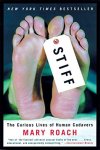
Cover image of StiffMary Roach‘s clever one-word titles (with the exception of Packing for Mars, which is three words, but still intriguing) encapsulate her sense of humor and scientific curiosity, and invite you to read on to learn more about human cadavers (Stiff), the afterlife (Spook), humans at war (Grunt), sex (Bonk), and digestion (Gulp). Who knows what she’ll write about next? But it’s sure to be interesting…

Neurologist Oliver Sacks wrote about the brain and how it (sometimes doesn’t) work. Check out The Man Who Mistook His Wife for a Hat and Other Clinical Tales (1998), Musicophilia: Tales of Music and the Brain (2007), or Hallucinations (2012). Sacks published his autobiography, On the Move, just four months before he died in 2015.

Rebecca Skloot has only written one book, but what a book: The Immortal Life of Henrietta Lacks will have a lasting impact. Tumor cells taken from an African-American woman without her knowledge in the 1950s became known as “HeLa” cells, the key to many scientific discoveries. Booklist says Skloot writes with “a novelist’s artistry, a biologist’s expertise, and the zeal of an investigative reporter.”

Dava Sobel is a former New York Times Science writer. Her most recent book is The Glass Universe try it if you liked Hidden Figures by Margot Lee Shetterly – but she has been publishing steadily every few years since Longitude: The True Story of a Lone Genius Who Solved the Greatest Scientific Problem of His Time in 1995.

Cover image of Far From the TreeIf you only ever read one 900+ page book in your life, there is a very good case for Far From the Tree by Andrew Solomon. (If 900 pages is simply too many for you, it’s worth reading the introduction, which is only about 50 pages.) Solomon writes about identity, particularly when a child has an identity that isn’t shared with the parent, such as deafness, schizophrenia, or musical genius. This book will expand your understanding of other people and increase your empathy. Solomon has also written The Noonday Demon, a book about his struggle with depression.

Interested in a bit of true crime, Victorian-style? The Suspicions of Mr. Whicher by Kate Summerscale is just that; detective Jonathan Whicher of Scotland Yard provided a model for many fictional detectives. Summerscale is also the author of Mrs. Robinson’s Disgrace: The Private Diary of a Victorian Lady and The Wicked Boy: The Mystery of a Victorian Child Murderer.

Cover image of The World Without UsEven wonder what would happen to Earth if all the humans just…disappeared? Alan Weisman takes that thought experiment and expands it into a book in The World Without Us, explaining what would last, what would crumble, and what would explode in a rather dramatic fashion. In 2013, six years after The World Without Us, Weisman published Countdown: Our Last, Best Hope for a Future on Earth?

From the seemingly tame subject of the Oxford English Dictionary (The Professor and the Madman; The Meaning of Everything) to the large and explosive (Krakatoa; A Crack in the Edge of the World), Simon Winchester writes “just the kind of creative nonfiction that elevates a seemingly arcane topic into popular fare” (Booklist).

Jeffrey Zaslow was a journalist for The Wall Street Journal and also an advice columnist. He wrote thoughtful, serious, tender books about women’s lives, including The Girls From Ames and The Magic Room, and co-wrote a number of other books, including The Last Lecture by Randy Pausch and Gabby: A Story of Courage and Hope with Gabrielle Giffords and Mark Kelly.

Personal experience/memoir/essays

Cover image of The Year of Magical ThinkingJoan Didion: There are too many books to list here, but try her memoirs, The Year of Magical Thinking or Blue Nights, or the collection We Tell Ourselves Stories in Order to Live.

Jonathan Franzen is better known as a novelist (The Corrections, Freedom, Purity), but his essays are both thoughtful and thought-provoking; he has the ability to make any topic (birdwatching; the postal service in Chicago) interesting. Try How to Be Alone, The Discomfort Zone, or Farther Away.

Elizabeth Gilbert: Probably still best known for Eat, Pray, Love, Gilbert has also written Committed: A Skeptic Makes Peace with Marriage and, more recently, Big Magic: Creative Living Without Fear. She is also the author of the novel The Signature of All Things.

Nick Hornby: In addition to writing novels and screenplays (e.g. High Fidelity), Hornby has written a decade’s worth of “Stuff I’ve Been Reading” columns for The Believer. They’re collected in Ten Years in the Tub.

Cover image of On WritingStephen King: King is best known for his novels, of course, but his book On Writing: A Memoir of the Craft is “a blend of memoir and craft” that makes for fascinating reading whether or not you ever plan to become a writer yourself.

Caitlin Moran: Colorful British feminist writer Moran wrote the hilarious bestseller How to Be A Woman, as well as essay collections Moranthology and Moranifesto. She is also the author of the novel How to Build A Girl.

Ann Patchett: Beloved novelist Ann Patchett brings the same wise, considered approach and deep understanding of people to her nonfiction writing. This Is The Story of A Happy Marriage is a collection not to be missed.

Cover image of The Happiness ProjectGretchen Rubin: The Happiness Project was a year-long personal project supported with research; it’s a memoir only a very “Type A” person could write, and may lead to other interesting academic reading. Rubin followed up the success of that book with Happier At Home and Better Than Before.

Cheryl Strayed: You know her as the author of Wild, but she also spent time as the advice columnist “Dear Sugar”; many of her columns were collected and published as Tiny Beautiful Things.

What are your favorite nonfiction books or authors? Which ones on this list are new and interesting to you?