Post-Thanksgiving, we had a big group again, with more than ten kids (plus baby siblings) at the beginning of our Step Into Storytime program for 2- and 3-year-olds. Given these numbers, we skipped the name song that we often sing after the hello song if there are fewer than ten kids.
I started off with a long-ish book, Toys Meet Snow by Emily Jenkins, because it’s one of my favorites and because we did have snow recently (and our craft was to do with snowflakes). It went okay, but may be better for a preschool group. The favorites today were (I think) Oh No, George! and Monkey and Me.
Snowflake craft: White butcher paper taped to the floor, die-cut snowflakes in light blue and dark blue, glue sticks, blue/purple/white/silver crayons, blue and gray markers. Nine kids stayed for the craft and a few stayed for a long time!
I had thought about reading Cub’s Big World after Toys Meet Snow, but I think I’ll save that for next week’s lead-off book, especially if we have snow between now and then. They All Saw A Cat and A Greyhound, A Groundhog are on deck too. Often the most successful books are the ones with some humor in them (like The Wonky Donkey and Grumpy Pants from last week). Do you have any favorite funny books for this age group? Please share!
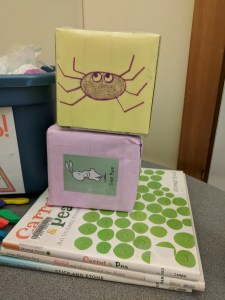
It was a cold rainy Monday the week of Thanksgiving, so attendance was a little sparse, but we had five kids in our target age range, plus two baby siblings, and we had a great time! I introduced my new creation this week: a yoga cube, made from the illustrations in the endpapers of Yoga Bunny by Brian Russo. I showed the book but didn’t read it, explaining that it’s a little long for two-year-olds. We tried out the yoga cube and it went really well – I brought it out three times during storytime and we did about three poses each time.
I also lucked out and found a big donkey puppet in the closet, so I used that to accompany my lead-off book, The Wonky Donkey by Craig Smith. Hee haw!
Hello song with ASL
Name song (including the grown-ups, as we only had six total bodies in the room at the beginning)
The Wonky Donkey by Craig Smith, with puppet. Definitely made at least one parent giggle.
Introduced the yoga cube and did three poses together
Grumpy Pants by Claire Messer: this one is a hit every time. It is just the right length for a group of 2-3-year-olds, and just the right concept too – sometimes you can be grumpy for no reason and just need a bath to cheer you up. (A nice cold bath, in Penguin’s case.)
Song cube: “If You’re Happy and You Know It, Clap Your Hands”
Carrot and Pea by Morag Hood: Another perfect book for this group, and a nice friendship story that emphasizes how difference can be good.
Yoga cube
I Feel Teal by Lauren Rille: I love this book, and it seemed to go over okay, but it may be that this age group doesn’t quite get linking colors and moods, they are still too literal (“I’m wearing green!”)
Song cube: ABC song
88 Instruments by Chris Barton: I hadn’t planned to include this one, it was one of my backup books, but the kids in I Feel Teal play musical instruments on one page of that story so my storytime kids got excited about that too. I pulled the jingly things out of the closet and we made some noise! The jinglers aren’t especially loud, which is good, because there aren’t good prompts built into the book to tell you when to make noise (you could jingle at every page turn, though).
Song cube: “Zoom Zoom Zoom, We’re Going to the Moon”
My Heart Is Like A Zoo by Michael Hall, with flannel board. I pointed to the flannel animals before starting the book and asked the kids to point or raise their hands when one of our flannel friends showed up in the book. It worked – with help from grown-ups.
Yoga cube
Roly Poly Pangolin by Anna Dewdney: This is a cute story about an unusual animal overcoming his shyness and making friends, plus it comes with a coloring sheet, so that’s what we did for our activity.
Goodbye song with ASL
Clean up mats, pass out coloring sheets, set out bowls of crayons
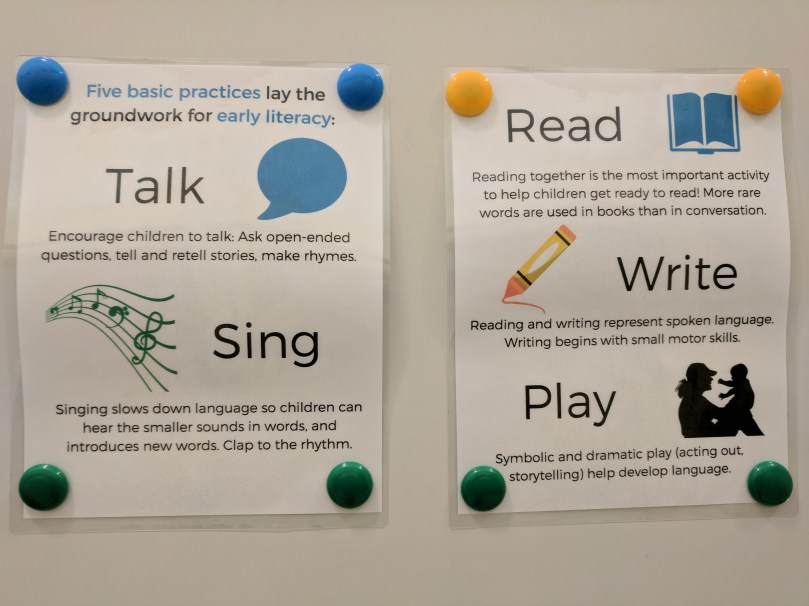
It was a rather dreary 50-degree morning and storytime was packed! There were at least 15 kids in the 2-3-year range, plus several younger siblings, including babies. We skipped the name song, but along with announcements, I pointed out the five early literacy practices that I always put up on the board – Read, Talk, Sing, Play, Write – and reminded caregivers and parents that doing those five things every day build the skills that will help kids learn to read.
Song cube atop today’s stack of books
Hello song with ASL
Sam and Dave Dig A Hole by Mac Barnett and Jon Klassen: This went over okay, but I think it’s a better one-on-one book, or maybe a better read-aloud for the preschool group. The illustrations are a bit subtle from a distance.
Song cube: “I Had A Little Turtle” – We had a lot of littler ones this time, and grown-ups were great about chiming in and singing.
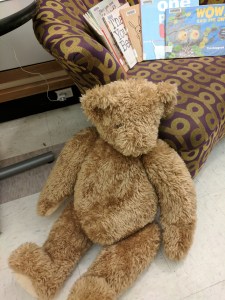
Where’s My Teddy? by Jez Alborough: This was a bit better, and I had a prop, thanks to a toddler who dragged in one of our larger stuffed bears.
“Head, Shoulders, Knees, and Toes” – Very good! Every kid knew the song and did the motions as best they could.
Handed out scarves for Have You Seen Elephant? by David Barrow, which has a hide-and-seek element. Again, this one might have been better for a slightly older group; it’s very good one-on-one, as the elephant is usually pretty obvious and the kids have fun pointing it out in each picture. Collected scarves.
Song cube: “Zoom Zoom Zoom, We’re Going to the Moon” – at least one kid was super excited about this song. I do it twice, in case it’s unfamiliar to anyone and they miss the countdown/blastoff bit at the end the first time through.
Thank YouBear by Greg Foley: Simple, sweet, and just right for this group today. Bear finds a box that he wants to give to his friend Mouse, which makes it a great segue into…
Not A Box by Antoinette Portis: Also just right for this group! Someone checked it out after storytime. (I always put all the books I read to the side so people can check them out afterward.)
Song cube: “I’m A Little Teapot”
One Pup’s Up by Marsha Wilson Chall and Henry Cole
Wow! Said the Owl by Tim Hopgood: This one is short and lends itself to being read with plenty of expression; it was pretty well received and a good one to end on.
Goodbye song with ASL
Clean up mats, put on music, dance in bubbles!
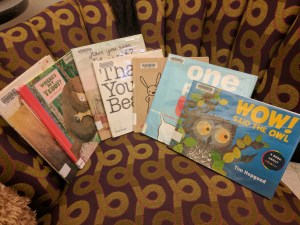
Sam and Dave, Where’s My Teddy?, Have You Seen Elephant?, Thank You Bear, Not A Box, One Pup’s Up, Wow! Said the Owl
Next week we’re closed on Monday for Veterans’ Day, and I’m hoping that by the week after that I’ll have my yoga cube ready to go so we can do some yoga poses in storytime. I also want to make sure I have a more diverse batch of books next time; I try to keep a 50/50 gender balance but today’s books were more by male authors.
Last week I was at the NELA annual conference and missed storytime, so I was happy to be back to it this morning, and we had a full house even on a very rainy day!
I’ve had Mem Fox’s Where Is The Green Sheep? as an alternate for a few weeks now, and this morning I quickly made a few flannel sheep to go with it. I also found a big stuffed sheep in one of our storage closets, and that generated a lot of excitement right away, so even before we sang the hello song I let any kid who wanted to come up and pet the sheep.
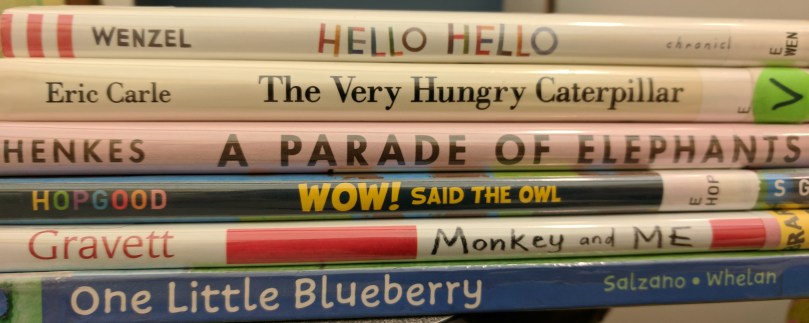
Hello Hello, The Very Hungry Caterpillar, A Parade of Elephants, Wow! Said the Owl, Monkey and Me, One Little Blueberry (not pictured: Where is the Green Sheep?)
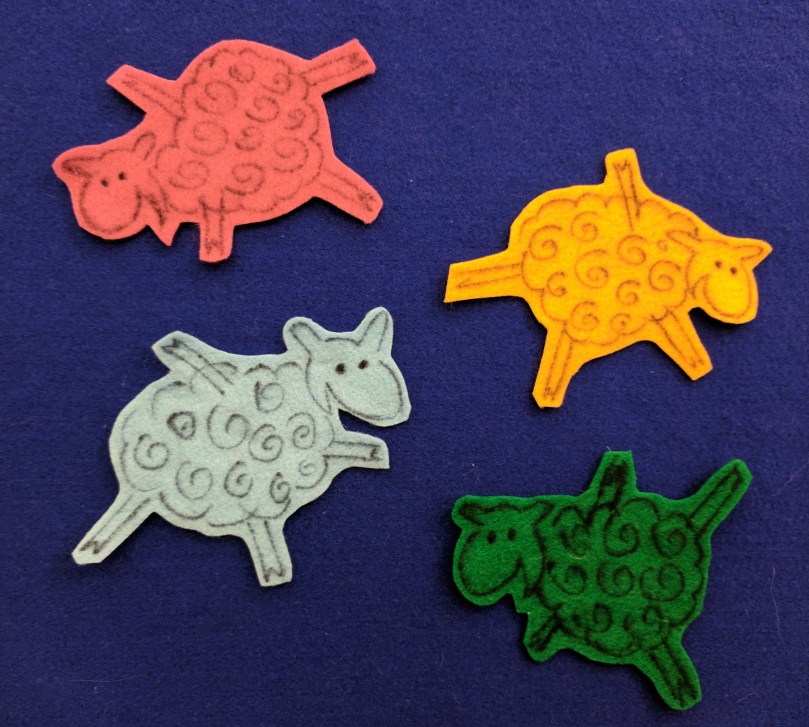
Felt sheep for the flannel board. I just put the pink, yellow, and blue ones out first, and stuck the green one on at the end of the book.
After our welcome announcements (keep the door clear, feel free to come and go as needed), we sang our hello song with ASL. Then we sang the name song; there were about ten kids at the beginning of our storytime (plus a brand-new baby, sibling to one of the kids), and a few went out but more came in throughout.
Hello Hello by Brendan Wenzel: I cannot overstate what a great first book this is. The text is so minimal, the pictures so bright and interesting, and so many opportunities for interactivity (e.g. waving arms like an octopus for “Hello bend”)
Song cube: “Zoom Zoom Zoom, We’re Going to the Moon”
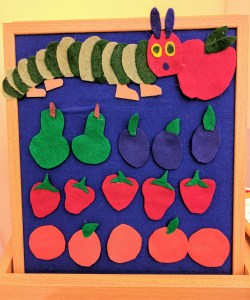
The Very Hungry Caterpillar by Eric Carle: I used the flannel board for this one, and had plenty of volunteers to remove the fruit as the caterpillar ate it. It was surprisingly orderly.
Song cube: “ABCs”
A Parade of Elephants by Kevin Henkes: Also such a great book for this age, with simple text but lots of opportunities for counting and movement; in the middle of the book we marched around in a circle (well, a circle-ish shape). Tie-in craft at the end!
Song cube: “If You’re Happy and You Know It”
Where is the Green Sheep? by Mem Fox, illustrated by Judy Horacek: I used the flannel board again, with four sheep I’d whipped up this morning before storytime started.
One Little Blueberry by Tammi Salzano, illustrated by Kat Whelan: I hadn’t set out to do a counting-theme storytime, but lots of today’s books were counting books. Another simple book with a surprise at the end.
Monkey and Me by Emily Gravett: This one has been a hit every time. I invite kids to stand up if they want to so they can do the animal imitations (waddle like a penguin, hop like a kangaroo), and when the girl and her monkey fall asleep at the end of the story, that quiets everyone back down again. Perfect.
Goodbye song with ASL
Cleaned up sitting mats
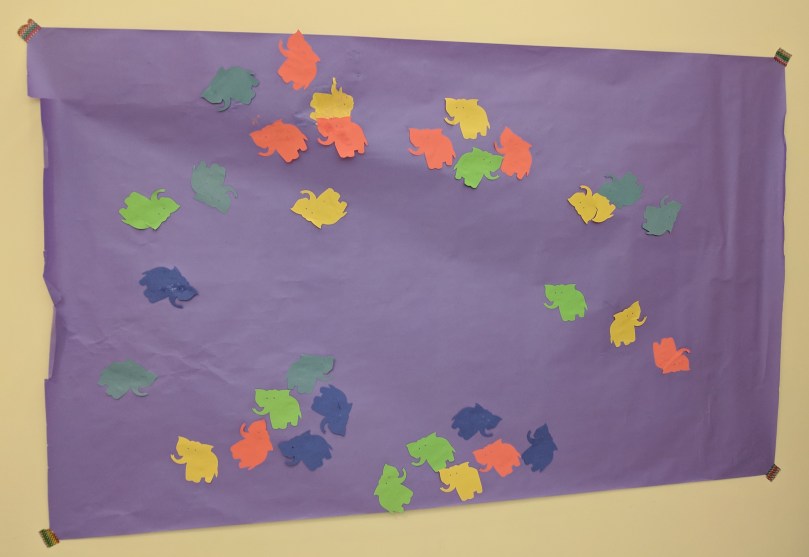
Taped purple butcher paper to the floor and put out glue sticks and paper elephants (also made this morning – thank you, die-cut machine!). I just let them glue the elephants down wherever they wanted on the paper, but with an older group, we could have made patterns with the colors, or drawn a line and had the elephants “march” along a parade route.
Our activity was gluing colored paper elephants onto a big piece of paper taped to the floor.
The New England Library Association (NELA) annual conference was in Warwick, Rhode Island this year, and it was a fantastic conference; all of the sessions I attended were worthwhile, and I saw lots of activity on Twitter (#NELA2018) to indicate that many other sessions were generating a lot of excitement as well. To top it off, the food was good, and the room temperature resembled neither saunas nor igloos. Well done, Rhode Island! Now, on to the sessions:
Monday, 9am: Finding Appeal Factors: Or What I’ve Learned from Being Twitter’s Resident Reader’s Advisory Specialist by Margaret Willison (@MrsFridayNext)
Willison had spoken the evening before about debunking the myth that “smart people like smart things and dumb people like dumb things.” Her presentation Monday morning was two-pronged: (1) how to learn to like what you don’t like (e.g. how to recommend horror if you don’t read/watch horror), and (2) cross-format recommendations (e.g. “I just watched ___, what should I read next?”). She talked about the need to step outside your natural tastes and build enthusiasm/information for other things; a great way to do this is to ask an articulate friend, and have them explain why they like what they like (not why you should like what they like). By discovering the appeal factors, you can build a common ground and work back. After all, “Just because something isn’t your cup of tea doesn’t mean you can’t understand why someone else likes it.”
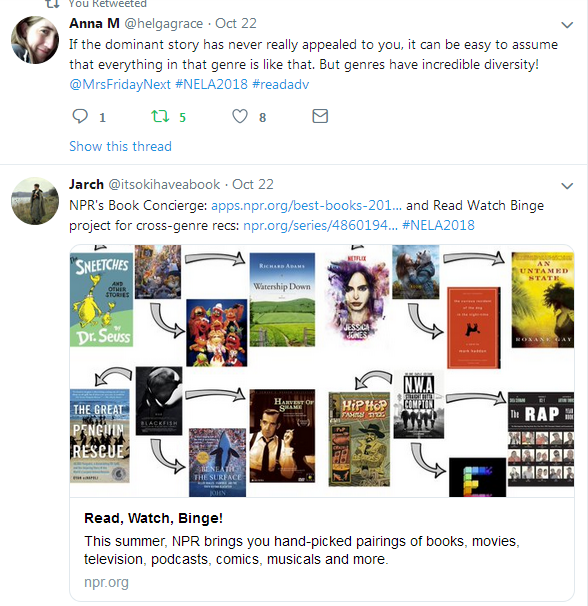
Willison did a live example with an audience member who reads the Jack Reacher books by Lee Child, finding out the appeal factors, making a “wrong” recommendation (a series of books that matched in character and content, but differed in tone). This can be done for music and movies as well as for books, and that’s where cross-format recommendations come in. See, for example, NPR’s Read, Watch, Binge series (and while you’re at it, check out their incredible Book Concierge tool, which they make annually; here’s 2017). Other resources are Goodreads, Smart Bitches, Trashy Books and The Ripped Bodice (for romance), The Criminal Element and Stop, You’re Killing Me! (for mysteries and thrillers), and the publisher TOR (for sci-fi and fantasy).
Monday, 11:30am: Sensory Storytime at the Public Library by Babs Wells, Maria Cotto
Shifting gears from adult readers’ advisory to children’s services, I attended two librarians’ joint presentation about sensory storytimes they offer at their libraries. Sensory storytime is geared for kids on the autism spectrum or with other developmental issues, though neurotypical children are welcome. Wells and Cotto strongly encouraged anyone thinking of offering a sensory storytime to use the book Programming for Children and Teens with Autism Spectrum Disorder by Barbara Klipper, and also pointed to an ALSC blog post that serves as a brief how-to guide. It’s important to be aware of community resources as well, to partner with and to spread the word. (If you’re in Rhode Island, Massachusetts, or nearby, check out The Autism Project.)
Wells and Cotto described their usual sensory storytime, starting with registration: not required, but helpful, especially if it gives the librarian a chance to talk with the parent/caregiver beforehand about any special needs their child might have. They might also want a “social story,” a one-page handout that can help prepare the child for a new environment or event; it can be read like a picture book. Once the storytime has begun, it’s helpful to have visuals for everything, to ease transitions from one activity to another (books, bubbles, songs, activities, etc.). Starting with a hello song is a good idea; the librarian learns everyone’s names (parents too!) and can roll a ball to each kid and have them roll it back. Cotto said she always has a felt board or a puppet, and stools or mats for kids to sit on, and things for them to hold in their hands and fidget with. “These kids need something that will capture their attention, they need something in their hands, they like to participate.” She only reads one book, something like Dog’s Colorful Day by Emma Dodd or The Deep Blue Sea by Audrey Wood. “Go with the flow,” she advised – much like toddler storytime. After the organized part of sensory storytime, it’s playtime: they bring out more activities – popsicle sticks with velcro on the ends so kids can make different shapes, sensory sand, water marbles (but not together!), dried beans with little treasures kids can find and scoop into a cup. This can be a time for parents and caregivers to socialize (they shouldn’t be socializing or on phones during storytime; they should be involved. “I get in everyone’s faces!” Cotto said). Be sure to give plenty of warning when the program is wrapping up: five minutes, three, one, goodbye!
Lastly, remember: “When you meet one child with autism, you meet one child with autism.”
Monday, 12:45pm: NERTCL Lunch with author Tracey Baptiste
The New England Roundtable of Teen and Children’s Librarians (NERTCL) had their annual business meeting over lunch and then invited author Tracey Baptiste (The Jumbies, Rise of the Jumbies) to speak. She tried out a new talk on us, “Creativity Under Pressure.” Here are my tweets from the session, which was probably less polished than one she’d given many times, but definitely interesting (and mark your calendars for the third Jumbies book next year!).
Monday, 2:15pm: Fake News or Real News? Helping Our Patrons Tell Fact from Fake, by Victoria Palmatier and Lisa Lipshires, Springfield City Library
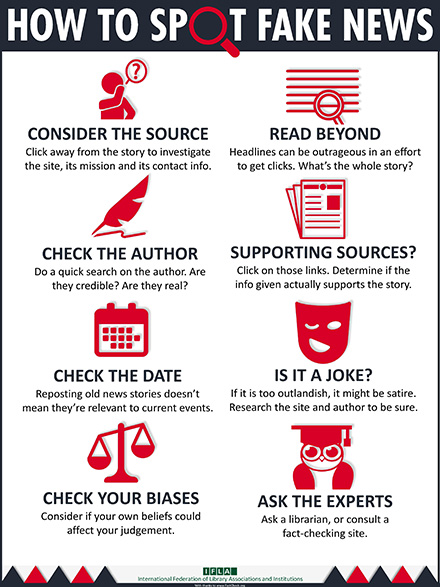
This is a topic I follow closely (See: Fake News a.k.a. Information Disorder reading list | “What is fake news?” informational handout (Creative Commons licensed) | Libraries in a Post-Truth World | Libraries in a Post-Truth World: The Conversation Continues), and the Springfield librarians’ presentation was very good, from their handout (a double-sided folded brochure called “Fake News? Real News? How to Tell Fact From Fake”) to their explanation of how they designed their workshop and what they’d do differently next time. They consulted two librarians and a journalism professor from UMass-Amherst as well as a local journalist, collected lots of resources for checking facts and photos (one I hadn’t heard of before was mediabiasfactcheck.com), suggested browser plug-ins (AdBlockPlus and Privacy Badger), and explained that in addition to checking a source’s bias, it’s necessary to check your own, especially if you’re having a strong emotional reaction to a headline.
Palmatier and Lipshires’ initial workshop was a lecture format followed by discussion, and they said that next time, they would offer a more hands-on approach in their computer lab. Another great idea they had was to have a copy of the day’s local paper for each workshop attendee, and then look at the local news online as well. They said that an in-person workshop makes the library and librarians seem approachable and legitimate, and as resources that can provide human connection in a meaningful way and make the world less confusing. (We all know we’re not going to change anyone’s mind on Facebook…)
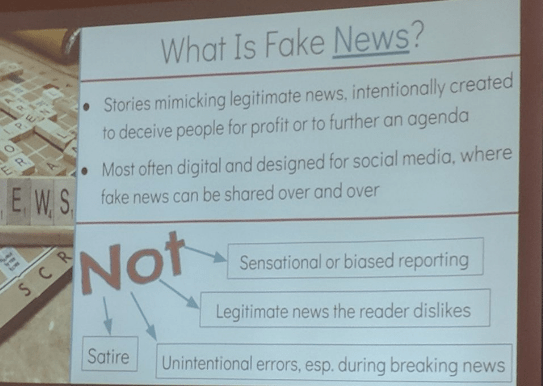
Presenters’ slide: What is Fake News?
Monday, 4:30pm (slightly delayed due to fire alarm): Great Expectations: Leaping from High School to College, by Sarah Hunicke (Portsmouth High School), Mary C. MacDonald (University of Rhode Island), and Marianne Mirando (Westerly High School)
There is a gap between what college and university professors expect in terms of research skills and information literacy and the students’ abilities in these areas. Because this year’s high school senior is next year’s college freshman, these three presenters worked together to examine what high school librarians (and high school teachers) can do to bridge the gap. College faculty expect students to be able to: 1. determine information needed to answer questions, 2. recognize information bias, 2. distinguish scholarly vs. popular, 3. understand the publishing cycle.
“Where do our students struggle?” Practice, Process, Assessment. “Where do our instructors struggle?” Assignment design (format vs content), Process (time commitment), Additional burden (grading). The two high school librarians who were presenting wanted to help teachers integrate information literacy into their students’ assignments without greatly increasing their grading burden. They each brought an example assignment from their schools, and we split into groups to come up with ways to do just that. In one case, it was as simple as adding a section on research quality to the grading rubric, and having the students hand in an annotated bibliography early in the process. Of course, librarians can also model searching library databases and online, showing students how to broaden or narrow searches as needed, and how to use keywords instead of natural language; if students see librarians working through problems (like getting no results, or too many results), they feel more confident to work through the same problems themselves.
Some teachers may not seek librarians’ help or even accept it when it is offered; however, the idea of “coaching” is big in K-12 education right now, so one approach librarians can take is to ask teachers, “If you’re not happy with your students’ sources/bibliographies, what can we do about that?” and work together.
And that was Monday! Stay tuned for Tuesday’s sessions: the ALA President’s “Big Ideas” speech, the First Amendment in libraries, Gregory Maguire, and the Ignite sessions (quick, 5-minute presentations on different topics).
Last week the library was closed for Columbus Day/Indigenous Peoples’ Day, so there was no storytime, but this week we were back in action! We started with seven kids, mostly on the younger side of our range, but as usual, more trickled in throughout and we probably had more than 10 altogether.
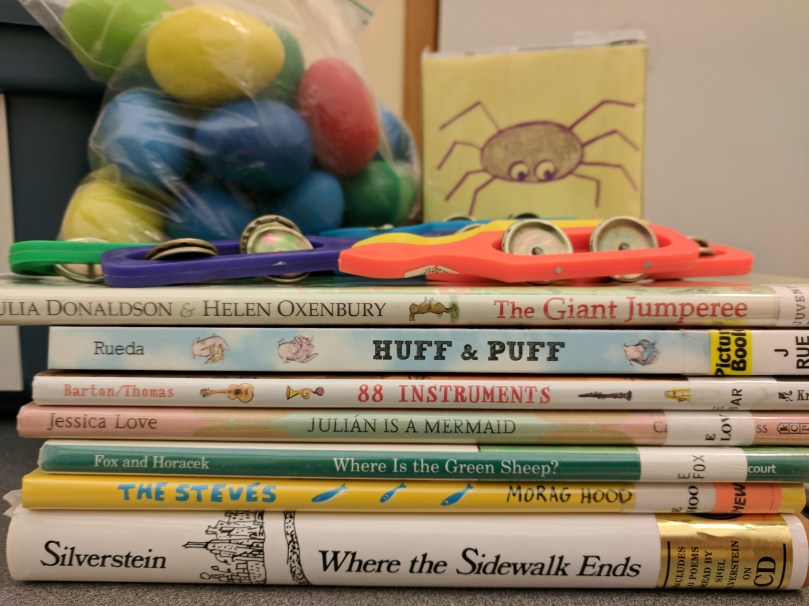
The Giant Jumperee, Huff & Puff, 88 Instruments, Julian is a Mermaid, Where is the Green Sheep?, The Steves, Where the Sidewalk Ends
Hello song with ASL from Jbrary
Name song (“____ is here today, let’s all clap our hands, ___ is here today”)
The Giant Jumperee by Julia Donaldson, illustrated by Helen Oxenbury: this one went over pretty well! It’s fun to read, and it’s a little long for some of the younger ones but it’s got a pattern they can follow.
Song cube: “I’m A Little Teapot”
Handed out scarves for Huff & Puff by Claudia Rueda. Blow on the scarves (or just wave them) when the wolf huffs and puffs! Collected scarves.
Song cube: “ABCs”
Let children come up and select shaker egg or bells for 88 Instruments by Chris Barton, illustrated by Louis Thomas. Practiced shaking and making noise, then being quiet with hands (and instruments) in laps. Collected instruments after the book (and one last good shake).
Song cube: “Zoom Zoom Zoom, We’re Going to the Moon”
Julian Is A Mermaid by Jessica Love. Explained that “abuela” means “grandmother” and “vamanos” means “let’s go,” otherwise let the pictures and text speak for themselves. This is the first time I’ve read this book in storytime and people seemed to really love the pictures.
Song cube: “The Itsy Bitsy Spider”
The Steves by Morag Hood. Such a funny book, adults and kids both responded well to the humor. Nice bright pictures work well for storytime also. Could do a tie-in craft with puffin coloring sheets or gluing pieces together. Or color puffins and then glue them onto one big sheet to make a puffin colony!
Song cube: “If You’re Happy and You Know It” (I usually end with “if you’re sleepy and you know it, give a yawn,” and stretch and sit back down; this is a good quieting technique)
Where the Sidewalk Ends by Shel Silverstein: “Hug-O-War,” “Early Bird,” and “Pancake?”
Goodbye song with ASL from Jbrary
Clean up colored sitting mats, put on music (“Shake Your Sillies Out,” “Wheels on the Bus,” “Skip to my Lou”), blow bubbles, dance!
Backup selection: Bear Says Thanks, We Don’t Eat Our Classmates, Hello Hello, Monkey and Me, The Very Hungry Caterpillar, Wow! Said the Owl, One Little BlueberryThe final lineup
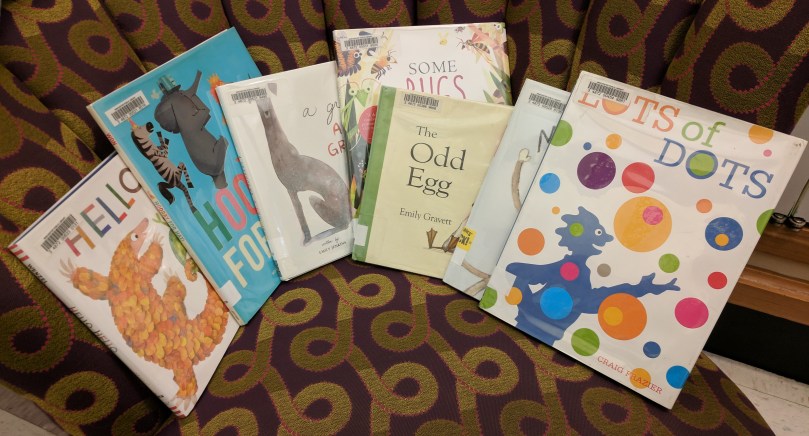
Today’s storytime was a big success! The weather (gray and threatening rain) helped bring people in, and Lots of Dots with a tie-in craft – gluing colored paper dots to a huge piece of butcher paper with glue sticks – was a huge hit. Hello Hello was a great book to start with, too – I forgot how many excellent opportunities it affords for interaction (“Hello Tongue, Ears, Hands, and Nose”), and it has a built-in quiet pause (“Hello Quiet”). For “Hello Bend” I demonstrated how to wiggle like an octopus, and at “Hello Neighbor” I asked the kids to turn and say hello to a neighbor.
Last week I made some early literacy signs to hang up along with a Step Into Storytime sign; I laminated them so they’ll be reusable. (I made them in Canva; if you’d like copies, I’m happy to share the PDF.) During “Itsy-Bitsy Spider” I mentioned that fingerplay helps develop fine motor skills.
Hello Hello, Hooray for Hat, A Greyhound A Groundhog, Some Bugs, The Odd Egg, Monkey and Me, Lots of Dots
Welcome and announcements
Hello song with ASL
Name song (there were about 10-11 kids to start, some more trickled in later)
Passed out scarves right away for Hello Hello by Brendan Wenzel – wave the scarves hello! Keep them for the song cube.
Song cube: “ABCs”
Hooray for Hat by Brian Won (lots of kids caught on to the pattern of the story and said “Hooray!” at the appropriate times)
Song cube: “Zoom Zoom Zoom, We’re Going to the Moon”
A Greyhound, A Groundhog by Emily Gravett and Chris Appelhans (I brought a little stuffed greyhound from home and let the kids come pet it after the story)
Some Bugs by Angela DiTerlizzi and Brendan Wenzel (I pointed out that it says “words by” and “bugs by,” which I love. “Author” and “illustrator” aren’t as meaningful for little kids; “wrote the words” and “drew the pictures” are easier to understand)
Song cube: “Itsy-Bitsy Spider” and “I’m A Little Teapot” (it landed against my chair, so both sides were showing)
The Odd Egg by Emily Gravett (with a big alligator SNAP! with two arms at the end)
Monkey and Me by Emily Gravett (this is sing-song-y enough that I did it with all of us standing up and doing the animal imitations – waddling penguins, elephant trunks, etc.)
Song cube: “I’m A Little Teapot” again
Lots of Dots by Craig Frazier (some kids found “dots” – buttons – on their clothes when I asked, and one found “dots” in the flower print on her leggings)
Goodbye song with ASL
Craft: I taped a long piece of butcher paper to the floor and scattered colored construction paper dots on it for kids to glue with glue sticks. They LOVED it. Definitely something to do again in a couple weeks. When everyone was done I taped the paper up on the wall.
Today we had a big crowd at storytime! It was a gray fall day, so maybe the weather urged people inside, or perhaps they’re just getting back into the rhythm of the season (storytimes are a little more sporadic in the summer because of all the other programs we do). There were at least 15 kids in the 2-3 age range, plus assorted siblings and several late arrivals. In the beginning, we had more than ten but I did the name song anyway – it’s a great way to learn names and start building individual connections.
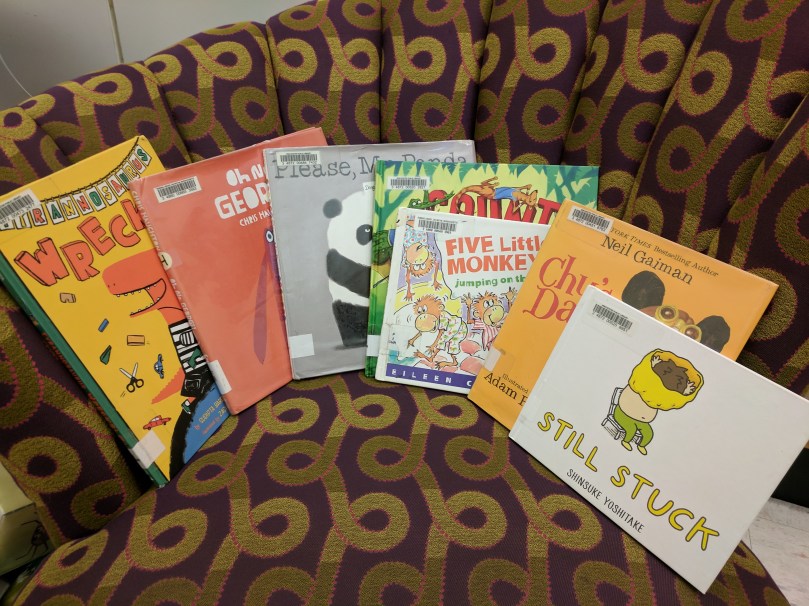
Tyrannosaurus Wrecks!, Oh No George!, Please Mr. Panda, Count the Monkeys, Five Little Monkeys, Chu’s Day, Still Stuck
“Hello Friends” song with ASL
Name song (“Hello ____, hello ___, hello ____, we’re glad you came today”)
Handed out shaker eggs for Tyrannosaurus Wrecks! by Sudipta Bardhan-Quallen, illustrated by Zachariah Ohora
Kept the shaker eggs for Oh No, George! by Chris Haughton. Collected shaker eggs after.
Song cube: ABC song
Please, Mr. Panda by Steve Antony
Song cube: “If You’re Happy and You Know It”
Five Little Monkeys Jumping On the Bed by Eileen Christelow (jumping encouraged!)
Count the Monkeys by Mac Barnett, illustrated by Kevin Cornell
Song cube: “I Had A Little Turtle”
Scarves (by audience request) for Still Stuck by Shinsuke Yoshitake. Collected scarves.
Goodbye song with ASL. Put away colored mats. Dance party with bubbles! (We have an old ipod loaded up with Raffi and Disney versions of classic kid music. And I brought my own bubbles from home because I am devoted to Pustefix bubbles.)
I skipped the flannel board and craft this week, but for next week I am thinking of a craft with paper dots and glue to go with Lots of Dots, and maybe The Very Hungry Caterpillar flannel board again…if I can make a butterfly before next Monday!
There was a smaller group at storytime today, but that allowed me to do the name song (“____ is here today, ____ is here today, let’s all clap our hands, ____ is here today”) after our usual “Hello friends” song. If the group is bigger than ten or so, I don’t do it, but because we only had seven or eight today, we did. I think it’s a good way to start because all the kids feel included, and it helps me learn the names, so I can address kids by name throughout the storytime.
When we use the song cube, or sing a new song, I make sure we do it twice, because young brains are hungry for patterns and repetition.
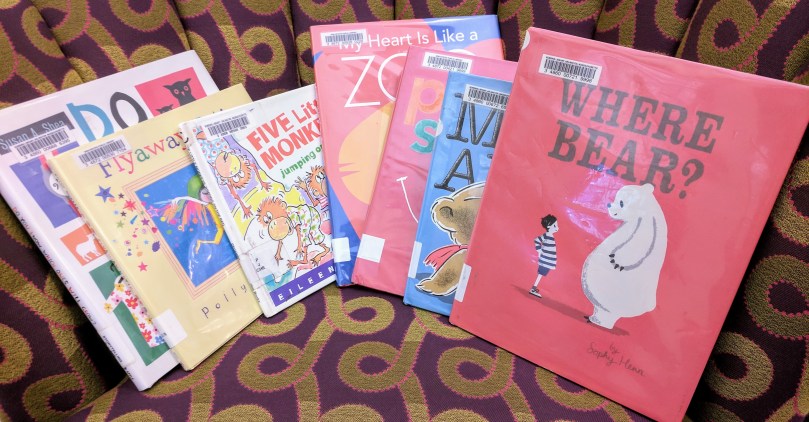
Do You Know Which Ones Will Grow?, Flyaway Katie, Five Little Monkeys, My Heart Is Like A Zoo, Perfect Square, Make A Wish Bear, Where Bear?
Welcome: Glad you’re here, please keep the doors clear, take snacks outside, feel free to come and go as needed.
“Hello Friends” song with ASL
Name song
Book: Do You Know Which Ones Will Grow? by Susan Shea
Song cube: “I Had A Little Turtle”
Hand out scarves
Book: Flyaway Katie by Polly Dunbar
Book: Five Little Monkeys by Eileen Christelow
Collect scarves
Book: My Heart Is Like A Zoo by Michael Hall (with flannel, but not interactive)
Song and activity: “Shake Your Sillies Out” with shaker eggs
Song cube: “I’m A Little Teapot”
Book: Perfect Square by Michael Hall
Song cube: “Itsy-Bitsy Spider”
Book: Make A Wish Bear by Greg Foley
Song: “Twinkle Twinkle Little Star”
Book: Where, Bear? by Sophy Henn
Goodbye song with ASL
Activity: coloring with crayons on a big piece of butcher paper (one bowl of crayons at each corner of the paper)
Today kicks off our fall series of storytime programs, and mine is “Step Into Storytime” for two- and three-year olds (though siblings are allowed to join, and we’re pretty lenient about ages; the come-and-go-as-necessary philosophy enables kids and their grown-ups to leave if they’re having a tough time and come back in when they’re ready, or next time).
T435 PL REP FC
We started off, as usual, with an introduction and a few guidelines (keep doors clear, take snacks outside), then our welcome song: “Hello friends” with sign language. I sang it through once with the motions, then showed each sign (should have done that first!), then we sang it through again, and lots of the kids and adults participated. Next:
Song cube: “Zoom zoom zoom, we’re going to the moon” (standing, twice)
Book: Fall Is Not Easy by Marty Kelley
Activity: Adding leaves to the tree on the flannel board. I think every kid participated and we had 16 leaves!
Song cube: “I had a little turtle”
Book: Hooray for Hat by Brian Won (“Show me your grumpy faces!”)
Song cube: “ABCs”
Book: The Very Hungry Caterpillar by Eric Carle
Activity: Very Hungry Caterpillar flannel board. At the appropriate point in the story, a kid would come up and remove the fruit the caterpillar ate that day (apple, pears, plums, strawberries, oranges). One kid who wanted to participate didn’t get a chance to take fruit off the board so I let her take the caterpillar off. And note to self: I need to make a butterfly!
Song cube: “The Itsy-Bitsy Spider” (standing, twice)
Book: Chu’s Day by Neil Gaiman and Adam Rex (kids loved the big sneeze!)
Song/activity: I passed out shaker eggs and we stood to sing “Shake Your Sillies Out.” Kids brought the eggs back to the front and put them in the bag at the end of the song.
Book: The Duckling Gets A Cookie by Mo Willems (I put my flannel Pigeon and Duckling up on the flannel board but we didn’t do anything with them)
Song: “Twinkle Twinkle Little Star” to calm a slightly squirrelly crowd. I meant to do the “Goodbye Friends” song with ASL like usual but I forgot!
Activity: Coloring with crayons. I traced one of the pages from Blue Chameleon and made copies for kids to color however they liked. We have a giant bin of crayons and they color right on the floor – next time I would scoop a few smaller bowls of crayons and spread them out around the room. People were great about putting the crayons back when they were finished!
Overall, this was a great storytime. Hooray for Hat seemed to be a favorite, several kids recognized The Very Hungry Caterpillar, and I think the Mo Willems book might have been more successful earlier in the lineup.
We have a whiteboard along one wall, and after “Welcome to Step Into Storytime!” I had written the five activities that support early learning: Talk, Sing, Read, Write, Play. Next time I want to incorporate more early literacy information into the storytime for caregivers, explaining in a sentence here and there why I’m doing what I’m doing (why sing songs twice, for example, and why do fingerplay or sign language) to support that early learning.










 Jenny Arch