How middle grade has changed (in) a generation

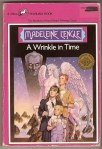
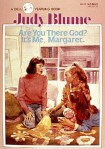
Working in a middle school library for the past year, I have been more conscious than ever about what books I am putting into kids’ hands – and, if the match is right, into their heads and hearts. They might read a chapter and put it down, or they might slog through and forget it after they’ve finished a required project…or, they might remember it forever. With that in mind, I (a) always encourage kids to return a book they’re not enthusiastic about and try something else instead, and (b) am extra mindful of representation. When reflect on the books that stayed with me (list below), nearly all of them feature white, American kids, and the few books that centered Jewish characters were all historical fiction set during WWII and the Holocaust (except for Margaret. Thank you, Judy Blume).

  • A Wrinkle in Time by Madeleine L’Engle (1962)
  • Are You There, God? It’s Me, Margaret by Judy Blume (1970)
  • Bridge to Terabithia by Katherine Paterson (1977)
  • The Devil in Vienna by Doris Orgel (1978)
  • The Castle in the Attic by Elizabeth Winthrop (1985)
  • Matilda by Roald Dahl (1988)
  • The Devil’s Arithmetic by Jane Yolen (1988)
  • Number the Stars by Lois Lowry (1989)
  • A Horse Called Wonder (Thoroughbred series #1) by Joanna Campbell (1991)
  • The Boggart by Susan Cooper (1993)
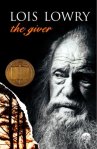
  • The Giver by Lois Lowry (1993)
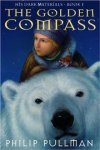
  • The Golden Compass by Philip Pullman (1995)
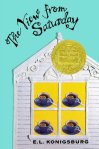
  • The View from Saturday by E.L. Konigsburg (1996)

It’s a disservice to kids – to any readers – when only “mirrors” books or only “windows” books are available to them. Everyone deserves to see themselves reflected in literature (and art, music, movies, TV, magazines, etc.). The presence of a character similar to you says You exist. You matter. But only reading about characters like yourself is limiting; reading about those who are different in some way provides a window into another way of experiencing the world: They exist. They matter.

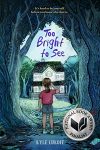
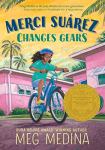
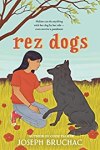
I have read so many middle grade books in the past few years that I couldn’t have imagined existing a generation ago. There are books with trans and non-binary characters, like Kyle Lukoff’s Different Kinds of Fruit and Too Bright to See and Ami Polonsky’s Gracefully Grayson and Alex Gino’s Melissa. There are books with Muslim protagonists by S.K. Ali and Saadia Faruqi, Hena Khan and Veera Hiranandani, and books with Latinx characters like Meg Medina’s Merci Suárez, Celia Pérez’s The First Rule of Punk, and Pablo Cartaya’s Marcos Vega Doesn’t Speak Spanish. There are books that address contemporary racism and microaggressions and police violence, like Blended by Sharon Draper. There are books by and about Indigenous people, like Rez Dogs by Joseph Bruchac and Ancestor Approved by Cynthia Leitich Smith and others. There are books that explore the histories and modern experiences of Asian American and Pacific Islanders, like Finding Junie Kim by Ellen Oh, Other Words for Home by Jasmine Warga, and Inside Out & Back Again by Thanhha Lai – the last two of which are in verse, a form I never encountered as a young reader but which is becoming more and more popular now (and with good reason). There are books about fat-shaming and fatphobia and body positivity, books that show what good therapy looks like, characters who experience mental illness or poverty, frank discussion of periods and endometriosis, and activism.

There is nothing inherently bad about the books I read and loved as a kid; I still re-read and love them, and am starting to share them with my daughter (and discuss parts that are sexist, racist, or otherwise problematic). But as a collection, they don’t show the dazzling breadth and depth of human experience that children’s literature illuminates now, from picture books through middle grade to young adult. I am so grateful to the authors and illustrators who create these works, let readers step into their characters’ shoes, learn about their lives, and grow in empathy, and I feel lucky to be able to put these books into kids’ hands.


MSLA 2022: Book Challenge Panel

Bonnie McBride, Anja Kennedy, Collen Simpson, Lizz Simpson, and Luke Steere are all librarians who have experienced, or are currently experiencing, some form of book challenge in their school libraries, whether it’s a formal challenge or “soft censorship.” Although national news has focused on widespread challenges in states like Texas and Florida, Bonnie said, “Book challenges have always been a part of librarianship….They are happening here.”

A few themes and solid pieces of advice were repeated throughout the panel:

  • Be prepared. Have a collection development policy that includes selection guidelines and a procedure for the request for reconsideration of materials. This policy should be approved by the School Board and the administration should be aware of it. “Your first line of defense is a strong policy that people can’t argue with” – not even the superintendent.
  • A challenge or ban in one part of the country affects us all: Fears of challenges may cause librarians to self-censor (avoiding purchasing or promoting certain texts), and may cause teachers to make changes to the texts they use in their curriculum.
  • Some good things can come from challenges: while one panelist said “I wouldn’t wish this on anyone,” she acknowledged that some good things came out of it: there was a good examination of policy (which was strong), thoughtfulness about what we present in our curriculum, teachers chose more current books (in collaboration with librarian), more voice and choice in lit circles, students came to school committee meetings, increased transparency, and school committee has educated itself on public forum measures and the law.
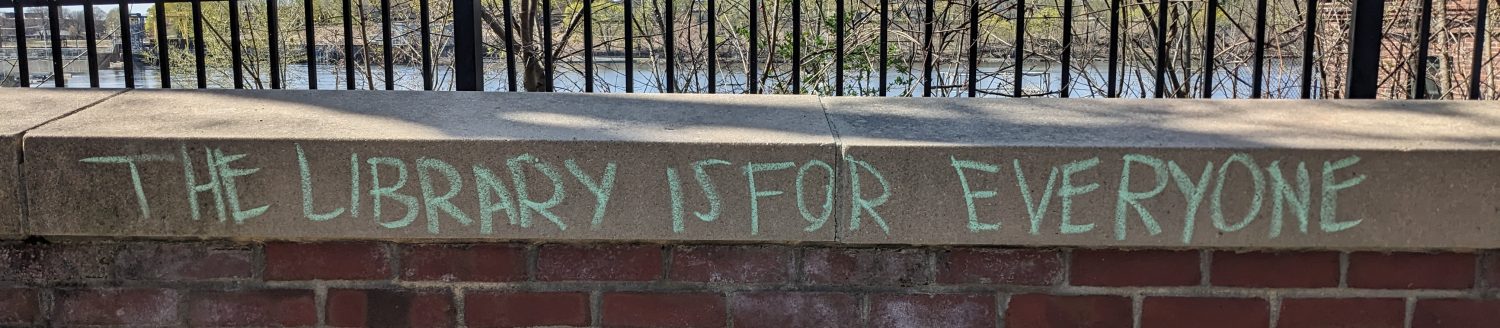
  • “Promoting and defending our books should be a given.” A majority of the books being challenged have LGBTQIA+ content, and “there are LGBTQIA+ kids and families in every community, whether you know it or not.” Luke said, “I like using the word ‘challenge’ because it’s something to rise to” and not something to work against. Libraries are for everyone.
  • Be proactive. When a new administrator is hired, go and talk to them. They might not know the history of the district, if there have been challenges in the past and how they were handled. Ask them, “Where do you stand on this? What do we do when this happens?”
  • Keep the focus on the book. If it’s a student bringing the challenge, offer to sit with them and help them fill out the form. This can be a learning experience, and it keeps the focus on the book, not the complainant or the librarian.

Resources:

  • Library Book Challenge Resources Wakelet, curated by Bonnie McBride
  • Massachusetts Association of School Committees (MASC) online manuals
  • Massachusetts Library System (MLS) Policy Collection
  • ALA Office of Intellectual Freedom (ALA OIF) Challenge Support
  • the MSLA listserv
  • Library Link of the Day: there has been an significant uptick in links that have to do with censorship, book challenges, and bans in school and public libraries over the past several months.

MSLA 2022: Cynthia Leitich Smith keynote “Brighter Days”

Author, teacher, publisher, and Muscogee Nation citizen Cynthia Leitich Smith delivered this morning’s keynote, “Brighter Days: Decolonizing Hearts, Minds, and Books for Young Readers.” She began by zipping through a number of essential fiction and nonfiction titles for young readers, from picture books through YA; children’s literature created by Indigenous authors shows that “we have a past, a present, and a future…[we are] 3D human beings with a full range of emotion.” Still, Native books make up just under 1% of books published for kids. “Why does that matter? Because we are still here….There are Native families in your communities whether you realize it or not.” Some of these families may “fly under the radar,” partly because of distrust of schools due to past experience. That makes it more important, not less, to seek out, include, and promote literature from Native authors, because “erasure hurts kids” and “Native kids deserve more from all of us.”

Cynthia acknowledged that publishing is a slow-moving industry and “it’s hard to shake up the conventional wisdom,” but with new imprints, new interest, and demand from readers, librarians, and booksellers, change is happening. Ellen Oh and the WeNeedDiverseBooks movement have been a force for positive change, as have conferences like LoonSong and Kweli. “A single voice…is not enough,” Cynthia said, referencing times that she had been told by people within the publishing industry that there was no room, or no need, for more Native voices beyond one or two established ones. But we need more: Cynthia said, “factual information won’t matter or stick if we don’t focus on humanity. Native people are modern people. Every kid, Indigenous or not, can benefit from exposure to Native values” like honoring ancestors, and protecting land and water. Young readers deserve a chance to read the work of many Native authors.

Librarians, Indigenous or not, have an important role to play; we are ambassadors to young readers. “We can’t do it without your continued support and activism,” Cynthia said. When purchasing and recommending books, she had a few tips: look for tribal specificity, contemporary settings, present tense, accuracy, and stories of daily life. It’s important to balance the historical with contemporary, tragedy with joy. “Unfortunately, much of what happened in the past is terrible”: Acknowledge oppression, integrate joy and achievement, address miseducation, and be aware that there is diversity within each tribal nation and “identity is nuanced.”

This is year-round work and should not be limited to Native American history month or just around Thanksgiving. Cynthia encouraged us to integrate Native books into year-round reading, and across the curriculum: “We are Native every single day…[it is] otherizing and marginalizing” to limit reading books by and about Indigenous people to one time of the year. “All kids deserve a truthful education.” She closed on a hopeful note, declaring, “We are seeing tangible progress” in the publishing industry and in Hollywood.

Resources:

MSLA 2022: Melissa Stewart, champion of nonfiction

Melissa Stewart gave an excellent presentation (“Tips and Tools for Nonfiction Read-Alouds“) at last year’s MSLA conference, so I was looking forward to hearing from her again this year, this time on the topic of “The Role of Equity in Creating Passionate Nonfiction Readers.” She started out by asking attendees to do an activity: jot down “five children’s books you love.” Then, put a check mark next to the nonfiction ones. No check marks? You’re not alone. However, we shouldn’t let our own preferences, biases, and assumptions get in the way: research shows that kids love nonfiction, both expository (nonfiction that explains, describes, and informs) and narrative.

Melissa’s talk was heavier on the “nonfiction” part than the “equity” part, but she made one crucial point that became my main takeaway from this session: Expository nonfiction is straightforward and gets right to the point, which is good for beginning readers; it is more accessible than fiction for kids who haven’t been read to (emphasis mine). For children not yet comfortable and familiar with storytelling conventions, nonfiction is more accessible. Plus, kids enjoy learning about specific topics (animals, things that go, sports, etc.) and it’s empowering for them.

Melissa asked us to consider what barriers exist between students and nonfiction books in our libraries. These barriers might stem from the organizational system the library uses (does it make sense to kids? Can they find what they want?), teacher assignments (are kids allowed to use nonfiction books as well as fiction? Do they know that?), or lack of communication between departments.

There are many things librarians can do to help kids find the nonfiction books they want: highlight them on displays, read them aloud, promote them in book talks. But the most important factor in helping students find nonfiction they love, Melissa said, is TOPIC: “the number one way” to turn “an expository nonfiction kid” on to reading is to give them a book – or some other resource – on that exact topic.

Resources:

Since Melissa’s presentation last year, I’ve been much more mindful of incorporating nonfiction into my displays, book talks, recommendations, and lists, and reading more of it myself (I particularly love picture book biographies). If/when I get the chance to work with younger elementary kiddos, I will be keeping this takeaway in mind.

MSLA 2022: Every library is organized…differently

“Ditching Dewey or Sticking With It?”

Demco Dewey poster 900sAnna Ring of Chickering Elementary School in Dover/Sherborn conducted an action research project, surveying hundreds of elementary, middle, and high school libraries to find out what organizational systems they use: the Dewey Decimal System, an adapted version of Dewey, or something else (Library of Congress, BISAC, or a homegrown system). She found that most elementary libraries are still using Dewey or adapted Dewey, while some middle and high schools are using other systems. A few key themes emerged from Anna’s presentation and from the discussion among the participants:
  • Students should understand that every library has some organizational system; it may not be the same in every library, but once you understand the system, you can learn how to use it to find what you want. Understanding that there is an organizing principle is a transferable skill, even if another library uses a different system than the one you’re familiar with.
  • Librarians want students to feel successful, and for collections to have “maximum browsability”: “I want to make it as easy as possible for kids to find things.” This might mean grouping certain series together (like the Who Is/Who Was books) instead of sticking rigidly to Dewey. Many librarians also championed labeled bins as a way to increase visibility, browsability, and findability – there might be bins for biographies, easy readers, I Survived books, Magic School Bus, animal books…
  • Reclassifying and reorganizing takes a LOT of time, so take a slow, considered approach, and get student input!

A final small but important point: some libraries choose to “keep Dewey but ditch the decimal,” as students don’t learn decimals in math until third or fourth grade. And good signage helps!

Virtual event: Starfish author Lisa Fipps at the Newton Free Library

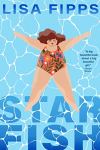
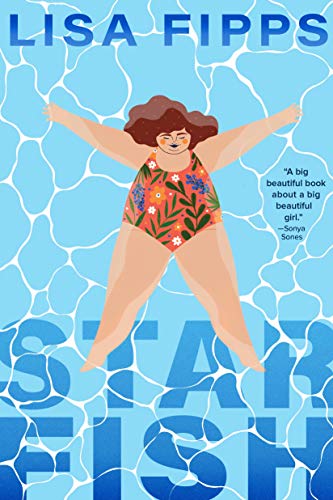
Cover image of StarfishBig thanks to the children’s librarians at the Newton Free Library for organizing, promoting, hosting, and moderating a delightful virtual author visit with Lisa Fipps, author of the novel in verse Starfish, a Printz honor book. Lisa was incredibly friendly and personable, doing only a short introduction before answering tons of questions from the Newton Free Library book club and other attendees.
Some snippets:

  • On the writing process: Lisa sees “movie trailers in my head”
  • On autobiographical fiction: Ellie got “the watered down story of my life” with authentic emotions
  • To those who say “things like that would never happen”: “They do.”
  • On growing up without seeing herself in books: “I didn’t know anybody like me” (#RepresentationMatters)
  • On wanting to make post-publication changes: “I don’t know any writer who doesn’t look back on a book” and want to change something. Lisa didn’t read Starfish until six months after it was published, and while there are small things she would change if she could, “I’m okay with it.”
  • On how to get published: “First you have to write the story.” Then find an agent (hers is Liza Boyce), who will help you find an editor (hers is Nancy Paulsen).
  • Will there be a sequel or prequel? The Printz committee asked this too! Not sure.
  • On future books: Nancy is editing book number two now, and Lisa is writing book number three.
  • How long does it take you to write a book? Starfish took eight months, the next book took six. Lisa is trying to write 2-3 books a year; “I want to be a full-time author and you need to write a lot to make that happen.” (Currently she works at the Kokomo-Howard County Public Library in Indiana)
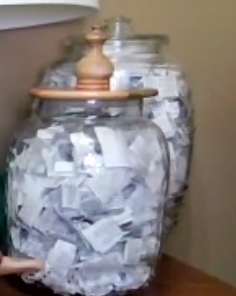
  • On that stuff on the table behind you: the penguin collection is because Nancy Paulsen’s imprint is part of Penguin Random House (which at least two librarians agree should have been called Random Penguin when they merged). The “inspiration jars” (see photo) are full of good reviews, fan letters, kind words, etc. That’s a lot of warm fuzzies!Screenshot of "inspiration jars"
  • On the role of music in writing: Lisa creates a playlist for every book she writes, to get into the characters’ heads; when actually writing, she listens to music with no lyrics.
  • How have family members responded to Starfish? “I have no idea, I’m estranged from my [biological] family” (except for a nephew); “I have families of choice.”
  • Advice for young writers? Write. And read a lot. “I try to read 3-5 books a week.”
  • What time of day do you write? Evenings after work, with marathon writing sessions (8-10 hours!) on weekends.
  • Do you read other novels in verse? Yes! The first one she read was Stop Pretending by Sonya Sones. “I think verse is a way to tell a powerful story in a short amount of words.”
  • On Ann Patchett’s advice to read your work aloud to yourself: “You will hear any clunkiness in your writing like that.” Lisa even recommends doing this while wearing foam earplugs.
  • On the therapist character in Starfish: Lisa used the wisdom of therapists mixed with the personality of a critique partner. (Readers loved Ellie’s therapist. Librarian Ms. Bery included Starfish in her list of books that normalize therapy.)
  • On Catalina’s character: Catalina is a “composite character” (bits and pieces of different people).

Thank you so much, Lisa Fipps and Newton Free Library!

2022 ALA Youth Media Awards

It’s the Oscars of #kidlit! (And honestly, at this point in my life, I’m much more excited about the ALA Youth Media Awards than about the Academy Awards.) This year I was following the announcements on Twitter and relaying them to my co-worker while we prepared to teach a bunch of seventh graders how to find reliable results when searching the internet (pro tip: there are more results after the first result! O brave new world…).

SLJ posted the winners of all the awards, but didn’t include the honor books on the same page; American Libraries has a complete write-up. I was thrilled to see Watercress by Andrea Wang, illustrated by Jason Chin, win the Caldecott medal (and a Newbery Honor and the Asian/Pacific American Award for Literature – Picture Book), and equally delighted to see Too Bright to See by Kyle Lukoff and Last Night at the Telegraph Club win the Stonewall.

Angeline Boulley’s Firekeeper’s Daughter won the Morris, the Printz, and an American Indian Youth Literature honor for YA; other AILA honor books I cheered for included Christine Day’s middle grade novel The Sea in Winter, Traci Sorrell’s picture book We Are Still Here, and YA novel Elatsoe by Darcie Little Badger.

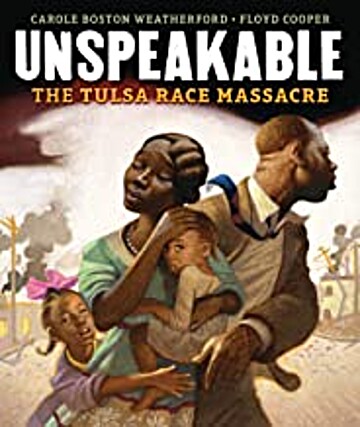
Cover image of UnspeakableI can’t imagine anyone was surprised that Unspeakable by Carole Boston Weatherford, illustrated by Floyd Cooper, won two Coretta Scott King awards (for author and for illustrator), as well as a Sibert honor and a Caldecott honor. I’m looking forward to reading CSK illustrator honor book Nina, but I’m really surprised that Christian Robinson’s other 2021 book, Milo Imagines the World, didn’t get any official recognition.
By the time the Pura Belpré awards were announced I was busy in the library, but I was happy to catch up later and see that ¡Vamos! Let’s Cross the Bridge by Raul III won the Youth Illustrator award, Yuyi Morales received an honor for Bright Star, and Somewhere Between Bitter and Sweet got a YA honor!

Cover image of StarfishOther Printz honor books included Starfish by Lisa Fipps (a novel in verse!), Concrete Rose by Angie Thomas, Last Night at the Telegraph Club by Malinda Lo, and Revolution in Our Time by Kekla Magoon (the latter is the only Printz book I hadn’t already read, but it’s on my list now).

Also added to my to-read list:

  • Pura Belpré Children’s Author Award and the Newbery Award winner The Last Cuentista by Donna Barba Higuera
  • Schneider Family Book Award winner My City Speaks, and honor books A Walk in the Words, A Bird Will Soar, and A Kind of Spark
  • Sydney Taylor Book Award Gold Medalist How to Find What You’re Not Looking For and Silver Medalist The Summer of Lost Letters
  • Theodore Seuss Geisel Award winner Fox at Night, written and illustrated by Corey R. Tabor
  • Sibert Award winner The People’s Painter: How Ben Shahn Fought for Justice with Art

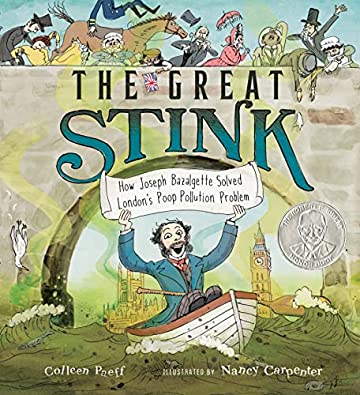
greatstinkI’d actually read a bunch of Sibert honor books, though not the winner; I was super excited to see The Great Stink on the list. We Are Still Here by Traci Sorrell and Unspeakable also got honors, as did Summertime Sleepers (which taught me the word “estivate,” which is like hibernating but in the summer).
Finally, I was so happy to see A.S. King receive the Margaret A. Edwards Award for Lifetime Achievement, Grace Lin receive the Children’s Literature Legacy Award, and Jane Yolen recognized with the Sydney Taylor Body-of-Work Award. A.S. King’s particular brand of magical realism/surrealism is completely unique to her; her books are deep and weird and thoughtful. Grace Lin writes for children of all ages, and her novel Where the Mountain Meets the Moon is a favorite in our house. And Jane Yolen is Jane Yolen.

Previous year’s incoherent ramblings about ALA YMA:

2021 ALA YMA

2020 ALA YMA

Edited 1/26/2022: Note to self: next year write a post more like Abby’s (ALSC blog).

Mother/Daughter Book Club: One Year Anniversary

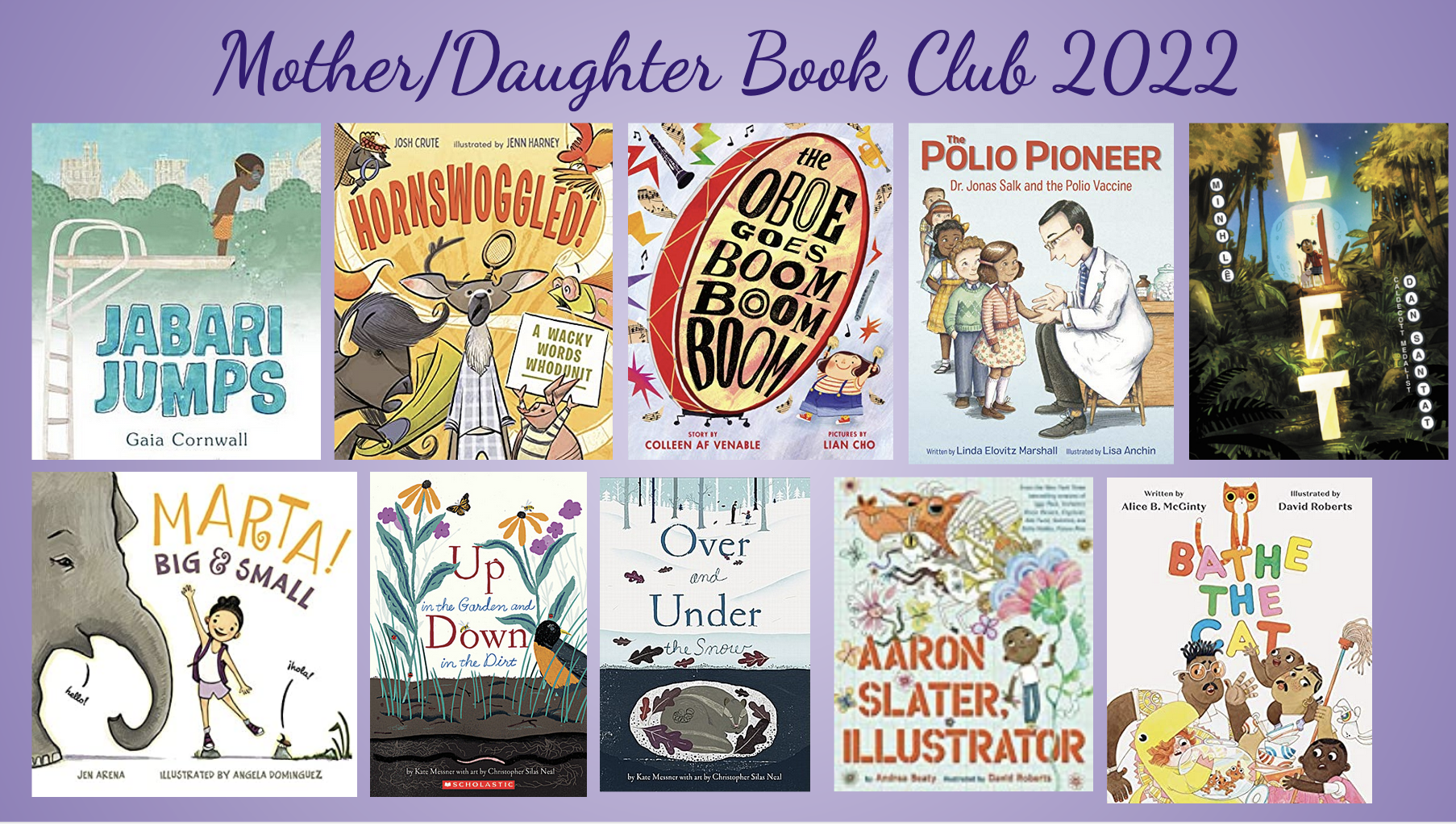
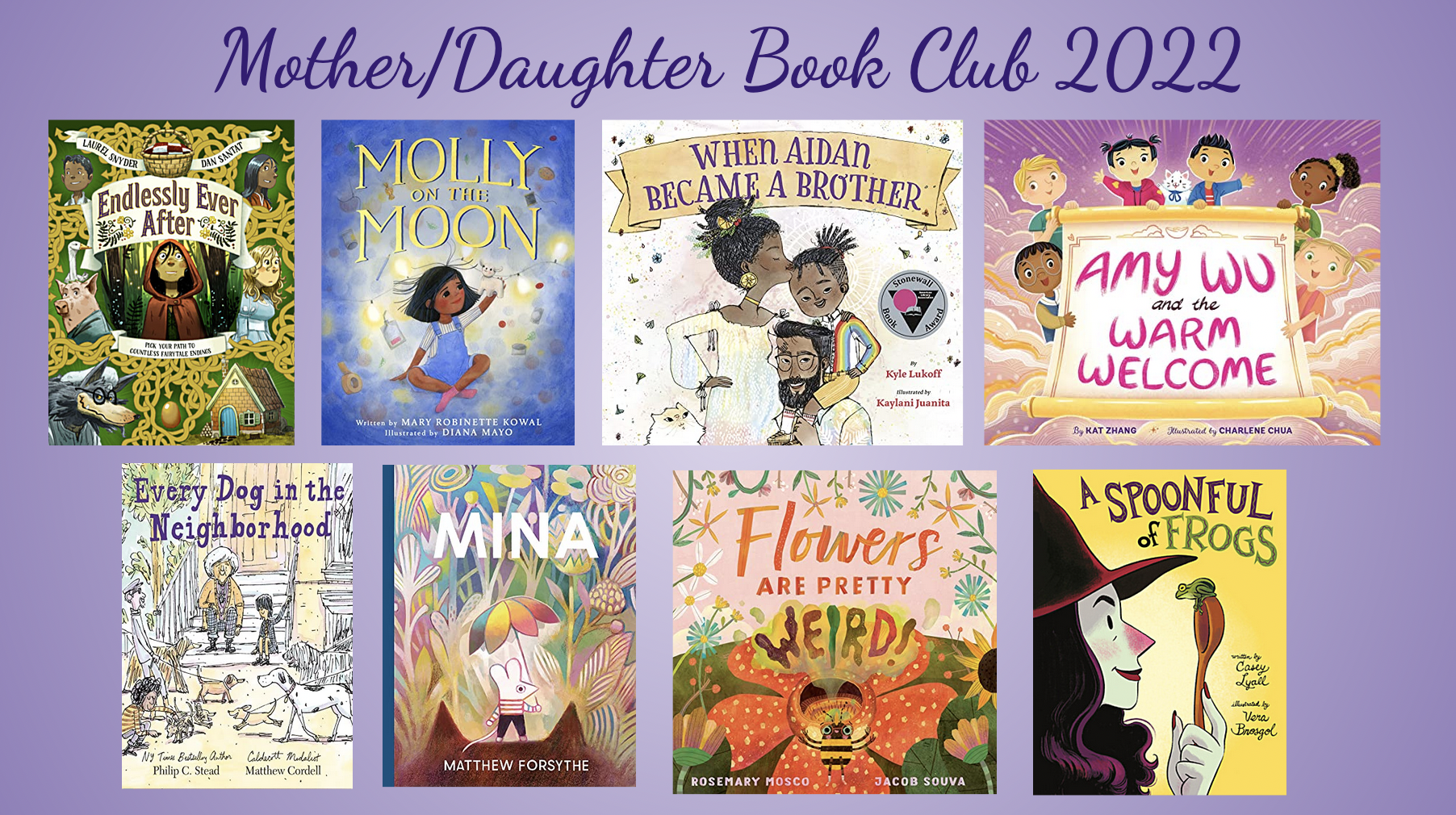
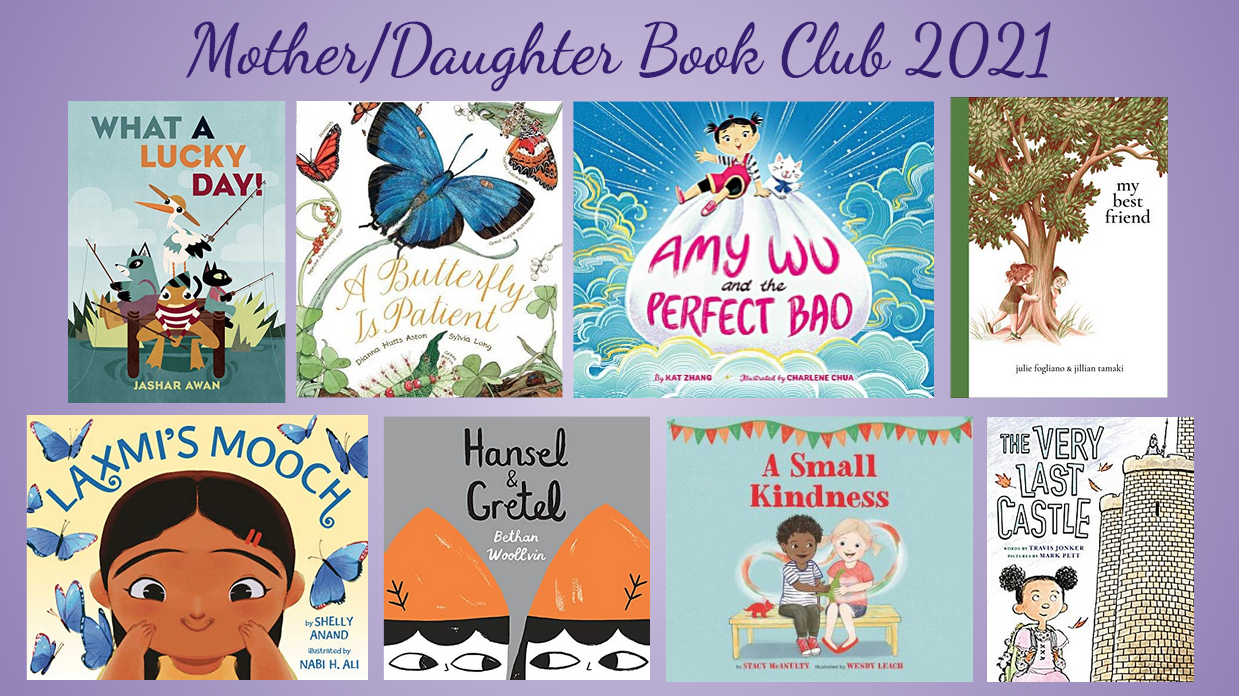
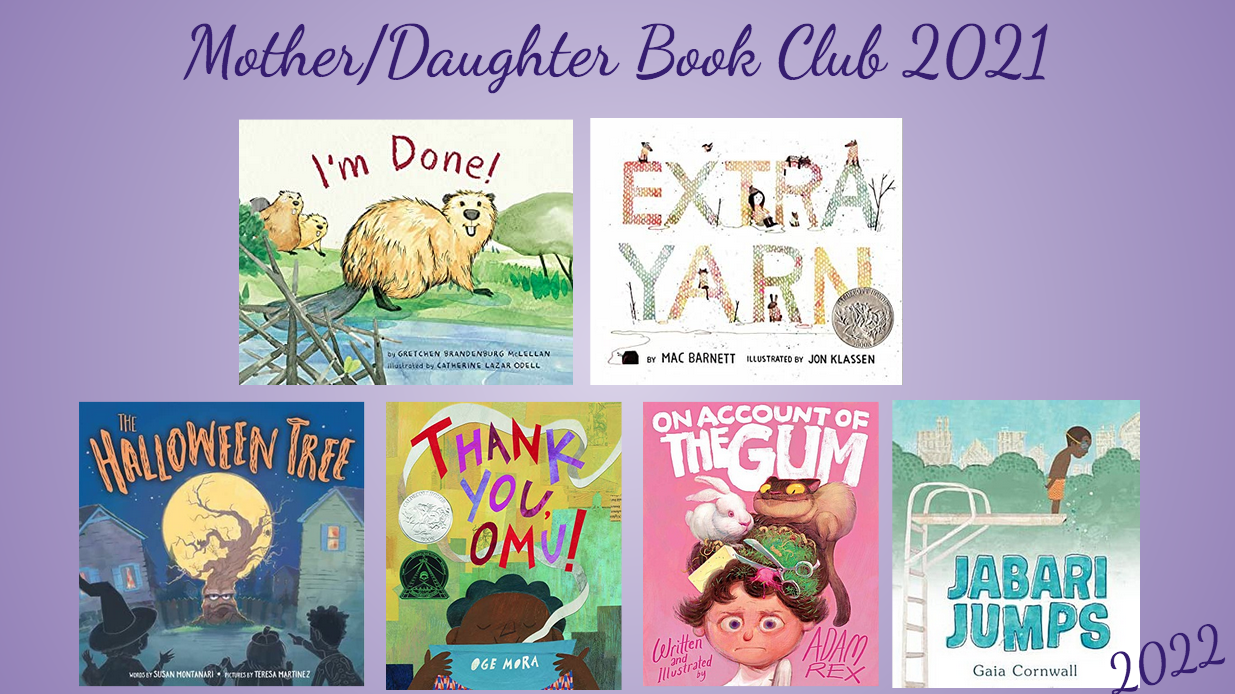
In February 2021, not long after our move across the state, we started a mother/daughter book club for friends old and new. Now we’re celebrating one year of monthly virtual meetings full of picture books and arts and crafts!

Cover images of picture books in caption
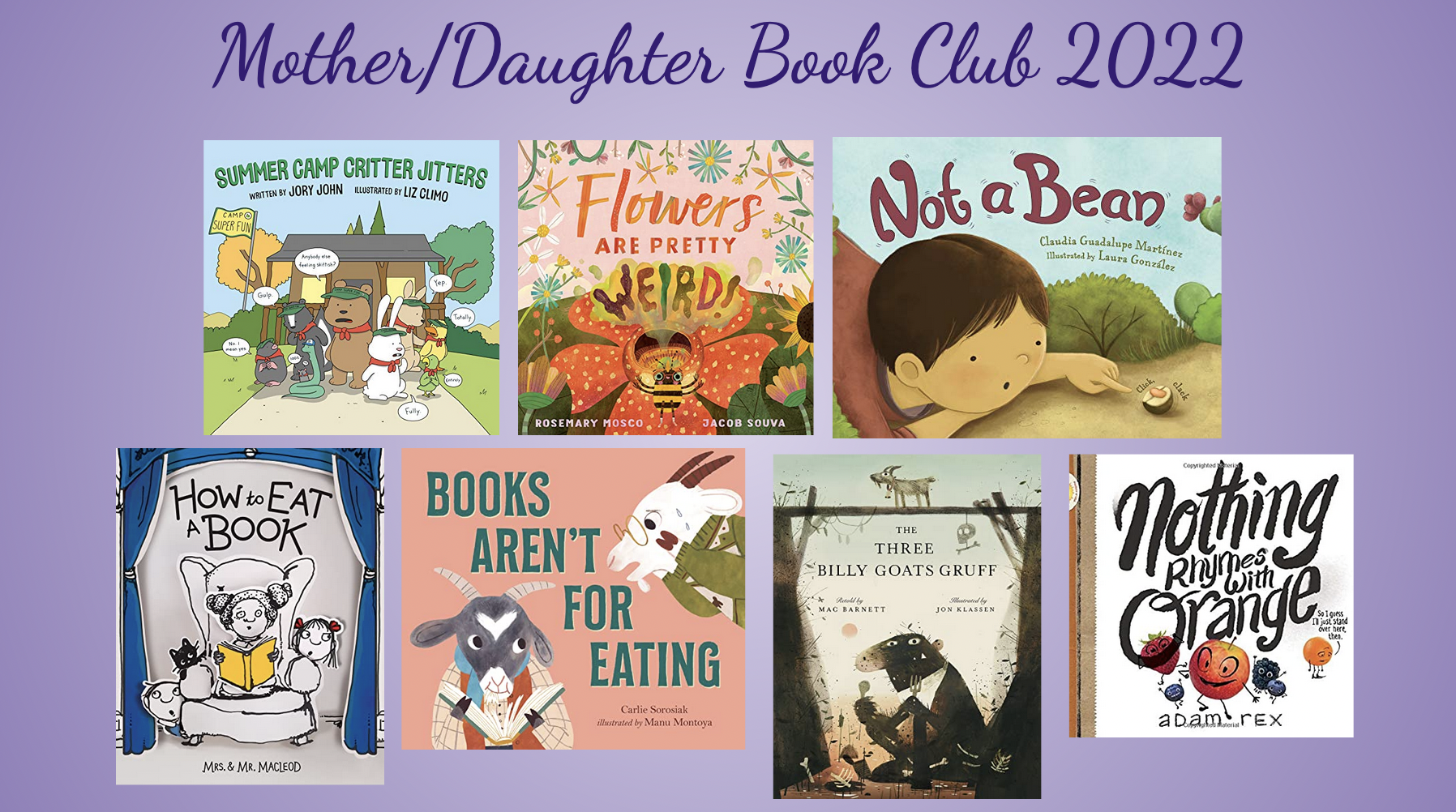
What A Lucky Day, A Butterfly is Patient, Amy Wu and the Perfect Bao, My Best Friend, Laxmi’s Mooch, Hansel & Gretel, A Small Kindness, The Very Last Castle

Cover images of picture books
I’m Done!, Extra Yarn, The Halloween Tree, Thank You Omu!, On Account of the Gum, Jabari Jumps

Through these books, we’ve encountered instant best friendship; how kindness can spread and generosity comes back around; the importance of perseverance, courage, and open-mindedness; and how a unique twist on a mainstream perspective can make things just right. Here’s to more reading and togetherness in 2022!

2021 Reading Wrap-Up

Here is 2020’s reading wrap up. Many of those books are ones I’m still talking about, thinking about, and recommending, especially:

  • The picture books On Account of the Gum by Adam Rex, Lift by Minh Lê and Dan Santat, My Best Friend by Julie Fogliano and Jillian Tamaki, and Evelyn Del Rey Is Moving Away by Meg Medina and Sonia Sánchez
  • Early reader and chapter book series (Elephant & Piggie, The Princess in Black, Ivy & Bean, Dory Fantasmagory, Clementine)
  • Nearly all of the middle grade books I listed, including Show Me A Sign by Ann Clare LeZotte, The List of Things That Will Not Change by Rebecca Stead, and Before the Ever After by Jacqueline Woodson
  • Adult novels The Pull of the Stars by Emma Donoghue, Hamnet by Maggie O’Farrell, and The Once and Future Witches by Alix E. Harrow
  • Nonfiction: the History Smashers series by Kate Messner. Even more titles came out this year and I’ve been recommending them all to students and teachers alike.

Now, on to 2021. This year was another good year for reading, even if it wasn’t good by (m)any other metrics. Betsy Bird did her marvelous and comprehensive #31Days31Lists again, and though I’ve read many of the titles she mentions, I requested a bunch of others from the library – they’re already starting to roll in!

Total number of books: 743. Yeah, this is a lot, even for me – I was surprised when I counted them up, especially since the number of picture books stayed approximately steady from last year to this year. Early readers, chapter books, and YA went up a bit, while middle grade dropped some (that was a surprise, too); graphic novels went way up.

Partially read or started-didn’t-finish: 19. Again, a cookbook, a book of poetry, and some children’s books that the kiddo wasn’t into (or took away to read by herself).

Picture books: 327.

Note: I’m limiting my list of standout picture book titles to those published in 2020 and 2021, because…327 books! In the other categories below, I haven’t limited myself to books published in 2020-2021, though many of them were.

  • When We Are Kind by Monique Gray Smith, illus. Nicole Neidhardt Cover image of What A Lucky Day
  • What A Lucky Day! by Jashar Awan
  • Eyes That Kiss in the Corners by Joanna Ho
  • The Polio Pioneer by Linda Elovitz Marshall, illus. Lisa Anchin
  • All the Way to the Top by Annette Bay Pimentel, illus. Nabi Ali
  • A Small Kindness by Stacy McAnulty, illus. Wendy Leach
  • Laxmi’s Mooch by Shelly Anand, illus. Nabi Ali Cover image of Laxmi's Mooch
  • Scarlet’s Tale by Audrey Vernick, illus. Jarvis
  • The Midnight Fair by Gideon Sterer, illus. Mariachiara DiGiorgio
  • Avocado Asks: What Am I? by Momoko Abe
  • Oh Look, A Cake! by J.C. McKee (reminded me of I Really Want the Cake!)
  • I Am Not A Penguin: A Pangolin’s Lament by Liz Wong (reminded me of The Angry Little Puffin)
  • Watercress by Andrea Wang, illus. Jason ChinCover image of The Oboe Goes Boom Boom Boom
  • Don’t Hug Doug (He Doesn’t Like It) by Carrie Finison, illus. Daniel Wiseman
  • A Map Into the World by Kao Kalia Yang, illus. Seo Kim
  • Unspeakable: The Tulsa Race Massacre by Carole Boston Weatherford, illus. Floyd Cooper
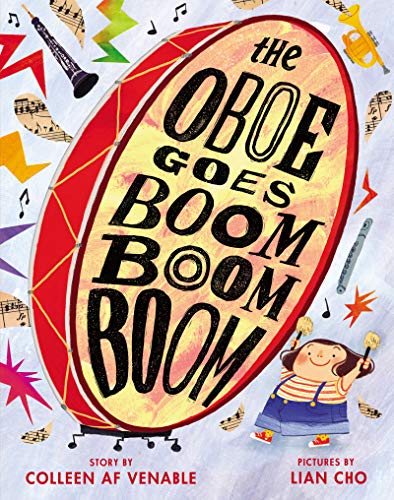
  • The Oboe Goes Boom Boom Boom by Colleen AF Venable, illus. Lian Cho
  • Dad Bakes by Katie Yamasaki
  • Maybe… by Chris Haughton

Early readers: 42.

  • “Living In…” series by Chloe Perkinsflubby
  • Disgusting Critters series by Elise Gravel
  • Elephant & Piggie by Mo Willems
  • Fox & Chick by Sergio Ruzzier
  • Pea, Bee, & Jay by Brian Smith
  • Chick & Brain by Cece Bell
  • Flubby Will Not Play With That by J.E. Morris

Chapter books: 55.

  • Zoey & Sassafras series by Asia Citrotwigandturtle1
  • Twig & Turtle series by Jennifer Richard Jacobson
  • Anna Hibiscus by Atinuke
  • Ruby Lu by Lenore Look
  • Unicorn Rescue Society series by Adam Gitwitz and others
  • Princess Pulverizer series by Nancy Krulik
  • Lunch Lady series by Jarrett J. Krosoczka (graphic novels)
  • Book Buddies: Ivy Lost & Found by Cynthia Lord

Middle grade (some overlap with YA and GN): 56.Cover image of Starfish

  • Letters from Cuba by Ruth Behar
  • Starfish by Lisa Fipps
  • Castle Hangnail by Ursula Vernon
  • The Raconteur’s Commonplace Book by Kate Milford
  • The Sea in Winter by Christine Day
  • A Boy Called Bat by Elana K. Arnold (all three Bat books)
  • Chance to Fly by Ali Stroker and Stacy DavidowitzCover image of Imaginary
  • The Inquisitor’s Tale by Adam Gidwitz
  • The Beatryce Prophecy by Kate DiCamillo
  • Imaginary by Lee Bacon
  • The Boys in the Back Row by Mike Jung
  • Flight of the Puffin by Ann Braden
  • Amari and the Night Brothers by B.B. Alston
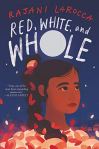
  • Red, White, and Whole by Rajani LaRoccatroubledgirls
  • No Fixed Address by Susin Nielsen
  • The Troubled Girls of Dragomir Academy by Anne Ursu
  • Too Bright to See by Kyle Lukoff
  • Simon B. Rhymin’ by Dwayne Reed
  • Ban This Book by Alan Gratz
  • Yusuf Azeem Is Not A Hero by Saadia Faruqi

YA (some overlap with MG and GN): 51.

  • The Selection (series) by Kiera CassCover image Firekeeper's Daughter
  • I Am Princess X by Cherie Priest
  • Eliza and Her Monsters by Francesca Zappia (re-read)
  • Blackout by Dhonielle Clayton, Tiffany D. Jackson, Ashley Woodfolk, Nicola Yoon, Angie Thomas, & Nic Stone
  • Cemetery Boys by Aiden Thomas
  • The Firekeeper’s Daughter by Angeline Boulley
  • Last Night at the Telegraph Club by Malinda Lo

Graphic novels: 88.

  • Graceling by Kristin Cashore and Gareth Hinds (YA)Cover image of Witches of Brooklyn
  • Measuring Up by Lily LaMotte (MG)
  • Haylee & Comet by Deborah Marcero (early reader/chapter book)
  • Hildafolk (series) by Luke Pearson (MG)
  • Jukebox by Nidhi Chanani (MG)
  • Dragon Hoops by Gene Luen Yang (YA)
  • Blancaflor by Nadja Spiegelman and Sergio García Sánchez (children’s)
  • Witches of Brooklyn by Sophie Escabasse (MG)sanitytallulah
  • Sanity & Tallulah by Molly Brooks (MG)
  • Bear by Ben Queen (?)
  • All Summer Long by Hope Larson (MG/YA)
  • Friends Forever by Shannon Hale (MG/YA)
  • Act by Kayla Miller (MG)

Adult fiction: 34.

  • Tuesday Mooney Talks to Ghosts by Kate Racculiacloudcuckooland
  • We Ride Upon Sticks by Quan Barry
  • Piranesi by Susanna Clarke
  • A Thousand Ships by Natalie Haynes
  • This Close to Okay by Leesa Cross-Smith
  • Skye Falling by Mia McKenzie
  • We Are the Brennans by Tracy Lange
  • Matrix by Lauren Groff
  • Cloud Cuckoo Land by Anthony Doerr
  • The Lincoln Highway by Amor Towles

Nonfiction (adult): 28.

  • You Never Forget Your First: A Biography of George Washington by Alexis Coesaynothing
  • The Anthropocene Reviewed by John Green
  • Braiding Sweetgrass by Robin Wall Kimmerer
  • Conditional Citizens by Laila Lalami
  • Candyfreak by Steve Almond
  • From Here to Eternity by Caitlin Doughty
  • Fuzz: When Nature Breaks the Law by Mary Roach
  • Say Nothing by Patrick Radden Keefe
  • Learning in Public by Courtney E. Martin

Nonfiction (children’s): 87.

  • The Great Stink by Colleen Paeff, illus. Nancy CarpenterCover image of If the World Were 100 People
  • Rescuing Titanic by Flora Delargy
  • If the World Were 100 People by Jackie McCann, illus. Aaron Cushley
  • Secret Engineer: How Emily Roebling Built the Brooklyn Bridge by Rachel Dougherty
  • Drowned City by Don Brown
  • Yummy: A History of Desserts by Victoria Grace Elliott (GN)
  • Gregor Mendel: The Friar Who Grew Peas by Cheryl Bardoe, illus. Jos A. Smith

Short stories/essay collections: 13.

  • Before You Suffocate Your Own Fool Self and The Office of Historical Corrections by Danielle Evans (stories)
  • The Souvenir Museum by Elizabeth McCracken (stories)
  • Ancestor Approved by Cynthia Leitich Smith et. al. (linked stories)
  • Calypso by David Sedaris (essays)
  • The Anthropocene Reviewed by John Green (essays)

Audiobooks: 16.

  • Starry River of the Sky and When the Sea Turned to Silver by Grace Lin, narrated by Kim Mai Guestboycalledbat3
  • Elana K. Arnold’s Bat books, narrated by Patrick G. Lawlor
  • No Fixed Address by Susin Nielsen, narrated by Nissae Isen
  • Too Bright to See by Kyle Lukoff, narrated by Jax Jackson
  • The Tale of Despereaux by Kate DiCamillo, narrated by Graeme Malcolm
  • The Miraculous Journey of Edward Tulane by Kate DiCamillo, narrated by Judith Ivey
  • Harry Potter and the Sorcerer’s Stone by J.K. Rowling, narrated by Jim Dale

Five-star ratings: 33. Sometimes I’m blown away by a book when I finish it but it fades in my memory; others stay vivid. There were some of each this year; those that made a sustained impact include (in order from picture books to adult books) Sootypaws, All the Way to the Top, The Polio Pioneer, Haylee & Comet, Castle Hangnail, Amari and the Night Brothers, Red White & Whole, Imaginary, Winterkeep, The Firekeeper’s Daughter, Piranesi, Braiding Sweetgrass, Say Nothing, and Cloud Cuckoo Land.

Re-reads: Not so many this year, other than familiar series (Ivy & Bean, Lunch Lady, Clementine) and picture books (we revisited This Is A Dog, Bo the Brave, Binny’s Diwali, A Small Kindness, On Account of the Gum, The Last Loose Tooth, The Magic School Bus Explores Human Evolution, and others), and the graphic novel Witches of Brooklyn by Sophie Escabasse.

#WeNeedDiverseBooks: 161. That’s about 20% of the total, which feels low to me – better next year. I use the #WeNeedDiverseBooks tag any time the creators of or characters in a book are outside the dominant narrative (white, straight). These stories are essential.

LibraryThing has changed their “stats” page to “charts and graphs.” As in previous years, I read more female authors/illustrators than male ones, and more living authors (1,560) than dead (304). And as the genre chart below shows (no surprise), I read a lot of children’s books!

Screen shot of LT genre statistics

LT also provides a map of authors’ nationalities. I read mostly American, Canadian, Australian, and UK authors, but some Iranian, Indian, Pakistani, Mexican, Japanese, Russian, Nigerian, and others as well. If anyone has books to recommend by authors from outside the US/Canada/UK, please share your suggestions!

Screen shot of LT

And that’s the 2021 reading wrap-up. Onward to 2022! What books are you looking forward to this year?

Picture Book Biographies

When I was little, I had a set of picture book biographies. I haven’t been able to find them since, but I remember that the series included books about Beethoven, Ben Franklin, and maybe Nellie Bly (the set skewed heavily white and male, but there were a few women included).

While I know that hardcover sets like this still exist*, I love the beautiful, creative stand-alone picture book biographies (and collective biographies) that have been published with what seems like increasing frequency in the past few years. Our reading at home skews toward fiction, but I’ve always felt that biography, while technically nonfiction, has fiction’s appeal: it’s the story of someone’s life. Plus, you usually learn something else – about history, or outer space, how to make a vaccine, or the latest in bridge-building.

*I like the Little People, Big Dreams series; they’re pitched to a younger audience, and they do a good job introducing young readers to a diverse array of historical figures, like Agatha Christie, Josephine Baker, Wilma Rudolph, Stevie Wonder, and David Bowie.

This list is not at all exhaustive, but includes many of the picture book biographies I’ve enjoyed over the past few years. I’ve separated them into a few loose categories, and some books appear in more than one category.

Authors

Just Like Beverly: A Biography of Beverly Cleary by Vicki Conrad & David HohnCover image of Just Like Beverly

Exquisite: The Poetry and Life of Gwendolyn Brooks by Suzanne Slade & Cozbi A. Cabrera

You Are My Friend: The Story of Mister Rogers and His Neighborhood by Aimee Reid & Matt Phelan

Science, Engineering, Technology, and Mathematics (STEM)

Mae Among the Stars by Roda Ahmed & Stasia Burrington

What Miss Mitchell Saw by Hayley Barrett & Diana Sudyka (Maria Mitchell)Cover image of The Spacesuit

The Spacesuit: How A Seamstress Helped Put A Man on the Moon by Alison Donald & Ariel Landy

Counting on Katherine: How Katherine Johnson Saved Apollo 13 by Helaine Becker & Tiemdow Phumiruk

Margaret and the Moon: How Margaret Hamilton Saved the First Lunar Landing by Dean Robbins & Lucy Knisley

Hidden Figures: The True Story of Four Black Women and the Space Race by Margot Lee Shetterly & Laura Freeman

Mario and the Hole in the Sky: How A Chemist Saved Our Planet by Elizabeth Rusch & Teresa Martinezmarioholeinsky

The Polio Pioneer: Dr. Jonas Salk and the Polio Vaccine by Linda Elovitz Marshall & Lisa Anchin

Dr. Fauci: How A Boy From Brooklyn Became America’s Doctor by Kate Messner & Alexandra Bye

Ocean Speaks: How Marie Tharp Revealed the Ocean’s Biggest Secret by Jess Keating & Katie Hickey

The Brilliant Deep: Rebuilding the World’s Coral Reefs by Kate Messner & Matthew Forsythe (Ken Nedimyer)

Secret Engineer: How Emily Roebling Built the Brooklyn Bridge by Rachel Dougherty

Musicians, Dancers, and Artists

Cover image of JosephineDancing Hands: How Teresa Carreno Played the Piano for President Lincoln by Margarita Engle & Rafael Lopez

Guitar Genius: How Les Paul Engineered the Solid-Body Electric Guitar and Rocked the World by Kim Tomsic & Brett Helquist

Trailblazer: The Story of Ballerina Raven Wilkinson by Leda Schubert & Theodore Taylor III

Firebird by Misty Copeland & Christopher Myers

Josephine: The Dazzling Life of Josephine Baker by Patricia Hruby Powell & Christian Robinson

The Noisy Paintbox: The Colors and Sounds of Kandinsky’s Abstract Art by Barb Rosenstock & Mary GrandPre

Activists and Politicians

Brave Girl: Clara and the Shirtwaist Makers’ Strike of 1909 by Michelle Markel & Melissa Sweet (Clara Lemlich)Cover image of All the Way to the Top

All the Way to the Top: How One Girl’s Fight for Americans with Disabilities Changed Everything by Annette Bay Pimentel, Nabi Ali, & Jennifer Keelan-Chaffins

The Next President: The Unexpected Beginnings and Unwritten Future of America’s Presidents by Kate Messner & Adam Rex

The First Woman To…

Cubs in the Tub: The True Story of the Bronx Zoo’s First Woman Zookeeper by Candace Fleming & Julie Downing

Her Fearless Run: Kathrine Switzer’s Historic Boston Marathon by Kim Chafee & Ellen Rooney

herfearlessrun

What Miss Mitchell Saw by Hayley Barrett & Diana Sudyka (Maria Mitchell)

Mae Among the Stars by Roda Ahmed & Stasia Burrington

The Spacesuit: How A Seamstress Helped Put A Man on the Moon by Alison Donald & Ariel Landy

Ocean Speaks: How Marie Tharp Revealed the Ocean’s Biggest Secret by Jess Keating & Katie Hickey

Secret Engineer: How Emily Roebling Built the Brooklyn Bridge by Rachel DoughertyCover image of Secret Engineer

Counting on Katherine: How Katherine Johnson Saved Apollo 13 by Helaine Becker & Tiemdow Phumiruk

Margaret and the Moon: How Margaret Hamilton Saved the First Lunar Landing by Dean Robbins & Lucy Knisley

Hidden Figures: The True Story of Four Black Women and the Space Race by Margot Lee Shetterly & Laura Freeman